La série d'animation Maul – Shadow Lord arrive prochainement en streaming sur Disney+. Et ce qu'elle va proposer au public ressemble assez étrangement à certaines idées que George Lucas, le créateur de Star Wars, avait pour une nouvelle trilogie après Le Retour du Jedi.
La série d'animation Maul – Shadow Lord arrive prochainement en streaming sur Disney+. Et ce qu'elle va proposer au public ressemble assez étrangement à certaines idées que George Lucas, le créateur de Star Wars, avait pour une nouvelle trilogie après Le Retour du Jedi.
La série d'animation Maul – Shadow Lord arrive prochainement en streaming sur Disney+. Et ce qu'elle va proposer au public ressemble assez étrangement à certaines idées que George Lucas, le créateur de Star Wars, avait pour une nouvelle trilogie après Le Retour du Jedi.
The plight of a reluctant medieval king is glimpsed through scattered pieces of the past, in an ingenious novel that asks how much we can really know about history
In a medieval palace an unnamed king chafes under the new and unsought burden of power. His uncertain fate plays out in the present-day imagination of an unnamed curator of unspecified gender, who has been employed by the palace to dress some of its rooms for public viewing in the wake of an undescribed personal tragedy.
It’s likely that you’ll either be utterly intrigued or deeply put off by that summary of poet Rebecca Perry’s debut novel, May We Feed the King, a highly wrought puzzle-box of a book which deliberately wrongfoots the reader at every turn. However, the intrigued will find that it richly rewards those who approach it with curiosity – just not in the ways we as readers (and as interpreters of stories in any form) have been trained to expect.
Dark obsessions drive this debut about the golden era of magazines – but its vile and hilarious heroine is not someone you want to spend so much time with
Last year the New York Times ran a quiz entitled “Could You Have Landed a Job at Vogue in the 90s?” It was based on the fabled four-page exam Anna Wintour had would-be assistants sit – a cultural literacy test containing questions about 178 notable people, places, books and films. I’m afraid that this former (British) Vogue intern did not pass muster: wrong era, wrong country.
A woman who almost certainly would pass with flying colours is the former Vogue staffer Caroline Palmer, now the author of a novel, Workhorse, set at “the magazine” during the dying days of a golden age of women’s glossies, when the lunches were boozy, the couture was free and almost anything could be expensed. In this first decade of the new millennium, we meet Clodagh, or Clo, a suburban twentysomething “workhorse” trying to make it in a world of rich, beautiful, well-connected “show horses”, and willing to do almost anything to get there.
Alex Jennings’s performance hums with buried rage in Christopher Isherwood’s landmark exploration of grief
At the start of A Single Man, George Falconer wakes up at home in the morning and drags himself despondently to the bathroom. There he stares at himself in the mirror, observing not so much a face as “the expression of a predicament … a dull harassed stare, a coarsened nose, a mouth dragged down by the corners into a grimace as if at the sourness of its own toxins, cheeks sagging from their anchors of muscle”.
Set in 1962, Christopher Isherwood’s landmark novel follows a day in the life of a 58-year-old British expat and college professor living in California. George is silently trying to come to terms with the death of his partner, Jim, after a car accident. We accompany him from his morning ablutions – during which he reflects on the judgment of his homophobic neighbour Mrs Strunk – and his drive to work, to a teaching session, a gym workout and a drink with his friend Charley. Throughout we are privy to his internal monologue, which reveals George as a man prone to existential dread and who is isolated in a world that, owing to his sexuality, regards him with suspicion.
The ghosts of Lincoln in the Bardo return to confront a dying oil man’s destructive legacy – but this time they feel like a gimmick
George Saunders is back in the Bardo – perhaps stuck there. Vigil, his first novel since 2017’s Booker prize‑winning Lincoln in the Bardo, returns to that indeterminate space between life and death, comedy and grief, moral inquiry and narrative hijinks. Once again, the living are largely absent, and the dead are meddlesome and chatty. They have bones to pick.
They converge at the deathbed of an oil man, KJ Boone. He’s a postwar bootstrapper: long-lived, filthy rich and mightily pleased with himself. “A steady flow of satisfaction, even triumph, coursed through him, regarding all he had managed to see, cause and create.” Boone is calm in his final hours, enviably so. He seems destined to die exactly as he lived, untroubled by self-reflection. But as his body falters, his mind becomes permeable to ghosts, and they have work to do. The tycoon has profited handsomely from climate denial, and there is still time for him to acknowledge his fossil-fuelled sins before the lights go out.
The 85-year-old bestselling author’s final novel, Adam and Eve, will be published in English in October
Bestselling novelist Jeffrey Archer has announced his next novel, Adam and Eve, will be his last, coming out 50 years after his debut was published.
The 85-year-old author has sold more than 300m books around the world since his first novel, Not a Penny More Not a Penny Less, was published in 1976, according to his publishers. His 1979 novel, Kane and Abel, was his biggest hit, selling more than 34m copies in 119 countries and 47 languages, and being reprinted more than 130 times.
In this larky autofiction, the ups and downs of creative life are cartoonishly dramatised as the writer becomes an action hero
Rob Doyle’s previous novel, Threshold, took the form of a blackly comic travelogue narrated by an Irish writer named Rob. In one episode before Rob becomes an author, we see him as a sexually pent-up teacher abroad, masturbating over an essay he’s marking. That the scene is an echo of one in Michel Houellebecq’s Atomised (once named by Doyle as the best book from the past 40 years) hardly lessens our discomfort, and it’s hard not to feel that our unease is precisely the point. “Frankly, a lot of my life has been disastrous,” he once told an interviewer – which might not be quite as self-deprecating as it sounds, given that Doyle has also argued that “great literature” is born of “abjection” not “glory”.
The autofictional game-playing continues in his new novel, Cameo, but instead of self-abasing display, we get a perky book-world send-up for the culture war era, cartoonishly dramatising the ups and downs of creative life. It takes the form of a vertiginous hall of mirrors centred on gazillion-selling Dublin novelist Ren Duka, renowned for a long novel cycle drawn on his own life, the summaries of which comprise the bulk of the book we’re reading. Duka’s work isn’t autofiction à la Knausgård: hardly deskbound, still less under the yoke of domesticity, he leads a jet-set life of peril, mixing with drug dealers, terrorists, spies, and eventually serving time for tax evasion before he develops a crack habit, a penchant for threesomes in Paris and – perhaps least likely of all – returns to his long-forsaken Catholicism.
As the Booker prize-winning author prepares to publish his final novel at 80, we assess his finest work
Duffy is the first in a series of crime novels about a bisexual private eye that Barnes published under the pseudonym Dan Kavanagh. It came out the same year as Barnes’s debut novel proper, Metroland, but where that took seven years to write, this took 10 days. Not that it shows: this “refreshingly nasty” (as Barnes’s friend Martin Amis put it) crime caper is beguilingly well written, with passages that display all of Barnes’s perception and wit. The plot of reverse blackmail and the shocking climax only add to the fun. Sample line “Two in the morning is when sounds travel for ever, when a sticky window makes a soft squeak and three Panda cars hear it from miles away.”
Over the past decade Josef Fares has made a name for himself in the video games industry not only due to his unique personality, but thanks to the creator’s constant push towards innovating in the co-op space, with each successive project receiving higher praise than the last. While Fares and Hazelight Studios’ latest release Split Fiction continues to find a growing audience, the team’s previous project – It Takes Two – is nearing another massive sales milestone.
In an interview conducted by Christopher Dring of TheGameBusiness, Hazelight Studios CEO Josef Fares spoke on a wide range of topics including 2025’s GOTY winner Clair Obscur: Expedition 33; the state of the industry, generative AI and more.
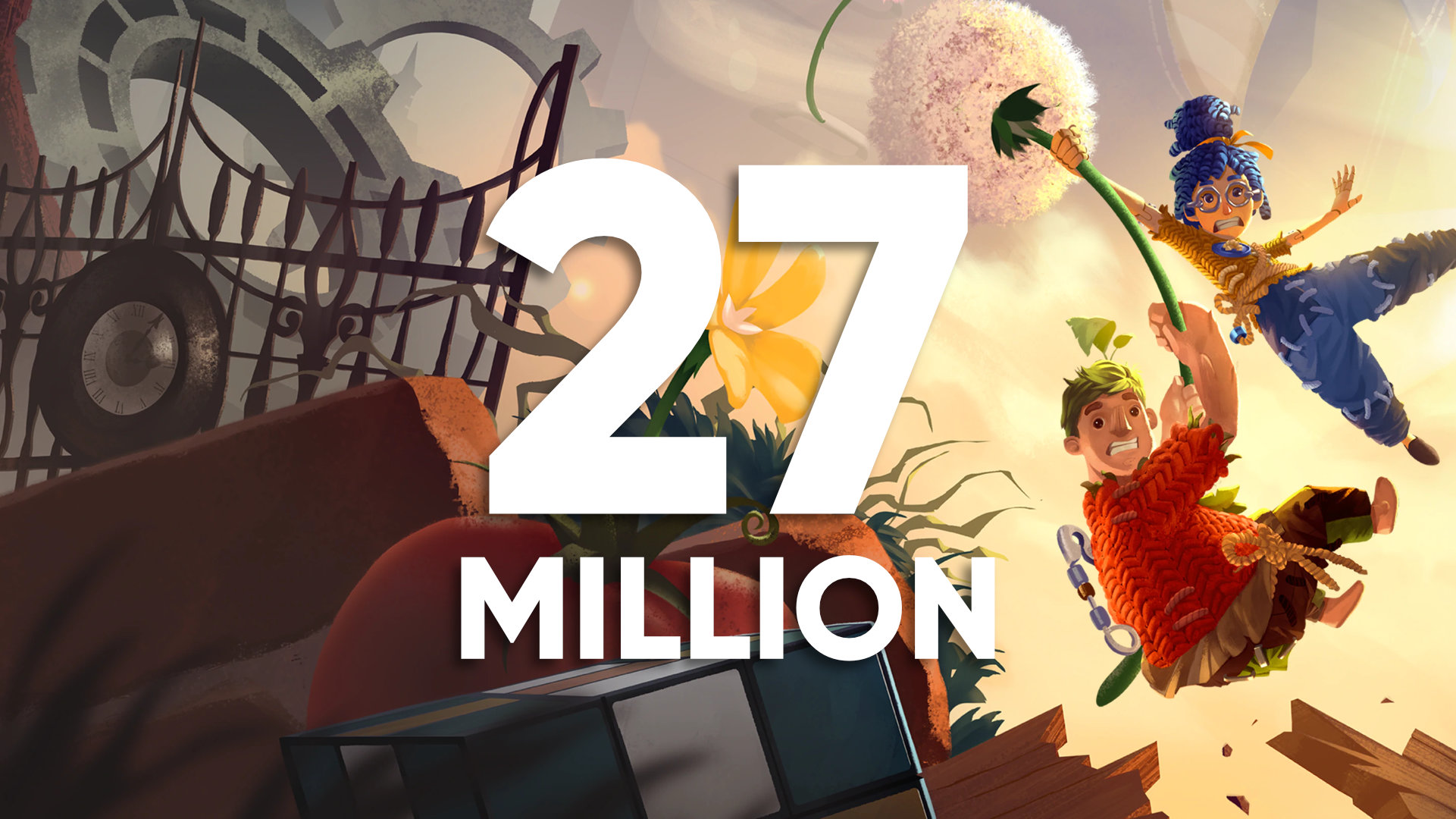
In discussing Hazelight’s last game prior to Split Fiction – It Takes Two – Fares revealed that the 2021 game of the year winner is continuing to sell millions of copies, confirming that the co-op title is now closing in on hitting 27 million copies sold.
While an incredible achievement in its own right, as with many of Hazelight’s games, It Takes Two included a friends pass allowing you to play through the whole game online with a friend without them needing to own a copy. This means that at this point over 50 million people have experienced the game.
Considering the fact that the game is set to receive an adaptation of some kind at some point (though we have heard little from the project since its initial announcement), It Takes Two will likely continue to sell well for many more years.
KitGuru says: What did you think of It Takes Two? How does it compare to the rest of Josef Fares’ output? Will Split Fiction manage to reach similar heights? Let us know down below.
 Connexion