↩ Accueil

Vue normale

Reçu hier — 9 décembre 2025

Intel ‘BMG-G31’ Battlemage GPU spotted in software update

9 décembre 2025 à 18:30

Intel has quietly dropped the most concrete evidence yet that its high-end “Battlemage” discrete graphics card is nearing a formal reveal. In a recent update to its VTune Profiler software, the company discreetly added support for the “BMG-G31” SKU, a designation long associated with the upcoming flagship Battlemage GPU. 

Wccftech shared the updated notes that also mention the upcoming Panther Lake processors. This inclusion suggests that the hardware is finalised (or close to) and is likely undergoing validation. The BMG-G31 silicon is widely expected to power the Arc Battlemage B770, a successor to the current Arc A770. According to the most recent reports, this new flagship will feature approximately 32 Xe2 cores paired with 16 GB of GDDR6 memory across a 256-bit interface. The architecture is also set to support a full PCIe 5.0 x16 connection.

Moreover, new shipping manifests shared by @x86deadandback (via VideoCardz) also corroborate the hardware's existence and provide details on its power requirements. These records indicate a thermal design power of 300 W for this GPU, a considerable increase over the 225 W range seen on the previous Alchemist generation. The increased power suggests Intel is pushing the silicon much harder to extract performance.

With the VTune entry co-listing the GPU alongside next-generation Panther Lake CPUs (powered by Xe3), Intel risks launching its Xe2 discrete cards just as its own mobile silicon moves to a newer architecture. However, with the company recently cracking the 1% discrete GPU market share barrier for the first time since Alchemist's debut, maintaining the momentum could be the key to expanding its share. Given the timing, a reveal at CES 2026 seems plausible.

KitGuru says: What kind of performance do you expect from a GPU with the reported specs of the “BMG-G31”?

The post Intel ‘BMG-G31’ Battlemage GPU spotted in software update first appeared on KitGuru.


Lenovo is reportedly preparing a Legion Pro laptop with a 21:9 rollable display

9 décembre 2025 à 18:00

Fresh leaks surfacing ahead of CES 2026 suggest that Lenovo is preparing to shake up the form factor of high-end gaming laptops once again. According to a recent report, the company is actively developing the Legion Pro Rollable, a machine that ditches the traditional fixed chassis in favour of a motorised, expanding OLED screen.

The promotional materials shared by Windows Latest show that the device functions as a standard 16:9 clamshell laptop in its default state. However, it can mechanically extend outward to a 21:9 ratio. Unlike the vertically expanding ThinkBook Plus Gen 6 Rollable that Lenovo shipped previously, this new gaming-focused laptop rolls out horizontally. Small motors drive rails that push the screen outwards to the left and right, transforming the panel, offering the field of view of an ultrawide monitor.

Image credit: Windows Latest

While full technical specifications remain under wraps, the leak points to the inclusion of Intel Core Ultra silicon, probably the upcoming Panther Lake architecture, given the early 2026 timeline. On the graphics side, the Legion branding all but guarantees a discrete Nvidia RTX GPU, almost certainly from the RTX 50-series. The display itself is tipped to be an OLED panel capable of at least 120Hz.

The existence of such a device is less far-fetched than it might appear. Lenovo has already proven it can mass-produce this technology with the ThinkBook Plus Gen 6, which successfully transitioned from a trade show concept to a retail product. Expanding that know-how to a horizontal, gaming-centric layout seems quite feasible for the brand.

KitGuru says: We expect the Legion Pro Rollable to command a significant price premium over other laptops. How much more would you be willing to spend for a rollable display?

The post Lenovo is reportedly preparing a Legion Pro laptop with a 21:9 rollable display first appeared on KitGuru.

Intel Core Ultra 7 270K Plus CPU surfaces in benchmark leak

9 décembre 2025 à 17:30

Intel's mid-cycle refresh for its desktop Arrow Lake lineup seems to be right around the corner, with the first concrete performance numbers for the unannounced Core Ultra 7 270K Plus appearing on the Geekbench database. This new SKU seems to be a direct replacement for the existing Core Ultra 7 265K, bringing a notable bump in core count and frequency adjustments that aim to refine the platform ahead of the next major architectural shift.

The most significant change revealed by the leaked entry (via Benchleaks) is the processor's core configuration. While the current 265K uses a 20-core layout, the incoming 270K Plus has been upgraded to a 24-core design, comprised of 8 P-cores and 16 E-cores. Adding four extra E-cores aligns the chip more closely with the top-tier Core Ultra 9 in terms of thread count. Beyond the silicon changes, Intel seems to be improving some specifications, with reports suggesting an increase in official memory support from DDR5-6400 to DDR5-7200, alongside a 100 MHz bump to E-core base and turbo frequencies.

The entry shows the chip running on a Gigabyte Z890 Eagle WiFi7 motherboard, with the Core Ultra 7 270K Plus achieving a single-core score of 3,235 and a multi-core score of 21,368. Despite being handicapped by relatively slow DDR5-4800 memory during the test, these numbers represent an uplift of roughly 5.6% in single-threaded tasks and 4.2% in multi-threaded workloads compared to the average scores of the Core Ultra 7 265K. According to the benchmark run, the CPU reached a clock speed of 5.5 GHz.

This refreshed lineup is expected to launch next year on the existing LGA 1851 socket, serving as a drop-in upgrade for current users. By sticking with the “Core Ultra 200” series branding, Intel is signalling that this is an iterative update rather than a new generation.

KitGuru says: Do you think the new Core Ultra 200 Plus series will help Intel regain some of the market share it has been losing in the desktop consumer segment?

The post Intel Core Ultra 7 270K Plus CPU surfaces in benchmark leak first appeared on KitGuru.
Reçu avant avant-hier

AOC and Philips unveil world’s first 1000Hz dual-mode gaming monitors

8 décembre 2025 à 18:00

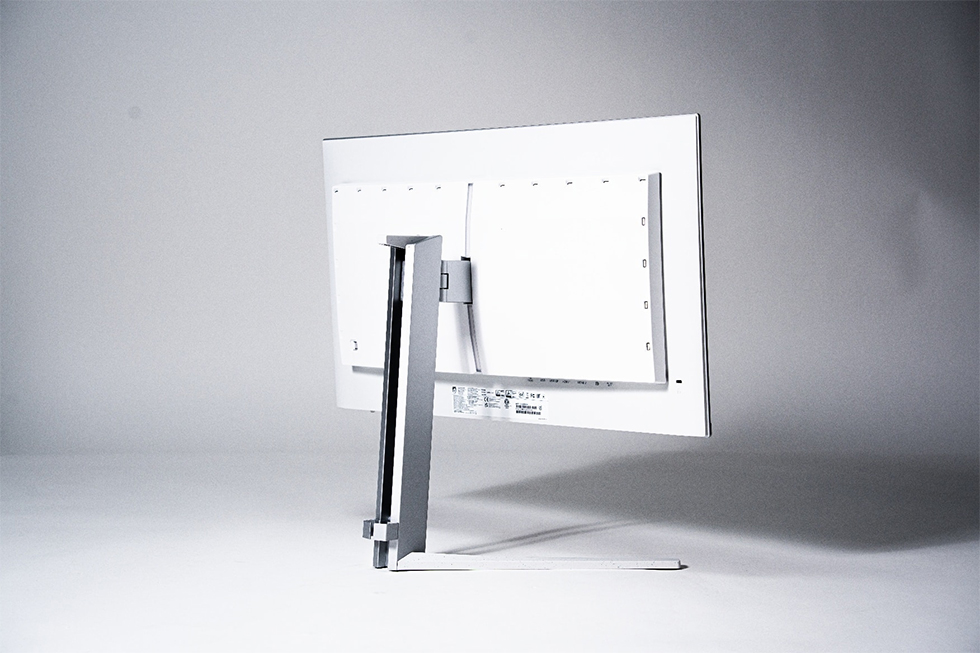
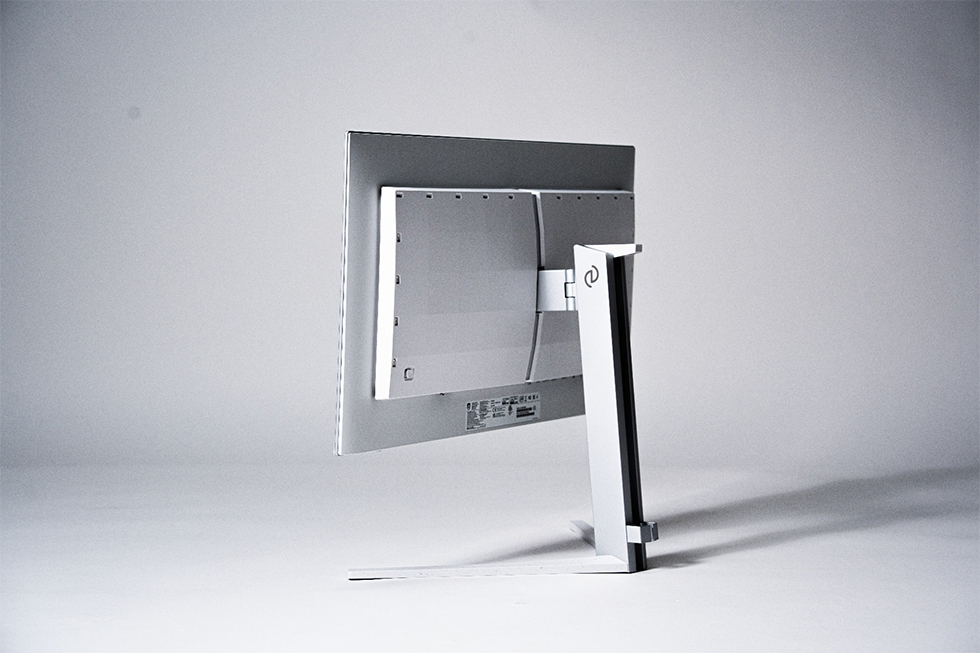
TP Vision's two gaming sub-brands, AOC and Philips, have officially introduced the first monitors capable of reaching 1000Hz. Unveiled at an event in China, the AOC AGON Pro AGP277QK and the Philips Evnia 27M2N5500XD share the same underlying display panel technology to achieve this milestone.

According to DisplaySpecifications, the 27-inch panel in both units offers dual-mode functionality similar to what we have seen in recent LG and ASUS offerings, but with significantly higher frequencies. Natively, the screen operates at a QHD resolution with a 500Hz refresh rate. However, for users prioritising pure motion clarity over pixel count, the display can switch to a Full HD resolution to unlock the 1000Hz mode. The panel specifications include VESA DisplayHDR 400 certification and a static contrast ratio of 2000:1. The panel type wasn't specified, but given the specs, it should be an IPS panel.

Image credit: DisplaySpecifications

Beyond raw speed, the Philips model integrates the brand's ComfortView 4.0 and AI-driven light-synchronisation technology. Both monitors are expected to feature fully ergonomic stands, with the Philips model utilising its Smart ErgoBase and the AOC variant likely sporting its signature 4-way adjustable design. Standard gaming features, such as 1ms GTG response times and low-input-lag modes, are available on both units.

While the monitors have made their formal debut in the Chinese market, TPVision has yet to confirm specific release dates or pricing for Western territories.

KitGuru says: There aren't that many PCs out there capable of taking advantage of these monitors. However, if you do have one of these, it seems you won't have to wait long to see what that experience looks like.

The post AOC and Philips unveil world’s first 1000Hz dual-mode gaming monitors first appeared on KitGuru.

Nvidia GTC 2026 dated for March with Vera Rubin and Feynman AI architectures in focus

8 décembre 2025 à 17:30

Nvidia has officially confirmed the schedule for its next major GPU Technology Conference, with GTC 2026 returning to San Jose on March 15th, 2026. The company has wasted little time in sharing the details on its official website, outlining a four-day event that will once again place its aggressive AI roadmap front and centre.

While the conference kicks off with workshops on the 15th, the headline event will undoubtedly be CEO Jensen Huang's keynote address on March 16th. Given the company's staggering $4.4 trillion market valuation, all eyes are on how the Green Team plans to maintain its momentum.

Unveiled at last year's event alongside Blackwell Ultra and DGX Spark, Vera Rubin is expected to be the primary talking point as Nvidia prepares to ramp up mass production of AI clusters based on the new architecture. Vera Rubin should deliver substantial improvements over Blackwell, featuring TSMC's 3nm process node, HBM4 memory integration, and significant upgrades to the networking stack. Moreover, Jensen Huang is also expected to provide an update on the next-generation Feynman GPU architecture.

Gamers expecting consumer-focused announcements should likely temper their expectations. GTC has increasingly solidified its reputation as an “all-AI” commercial showcase, with GeForce products typically reserved for venues like CES. Instead, attendees can expect a deep dive into the industrial metaverse, updates to the CUDA library, and the latest breakthroughs in robotics.

KitGuru says: What are your expectations for GTC 2026?

The post Nvidia GTC 2026 dated for March with Vera Rubin and Feynman AI architectures in focus first appeared on KitGuru.

Acer unveils Predator X27UZ1 QD-OLED monitor with 280Hz refresh rate

8 décembre 2025 à 15:30

Acer has quietly expanded its high-end gaming monitor portfolio with the introduction of the Predator X27UZ1, a new 26.5-inch display built around QD-OLED technology. The screen targets competitive gamers, offering a WQHD resolution (2560×1440) and an impressive overclockable refresh rate of up to 280Hz.

According to Prad, the panel specifications align with the high standards expected of modern OLEDs. It features a 0.03ms G2G response time and covers 99% of the DCI-P3 colour gamut with a Delta E of less than 2, ensuring accurate colour reproduction right out of the box. Contrast is rated at 1,500,000:1, while brightness levels are rated at 250 nits for full-screen SDR content and up to 1,000 nits for HDR highlights at a 3% APL. These specs have earned the unit DisplayHDR True Black 400 certification.

Connectivity options include two HDMI 2.1 ports, a single DisplayPort 1.4, and a dedicated headphone output. The included stand offers comprehensive ergonomic adjustments, including 120mm of height travel and tilt, swivel, and pivot functionality. For those preferring aftermarket arms, the chassis supports a 75x75mm VESA mount. Integrated 5-watt stereo speakers are also present for basic audio duties.

The value proposition is slightly complicated due to the warranty terms. While the street price is quite accessible at €450, the monitor ships with a standard two-year guarantee. This is shorter than the three-year burn-in coverage that has become the industry standard for OLED gaming monitors from major competitors, which may give some potential adopters pause regarding long-term panel longevity.

KitGuru says: Given its shorter warranty period, would you still consider Predator X27UZ1 if you were looking for an OLED gaming monitor?

The post Acer unveils Predator X27UZ1 QD-OLED monitor with 280Hz refresh rate first appeared on KitGuru.
Nvidia continues to phase out Pascal GPUs

7 décembre 2025 à 16:00

Following the release of the 590 driver branch, which formally ended “Game Ready” support for the GTX 900 and 10 series GPUs, Nvidia has been forced to issue a correction regarding its supported hardware list. Initially, the release notes revealed that the Titan GTX and several Pascal-based mobile GPUs were still listed as supported, but that is no longer the case.

Nvidia has since removed all mentions of the MX and Titan GTX GPUs in the list of supported hardware, as noted by VideoCardz. The company has updated its documentation to confirm that all Pascal-based GPUs are indeed moving to legacy status. This correction hits the entry-level laptop segment particularly hard, wiping out almost the entire MX lineup. The only survivor is the MX450, which remains supported solely because it is built on the newer Turing architecture (TU117S), unlike its Pascal-based predecessors.

The transition to the 590 branch also marks the end of an era for the Titan family. With the deprecation of Maxwell, Pascal, and Volta, the support list has been decimated. The Titan X, Titan XP, and Titan V are no longer supported. This leaves the Turing-based Titan RTX as the sole remaining member of the family with active driver support.

Note that, as these GPUs will be moved to legacy, they'll still receive critical security updates via a dedicated branch.

KitGuru says: Do you own a Titan GTX or a mobile MX GPU? Are you planning to upgrade those systems, given they're about to be considered legacy?

The post Nvidia continues to phase out Pascal GPUs first appeared on KitGuru.

Lian Li launches RS series PSUs with rotating AC outlet and dual-side connectors

7 décembre 2025 à 15:00

Lian Li has introduced the RS Series, a new line of power supplies designed to address the physical constraints often found in compact or dual-chamber PC cases. Available in 1000W and 1200W capacities, the series introduces a unique mechanical feature: a rotating AC inlet.

The rotating inlet found on the RS series allows builders to adjust the orientation of the power cord connection, making it easier to fit the unit into a chassis with limited clearance or unusual mounting brackets. The design's flexibility extends to the modular interface as well, with the RS Series featuring 24-pin motherboard output ports on both the left and right sides of the unit. This dual-port layout ensures the main ATX cable takes the most direct path to the motherboard, regardless of the PSU's orientation, helping declutter the cable management chamber.

Some RS PSUs come with an RS Hub designed to solve the common shortage of internal USB headers in RGB-heavy builds. It provides four USB 2.0 headers capable of supporting up to eight devices. The hub is magnetic and can be placed anywhere in the case or mounted directly onto the PSU. This accessory is included with the 1200W models, but it's also an optional add-on for the 1000W variants.

Under the hood, the units are built using a combination of Japanese capacitors and industrial-grade EPCOS capacitors, which Lian Li claims are smaller yet more durable than traditional components. The platform is rated for high efficiency, carrying 80 Plus Gold, PPLP Gold, and Cybenetics Platinum certifications. Cooling is provided by a 135 mm fluid-dynamic bearing (FDB) fan that supports a Zero RPM mode for silent operation under lighter loads.

The PSUs ship with soft, flat modular cables and magnetic cable ties to further assist with routing. The Lian Li RS Series is available starting December 5th, 2025, in both black and white. The RS1000G Black without a hub is priced at $154.99, while the RS1000G White without a hub is priced at $159.99. If you choose the RS1000G bundled with the RS Hub, the Black version costs $159.99, and the White version is $164.99. Finally, for the RS1200G models, which are available only with the RS Hub, the Black edition is $179.99, and the White edition is $184.99.

KitGuru says: Although a bit pricey, these PSUs' feature set is quite rare in the current market. The only similar alternative is the Corsair RMx Shift, which is priced similarly to these at the same power level.

The post Lian Li launches RS series PSUs with rotating AC outlet and dual-side connectors first appeared on KitGuru.

Dell and Lenovo reportedly set to raise PC prices due to rising memory costs

7 décembre 2025 à 14:00

Dell is reportedly preparing to increase its system prices by 15-20% as early as mid-December, driven by a dramatic surge in DRAM costs. Lenovo may follow suit, as industry insiders point to the exploding cost of memory as the cause, specifically DDR5, which has seen year-over-year increases of 70%, with some specific components spiking by a massive 170%.

According to Trendforce, Lenovo is already advising customers that current price quotes will expire on January 1st, with significant increases expected in early 2026 due to AI-driven demand and shortages. Other major OEMs, including HP, Samsung, and LG, are also said to be reassessing their 2026 product roadmaps, particularly for AI tablets and PCs.

TrendForce has consequently downgraded its notebook shipment forecast for 2026 from 1.7% growth to 2.4% decline. With memory accounting for a significant chunk of a PC's cost, 2026 is shaping up to be a challenging year for consumers, likely characterised by higher prices, limited availability, and potentially lower-spec products as brands attempt to maintain price points.

KitGuru says: With all these new reports lately, it seems those planning to buy a laptop are better off getting it ASAP or risk paying a considerably higher price.

The post Dell and Lenovo reportedly set to raise PC prices due to rising memory costs first appeared on KitGuru.

Riot’s fighting game ‘2XKO’ comes to consoles early next year

7 décembre 2025 à 13:00

After years of anticipation since its initial tease as ‘Project L', Riot Games has confirmed that its League of Legends-based tag fighter, 2XKO, will officially launch on PlayStation 5 and Xbox Series X/S in January 2026.

The console debut will coincide with the launch of Season 1 across all platforms, marking a significant milestone for the title, which has been in PC Early Access since October 2025. This simultaneous rollout ensures that the player base remains unified, with Riot confirming cross-platform progression. Console players will not be left behind, as a catch-up mechanism will allow them to earn or unlock content from the PC-exclusive early access period, including champions, skins, and mastery rewards.

Season 1 is set to bring substantial new content, headlined by the arrival of a new champion to the roster. Additionally, Riot is doubling down on the esports ecosystem with the introduction of the “Frame Perfect” skin line. A portion of the proceeds from these skins will go directly to tournament organisers to support prize pools and production costs.

Riot has also unveiled the 2026 Competitive Series, a global circuit developed in partnership with independent event organisers. The series will feature twenty sanctioned events, including five major tournaments. The competitive calendar kicks off almost immediately after launch, with the first event scheduled for January 29th, 2026, at Frosty Faustings.

KitGuru says: Have you already tried 2XKO, or were you waiting for the console release?

The post Riot’s fighting game ‘2XKO’ comes to consoles early next year first appeared on KitGuru.

First wave of Activision titles land on Ubisoft+ streaming service

5 décembre 2025 à 18:30

Ubisoft has officially begun integrating Activision Blizzard titles into Ubisoft+ Premium, marking the first tangible result of the cloud-streaming rights deal secured in August 2023. The publisher has confirmed that the first batch of games is available to stream starting today, initially launching via an integration with Nvidia GeForce Now.

This expansion is a direct consequence of the agreement made during Microsoft's acquisition of Activision Blizzard, under which Ubisoft secured perpetual cloud-streaming rights to the studio's catalogue. Chris Early, Ubisoft's Senior Vice President of Corporate Partnerships, noted that this move is intended to strengthen the service's content offering and allow the publisher to license these titles to other cloud providers and console makers. While GeForce Now is the first platform to support this integration, Ubisoft has stated that these games will become available via other cloud providers in the future.

The initial lineup of Activision games available to stream includes some of the publisher's biggest hits. Subscribers can now access the standard editions of Call of Duty: Modern Warfare II and Call of Duty: Modern Warfare III, as well as the Crash Bandicoot N. Sane Trilogy, which includes Crash Bandicoot, Cortex Strikes Back, and Warped. Similarly, the Spyro Reignited Trilogy is now available, offering the remastered versions of Spyro the Dragon, Ripto's Rage!, and Year of the Dragon.

Ubisoft has confirmed that this is just the beginning, with more titles from both Activision and Blizzard expected to join the Ubisoft+ Premium catalogue in the coming months.

KitGuru says: Are you subscribed to Ubisoft+ Premium? What other Activision games would you like to see on the platform?

The post First wave of Activision titles land on Ubisoft+ streaming service first appeared on KitGuru.
Gigabyte brings the new wood trend to motheboards with the new X870E Aero X3D Wood

5 décembre 2025 à 18:00

Gigabyte has unveiled the X870E Aero X3D Wood, a new high-end motherboard that leans heavily into the recent trend of integrating natural materials into PC hardware. Moving away from the usual gamer aesthetic, this model features a wood-grain finish and a leather pull tab, designed to complement chassis like the Fractal North or other furniture-inspired builds.

Beneath the organic styling, according to TechPowerUP, the board is built on the AMD Socket AM5 platform, supporting Ryzen 7000, 8000, and 9000 series processors. Power delivery is handled by a 16+2+2 digital VRM solution, cooled by Gigabyte's VRM Thermal Armor Advanced. The PCB uses 8-layer back-drilling to enhance signal integrity, enabling DDR5 memory overclocking speeds of up to 9000MT/s, according to the company.

For connectivity, the board is targeted at creators and power users. It features dual USB4 Type-C ports, Wi-Fi 7 with a high-gain antenna, and dual 5GbE LAN ports for high-speed wired networking. Expansion options include two PCIe 5.0 x16 slots supporting dual graphics cards, alongside four M.2 slots offering a mix of PCIe 5.0 and 4.0 interfaces, all protected by thermal guards.

Gigabyte has also integrated its latest builder-friendly features, including the screwless M.2 EZ-Latch Click & Plus system and the WIFI EZ-Plug for quick antenna installation. On the software side, the board introduces X3D Turbo Mode 2.0, an AI-driven optimisation feature designed to maximise performance on AMD's X3D processors. The motherboard also includes DriverBIOS, which preinstalls Wi-Fi drivers to ensure network connectivity at first boot.

KitGuru says: After cases and keyboards, it looks like motherboards are the next in line for having wooden accents. What do you think will come next?

The post Gigabyte brings the new wood trend to motheboards with the new X870E Aero X3D Wood first appeared on KitGuru.
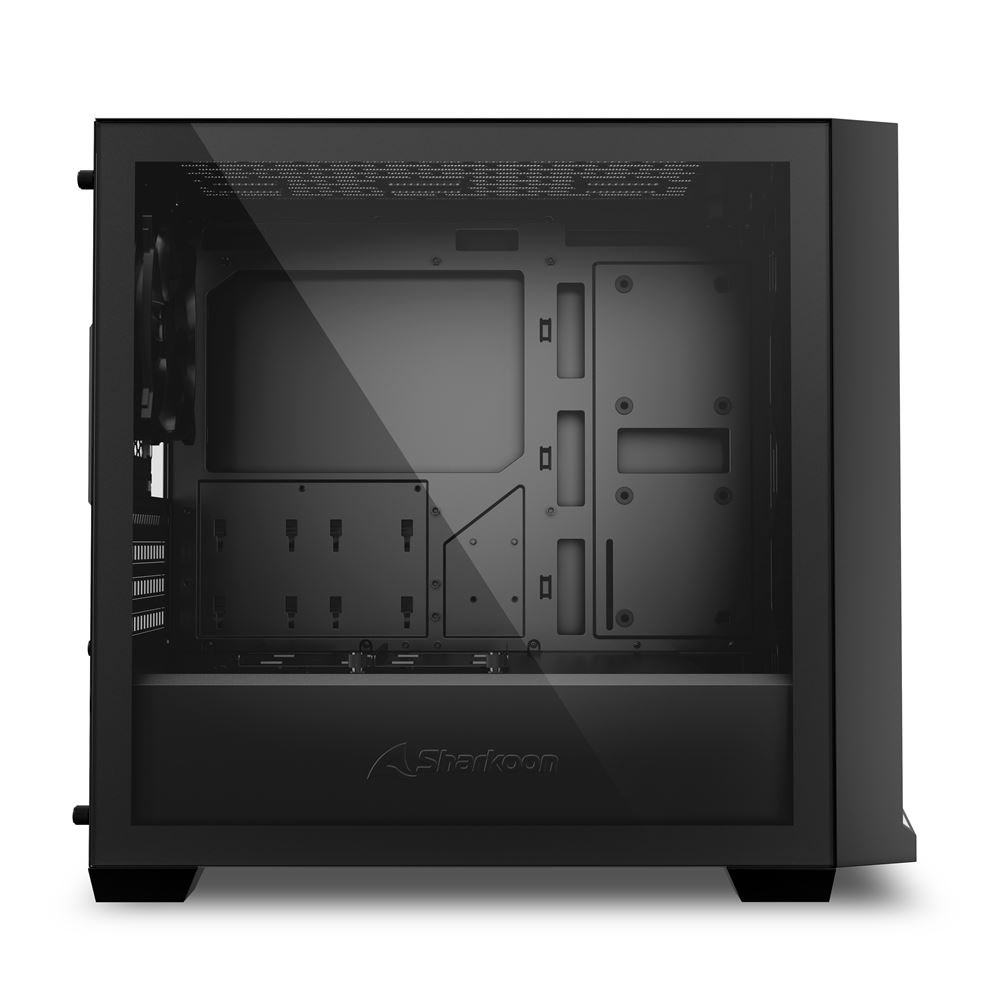
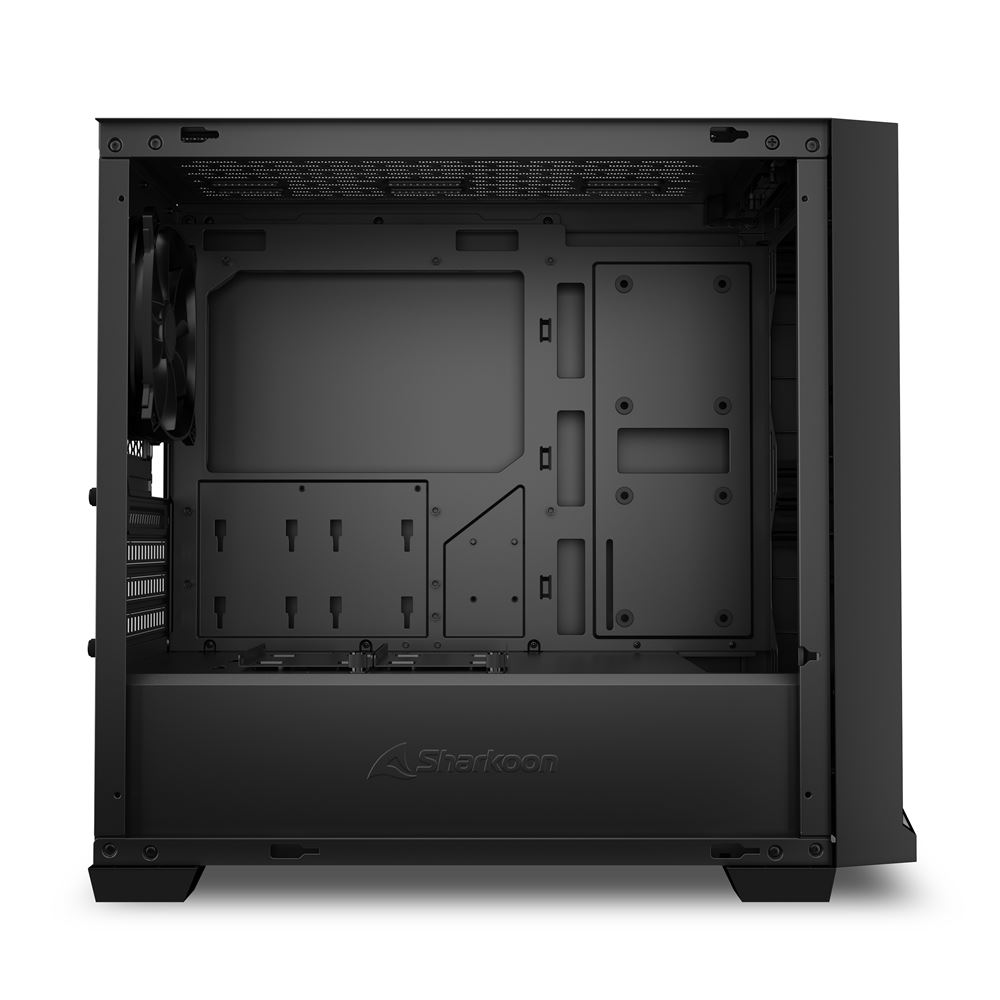
Sharkoon launches budget-friendly J1000 ARGB mATX case

5 décembre 2025 à 15:30

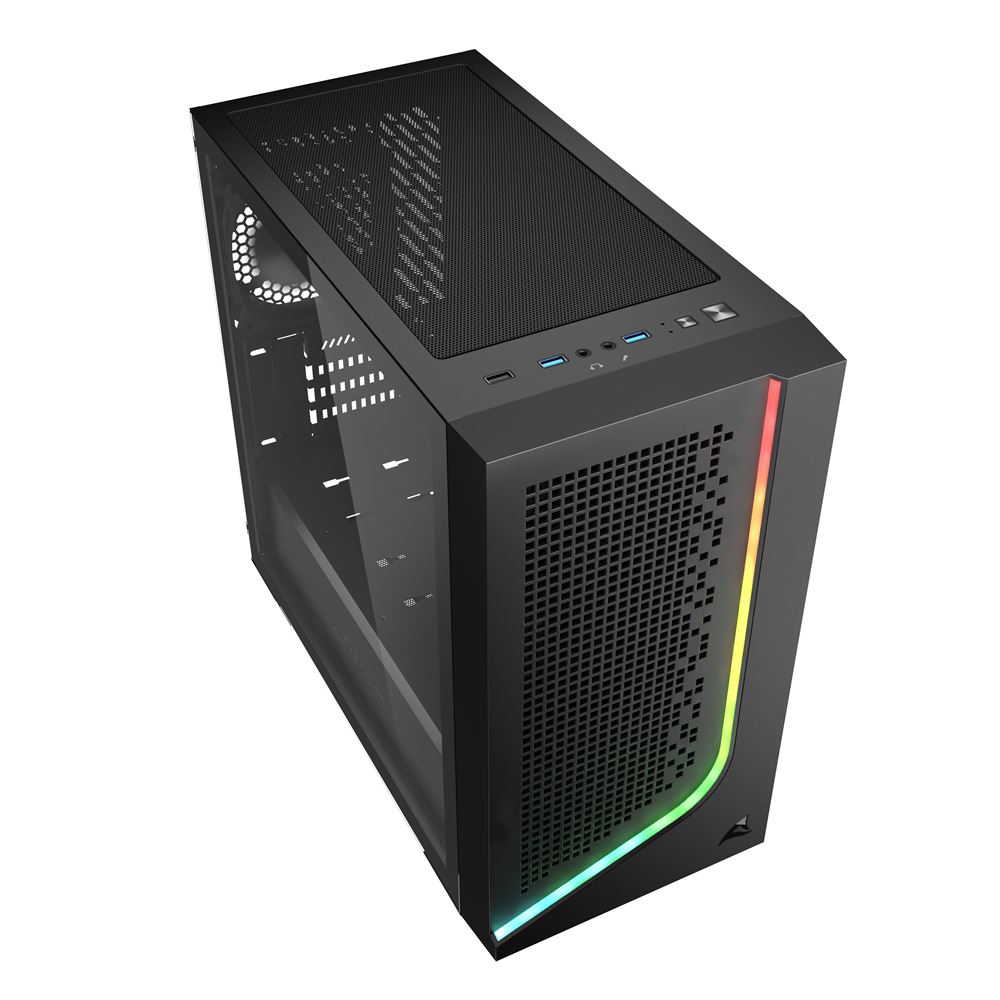
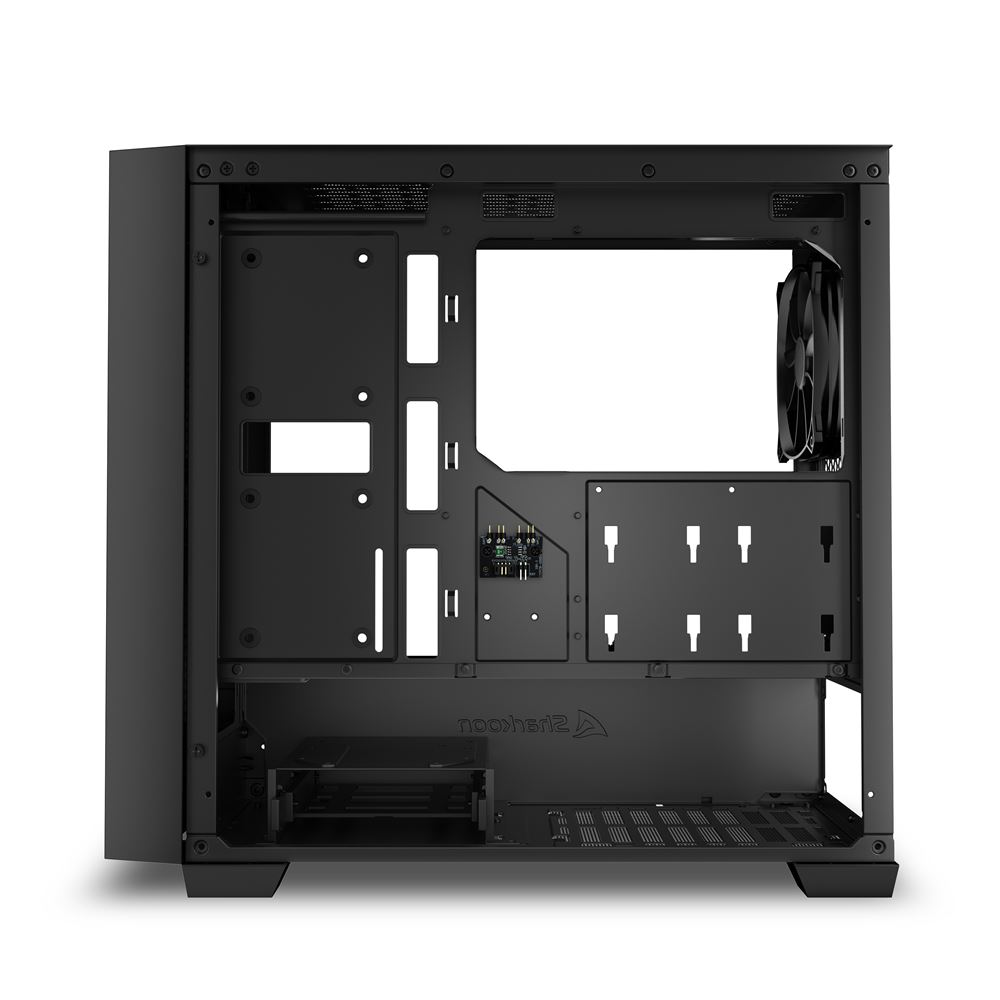
Sharkoon has expanded its range of compact cases with the J1000 ARGB, a new mATX chassis that aims to balance airflow and aesthetics at an aggressive price point. The case is designed for smaller systems where desk space is a priority, while still supporting standard gaming hardware components.

The front panel of the J1000 ARGB is what makes the case stand out, featuring a large mesh section for air intake. This is accented by a curved ARGB lighting strip that runs down the front panel, providing a lighting element that can be synchronised with compatible motherboards. A tempered glass side panel is fitted to the left side, offering a clear view of the internal components.

Cooling is handled out of the box by a single pre-installed 120 mm rear exhaust fan. While this is a modest stock configuration, the chassis supports up to five fans in total, allowing builders to add intake fans behind the perforated front panel or additional exhaust fans at the top. Despite the compact mATX form factor, storage options are relatively generous. The case can accommodate up to 2x 3.5-inch hard drives and up to 6x 2.5-inch drives.

Connectivity options on the top panel include two USB-A 3.0 ports, a single USB-A 2.0 port, and standard audio jacks for headsets. The Sharkoon J1000 ARGB is available now with a recommended retail price of €49.90.

KitGuru says: Affordable and compact, the J1000 ARGB looks like a solid option for an entry-level mATX build. Just pack it with a couple of fans at the front, and it should be good to go.

The post Sharkoon launches budget-friendly J1000 ARGB mATX case first appeared on KitGuru.
Endorfy debuts Stoneflow mousepads with moisture-resistant terrazzo surface

5 décembre 2025 à 14:30

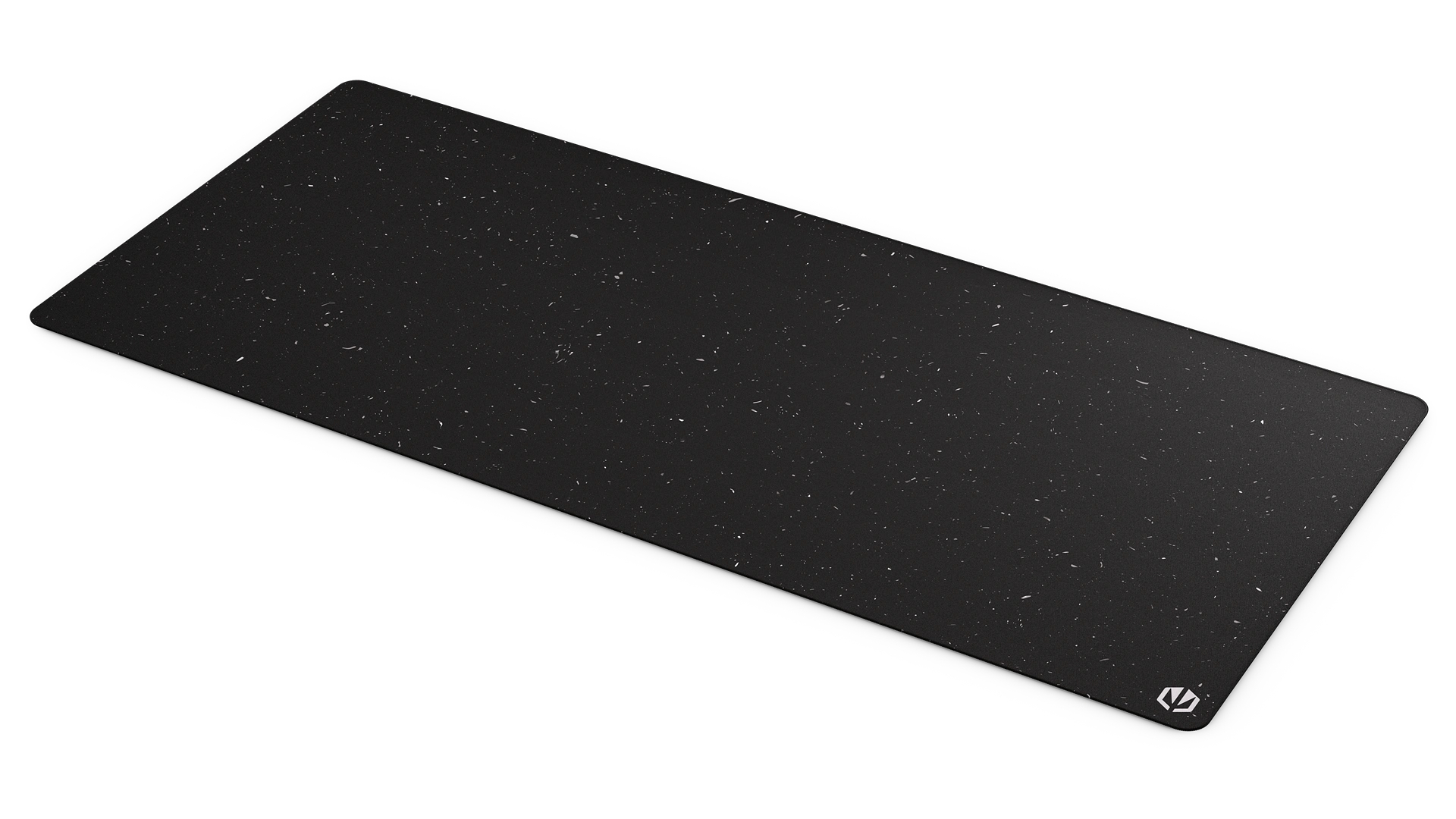
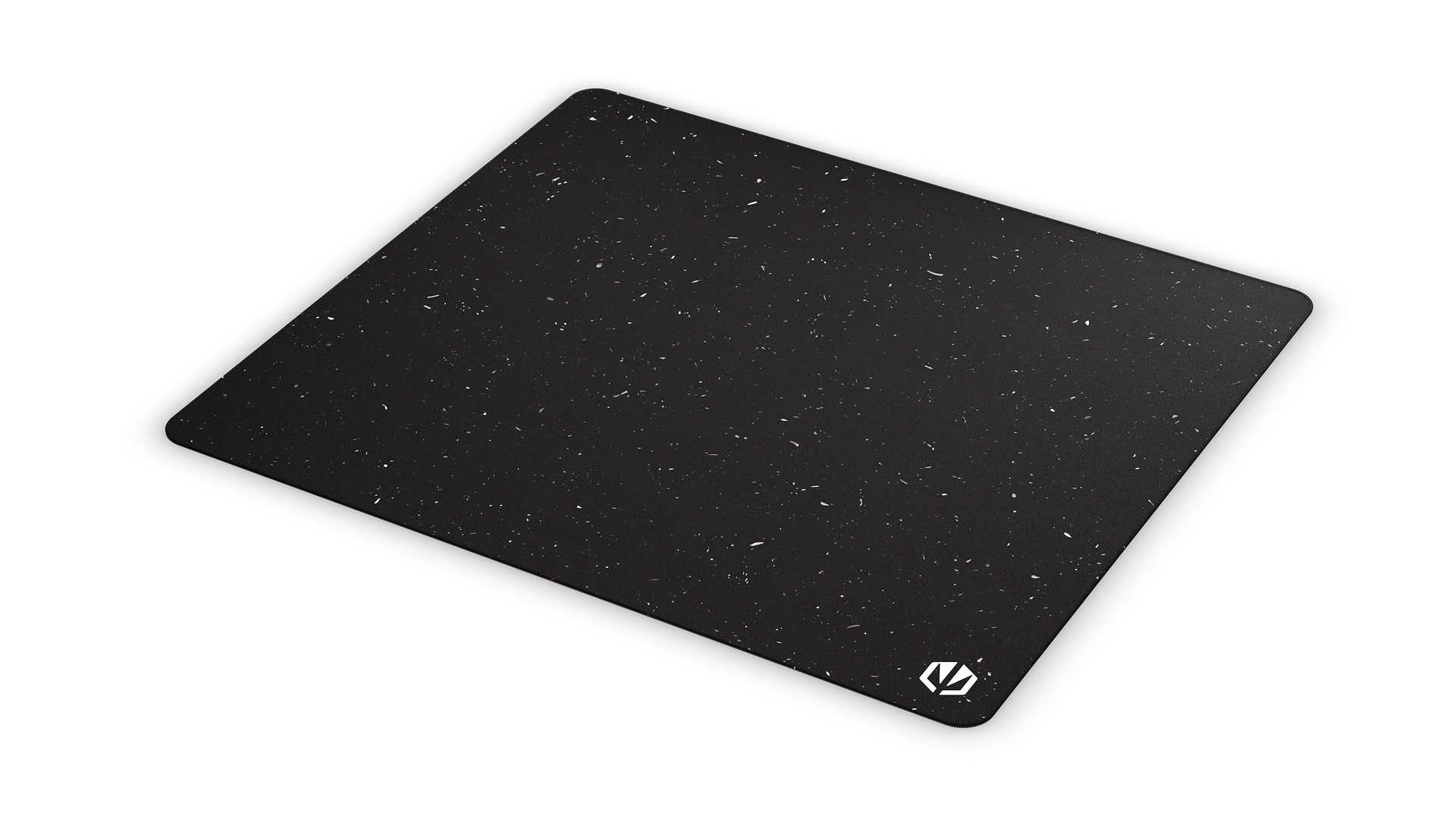
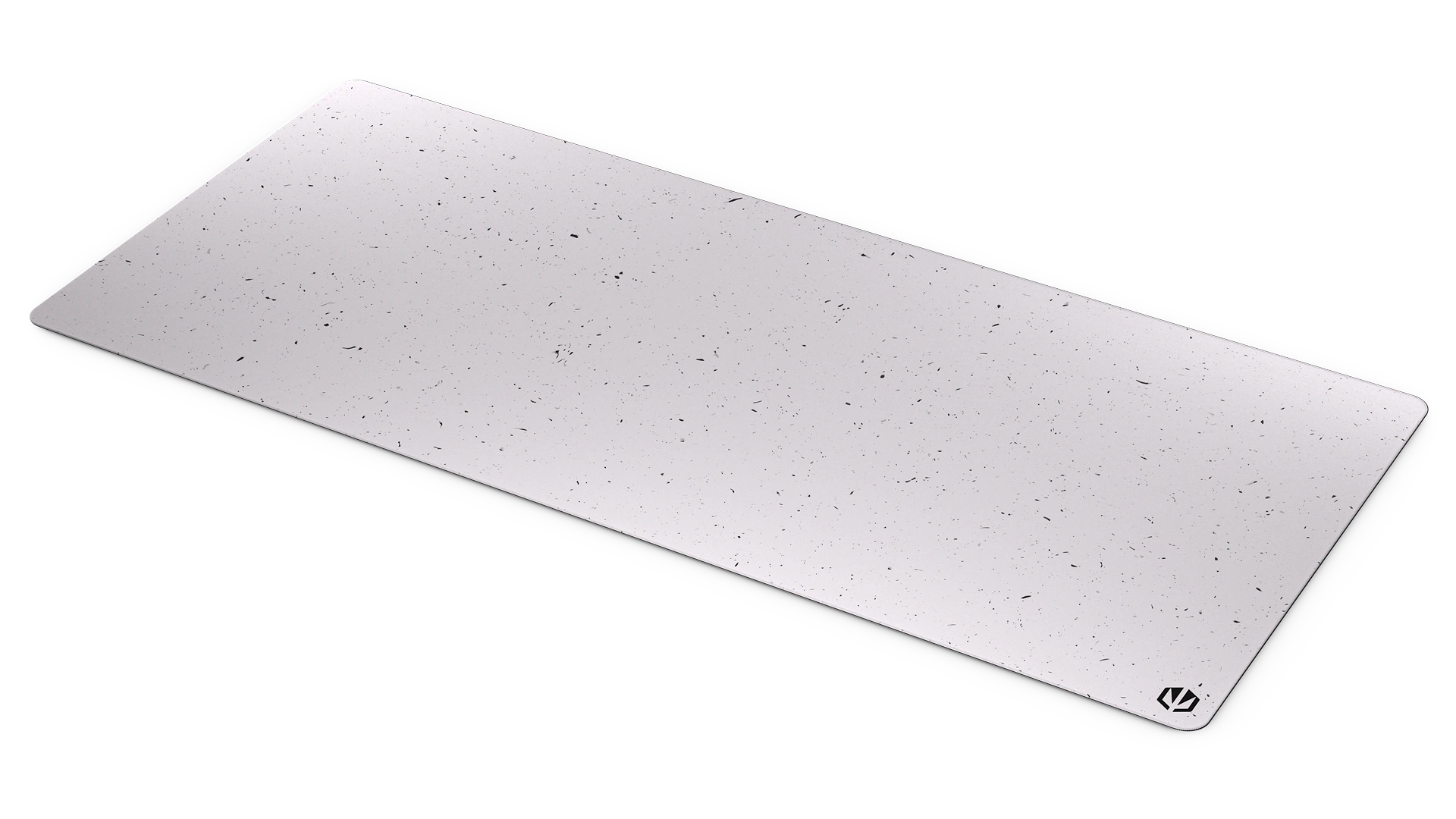
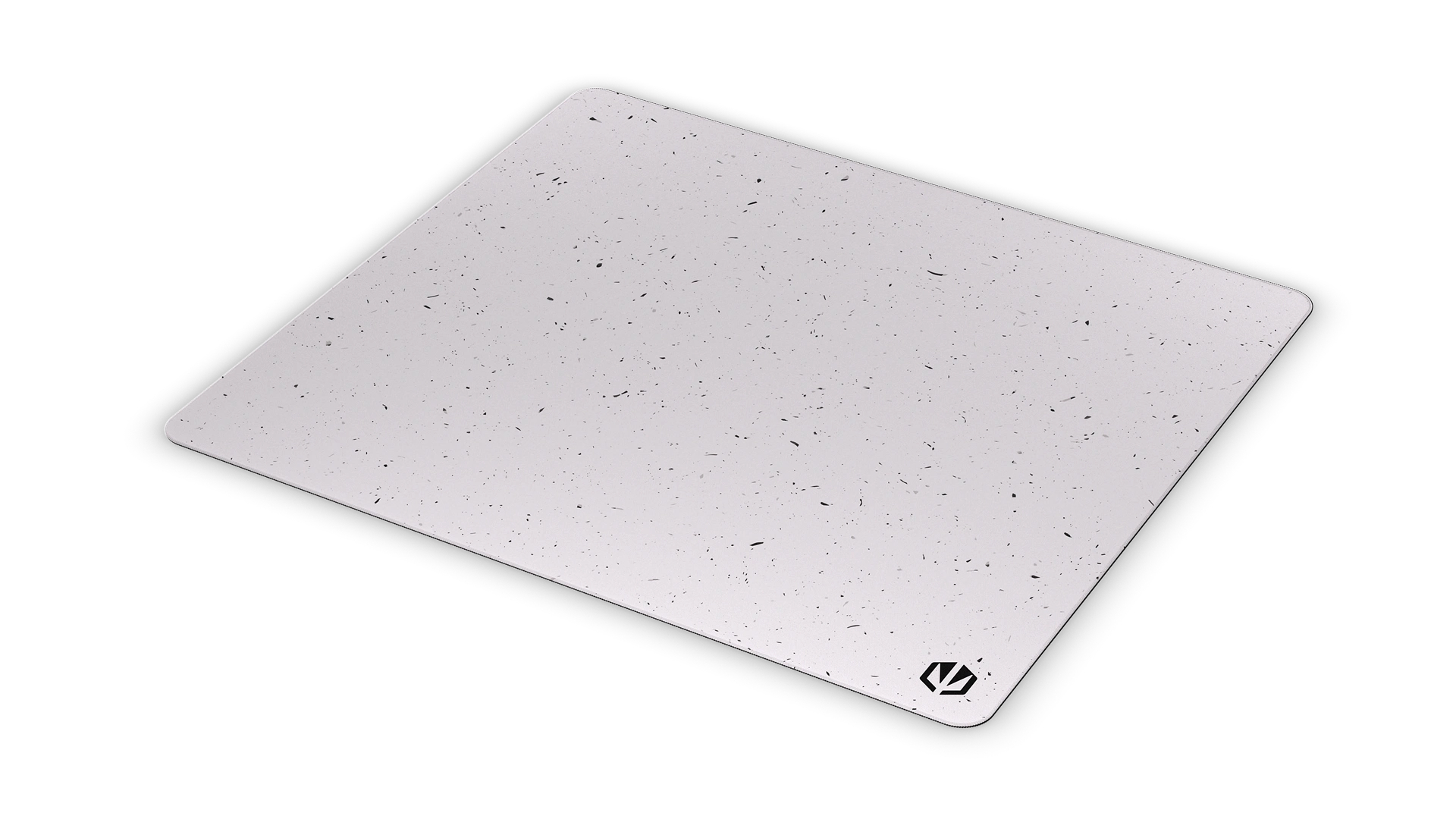
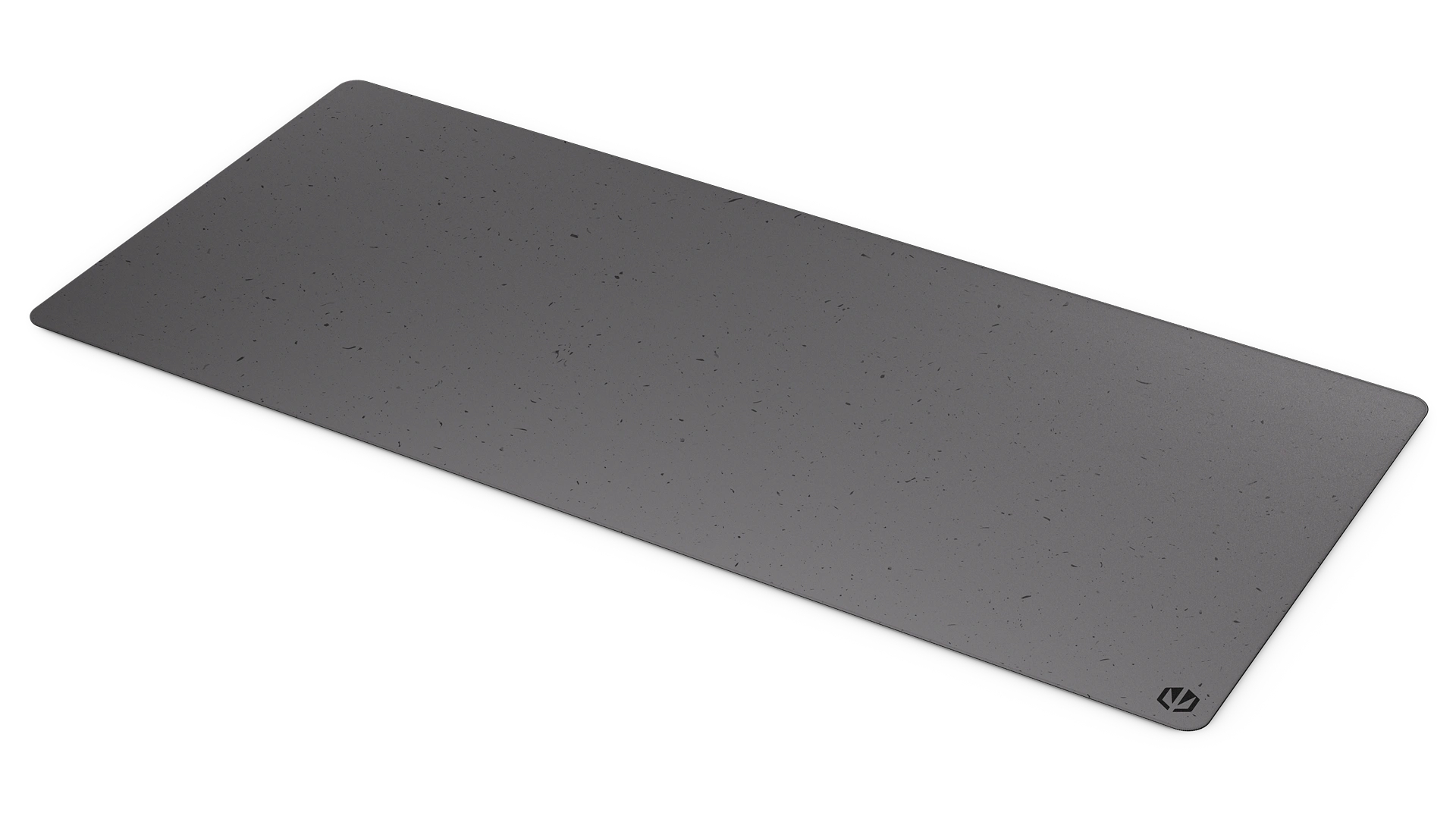
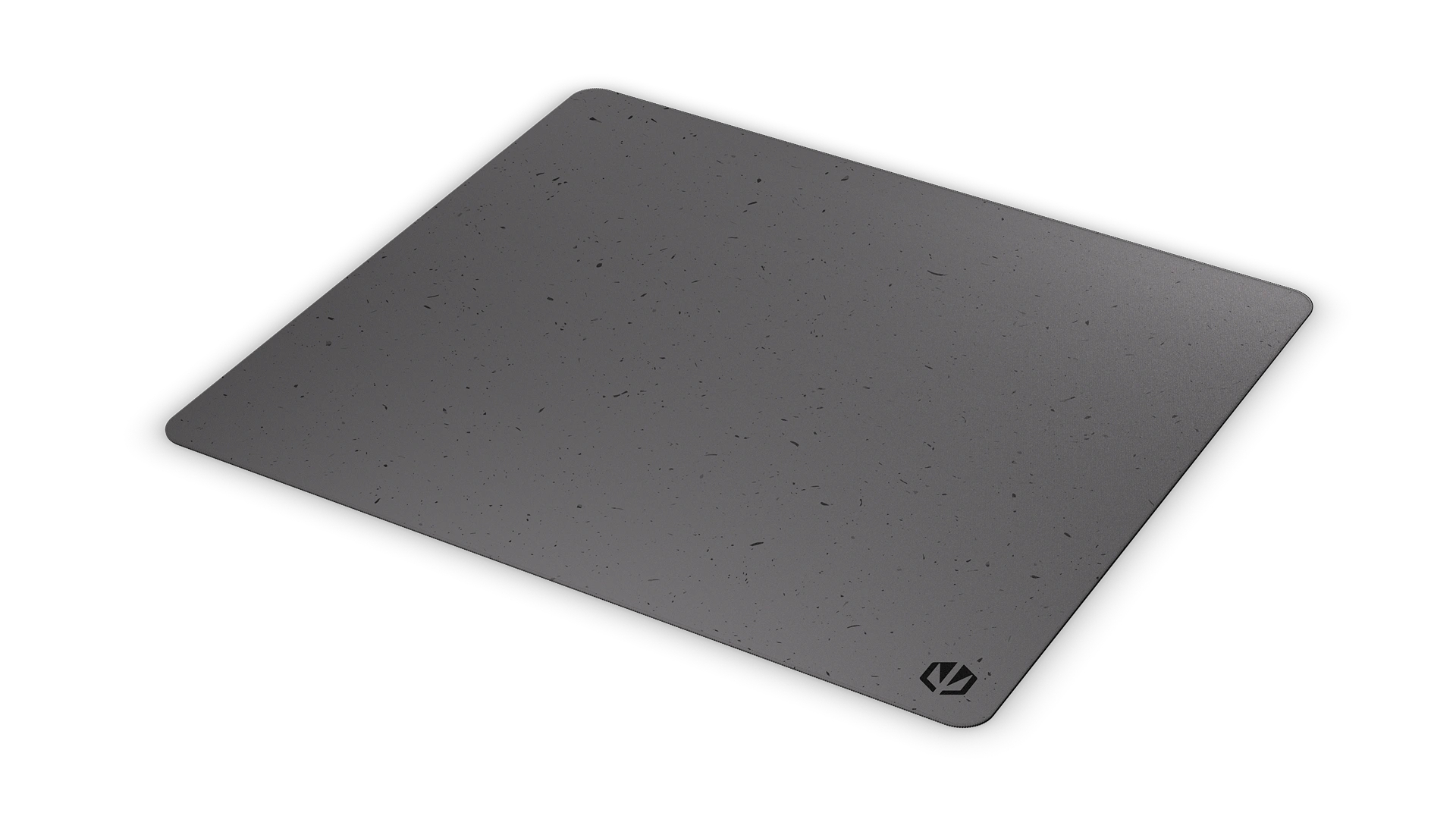
Endorfy continues its recent run of peripheral releases with the launch of the Stoneflow series of mousepads. Unveiled today, the new lineup features a distinct visual aesthetic inspired by modern terrazzo design, offered in black, white, and grey colourways to suit various workstation setups.

The Stoneflow series is available in two sizes. The standard ‘L' model measures 450 x 400 mm, offering a more square footprint for mouse movement, while the ‘XL' variant is a 900 x 400 mm desk mat designed to sit under both a keyboard and a mouse. Both models use a moisture-resistant fabric surface that Endorfy states is fully compatible with both optical and laser sensors.

To ensure longevity, the pads are finished with colour-matched stitched edges intended to prevent fraying and separation over time. The underside is lined with a non-slip rubber base to maintain stability during use. The Endorfy Stoneflow series is available starting today, with the L models costing €16 and the XL models costing €19.

KitGuru says: The terrazzo look of the Stoneflow mousepad is a nice touch that sets it apart from a plain-colour surface. Do you like it? 

The post Endorfy debuts Stoneflow mousepads with moisture-resistant terrazzo surface first appeared on KitGuru.
XPG introduces Armax DDR5 memory with ‘stealth fighter’ aesthetic

4 décembre 2025 à 18:30

XPG has announced the launch of its latest memory series, the Armax DDR5. Designed with a specific aesthetic in mind, the new modules draw inspiration from the silhouette of stealth fighter jets, offering a rugged look paired with speeds of up to 6400MT/s.

Adata XPG Armax's design focus is compatibility. With a heat spreader height of just 39.5mm, the modules are positioned as an ideal solution for Small Form Factor (SFF) builds where clearance for CPU coolers and cables can be tight. The modules will be available in a variety of single and dual-module configurations.

Under the hood, the series targets the current performance sweet spot, with frequencies ranging from 6000MT/s to 6400MT/s and timings as low as CL30-40-40. For easy overclocking, both Intel XMP 3.0 and AMD EXPO profiles are supported out of the box.

Visually, the modules feature a V-shaped top light bar intended to create a dynamic flow effect. The Armax RGB DDR5 variant supports customisation via XPG Prime and most motherboard RGB software, while a non-RGB version is available for those preferring a more understated build.

The XPG Armax DDR5 series is available now through global retailers and is backed by a limited lifetime warranty. However, due to the current state of the memory market, you might be better off waiting for it to come down a bit.

Discuss on our Facebook page, HERE.

KitGuru says: Do you like the looks of these new Armax DDR5 modules?

The post XPG introduces Armax DDR5 memory with ‘stealth fighter’ aesthetic first appeared on KitGuru.
Nvidia drops Maxwell and Pascal support with new Linux 590 branch drivers

4 décembre 2025 à 16:00

Nvidia seems to have quietly begun retiring its older Maxwell and Pascal architectures, a move signalled by the release of its latest Linux driver. The new 590 driver branch, currently available in beta as version 590.44.01, appears to have dropped support for the GeForce GTX 900 and GTX 10 series GPUs, confirming earlier reports that these cards are now entering legacy status.

Spotted by VideoCardz, the official release notes state that the 580.xx driver series is the final branch to offer full “Game Ready” support for Maxwell and Pascal. So, if you have such a graphics card running on a Linux-based system, there's a chance you may face issues with future game releases.

This transition places the GTX 900, GTX 10, and the few consumer discrete Volta cards into maintenance mode. Owners of these GPUs will no longer receive day-zero game optimisations or performance enhancements. Instead, support will be limited to quarterly security patches to address critical vulnerabilities. For gamers still holding onto these graphics cards, this effectively signals the end of the road for new driver features.

Discuss on our Facebook page, HERE.

KitGuru says: Do you own an Nvidia GTX 900 or 10 series graphics card? Are you planning to upgrade now that driver support is coming to an end?

The post Nvidia drops Maxwell and Pascal support with new Linux 590 branch drivers first appeared on KitGuru.
Micron kills Crucial brand to focus on AI data centre segment

4 décembre 2025 à 15:45

Micron has announced it will discontinue its consumer-facing Crucial brand, marking the end of a 29-year run for one of the most known names in PC memory and storage. The company confirmed it will cease selling Crucial-branded consumer products through global retailers and distributors by February 2026.

Micron's decision represents a strategic pivot for the US memory giant, which is reallocating its manufacturing capacity away from the low-margin consumer market to satisfy the insatiable demand for enterprise-grade memory in AI data centres. Sumit Sadana, Micron's Executive Vice President and Chief Business Officer, stated that the AI-driven growth in the data centre has led to a surge in demand for memory and storage, necessitating the move to improve supply for larger, strategic customers in these faster-growing segments.

For PC enthusiasts and system builders, this marks a significant loss. Crucial has long been a go-to choice for reliable, affordable DDR4 and DDR5 memory kits and SSDs. While shipments will end in early 2026, Micron has assured existing customers that it will continue to honour warranties and provide service support for Crucial products already in the wild.

The move is not a total withdrawal from the memory market, but rather a realignment. Micron will continue to sell its Micron-branded enterprise products to commercial channel clients globally. To mitigate the impact on its workforce, the company plans to offer redeployment opportunities to affected employees, moving them into other open positions within the organisation.

Discuss on our Facebook page, HERE.

KitGuru says: Micron is one of the biggest memory suppliers in the world by volume, so this is a pretty major blow to the consumer market. We can only hope that the likes of Samsung and SK Hynix don't go in the same direction, as consumers would be left with very few options if that were to happen. 

The post Micron kills Crucial brand to focus on AI data centre segment first appeared on KitGuru.
Cooler Master nearing launch for massive Cosmos Alpha PC case

3 décembre 2025 à 18:30

Cooler Master is preparing to launch the latest addition to its Cosmos series. Dubbed the Cosmos Alpha, this full-tower chassis appears to be the production version of the “Cosmos 2025” prototype that was showcased earlier this year at Computex. While an official release date has not yet been confirmed, the sudden appearance of retail listings suggests a launch soon.

According to Vortez, the Cosmos Alpha is designed to modernise the iconic line while retaining the massive scale that defined its predecessors. Externally, the chassis features the brand's signature curved aluminium handles and frame, as well as a “metal sponge” front panel. First teased on the prototype, this material reportedly outperforms standard mesh in both airflow permeability and ease of cleaning, offering a unique aesthetic for high-end builds.

The chassis is built around the new FreeForm 2.0 design philosophy, which emphasises modularity. The layout supports highly customised configurations, including adjustable channels so you can target your cooling towards hot zones. The case is confirmed to support back-connect motherboards (such as ASUS BTF or MSI Project Zero), allowing for a cable-free visual presentation in the main chamber.

Early store listings have provided a first look at potential pricing. An Indian PC hardware retailer listed the case at ₹32,699 (about £310).

Discuss on our Facebook page, HERE.

KitGuru says: Have you ever owned a Cosmos case? If you didn't, does the Cosmos Alpha have a chance to be your first?

The post Cooler Master nearing launch for massive Cosmos Alpha PC case first appeared on KitGuru.

Intel Arc GPU market share has grown according to analyst

3 décembre 2025 à 18:00

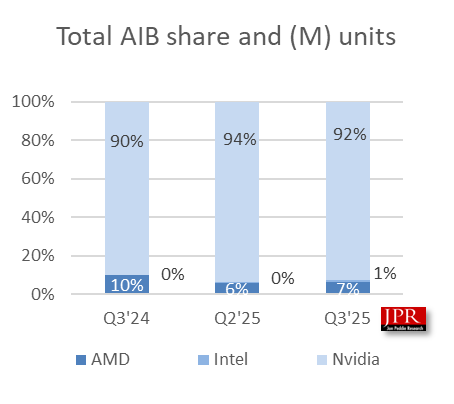
Analyst firm Jon Peddie Research (JPR) has released its Q3 2025 report on the AIB discrete GPU market, revealing a small but significant milestone for Intel. For the first time since its launch, the Intel Arc cards have cracked the 1% market share barrier, moving past the 0.5% mark it had previously been stuck at. 

Intel's growth has been slow due to its late entry into a highly established market. However, recent growth offers a glimmer of hope for Team Blue and its supporters. According to JPR's latest report on the discrete GPU market, Intel has grown 0.4%, breaking the 1% barrier for the first time.

The remaining 99% of the market saw a slight shift in power dynamics. Nvidia continues to dominate the market, holding a massive 92% share. However, this represents a 1.2% decline from the previous quarter. AMD capitalised on this dip, increasing its share by 0.8% to reach 7%. These fluctuations are often driven by inventory availability and pricing strategies from board partners, where even minor adjustments can lead to visible swings in quarterly percentages.

Broader market health appears mixed. Shipments for the quarter reached 12 million units, valued at $8.8 billion, representing a modest 2.8% growth over the previous quarter. However, JPR warns that this figure masks underlying volatility. The firm forecasts a long-term decline, predicting a -0.7% annual drop through 2029.

Discuss on our Facebook page, HERE.

KitGuru says: The GPU market is in a weird spot right now thanks to the AI boom, so it will be interesting to follow numbers like this in the year ahead. 

The post Intel Arc GPU market share has grown according to analyst first appeared on KitGuru.
Samsung unveils Galaxy Z TriFold, the company’s first triple-screen device

3 décembre 2025 à 14:00

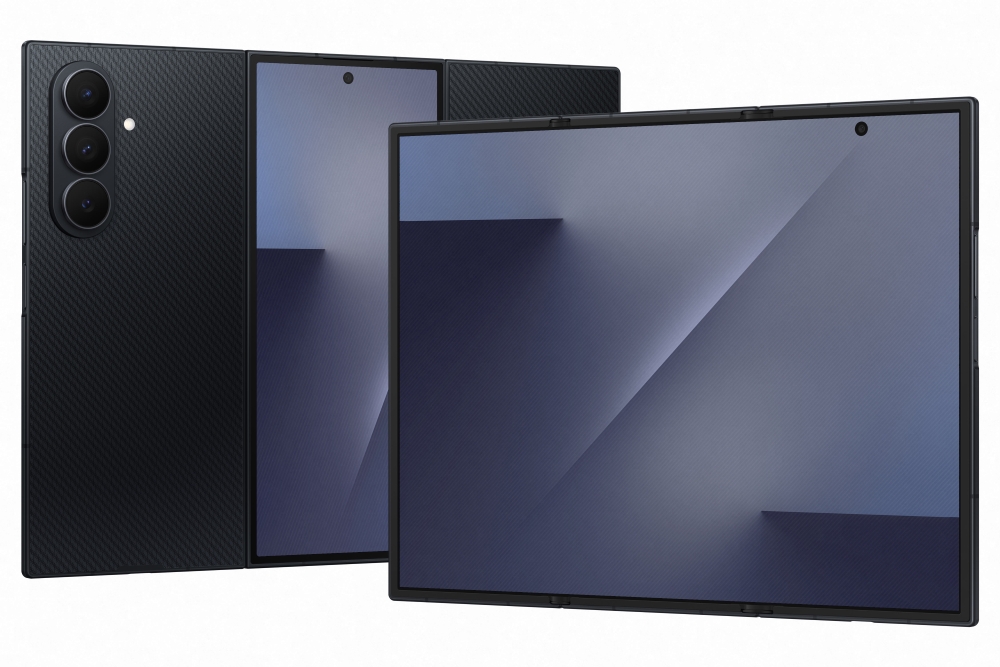
Samsung has officially announced its first foray into the tri-fold smartphone market with the Galaxy Z TriFold, a device that expands the company’s foldable portfolio to a new form factor. The handset features a dual-hinge design that allows it to unfurl into a massive 10-inch tablet-style display, positioning it as the largest screen available on a Galaxy phone to date.

The Z Trifold's design revolves around dual titanium hinges, which allow the main screen to fold inwards, protecting the panel when closed. Moreover, Samsung has placed the 6.5-inch cover screen on the back of the folded stack. This cover panel uses a 21:9 aspect ratio with a resolution of 2520 x 1080 and offers a 120 Hz variable refresh rate, protected by Corning Gorilla Glass Ceramic 2.

When fully opened, the main 10-inch display offers a resolution of 2160 x 1584 and a peak brightness of 1,600 nits. Like the cover screen, it supports a variable 1-120 Hz refresh rate. Samsung has kept the chassis relatively slender, measuring 12.9 mm when folded and slimming down to just 3.9 mm at its thinnest point when open. The device weighs in at 309 g and retains an IP48 rating for dust and water resistance.

The Z TriFold is powered by the Snapdragon 8 Elite for Galaxy, paired with 16 GB of RAM. Storage options include 512 GB and 1 TB. Power is provided by a 5,600 mAh battery split across three cells, supporting 45W wired charging and 15W wireless charging. Camera duties are handled by a 200 MP main sensor (ISOCELL HP2), joined by a 12 MP ultrawide and a 10 MP 3x telephoto lens. Both the cover and main displays feature 10 MP punch-hole selfie cameras.

On the software front, the device runs OneUI 8 based on Android 16. The larger canvas supports running three full-sized apps side-by-side in portrait mode. Most notably, this is the first Samsung phone to feature a standalone Samsung DeX mode that operates directly on the device without an external monitor, allowing for a desktop-like experience when paired with peripherals.

Samsung will release the Galaxy Z TriFold on December 12th in Korea and expand availability gradually. Official pricing is still unknown, but Korean listings suggest a price of 3,594,000 KRW (about £1,800).

Discuss on our Facebook page, HERE.

KitGuru says: Do you think foldable phones are the future?

The post Samsung unveils Galaxy Z TriFold, the company’s first triple-screen device first appeared on KitGuru.
Voting opens for The Game Awards’ Player Voice category

2 décembre 2025 à 18:30

The Game Awards 2025 has officially opened the polls for its Players' Voice category, the only accolade in the upcoming ceremony determined entirely by the gaming community. Unlike the primary categories, where a global jury of media outlets heavily weights the outcome, the Players' Voice award hinges 100% on fan engagement. This year's contest is particularly interesting as it sees the return of the roguelike survival hit Megabonk, which had previously been withdrawn from the Best Debut Indie category by its developer but is now eligible for this community-driven prize.

The voting process for the Players' Voice award is structured as a three-round tournament designed to whittle down the initial pool of 30 nominees. The first round is currently underway and will conclude on December 3rd at 2:00 AM BST. In this initial phase, users can log into the official Game Awards website via their social accounts or email to select their top ten favourites from the longlist. The nominees include heavy hitters such as Battlefield 6, Clair Obscur: Expedition 33, and Death Stranding 2, alongside older live-service titles like Genshin Impact and Warframe.

Once the first deadline passes, the field will be narrowed down to the top ten titles for Round 2, which is scheduled to kick off on December 4th at 5:00 PM BST. At that stage, voters will be limited to selecting just five titles. The competition intensifies for the third and final round, starting December 8th, where the remaining five nominees will face off for the single winning spot. The full list of nominees for the first round of The Game Awards 2025 Players’ Voice Award voting can be found below:

  • Arc Raiders

  • Battlefield 6

  • Clair Obscur: Expedition 33

  • Death Stranding 2: On The Beach

  • Delta Force

  • Dispatch

  • Donkey Kong Bananza

  • Doom: The Dark Ages

  • Elden Ring Nightreign

  • Final Fantasy XIV

  • Fortnite

  • Genshin Impact

  • Ghost of Yōtei

  • Hades II

  • Helldivers 2

  • Hollow Knight: Silksong

  • Indiana Jones and the Great Circle

  • Kingdom Come: Deliverance II

  • Mario Kart World

  • Marvel Rivals

  • Megabonk

  • Ninja Gaiden 4

  • No Man's Sky

  • Peak

  • R.E.P.O.

  • Silent Hill f

  • Sonic Racing: CrossWorlds

  • Split Fiction

  • Warframe

  • Wuthering Waves

Historical precedence suggests this award often favours titles with passionate, active communities. Black Myth: Wukong took home the accolade in 2024, following in the footsteps of Baldur's Gate 3 in 2023, Halo Infinite in 2021, and Ghost of Tsushima in 2020. The winner of this year's contest will be revealed live during the main ceremony at the Peacock Theatre in Los Angeles on December 11th.

Discuss on our Facebook page, HERE.

KitGuru says: What games are you voting for in TGA's Players' Voice category? Who do you think will win the award?

The post Voting opens for The Game Awards’ Player Voice category first appeared on KitGuru.

DICE revives Battlefield Labs for upcoming Battlefield 6 patches

2 décembre 2025 à 18:00

DICE is reactivating its Battlefield Labs initiative, a community testing program designed to gather feedback. Initially, the tool was created before Battlefield VI and Redsec was released, but now it will be adapted to test updates before they go live. While participation is strictly by invitation, players can register their interest directly through the Electronic Arts website.

Following a brief hiatus, Dice confirmed that Labs sessions will resume starting today. The testing window is notably short, running from 10 PM to 12 PM BST for PC players on Steam and the EA App. As with previous tests, participants will be bound by an NDA to prevent the sharing of footage or details.

The focus of this specific session is to trial changes arriving in the December 9th patch. DICE is targeting core gameplay pillars that the community has been asking to be improved, including visual clarity, audio, and networking. In this session, these tweaks will be tested across the Eastwood and Operation Firestorm maps in the All-Out Warfare playlist.

Specific technical improvements being trialled include a revision of the footstep audio engine. The goal is to provide more accurate distance cues and clearer surface identification to help players locate enemies more easily. Hit registration has also been tuned to offer a smoother experience during close-quarters combat.

Looking beyond this update, DICE plans to utilise Battlefield Labs more frequently. The studio intends to use the platform to try out map redesigns, new mechanics and modes, environmental changes, and experimental rulesets such as reduced squad sizes.

Discuss on our Facebook page, HERE.

KitGuru says: Are you registered on Battlefield Labs? Will you jump into the next test session or wait for the patch release to try out the changes?

The post DICE revives Battlefield Labs for upcoming Battlefield 6 patches first appeared on KitGuru.

Epomaker launches QK108, a full-size gasket-mounted keyboard with VIA support

2 décembre 2025 à 17:00

Epomaker has officially released the QK108, a new mechanical keyboard that ignores the trend of shrinking form factors by offering a complete 100% layout, designed for users who require a numpad.

The QK108 offers plenty of customisation through the open-source VIA firmware. Unlike many pre-built keyboards that rely on proprietary software, the QK108 allows users to remap keys and record macros directly to the board's onboard memory using the web-based VIA interface. This ensures cross-platform compatibility, meaning settings are saved to the device rather than the specific computer it is connected to.

The chassis features a gasket-mount structure and five distinct layers of sound-dampening materials, including latex foam, PET sheets, and a bottom silicone layer. These layers promise to reduce hollow case ping and improve typing acoustics. Out of the box, it comes equipped with factory-lubed Wisteria Linear V2 or Sea Salt Silent switches and OEM-profile PBT keycaps. The PCB is hot-swappable, allowing users to replace switches without soldering.

Above the number pad, Epomaker has integrated a smart screen and a programmable rotary knob. The screen can display system status, date/time, custom GIFs, or a new “Typing Mode” that visualises keystrokes in real time. The knob can be configured for various functions, including volume control, brightness adjustment, or playlist navigation. Connectivity is handled via a tri-mode system supporting wired USB-C, Bluetooth 5.0, and 2.4 GHz wireless. The unit is powered by an 8000 mAh battery, which Epomaker claims provides up to 229 hours of usage with the RGB lighting and screen disabled. The Epomaker QK108 is now available for $84.99/€76.95 at Epomaker's official website.

Discuss on our Facebook page, HERE.

KitGuru says: With most keyboard brands releasing TKL, 75%, and 65% keyboards, it's nice to see something a bit more traditional but updated with modern features.

The post Epomaker launches QK108, a full-size gasket-mounted keyboard with VIA support first appeared on KitGuru.

AMD confirms Ryzen 7 9850X3D via support page

1 décembre 2025 à 19:00

AMD has inadvertently confirmed the existence of a new high-end gaming processor, the Ryzen 7 9850X3D, after the unannounced chip appeared on the company's own support website. The listing, which was spotted before being pulled, suggests that an official reveal could be imminent.

The mention on AMD's website spotted by @Olrak29_ (via VideoCardz) corroborates reports that AMD is preparing a higher-binned version of its popular 8-core, 16-thread X3D CPU. According to the latest rumours, the Ryzen 7 9850X3D will feature a 120W TDP and a maximum boost clock of 5.6GHz, a 400MHz increase over the existing Ryzen 7 9800X3D that tops out at 5.2GHz. If that's the case, AMD has probably managed to squeeze out higher frequencies through better silicon binning rather than simply increasing power limits.

Like its sibling, the 9850X3D is built on the Zen 5 architecture and uses AMD's 2nd Gen 3D V-Cache technology. This places the 64MB cache slice underneath the processor cores rather than on top. As such, the new chip is expected to retain the same 96MB of L3 cache as the 9800X3D.

For gamers, this processor would position itself as a premium alternative in the AM5 lineup, offering higher out-of-the-box frequencies for titles that benefit from raw clock speed alongside the massive cache buffer. With the 9800X3D already dominating gaming benchmarks, the 9850X3D aims to further cement AMD's lead over Intel's current offerings.

AMD hasn't formally announced this CPU yet, but with CES 2026 right around the corner, there's a good chance we'll see it being unveiled soon.

KitGuru says: How much would you be willing to pay for a higher-clocked Ryzen 7 9800X3D?

The post AMD confirms Ryzen 7 9850X3D via support page first appeared on KitGuru.
❌