↩ Accueil

Vue normale

MSI Roamii BE Pro Mesh WiFi 7 System Review

30 janvier 2026 à 15:19

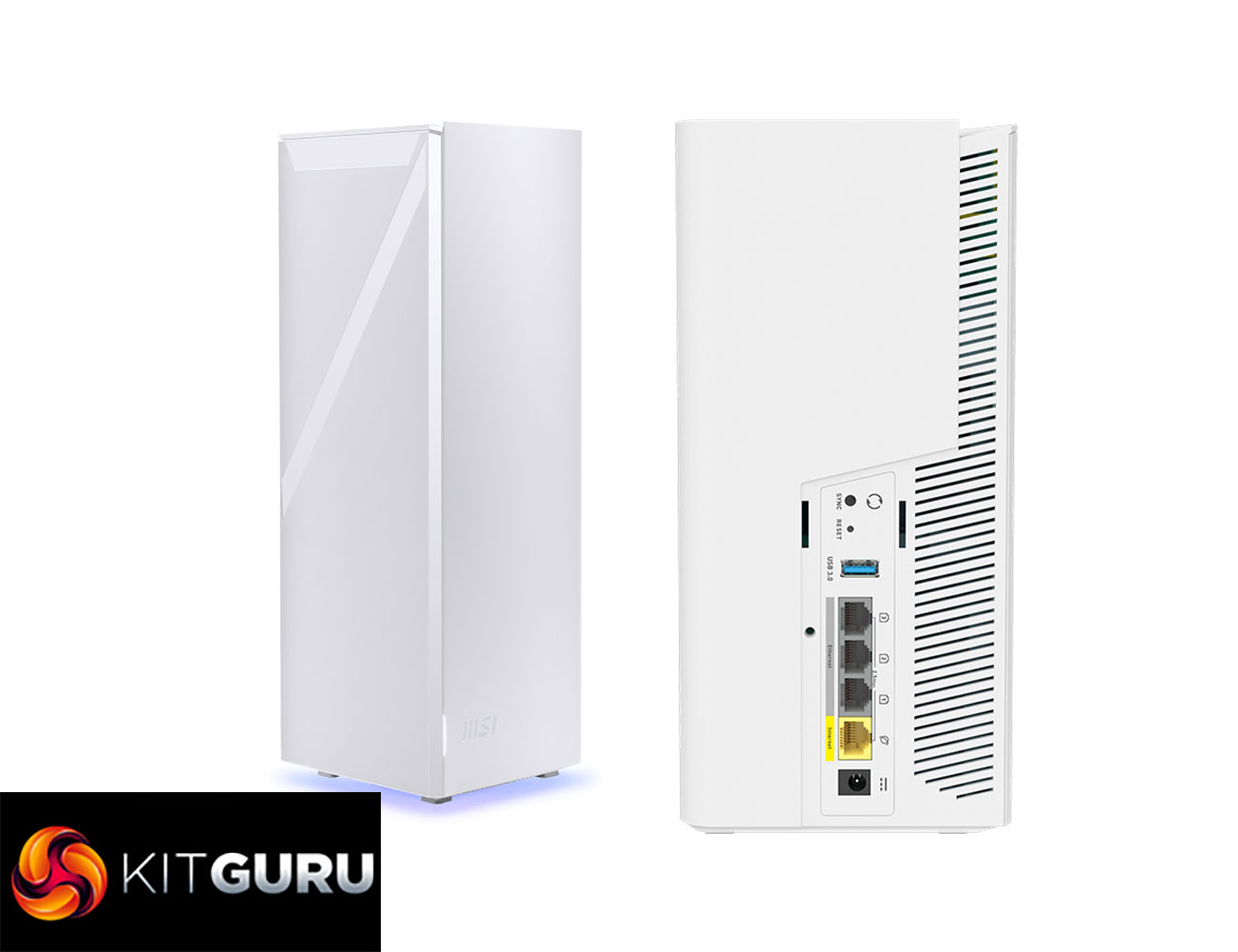
WiFi 7 is finally starting to gain traction, although we're still waiting for more client devices to arrive. If you're looking to upgrade your wireless network, it would now be a false economy not to future-proof yourself with the latest standard. Joining the WiFi 7 fray is MSI with its Roamii BE mesh system. It comes in two forms – Lite and Pro. The former offers just two radio frequencies, while the Pro we tested adds 6GHz, promising monster wireless network bandwidth. We put the Roamii BE Pro through our comprehensive WiFi mesh test suite to find out if the practice matched the theory.

The Roamii BE Pro is a BE11000 system, meaning it combines 5,764Mbits/sec at 6GHz, with 4,323Mbits/sec at 5GHz, and 688Mbits/sec at 2.4GHz, although MSI only promises a maximum combined throughput of 9.4Gbits/sec. The benefit of WiFi 7 (and WiFi 6 BE) is that 6GHz and 5GHz can be combined (with a compatible client) for maximum throughput. The Lite version loses the 6GHz, so offers just BE5000 performance.

You get 6x internal antennae (so two per waveband) with the Roamii BE Pro, plus additional router software and hardware features. The system can allegedly cover a 6,000 square feet area, although of course this will depend on obstructions. That's likely to be more than enough for a three story house, such as the one we use for testing.

The Roamii BE Pro has a solid wired networking specification too, with four 2.5Gbit Ethernet ports, one of which would be used for WAN duties on the router, while remaining available for wired devices on the satellite. There is a USB port on both units too, ready for network storage sharing.

Coming in at under £300, the Roamii BE Pro looks like good value too, giving you mesh WiFi for the price of a midrange standalone router. Read on to find out if the performance and capabilities make this a bit of a bargain.

Price: £279.99

Specification:

  • Wireless protocols: MU-MIMO with 802.11b/g/n/ax/be 2.4GHz, 802.11a/n/ac/ax/be 5GHz/6GHz
  • Performance: AX11000 (5,760 + 4,320 + 688 Mbits/sec)
  • Antenna Configuration: 2×2 internal antennas for 2.4GHz; 2×2 for 5GHz; 2×2 for 6GHz
  • Ports: 4 x 2.5 Gigabit Ethernet WAN, USB 3.0
  • Modem Support: VDSL/ADSL 2+ or cable
The post MSI Roamii BE Pro Mesh WiFi 7 System Review first appeared on KitGuru.

Open Gaming Collective (OGC) formed to unify Linux gaming

30 janvier 2026 à 15:00

A number of major Linux gaming projects are joining forces to form the Open Gaming Collective. The goal here is to reduce duplicated work across several crucial projects and centralise development efforts for critical components like kernel patches, input frameworks and display compositors. 

The OGC's technical strategy (via GamingOnLinux) centres on an “upstream-first approach”. Rather than maintaining permanent forks or bespoke patches, the group intends to submit all improvements and hardware fixes directly to the source projects (such as the mainline Linux kernel or Mesa). Early deliverables include a shared, gaming-optimised OGC Kernel and a specialised fork of gamescope designed to expand hardware support across a wider range of handhelds and desktop GPUs.

Bazzite, one of the founding members, has already outlined immediate changes resulting from joining the collective. The distribution will phase out its custom Handheld Daemon (HHD) in favour of InputPlumber, a unified input remapper already utilised by SteamOS, ChimeraOS, and Nobara. Additionally, Bazzite will integrate features like RGB and fan control directly into the Steam UI where possible, further bridging the gap between custom Linux distros and the native Steam Deck experience.

Besides Bazzite, other companies and partners include Nobara, ChimeraOS, Playtron, Fyra Labs, PikaOS, ShadowBlip, and Asus Linux.

KitGuru says: The formation of the OGC is an important step for the Linux gaming community. Standardising the kernel and input layers could finally bring the “it just works” stability of SteamOS to the broader Linux desktop world.

The post Open Gaming Collective (OGC) formed to unify Linux gaming first appeared on KitGuru.

Fanatec and Elgato introduces official Stream Deck plugin for racing sims

30 janvier 2026 à 14:00

Fanatec has officially released its first-party Stream Deck plugin. Available for free on the Elgato Marketplace, the plugin transforms the Stream Deck into a real-time telemetry display and hardware tuning hub for racing sims.

This collaboration marks one of the first major synergy projects since Fanatec's integration into the Corsair family, leveraging Elgato's software expertise to enhance the racing experience. The plugin supports the entire Stream Deck lineup, with optimised, pre-configured profiles specifically for the Stream Deck XL and the dial-equipped Stream Deck +.

For the first time, racers can use the Stream Deck as a digital “dashboard” to monitor critical race data, including tyre temperatures, fuel levels, track position, and flag warnings. Beyond telemetry, the most powerful feature is direct access to the Fanatec Tuning Menu, which lets drivers use Stream Deck buttons or dials to adjust force feedback strength, brake sensitivity, and other hardware parameters on the fly.

KitGuru says: Are you interested in sim racing setups? If you had or have one, would something like Elgato's Stream Deck with this new plugin be something you would consider adding?

The post Fanatec and Elgato introduces official Stream Deck plugin for racing sims first appeared on KitGuru.

Gearbox shares updated 2026 roadmap for Borderlands 4

30 janvier 2026 à 13:00

Borderlands 4 is in a bit of an awkward spot currently. While the game is in many ways the best the series has seen, a relative lack of end-game content for hardcore fans and a plethora of performance issues especially at launch led to softer-than-expected sales. That said, the team at Gearbox appear committed to improving Borderlands 4, with the team now offering an updated roadmap for 2026.

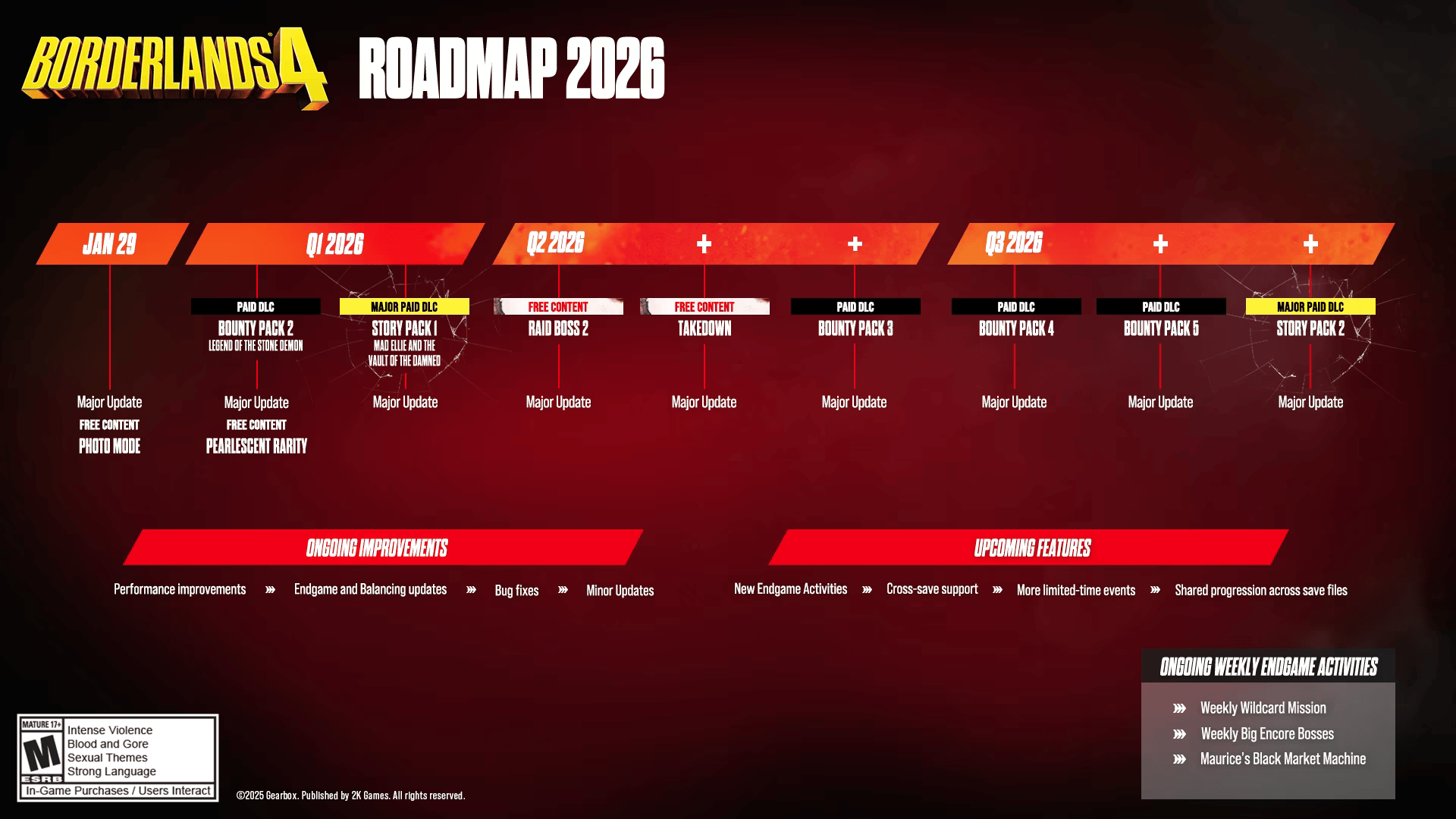
Taking to their blog, the team at Gearbox officially showcased their full 2026 roadmap. While we knew some of what to expect from Borderlands 4’s post-launch plans (even prior to the game’s release), we’ve now gotten a more comprehensive look.

The first major update for 2026 is now live and includes the addition of a photo mode alongside dozens of tweaks, buffs, changes and fixes.

Looking to the future however, Borderlands 4’s 2026 is set to be as follows:

  • Q1 2026
    • Bounty Pack 2 (paid)
    • Pearlescent rarity (free)
    • Story Pack 1 (paid)
  • Q2 2026
    • Raid Boss 2 (free)
    • Takedown (free)
    • Bounty Pack 3 (paid)
  • Q3 2026
    • Bounty Pack 4 (paid)
    • Bounty Pack 5 (paid)
    • Story Pack 2 (paid)

Borderlands 4 Roadmap

Each of these new pieces of content (both free and paid) will be released alongside a ‘major’ update. Other ancillary additions with no specific timeline include:

  • Performance improvements
  • Endgame and balancing updates
  • New Endgame activities
  • Cross-save and shared-progression
  • Limited-time events

While the game certainly came in a bit hot, Borderlands 4 is a fun time and so it is encouraging to see the team at Gearbox try to address as many fans' complaints as possible – while still sticking to their initial plans.

KitGuru says: What do you think of this updated roadmap? What’s your opinion on Borderlands 4 in its current state? Does it have the potential to be the best entry in the series? Let us know your thoughts down below.

The post Gearbox shares updated 2026 roadmap for Borderlands 4 first appeared on KitGuru.

World War Z x The Walking Dead available now

30 janvier 2026 à 12:00

World War Z is a fun 3rd-person co-op shooter in the vein of Left4Dead and other horde shooters. Released back in 2019, the team at Saber Interactive have blessed the title with a ton of post-launch support – much of which was free. 4 months on from its last major update, the game has now gotten its first big crossover DLC, with World War Z x The Walking Dead available now.

Purchasable right now for the relatively low price of £7.99, World War Z x The Walking Dead offers a ton of content for fans of both Saber Interactive’s shooter as well as watchers of the show, adding:

  • New Story Campaign with 3 chapters
    • The Prison
    • Alexandria Safe Zone
    • Grady Memorial Hospital
  • 4 playable survivors
    • Rick Grimes
    • Daryl Dixon
    • Michonne
    • Negan

  • Two melee weapons
    • Michonne’s Katana
    • Negan’s Bat Lucille
  • Two weapon skins
    • Rick’s Revolver
    • Daryl’s Crossbow
  • Visual overhaul of enemies to look like TWD’s ‘walkers’
  • New special enemy ‘spiked walker’

While there have been a bunch of different games based on The Walking Dead, very few have been received well. As such, for many this represents what might be one of the better Walking Dead experiences out there – despite only being a crossover.

KitGuru says: What do you think of this latest DLC? Are you a fan of The Walking Dead? What other zombie properties would you like to see World War Z collab with? Let us know down below.

The post World War Z x The Walking Dead available now first appeared on KitGuru.

Solid Snake to join Rainbow Six: Siege as a brand new operator

30 janvier 2026 à 11:15

Rainbow Six: Siege is arguably one of Ubisoft’s biggest games of all time, with the now decade-old title continuing to make money in-part through its plethora of cross-overs. Following on from the likes of Chun-Li; Master Chief; 2B and even Pickle Rick, Solid Snake himself is set to join the Rainbow Six Siege roster.

Teasing their upcoming Year 11 Roadmap reveal event (going live on the 15th of February) Ubisoft offered a slight hint at what players can expect in the way of announcements.

Though very little was given away, we do know that the iconic Solid Snake himself is set to crossover into Rainbow Six: Siege.

Unlike all other crossovers, Snake is set to be a full-on operator as opposed to simply being a skin for a pre-existing character – meaning he should have his own unique abilities, equipment and more.

Unfortunately, we did not get to hear Snake speak in the teaser, and so it is unknown whether the operator will feature brand new voice lines (and who will voice him) or if they will simply reuse old audio. We will have to wait until the 15th of February to find out.

KitGuru says: Are you surprised to see Snake coming to Siege? Will he be voiced by David Hayter? Who’s your favourite operator? Let us know down below.

The post Solid Snake to join Rainbow Six: Siege as a brand new operator first appeared on KitGuru.

New Nioh 3 demo available now on PS5 and PC

30 janvier 2026 à 10:30

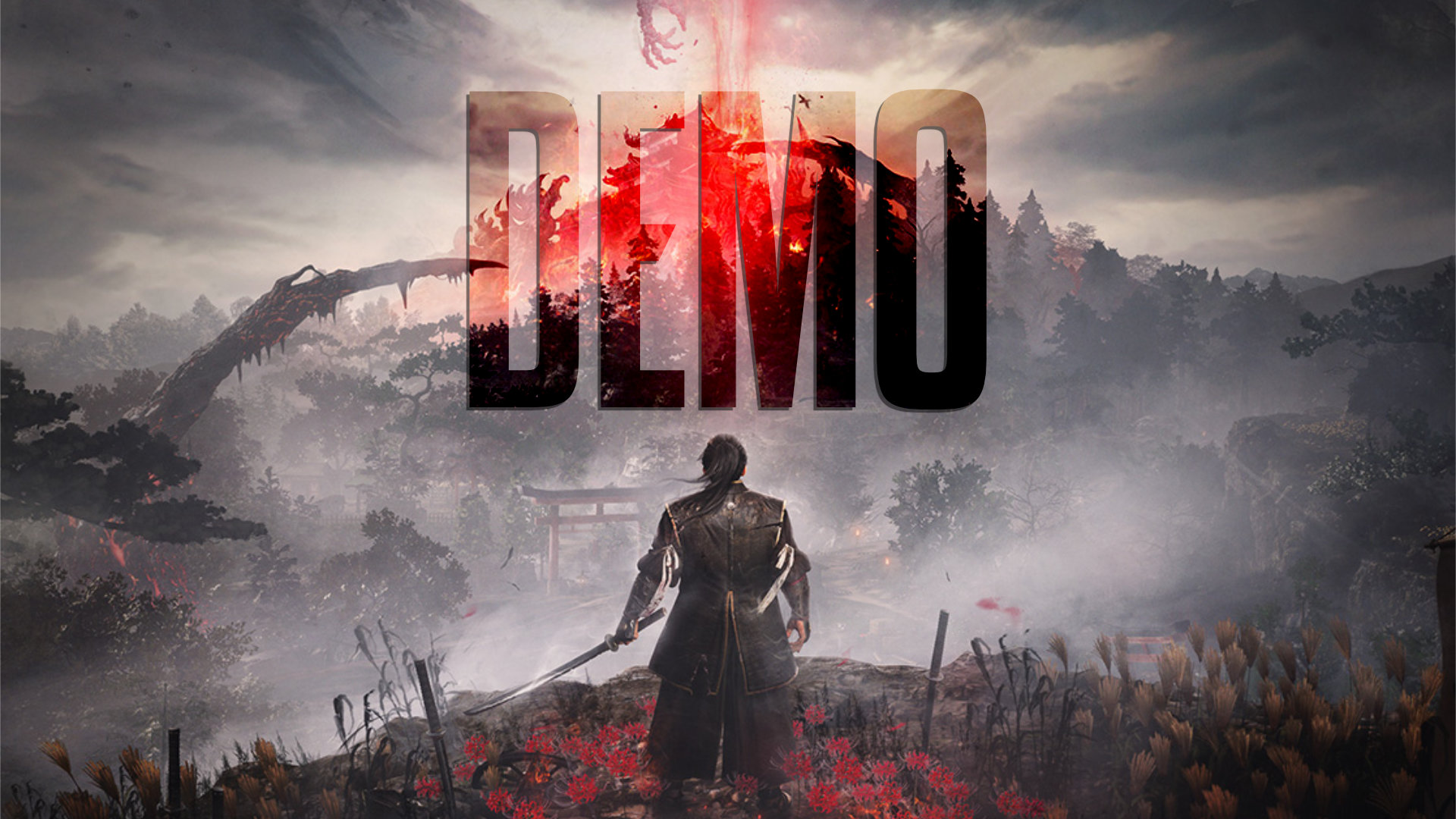
Team Ninja have been great in supporting their upcoming releases with free demos for all to check out and enjoy. Such has been the case with the Nioh series, offering various alpha, beta and timed-limited demos across its previous two entries. Following the initial Nioh 3 demo from last year, the studio has now released a more complete demo ahead of the game’s February release date.

With Nioh 3 just a week away from launch, Team Ninja have now published a brand new demo for the game, letting you try out the title for yourself ahead of its 6th of February release date.

Unlike the limited-time demo released back in June following its initial unveiling, this new demo is available on both PS5 and PC, and will allow you to transfer your save data over to the full game upon its release.

Nioh 3 Team Ninja

As expected, the demo features the opening section of the game and so switching over to the full release should be relatively painless. Those who do complete the demo prior to the 15th of February will also receive a bonus in-game item as a small reward.

While no end date has been given for this demo, Team Ninja have delisted various demos in the past, and so you might want to check Nioh 3 out for free while you can – even if you don’t plan on buying the title immediately.

KitGuru says: Are you looking forward to Nioh 3? What’s your favourite modern Team Ninja game? Let us know your thoughts down below.

The post New Nioh 3 demo available now on PS5 and PC first appeared on KitGuru.

AOC AG276QSG2 Review (1440p/360Hz G-Sync Pulsar)

30 janvier 2026 à 10:09

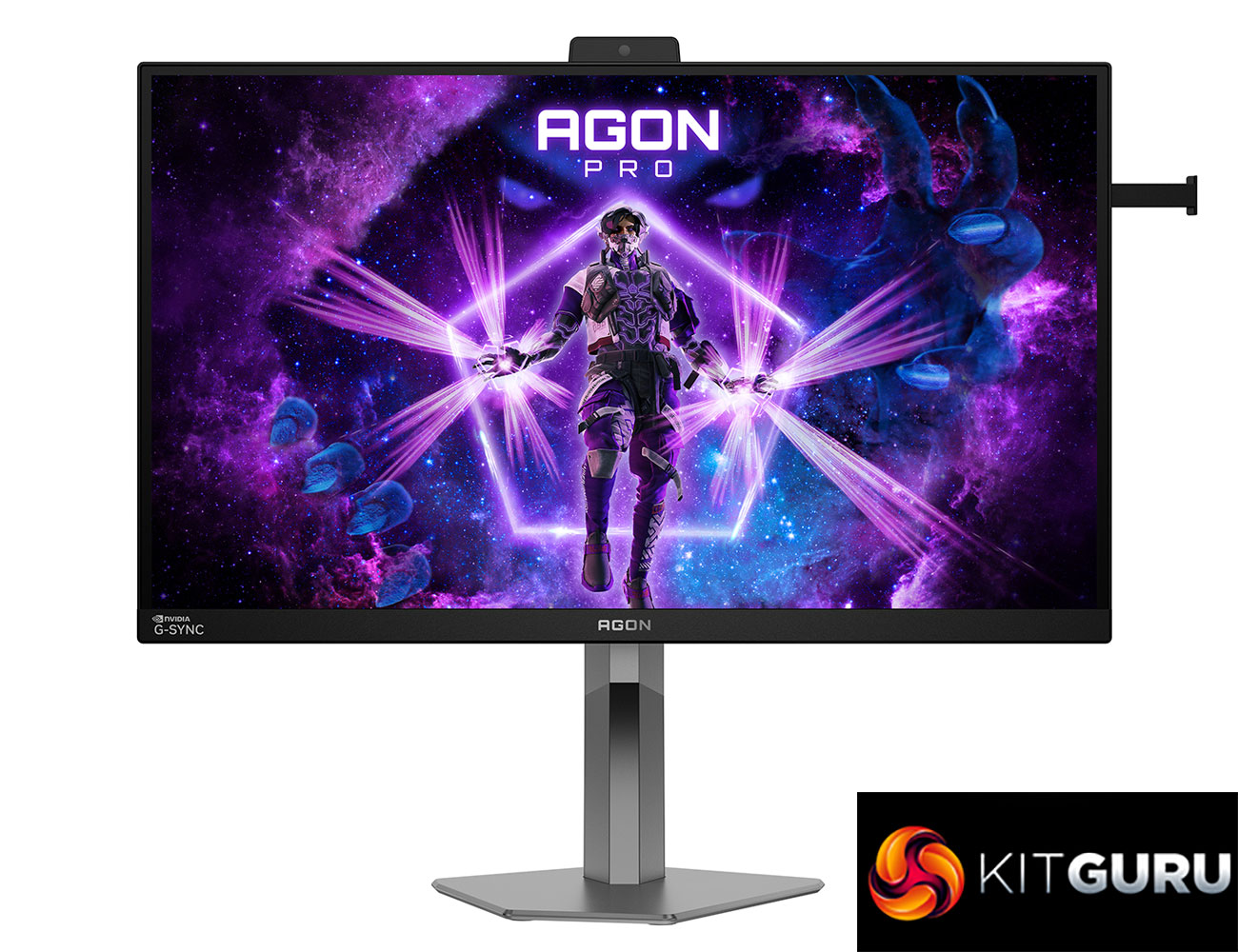
Today we're checking out the AOC Agon Pro AG276QSG2. The model number may not make it immediately obvious, but this is a rather exciting monitor for one main reason – it supports Nvidia's new G-Sync Pulsar backlight strobing technology that was officially launched at CES 2026. It's built around a 27in 1440p IPS panel with a 360Hz refresh rate, so that alone sounds pretty competitive – but what does Pulsar bring to the table? We find out today.

Timestamps:

00:00 Intro
00:57 Pricing and other Pulsar models
01:31 But what is G-Sync Pulsar?
03:43 Pulsar motion clarity examples
06:00 Overdrive and response times
07:28 Panel testing
10:30 Real-world gaming experience
12:17 Monitor design
13:36 Closing thoughts

First things first – pricing. The AOC AG276QSG2 is listed for pre-order on both Scan and OCUK for just under £560, making it the cheapest of the two other G-Sync Pulsar monitors that are currently listed here in the UK, given Acer's model is £600, and the ASUS is £629. Given all Pulsar monitors use the same panel, and considering Pulsar behaviour itself is tuned by Nvidia, performance between all three is likely to be near-identical, so the lower price alone could swing a lot of buyers towards this AOC model.

G-Sync Pulsar

But we're getting ahead of ourselves, so let's take a step back and first answer the question – what exactly is G-Sync Pulsar?

We don't need to go into too much depth here, as it was announced back at CES 2024, we got hands-on in April that year, and more recently Nvidia published an in-depth blog explaining exactly how the technology works.

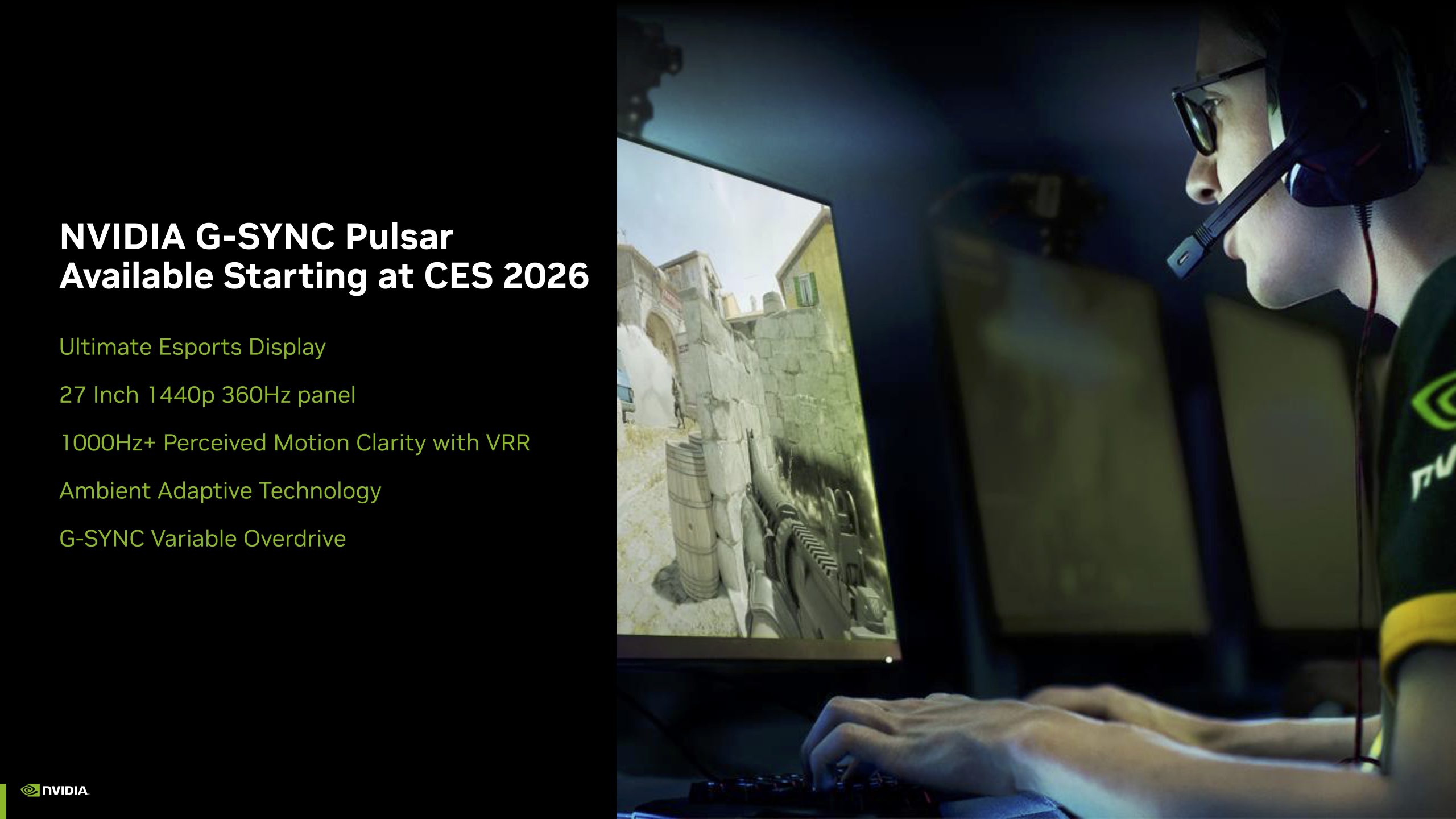
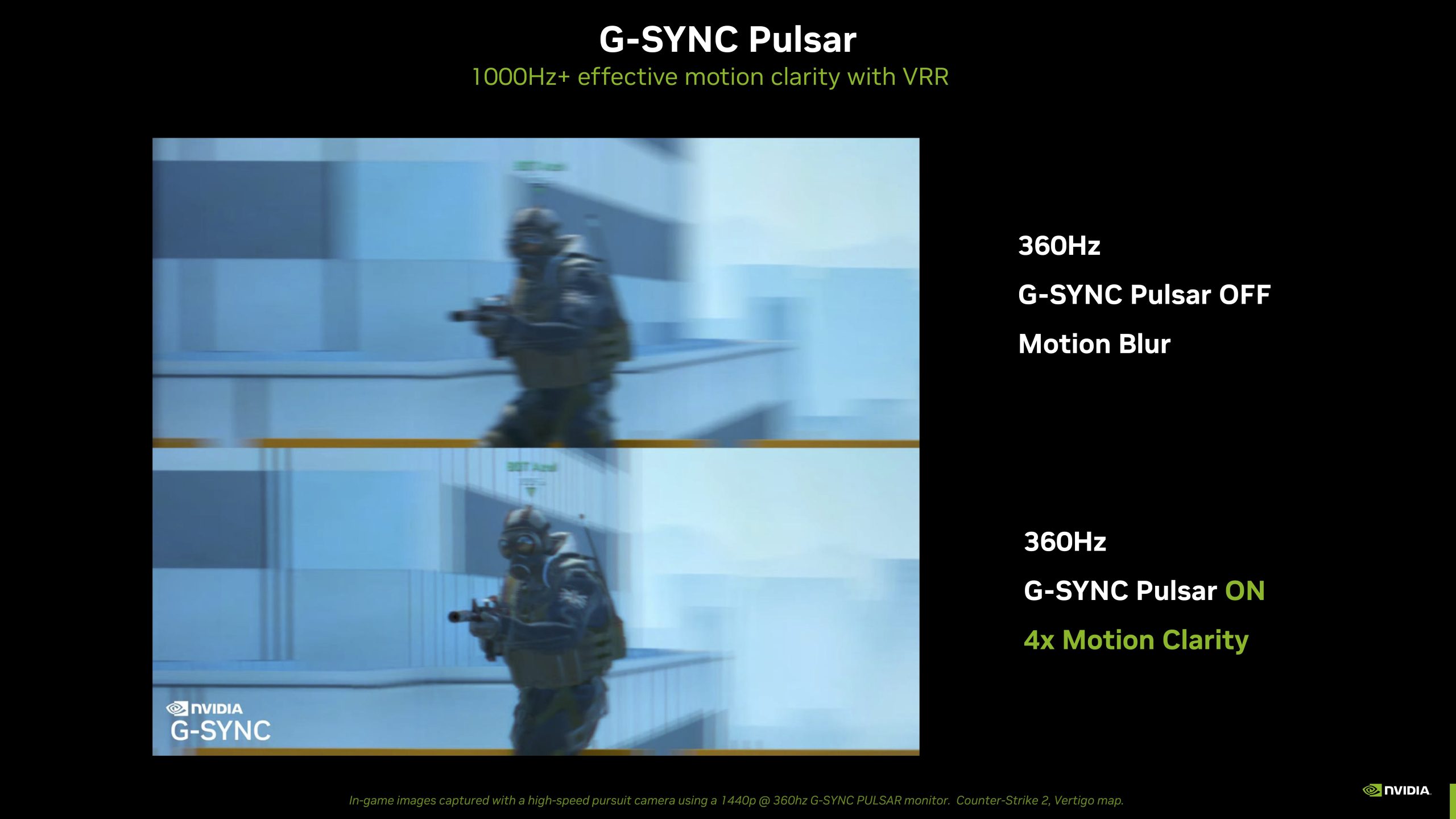
In a nutshell, Pulsar is the combination of high-tech backlight strobing and G-Sync variable refresh rate technology. While some monitors have married adaptive sync and backlight strobing together in the past, Pulsar is a much more advanced system that is designed to dramatically improve perceived motion clarity throughout the VRR window.

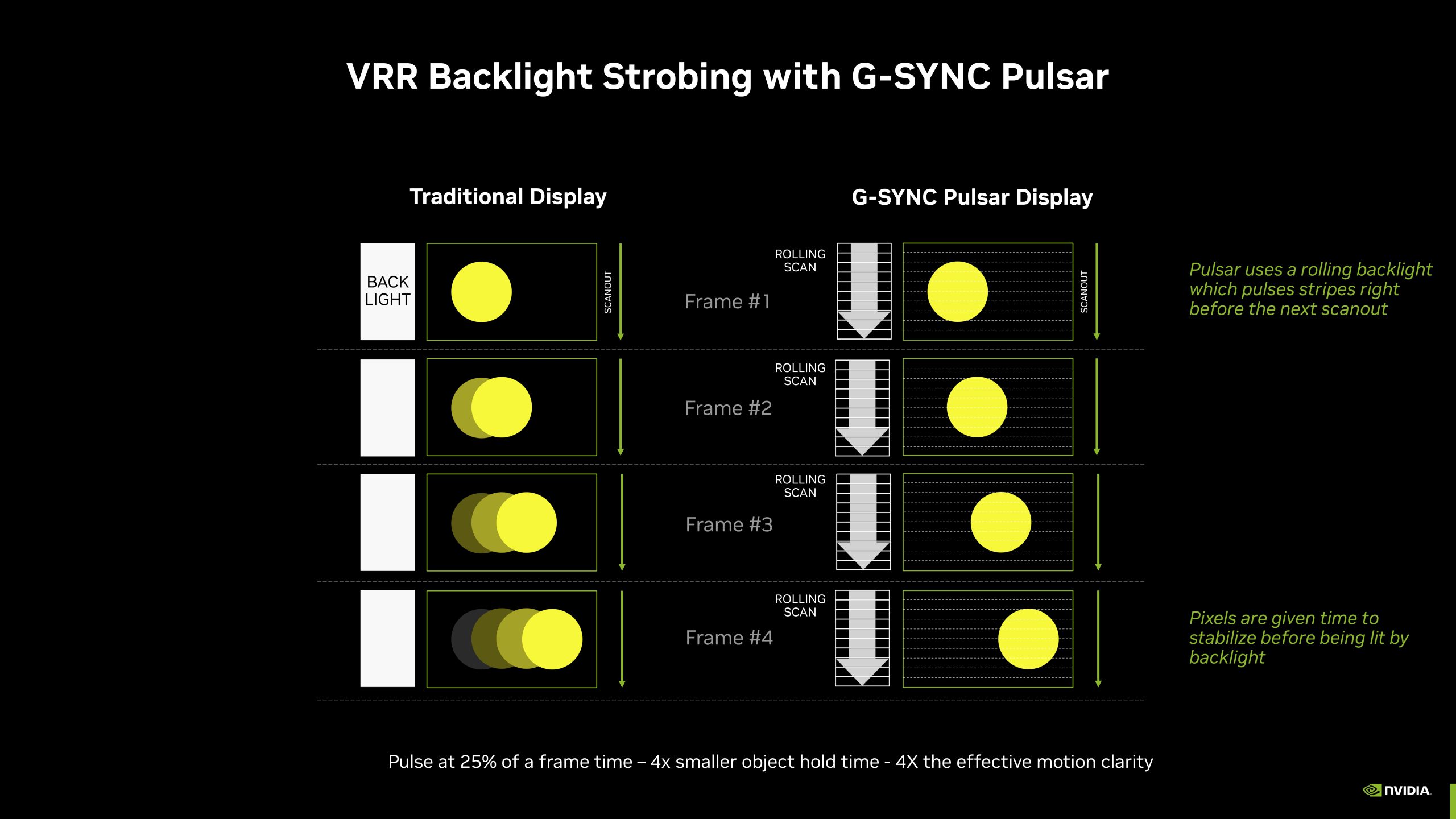
At its most basic level, backlight strobing works by reducing the amount of time each frame is visible. With Pulsar, Nvidia says that the backlight is only pulsed for 25% of the frame time, meaning each image is only briefly illuminated once the pixels have fully settled. In theory, that 1/4 frame visibility translates into 4x lower persistence, and this is how the company claims ‘1000Hz+ effective motion clarity'.

The G-Sync integration is the added secret sauce. More basic backlight strobing implementations typically run at fixed refresh rates and fire the backlight at a fixed point in the refresh cycle, regardless of how long the GPU took to deliver the frame or how well the panel transitions have completed. That leads to the usual strobing artifacts we're used to seeing, like crosstalk, double images, and inconsistent clarity especially at lower refresh rates. Pulsar, however, is driven directly by the MediaTek scaler which now has G-Sync built in, so the display knows exactly when a frame starts, when pixel response has stabilised, and when to flash the backlight.

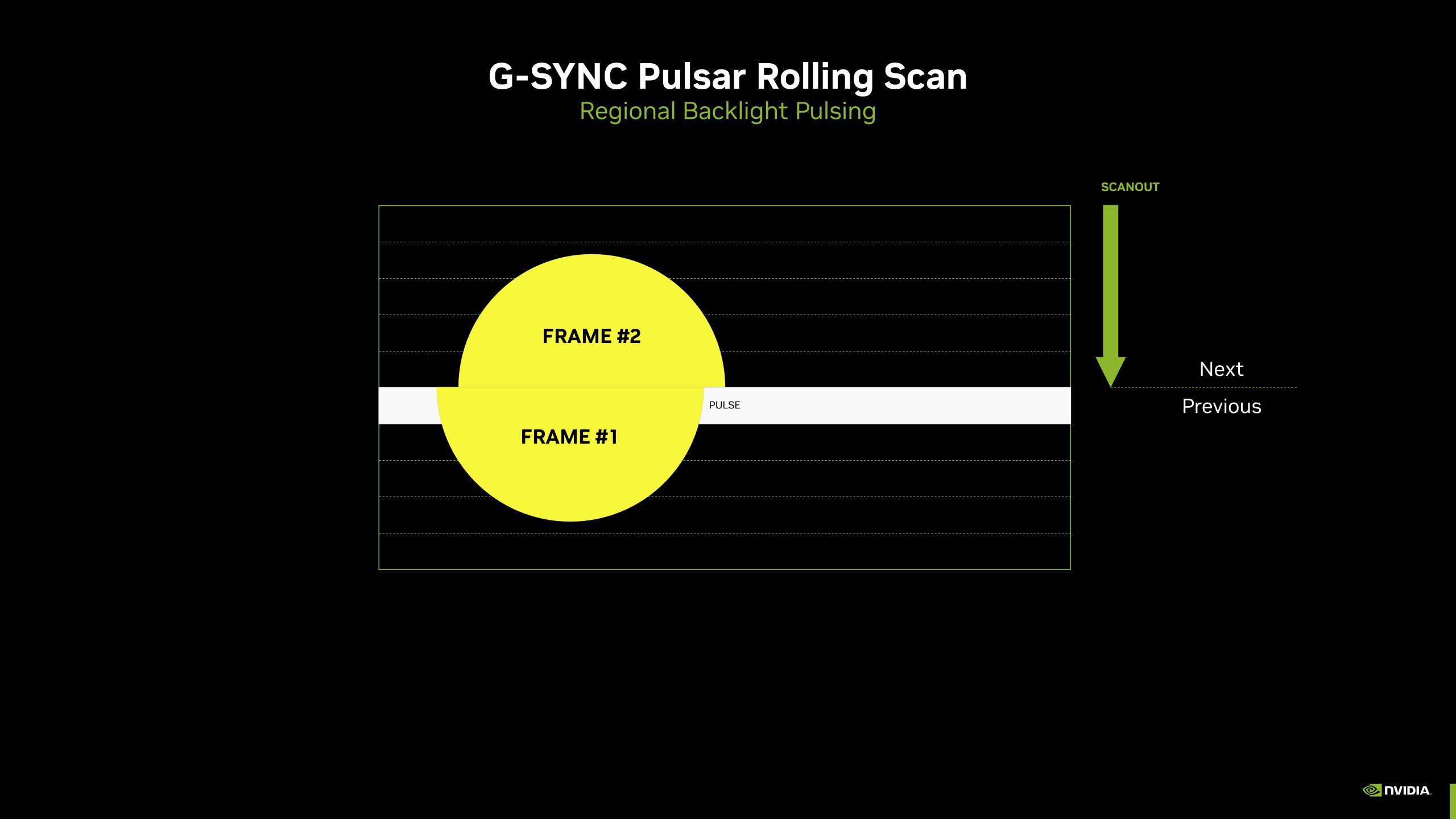
On top of that, Pulsar incorporates what Nvidia calls a ‘rolling scan'. By utilising multiple horizontal backlight strips that can be pulsed independently, Pulsar strobes different sections of the panel sequentially, rather than the whole panel being strobed at once. This should lead to dramatically reduced crosstalk and consistent clarity from top to bottom, something that isn't true for previous backlight strobing implementations.

Specification:

  • Screen size (inch): 27
  • Screen size (cm): 68.58
  • Flat / Curved: Flat
  • Panel treatment: Antiglare (AG)
  • Pixel pitch: 0.2328 mm
  • Pixels per inch: 108.79
  • Panel resolution: 2560 x 1440
  • Resolution name: QHD
  • Aspect ratio: 16:9
  • Panel type: Fast IPS
  • Backlight type: WLED
  • Max refresh rate: 360 Hz
  • Response time (GtG): 1 ms
  • Response time (MPRT): 0.3 ms
  • Static contrast ratio: 1000:1
  • Viewing angle (CR10): 178 / 178
  • Display colours: 16.7 Million
  • Brightness in nits: 450 cd/m²
  • Bezel type (front): 3-sided frameless
  • Bezel colour (front): Black
  • Bezel finishing (front): Texture
  • Cabinet colour (backside): Grey, Black
  • Cabinet finishing (backside): Texture
  • Removable stand:
  • Speaker power: 2 W x 2
  • Kensington lock:
  • VESA mount support: With VESA bracket accessory
  • Tilt: -3.5° ~ 18.5°
  • Height adjust: 130 mm
  • Swivel: -18.5° ~ 18.5°
  • Pivot: -90° ~ 90°
  • HDMI: 2x HDMI 2.1 (TMDS)
  • Digital HDCP (HDMI): HDCP 2.2
  • DisplayPort: DisplayPort 1.4 x 1
  • USB hub:
  • USB generation: USB 3.2 (Gen 1), 5 Gbit/s
  • USB type downstream: 3 x USB-A
  • USB type upstream: 1 x USB-B
  • Audio output: 1x Audio out
  • Warranty period: 3 years
The post AOC AG276QSG2 Review (1440p/360Hz G-Sync Pulsar) first appeared on KitGuru.
❌