↩ Accueil

Vue normale

January’s Humble Choice line-up includes Sonic Frontiers; Hunt Showdown and more

7 janvier 2026 à 16:00

2026 is officially here, and seeing as how it’s a new month, Humble has another set of games available to claim right now as part of its Humble Choice subscription service. Kicking off the year with a strong selection of titles, January’s line-up includes Sonic Frontiers; Hunt Showdown; the Tomb Raider Classic collection and more.

Available to add to your library from now, January 2026’s Humble Choice line-up is as follows:

  • Sonic Frontiers
  • Tomb Raider IV-VI Remastered
  • Hunt Showdown 1896
  • Etrian Odyssey II HD
  • Nice Day for Fishing
  • Metal Slug Tactics
  • Settlement Survival
  • Wizard of Legend 2

All in all this marks a pretty good month for Choice subscribers, with Sonic Frontiers offering a fun open zone to dash around and complete various platforming puzzles – all the while offering a set of more traditional boost-era stages as well.

Tomb Raider IV-VI Remaster is, as it says, a remaster of Lara Croft’s earlier outings. Released a little under a year ago, this package offers options for both classic and enhanced visuals thanks to the efforts of remaster specialists Aspyr.

Wizard of Legend 2 meanwhile is a fun single-player or co-op rogue-like offering a mix of dungeon crawling, fun and fast gameplay as well as a wide variety of upgrades. Though somewhat of a downgrade in art style compared to the first entry, Wizard of Legend 2 is still definitely worth checking out.

As always, a portion of your subscription will go towards charity, with this month supporting Gamers Outreach: “A nonprofit organization that exists to empower hospitalized families through video games.”

KitGuru says: What do you think of January’s offerings? Is this a solid start to 2026? Let us know your thoughts down below.

The post January’s Humble Choice line-up includes Sonic Frontiers; Hunt Showdown and more first appeared on KitGuru.

CES 2026: Sudokoo launches full line-up of CPU coolers

7 janvier 2026 à 15:21

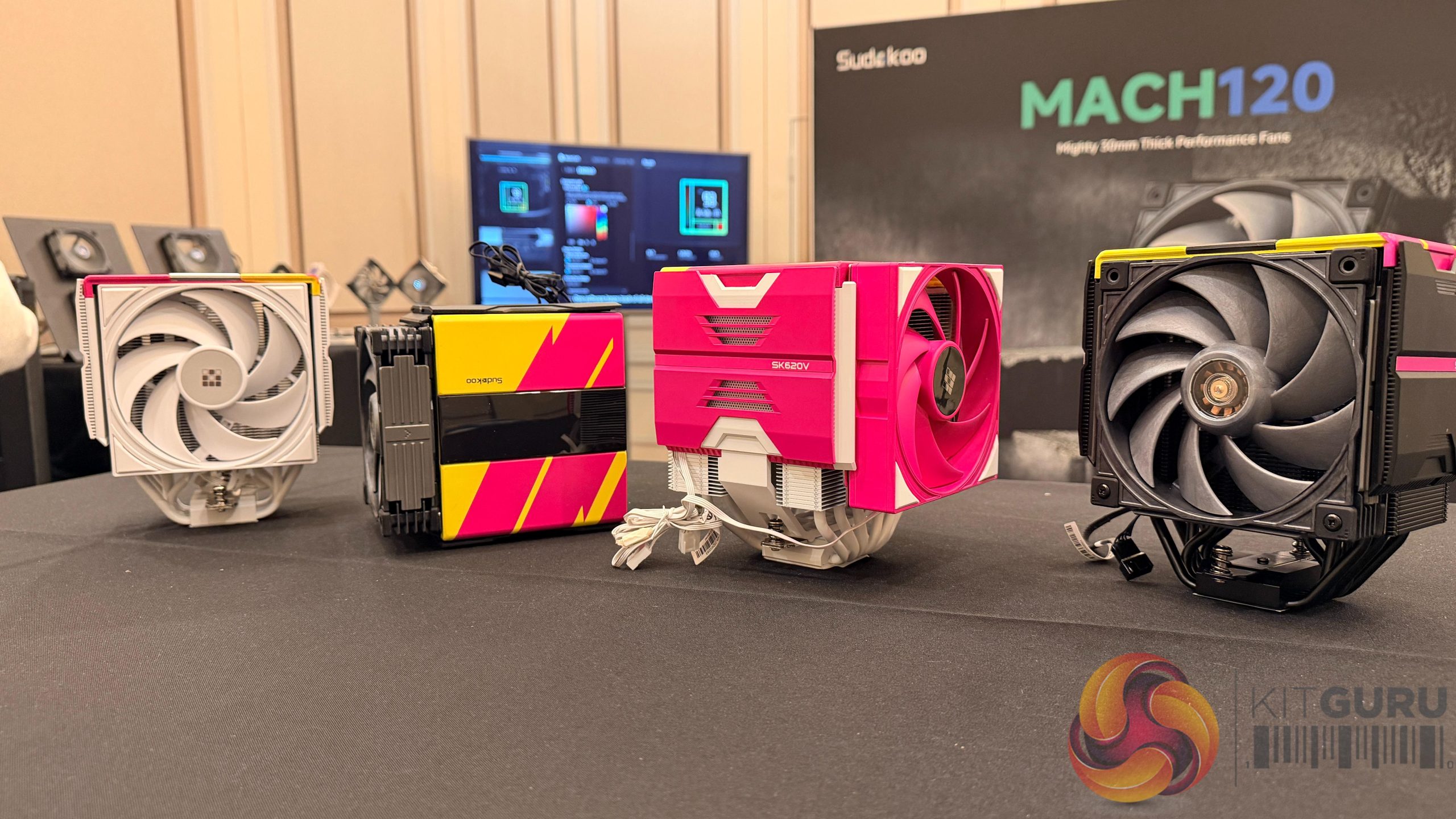
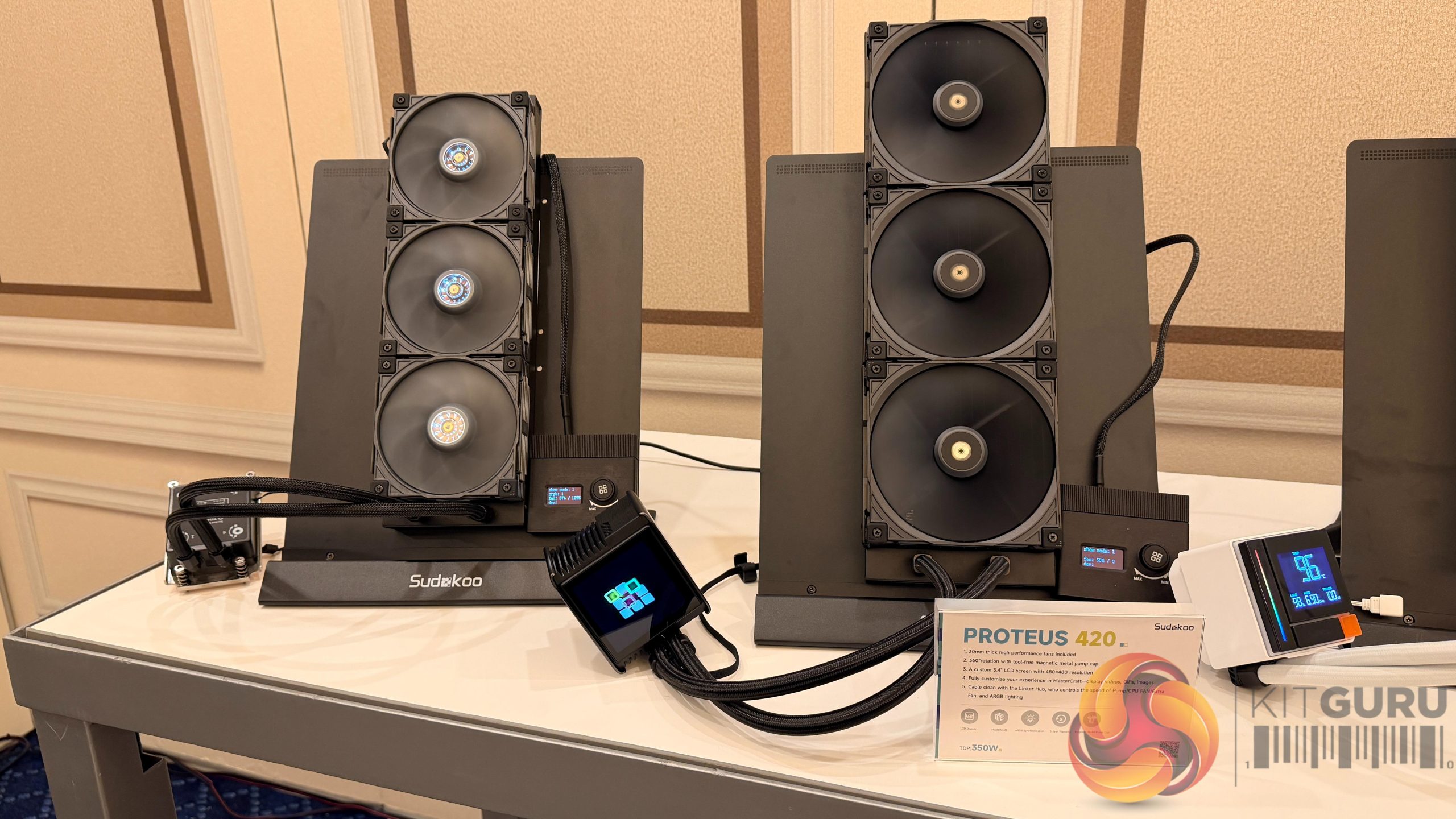
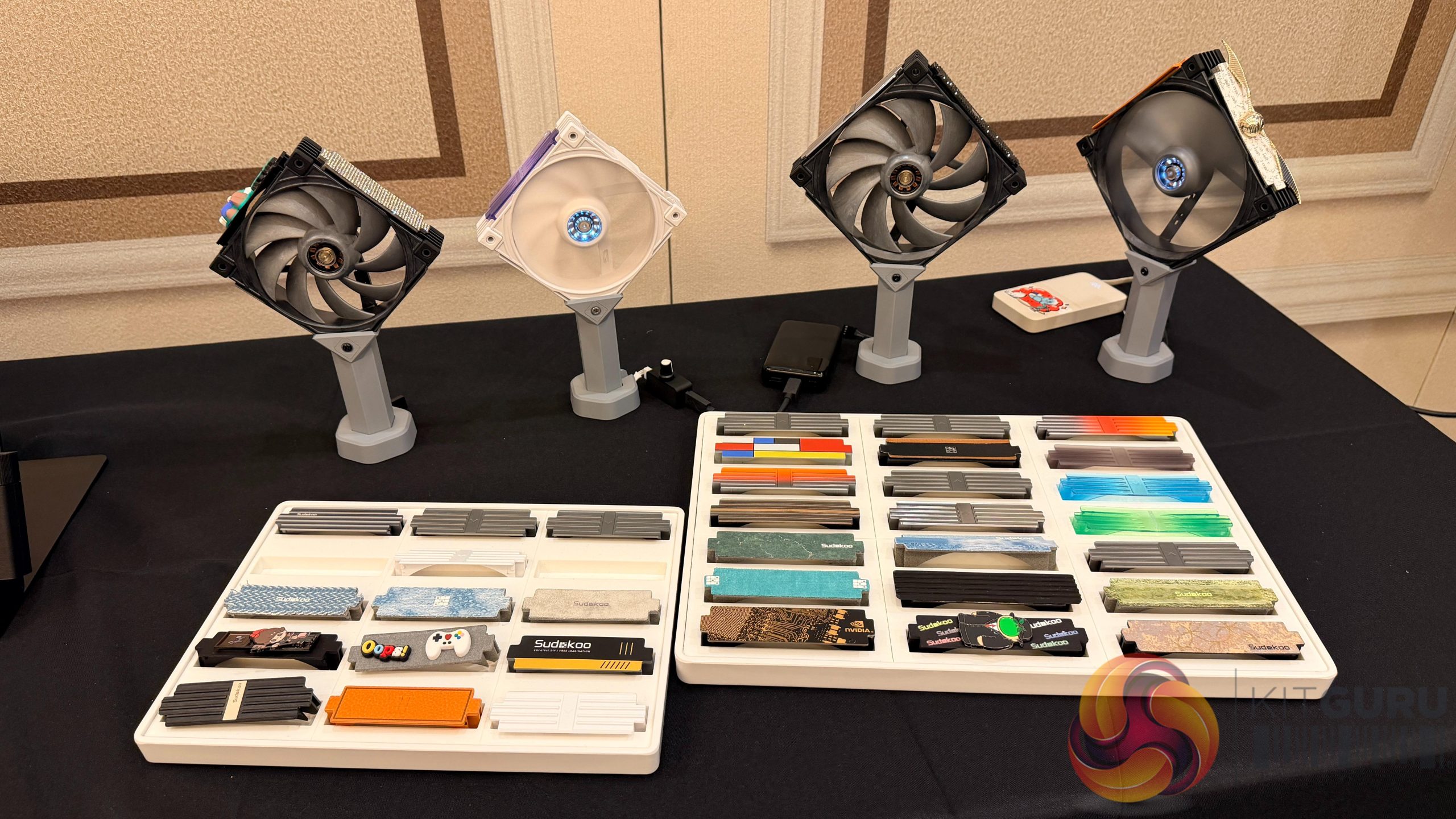
Sudokoo is making its first CES appearance this year, bringing along a host of new CPU coolers, covering both air and AIO units. We stopped by their booth to get a first-hand look at the new range.

Watch via YouTube below:

Timestamps:
00:00 SK700V Mach
00:55 SK600VC
01:18 ST720
01:45 Aetherflex 360
02:16 Energlo 360
03:06 Proteus 420
03:35 Workstation Liquid Cooler
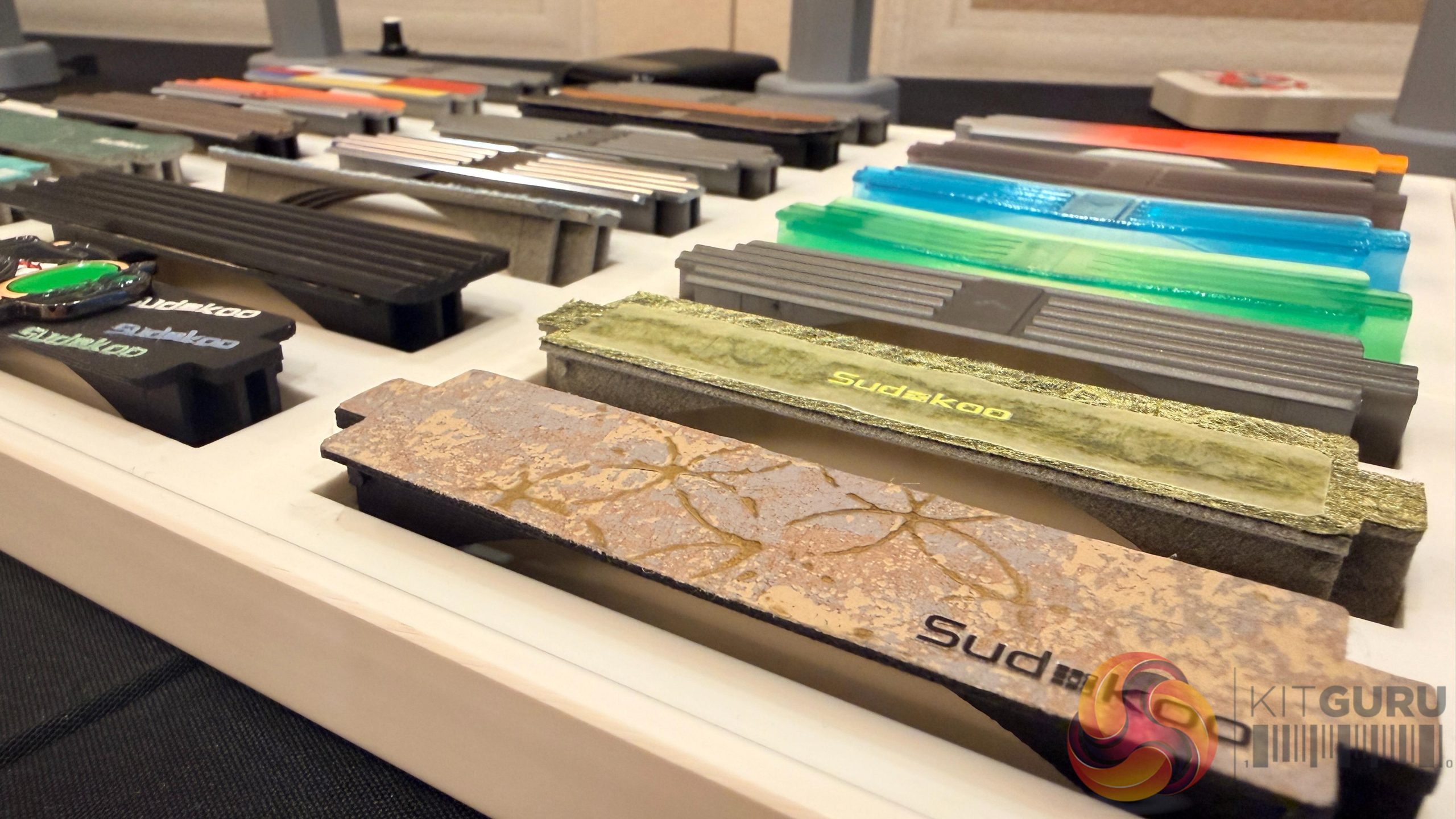
03:51 Fans and Custom options
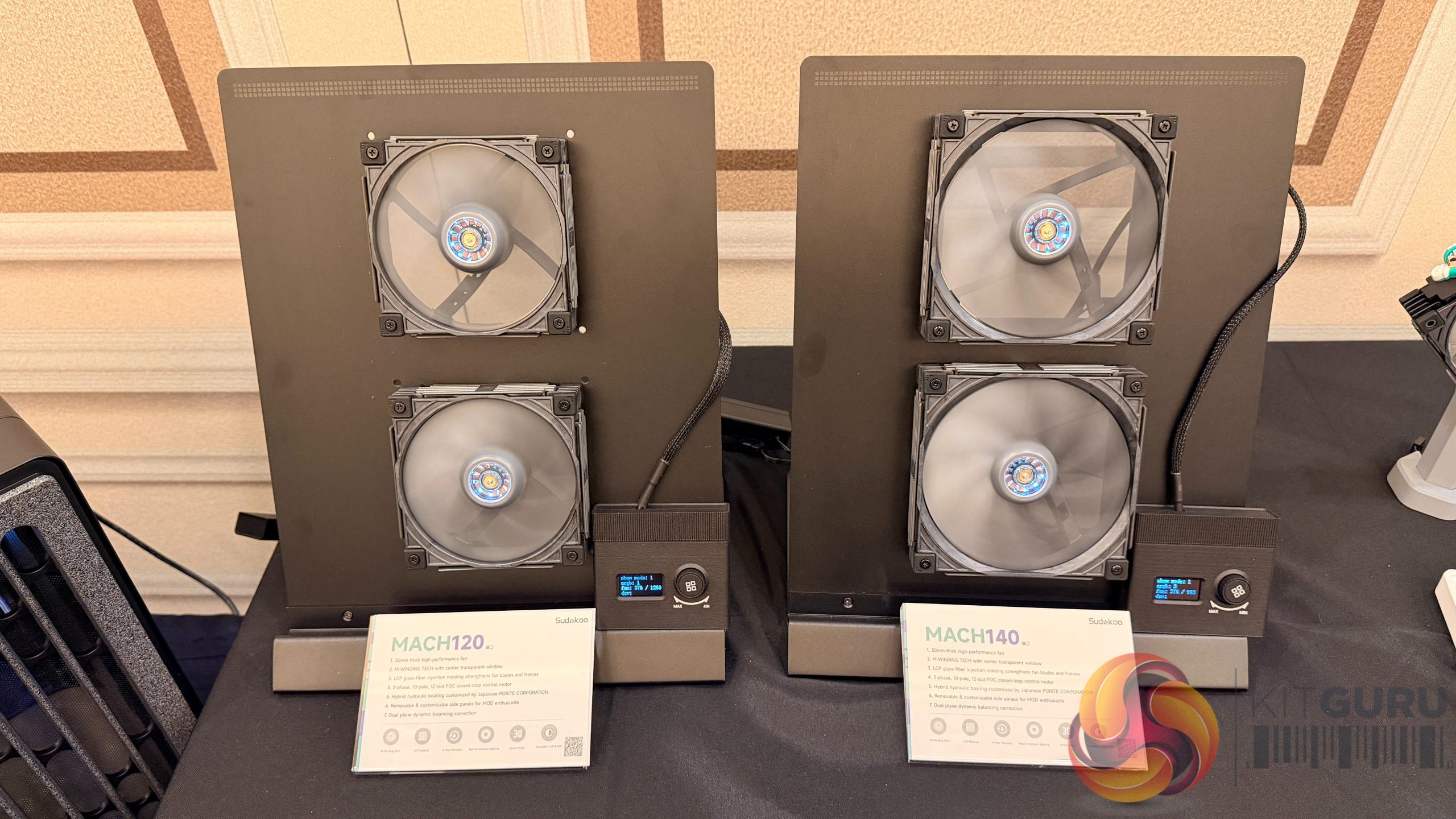
04:35 Mach 120 and Mach 140 Fans
04:50 Proteus 360 Display
04:58 Modded Aircoolers – coming soon
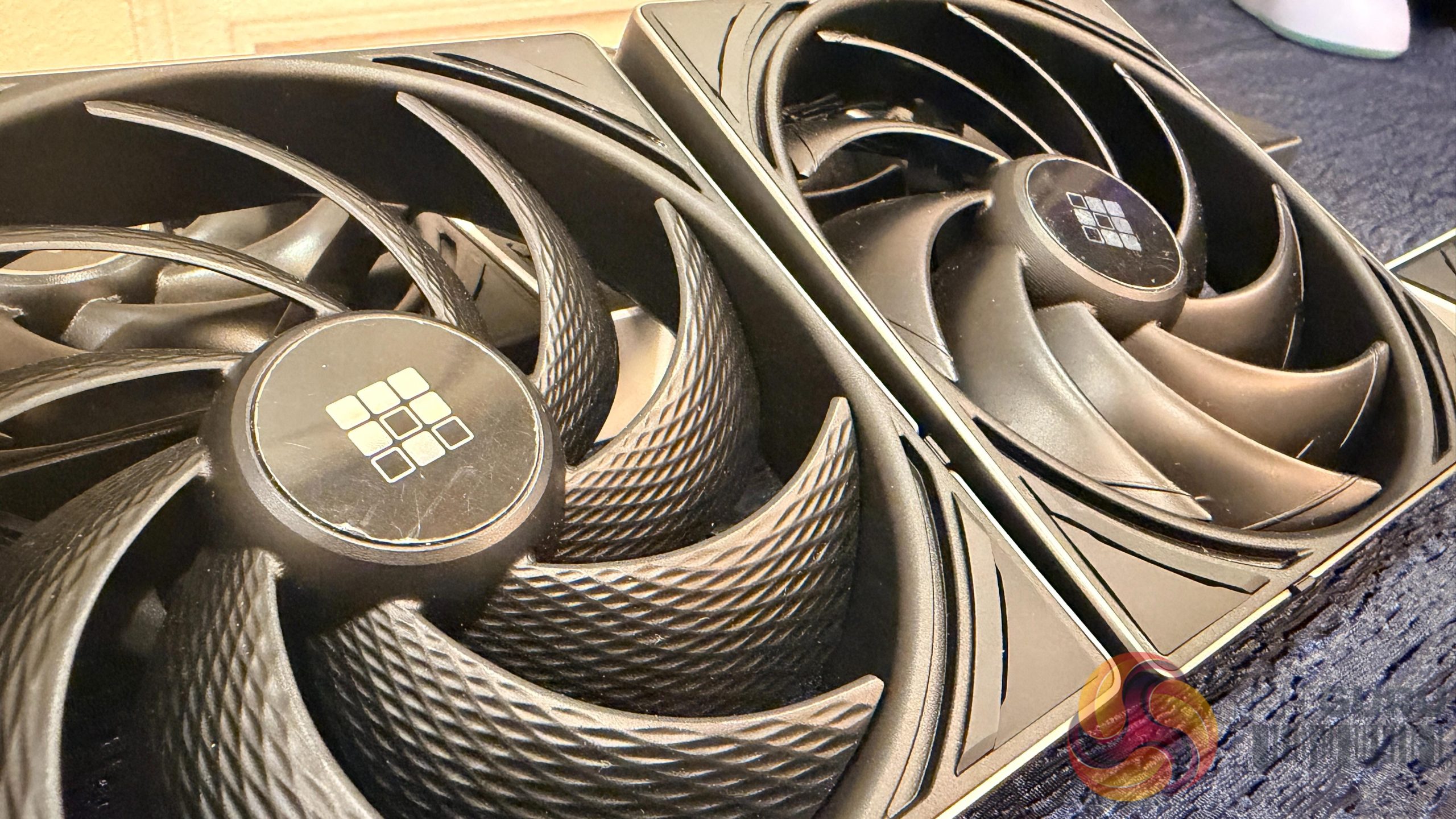
05:27 Cross section of fans
05:41 Magnetic Astra Fans

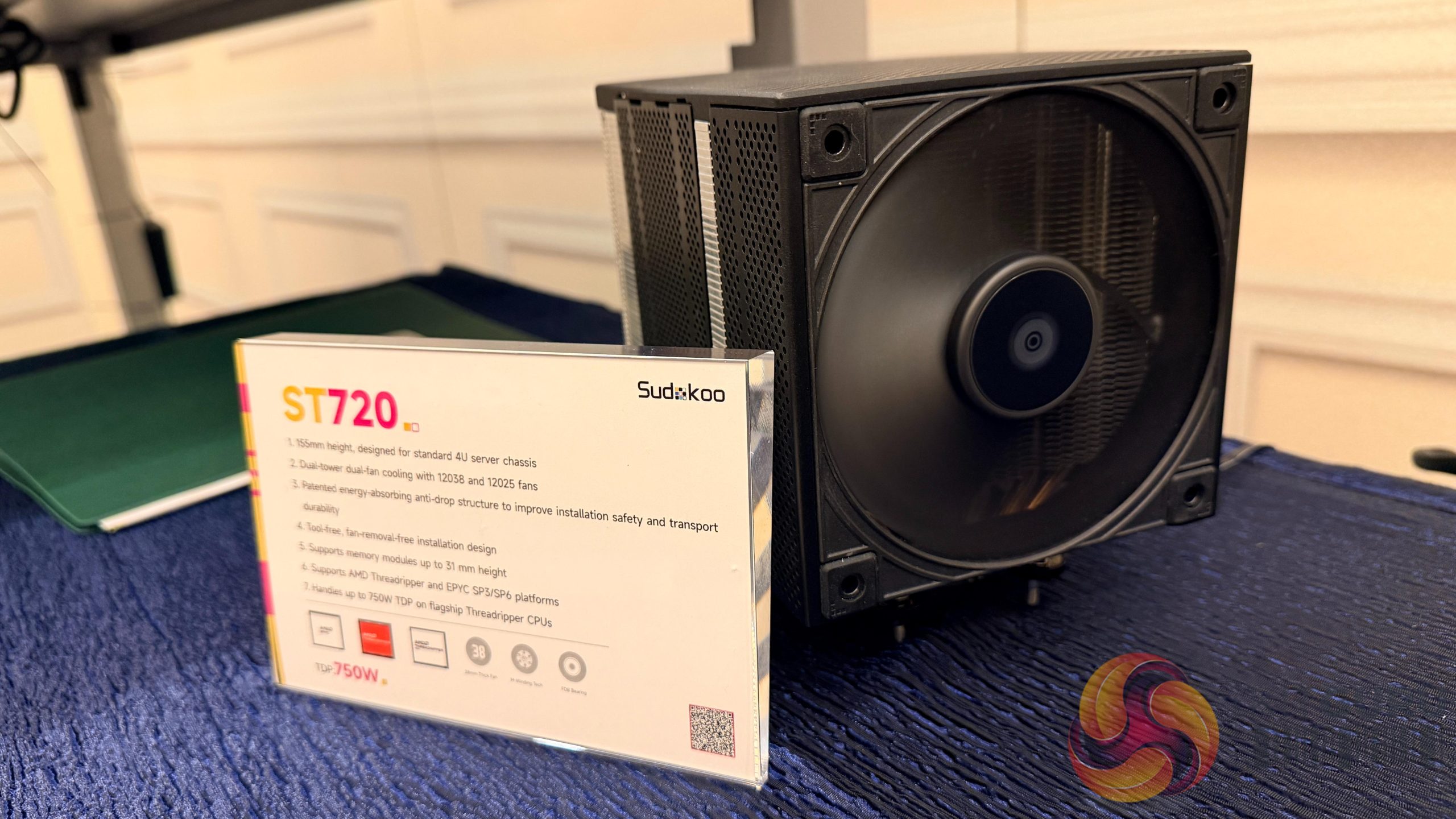
The flagship ST720 is positioned for workstation and server environments where thermal stability and compact dimensions are critical. The cooler supports up to 750W TDP on AMD’s top-end Threadripper processors and is fully compatible with Threadripper and EPYC SP3/SP6 platforms. With a 155mm height, it is sized for standard 4U chassis deployments.

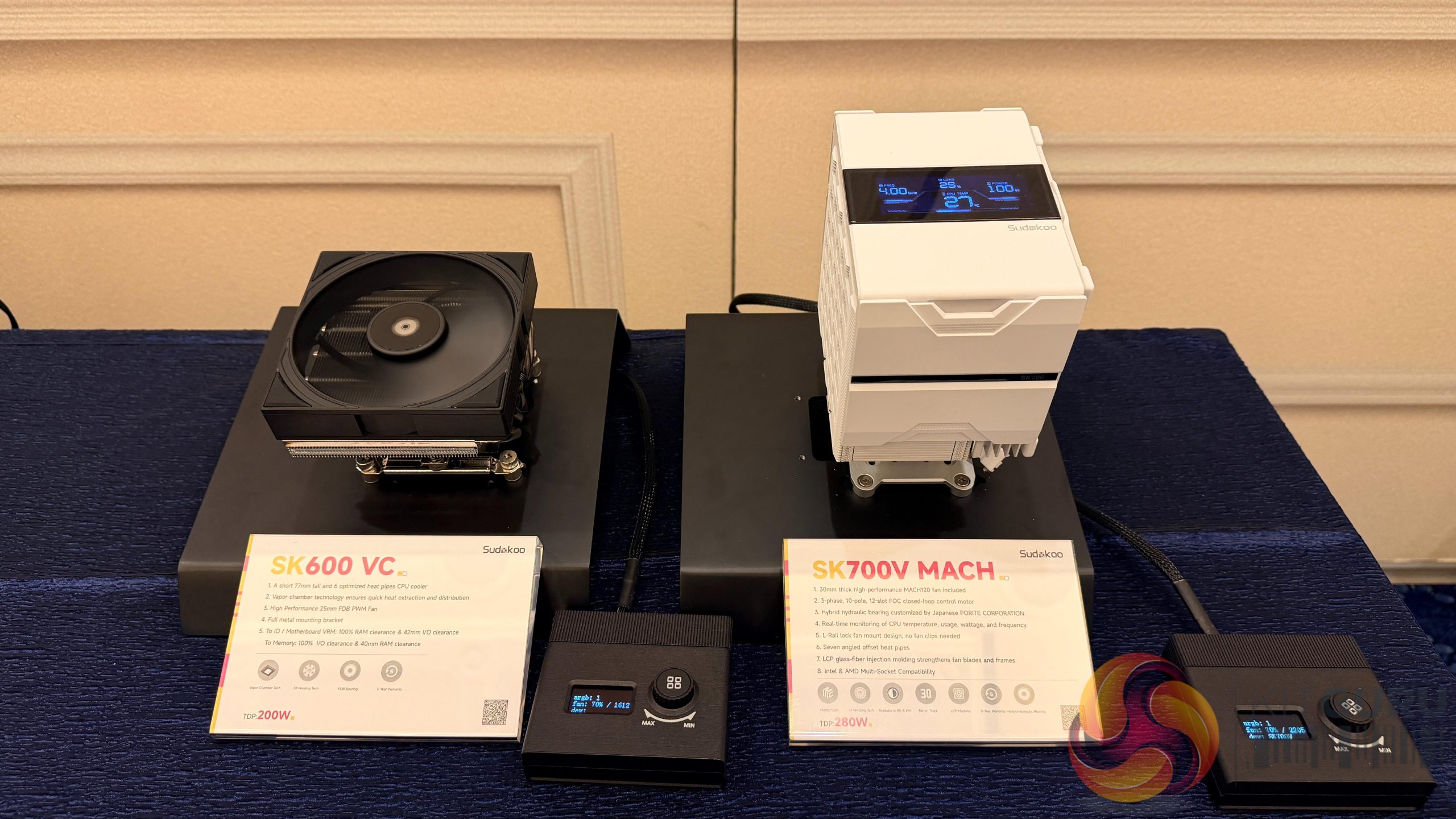
For small‑form‑factor builders, the SK600 VC introduces an ultra‑low‑profile design built around a vapor chamber cold plate and six heat pipes. The cooler stands 77mm tall and uses a 25mm FDB PWM fan, which should give you enough clearance for most RAM sticks on the market.

Enthusiast users are the target for the SK700V MACH, a revised version of the company’s high‑end air cooler. The MACH edition includes a 30mm‑thick MACH120 fan and adopts an L‑Rail lock mounting system intended to eliminate traditional fan clips and simplify installation. Intel and AMD multi‑socket support is included.

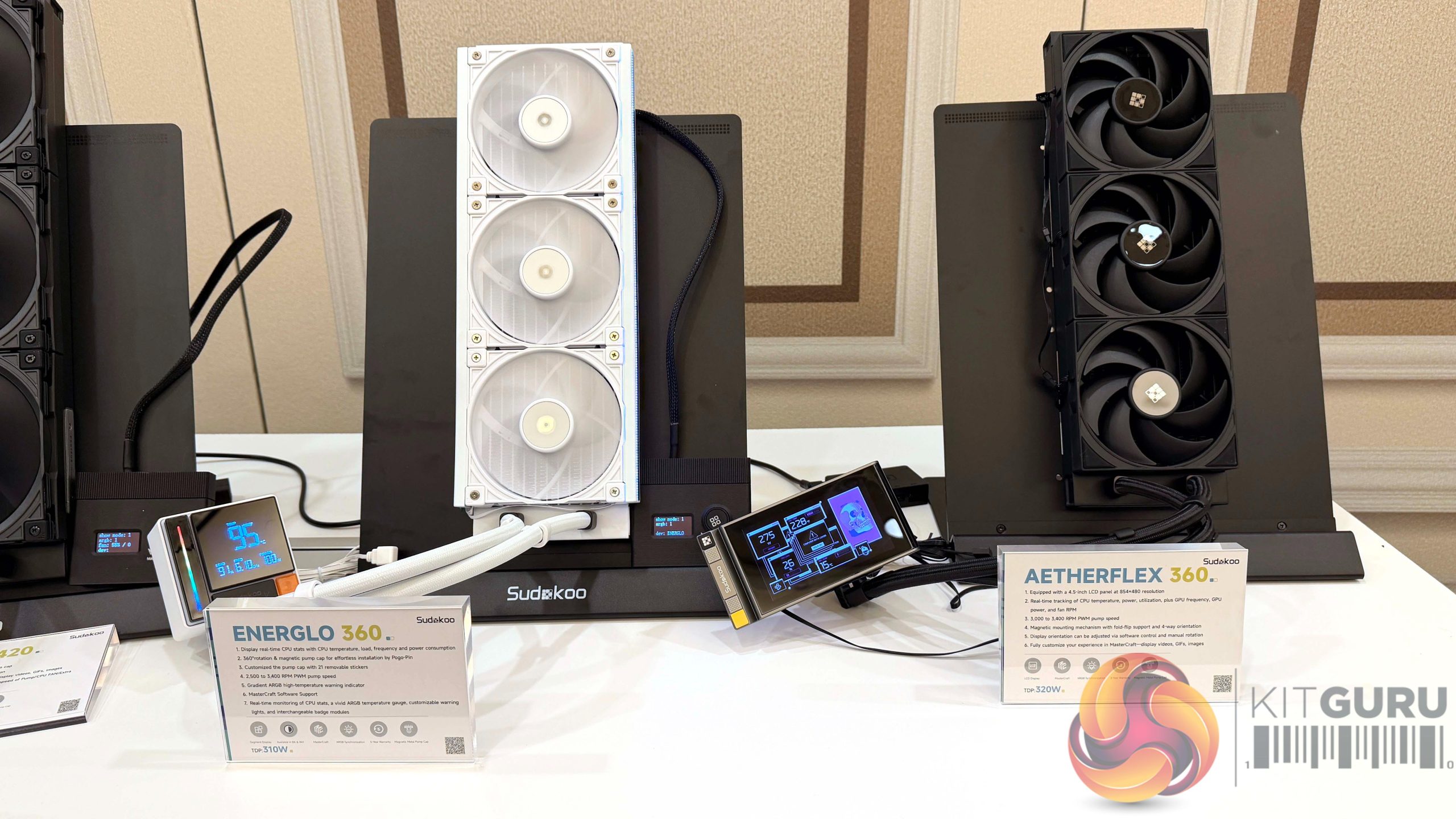
SUDOKOO is also entering the liquid cooling market with the AETHERFLEX 360, a 360mm AIO designed around real‑time system monitoring. The unit features a 4.5‑inch LCD display with an 854×480 resolution panel capable of showing CPU temperature, power and utilisation, along with GPU frequency, GPU power, and fan RPM. The cooler uses a magnetic mounting system with fold‑flip support for easier installation and adjustment.

KitGuru Says: Sudokoo has built out an impressive looking line-up of coolers. We'll look forward to seeing some of these units in action in the months ahead.

The post CES 2026: Sudokoo launches full line-up of CPU coolers first appeared on KitGuru.

January’s Xbox Game Pass line-up include Star Wars Outlaws; RE: Village and more

7 janvier 2026 à 15:00

Twice a month, Microsoft offers an update on their Xbox Game Pass library, announcing which titles will be arriving over the coming weeks and which will be departing. Microsoft has now officially unveiled the first drop of new titles joining Game Pass this January, including but not limited to Atomfall; Rematch; Star Wars Outlaws; Resident Evil Village and more.

Being released in a staggered form, Xbox Game Pass’ line-up for the first half of January 2026 is as follows:

Available now:

  • Brews & Bastards
  • Little Nightmares Enhanced Edition

Arriving on the 7th of January (to the mid-tier Game Pass Premium):

  • Atomfall
  • Lost in Random: The Eternal Die
  • Rematch
  • Warhammer 40,000: Space Marine – Master Crafted Edition 

Game Pass Village

Coming Soon:

  • Final Fantasy (8th Jan)
  • Star Wars Outlaws (13th Jan)
  • My Little Pony: A Zephyr Heights Mystery (15th Jan)
  • Resident Evil Village (20th Jan)
  • Mio: Memories in Orbit (20th Jan)

As mentioned, a number of titles are also set to depart from the service – with the following being removed on the 15th of January:

  • Flintlock The Siege of Dawn
  • Neon White
  • Road 96
  • The Ascent
  • The Grinch Christmas Adventures

Further details on the upcoming games can be found HERE, but all-in-all the first few weeks of January is looking pretty good for Xbox Game Pass – even if many of the biggest titles were already available on GP Ultimate.

KitGuru says: What do you think of January’s line-up so far? Is it worth the price hike? Let us know down below.

The post January’s Xbox Game Pass line-up include Star Wars Outlaws; RE: Village and more first appeared on KitGuru.

Riot Games officially announce console release date for 2XKO

7 janvier 2026 à 14:00

Right at the tail-end of last year, Riot Games seemingly accidentally leaked the official console release date for their new 2v2 fighter 2XKO. Though essentially already known, Riot have now republished the trailer officially confirming that 2XKO is launching on consoles in under two week’s time.

Making the announcement via an official console trailer, the team at Riot Games have once again (but properly this time) unveiled the console release date for 2XKO – with the free-to-play fighter arriving on the 20th of January alongside the game’s first Season.

As mentioned, 2XKO is a 2v2 fighter set in the world of League of Legends. Officially released back in September on PC, the game currently features a total of 11 playable characters, with more coming during the aforementioned Season 1.

As of now, the list of champions includes the following:

  • Ahri
  • Blitzcrank
  • Braum
  • Darius
  • Ekko
  • Illaoi
  • Jinx
  • Teemo
  • Vi
  • Warwick
  • Yasuo

Developing a fighting game is no easy task, and while early reactions to the PC version have been positive, we will have to wait and see what console players think of the game when it arrives in less than two weeks’ time.

KitGuru says: Are you looking forward to the console release? Have you tried it on PC yet? Which characters do you hope are added early on in its post-launch life? Let us know down below.

The post Riot Games officially announce console release date for 2XKO first appeared on KitGuru.

CES 2026: Intel launches 18A ‘Panther Lake’ Core Ultra 3 CPUs

7 janvier 2026 à 12:07

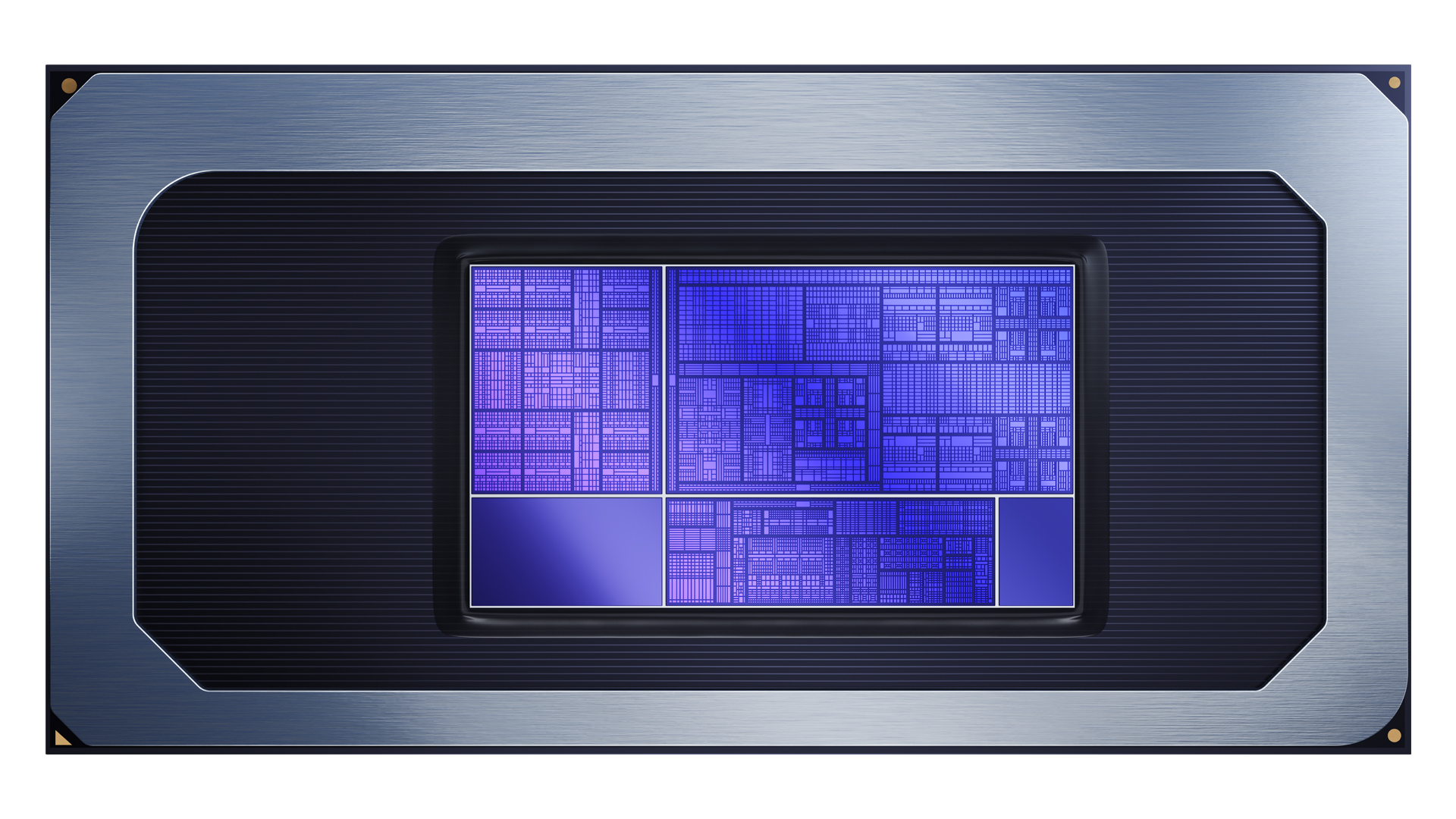
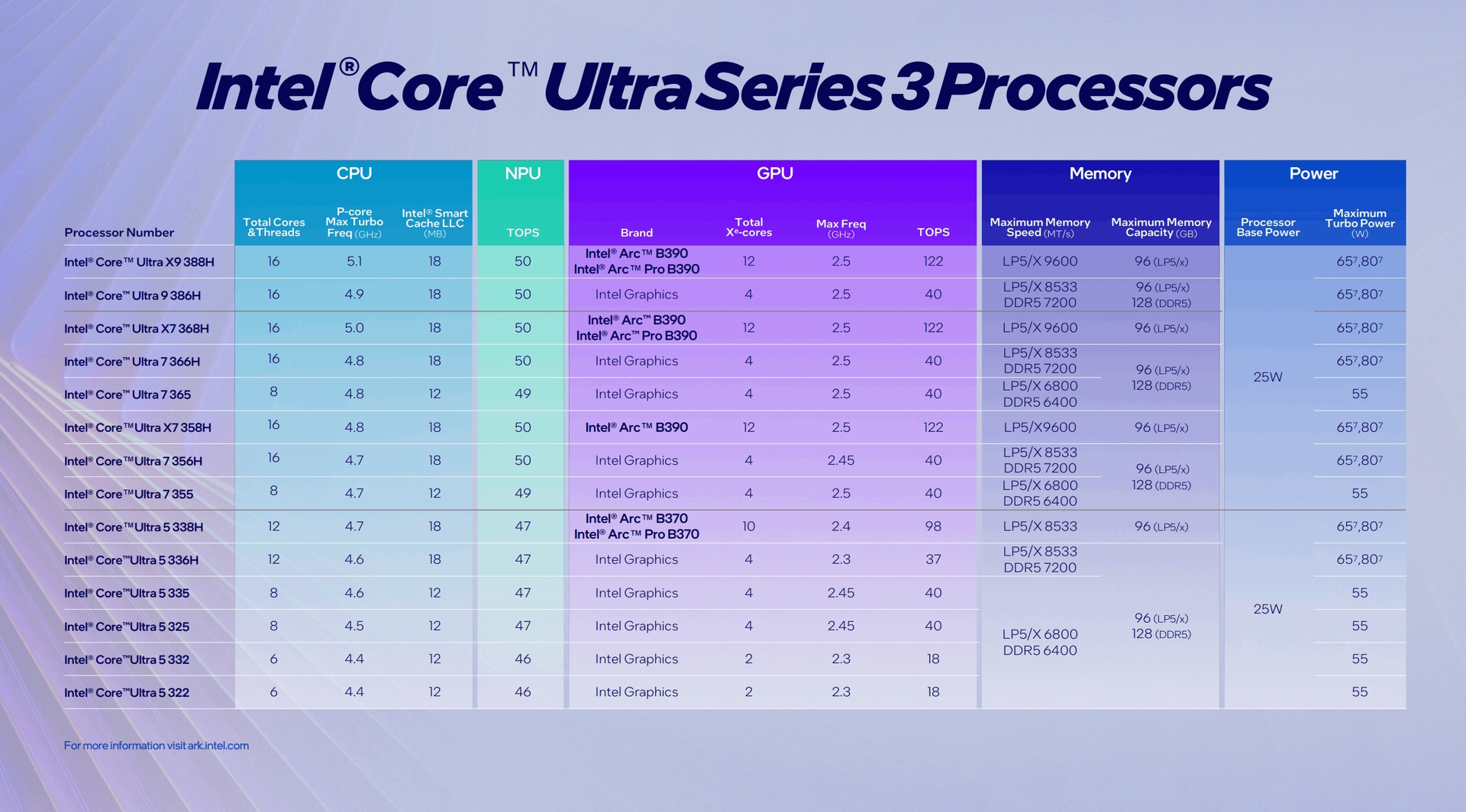
Intel has officially launched its third-generation Core Ultra mobile processors at CES 2026, marking the long-awaited debut of its Intel 18A process technology. Also known as Panther Lake, the Core Ultra Series 3 is the first compute platform designed and manufactured entirely in the US using 18A silicon. With a focus on mobile efficiency and integrated graphics, Intel is claiming a 76% uplift in gaming performance and a 60% improvement in multithreaded performance over the previous generation.

The Core Ultra Series 3 lineup introduces a new naming convention. The flagship Intel Core Ultra X9 388H and Ultra X7 models feature a dedicated “X” prefix, denoting the inclusion of the new Arc B‑series integrated GPU. Built on the Xe3 architecture (derived from the upcoming Battlemage desktop series), the top-tier B390 iGPU includes 12 Xe-cores and is reportedly capable of matching the performance of a discrete Nvidia RTX 4050 laptop GPU. To further boost frame rates, these integrated graphics support XeSS 3, which incorporates AI-driven multi-frame generation similar to DLSS 4.

Architecturally, Panther Lake features a multi-tile design. The compute tile, built on the 18A node, introduces a new core configuration with up to four Cougar Cove P-cores, eight Darkmont E-cores, and four low-power Darkmont E-cores. Despite a lower P-core count than the previous generation, Intel claims that architectural refinements and the die shrink deliver a 60% improvement in multithreaded performance at 25W. The NPU has also been upgraded to the NPU 5 architecture, delivering 50 standalone TOPS for local AI tasks and meeting the requirements of Microsoft’s latest Copilot+ PC standards.

For the first time, these processors are certified for 24/7 reliability across a temperature range from -40°C to 100°C. In robotics and video analytics workloads, Intel says the integrated AI acceleration offers a significant total cost of ownership (TCO) advantage, delivering up to 4.5× higher throughput on vision language models (VLMs) compared to traditional CPU-plus-discrete-GPU configurations. Intel also claims these chips can offer up to 27 hours of battery life.

Laptops powered by the Intel Core Ultra Series 3 are available for pre-order now. Global retail availability is scheduled for January 27th, 2026, with more than 200 designs from partners including MSI, Lenovo, and ASUS expected to reach the market in the first half of the year.

KitGuru says: Intel's 18A node is finally here, and on paper, Panther Lake looks very competitive. It will be interesting to put these chips to the test in the months ahead. 

The post CES 2026: Intel launches 18A ‘Panther Lake’ Core Ultra 3 CPUs first appeared on KitGuru.

CES 2026: Acer debuts 1000Hz monitor, new Predator laptops

7 janvier 2026 à 11:26

Today at CES, we stopped by to visit Acer to get a look at a wide range of both gaming and productivity-focused gear. This includes the new Predator XB273U F6, an ultra fast QHD gaming monitor that can hit a peak refresh rate of 1000Hz, as well as new laptops, projectors and more.

Watch via YouTube below:

Timestamps:
00:00 laptops, laptops and more laptops
00:20 Helios NEO 165 AI (INTEL)
00:38 Nitro V 165 AI (INTEL)
01:02 Nitro V 16 AI (AMD)
01:20 Predator XB273U F6
01:38 Predator X34 F3
01:50 Acer Nitro 30
02:03 Some more laptops
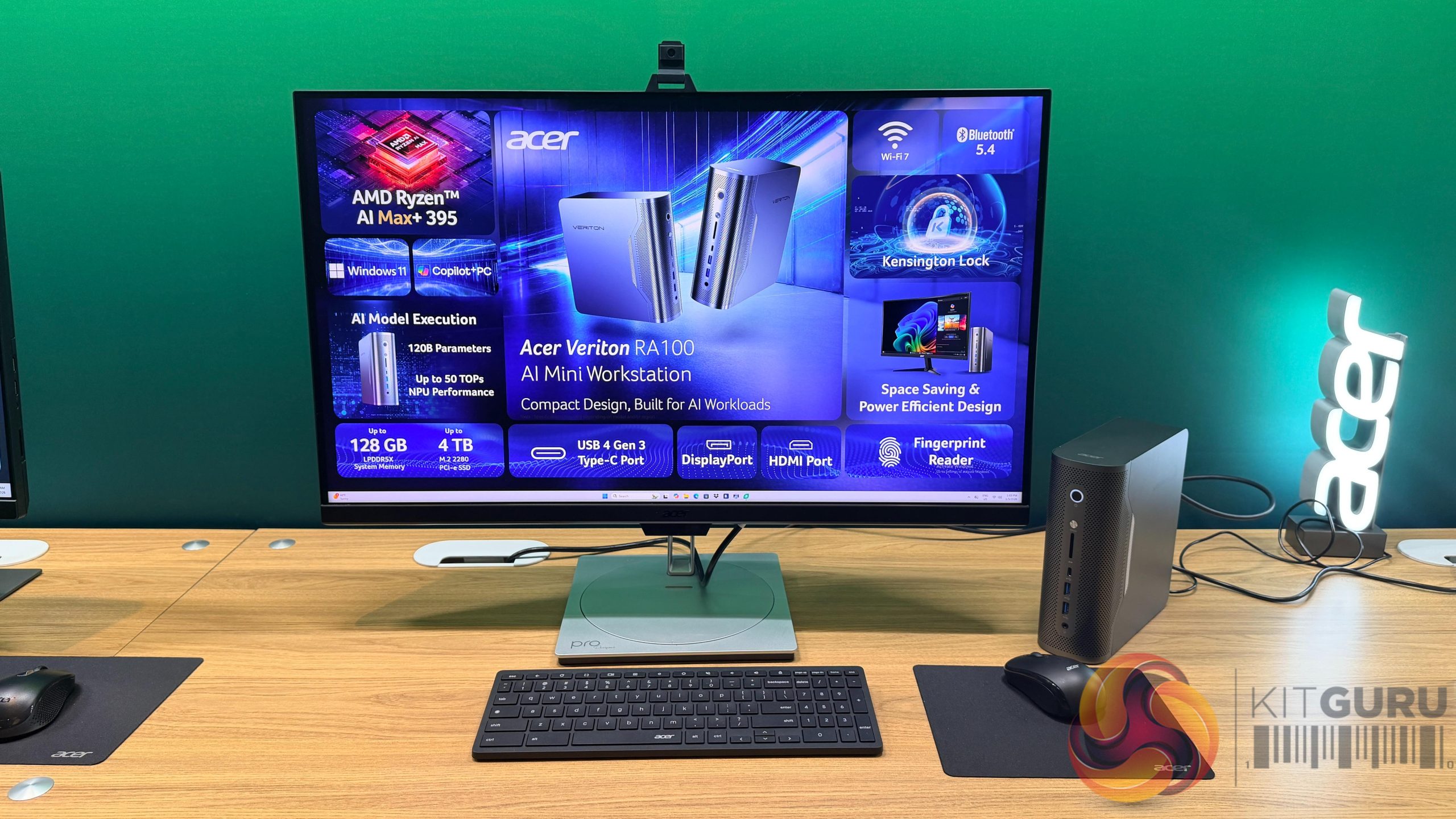
03:25 Veriton RA100 Ai Mini Workstation
03:44 ProDesigner PE320QX
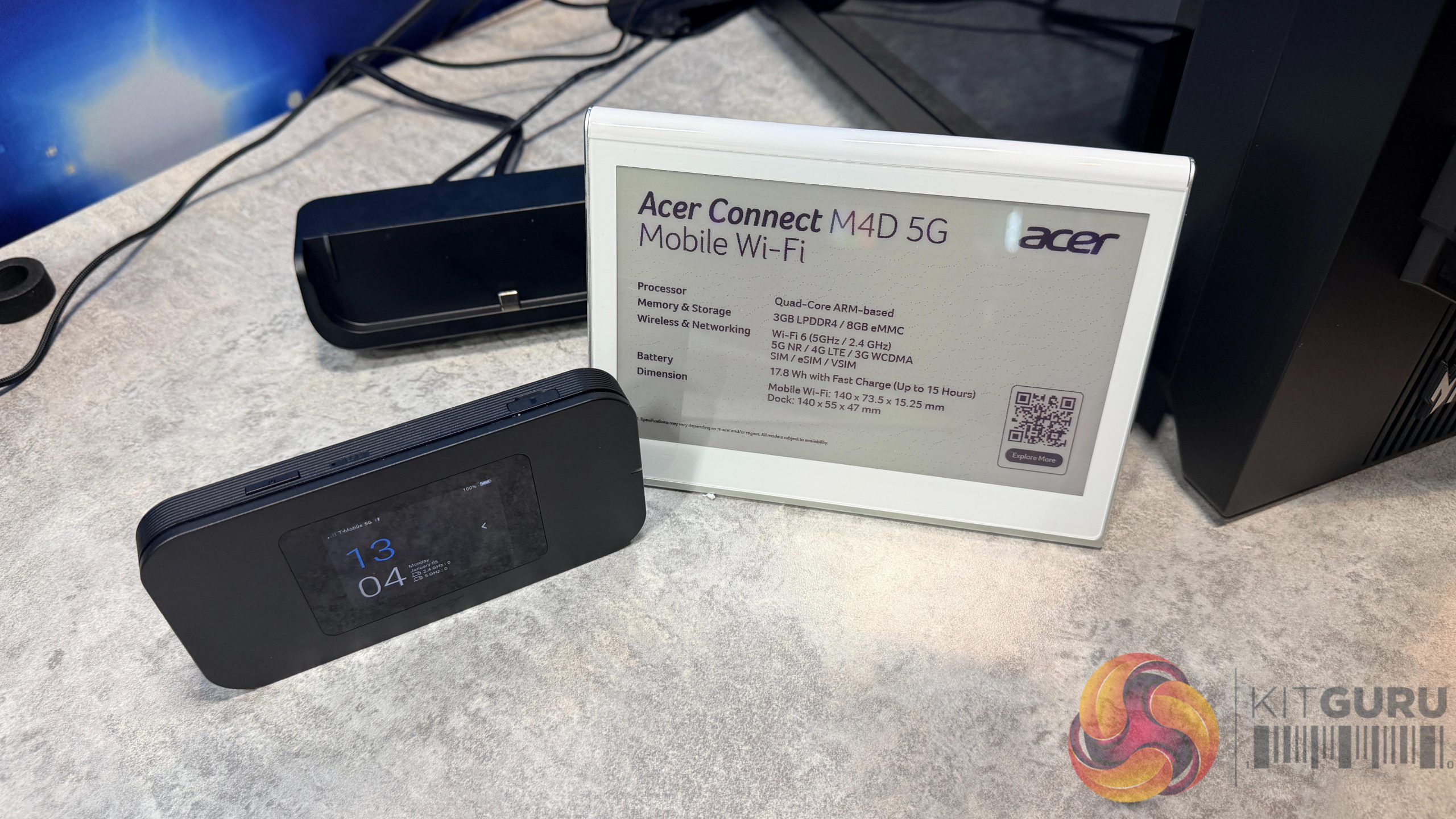
03:55 Connect M4D 5G Mobile WiFi
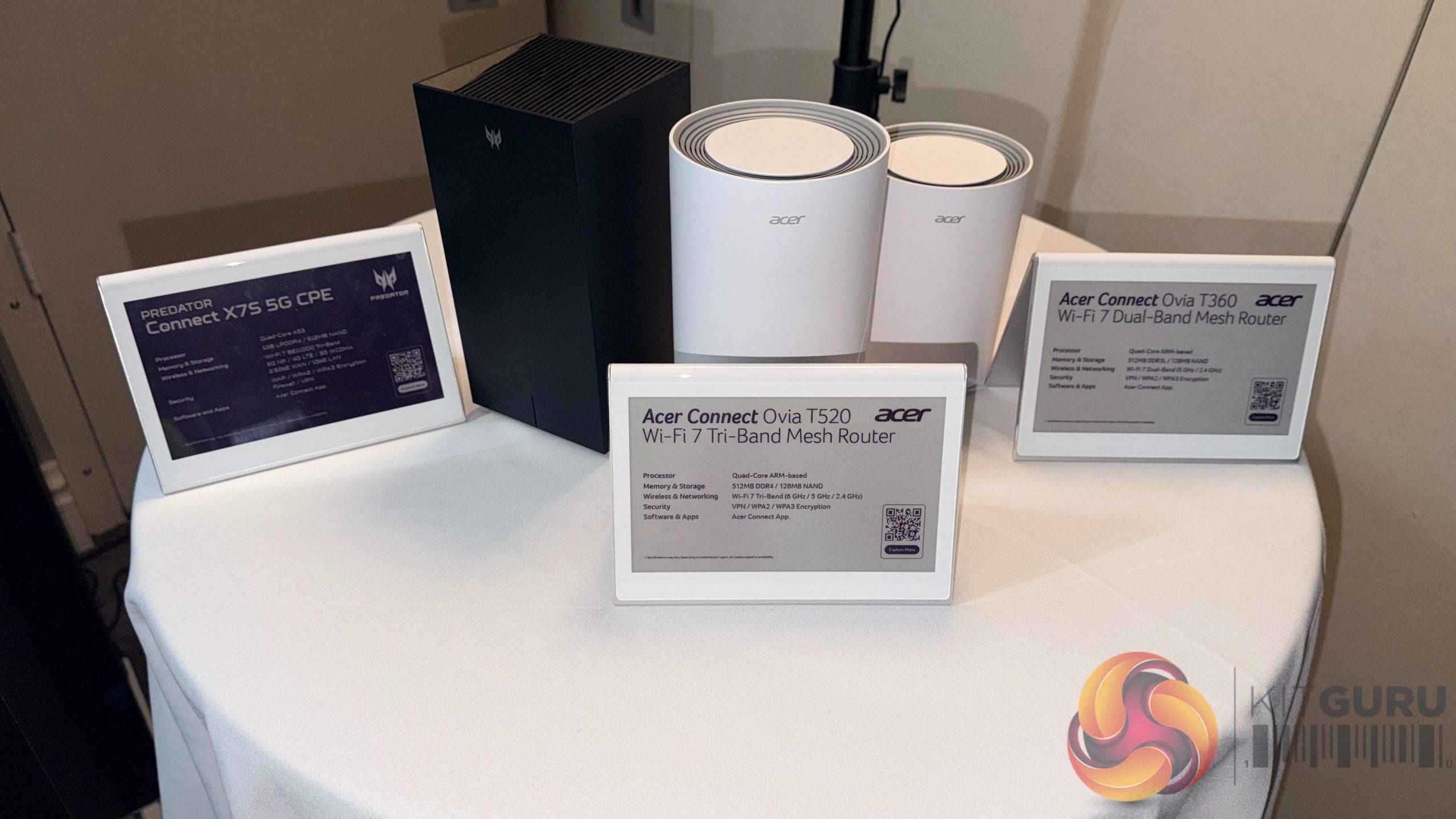
04:28 Connect X75 5G CPE and routers

Acer’s CES presence this year puts a strong emphasis on displays, starting with a trio of high‑refresh gaming monitors and a new 6K creator panel. The Predator XB273U F6 leads the group, a 27‑inch QHD IPS monitor that runs at 500Hz natively and can reach 1000Hz through its Dynamic Frequency and Resolution mode. It’s aimed squarely at competitive players, backed by AMD FreeSync Premium, factory‑calibrated color, and full ergonomic adjustment.

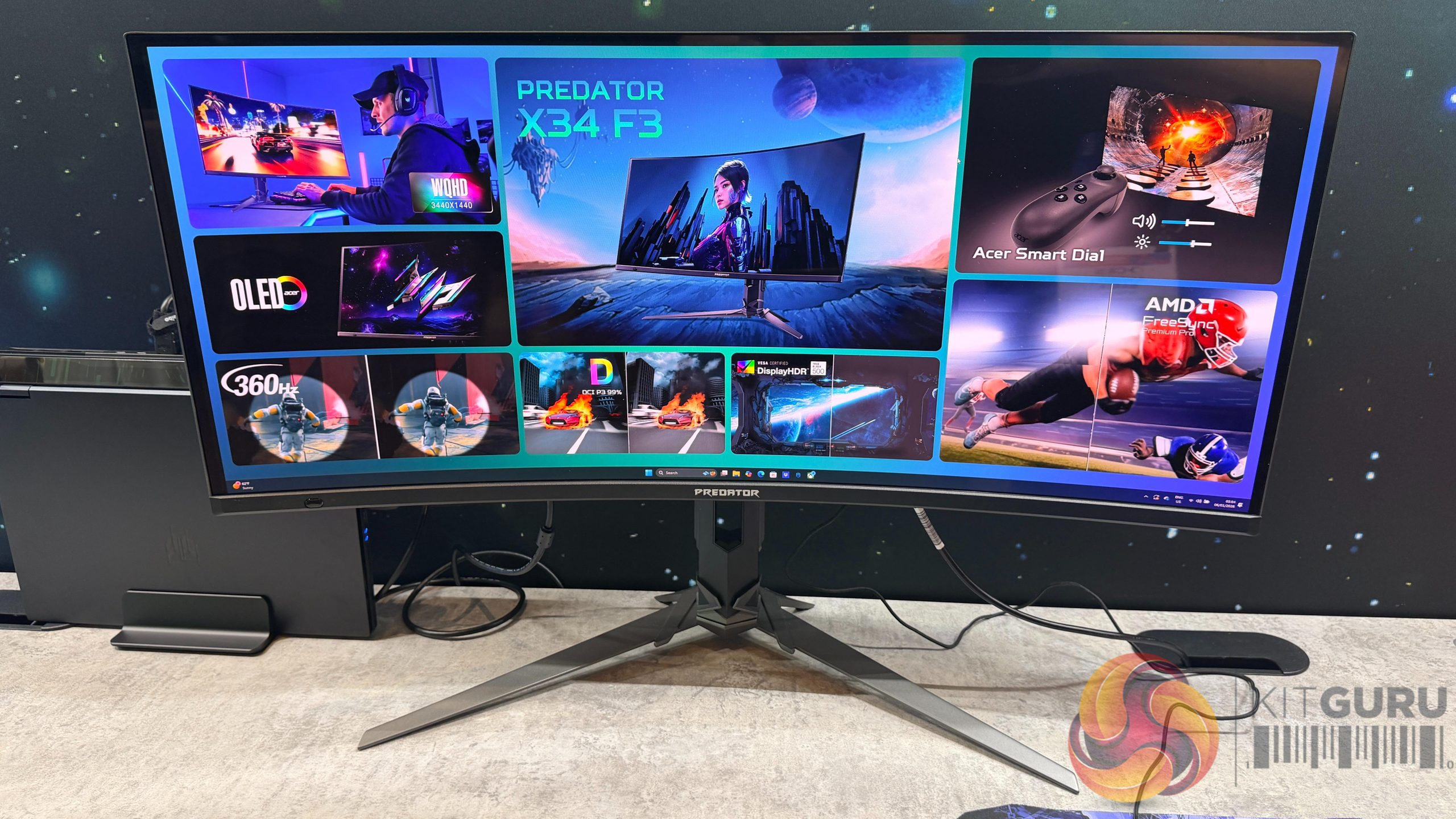
The curved Predator X34 F3 showcases Acer’s QD‑OLED implementation at 360Hz, delivering deep contrast, a 0.03ms response time, and FreeSync Premium Pro support. For users who split time between gaming and creative work, the Nitro XV270X P offers a 5K/165Hz mode alongside a 1440p/330Hz option. Acer is also showing the ProDesigner PE320QX, a 31.5‑inch 6K display with HDR600, wide‑gamut coverage, USB4 connectivity, and a Reflection‑Free coating designed for studio environments.

Another highlight of the display section is the Vero HL1820, a 4K RGB laser projector built around color accuracy and long‑term efficiency. It outputs 5500 lumens, covers 106% of BT.2020, supports 1080p/240Hz gaming, and uses a mercury‑free laser engine rated for up to 30,000 hours.

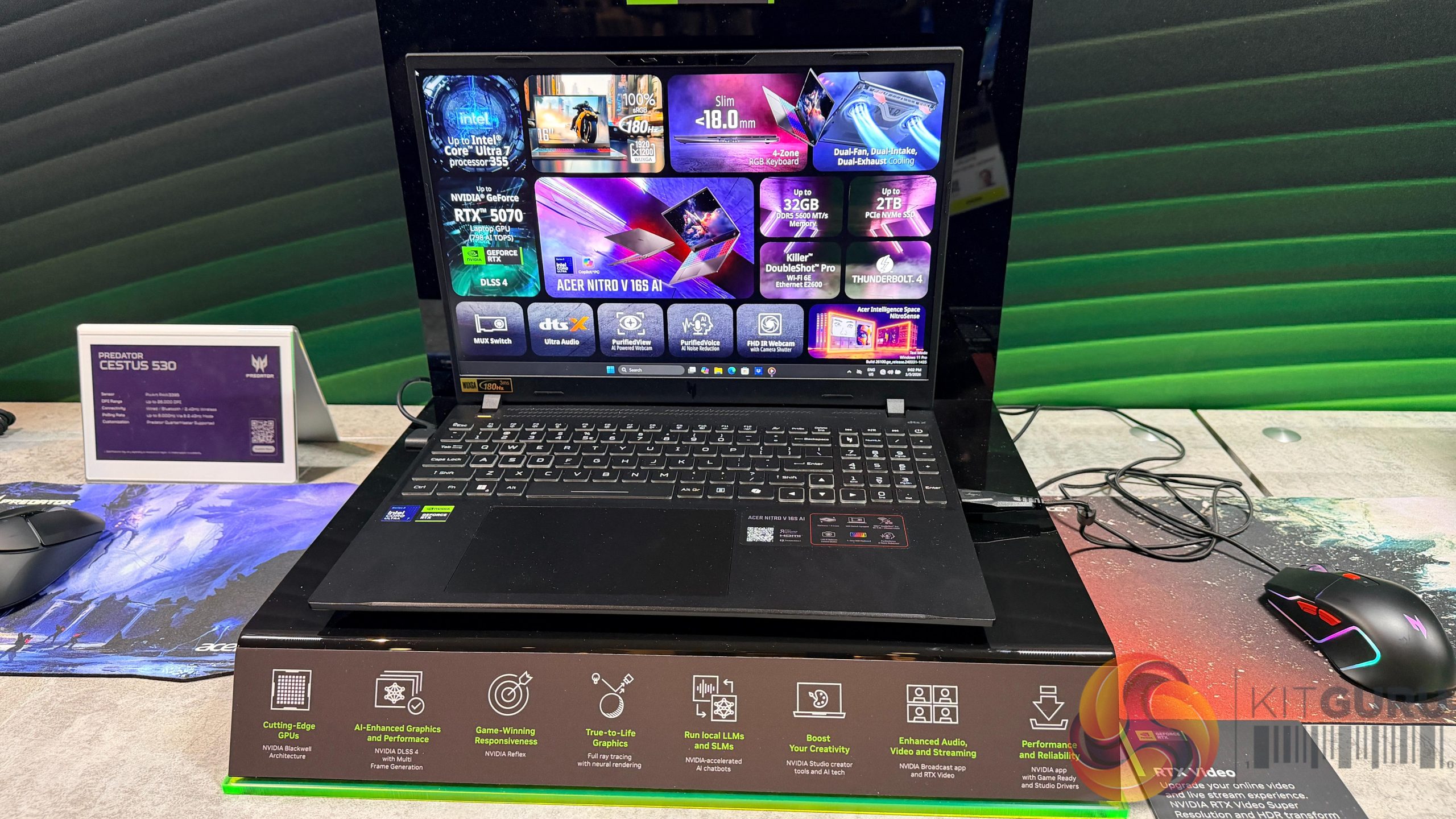
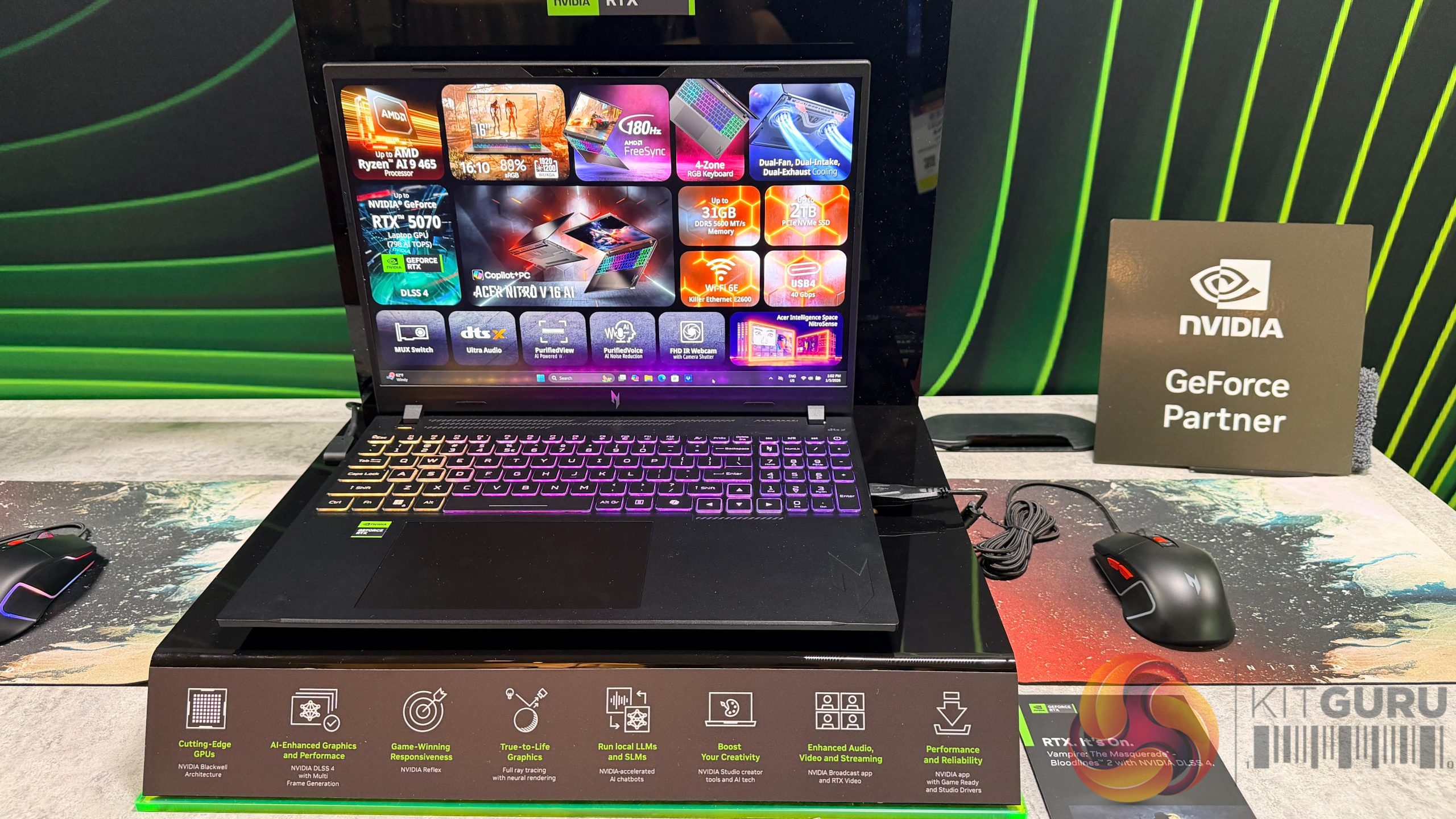
The company’s gaming laptop lineup is moving to Intel’s new Core Ultra Series 3 processors and NVIDIA’s GeForce RTX 50‑series GPUs. The Predator Helios Neo 16S AI sits at the top, pairing up to a Core Ultra 9 386H with an RTX 5070 Laptop GPU inside an 18.9mm metal chassis. The model on display features a 16‑inch WQXGA OLED panel, liquid metal cooling, and support for up to 64GB of DDR5 memory. The Nitro V 16 AI and Nitro V 16S AI serve as more accessible options, both offering up to a Core Ultra 7 355 and RTX 5070 Laptop GPU, with the 16S model slimming down to under 17.9mm. All three systems support Acer Intelligence Space and Copilot+ PC features on Windows 11, with on‑device NPUs accelerating tasks like Live Captions and image generation.

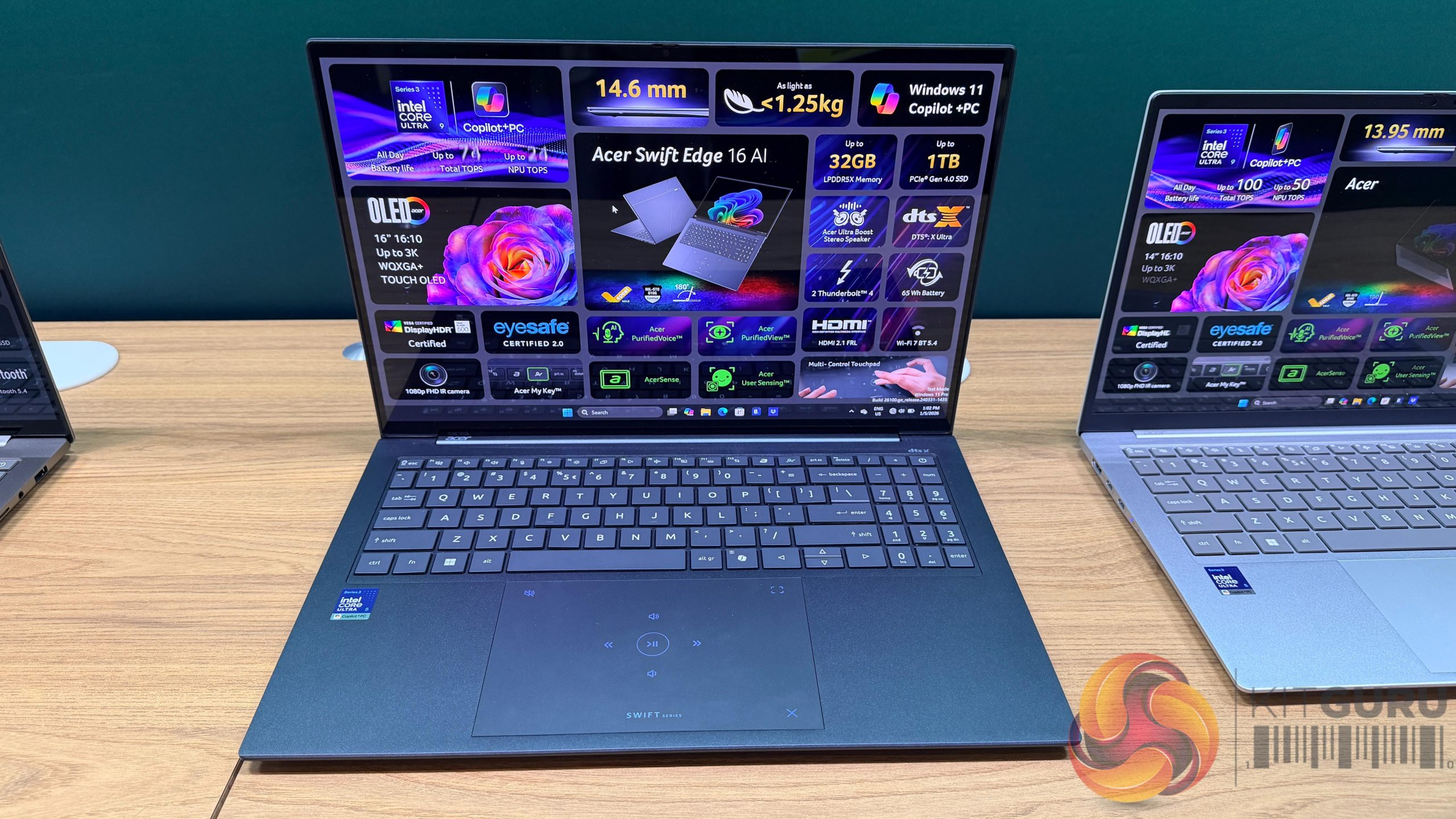
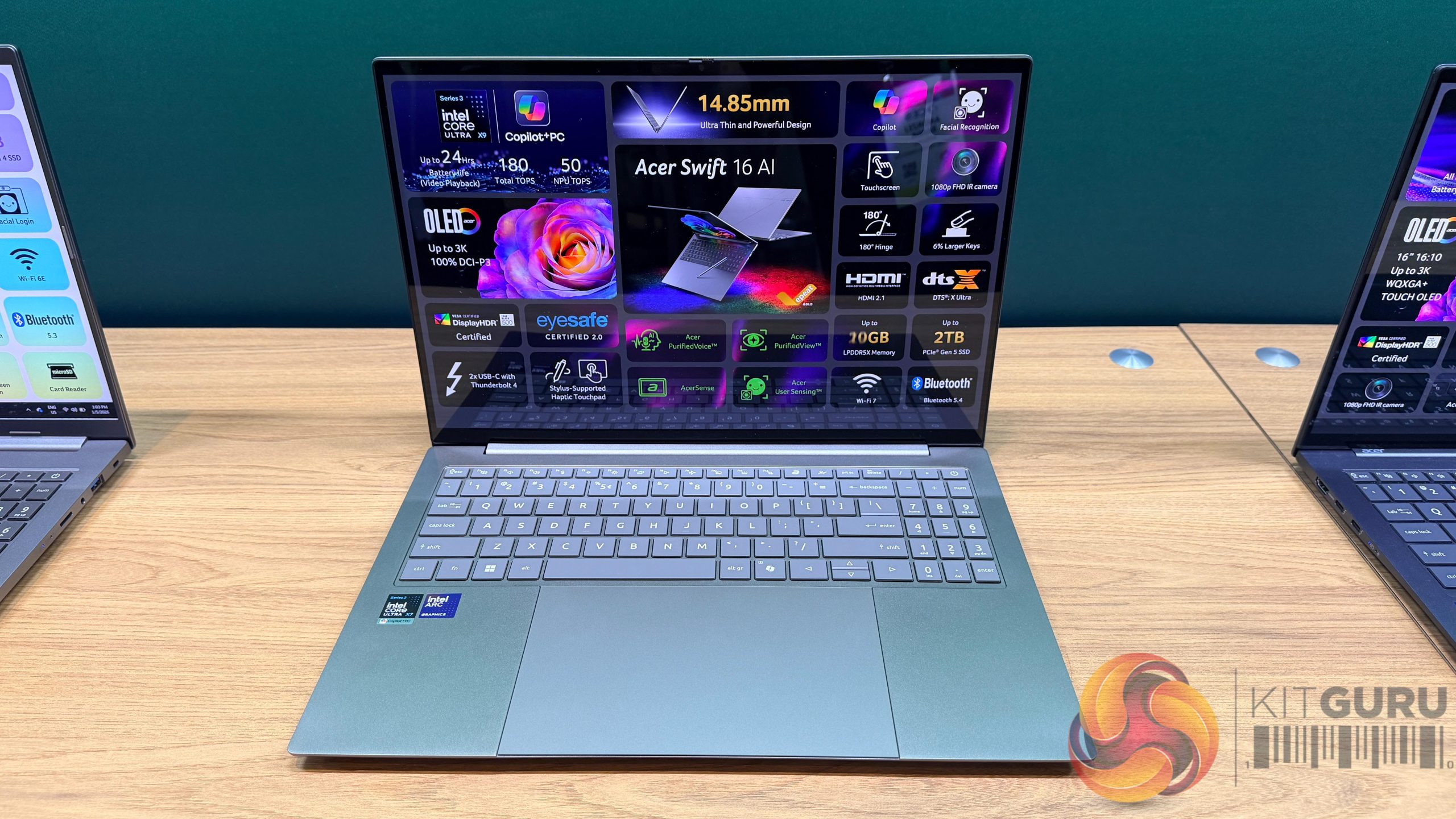
Acer’s broader AI‑focused notebook strategy is represented by the new Swift AI series. The Swift 16 AI is the flagship, built from aluminum and powered by up to an Intel Core Ultra X9 388H with integrated Arc B390 graphics. Acer is showcasing its unusually large haptic touchpad, which supports stylus input and is designed for direct interaction with AI‑driven creative tools. The laptop features a 16‑inch 3K OLED 120Hz touch display and DTS:X Ultra speakers.

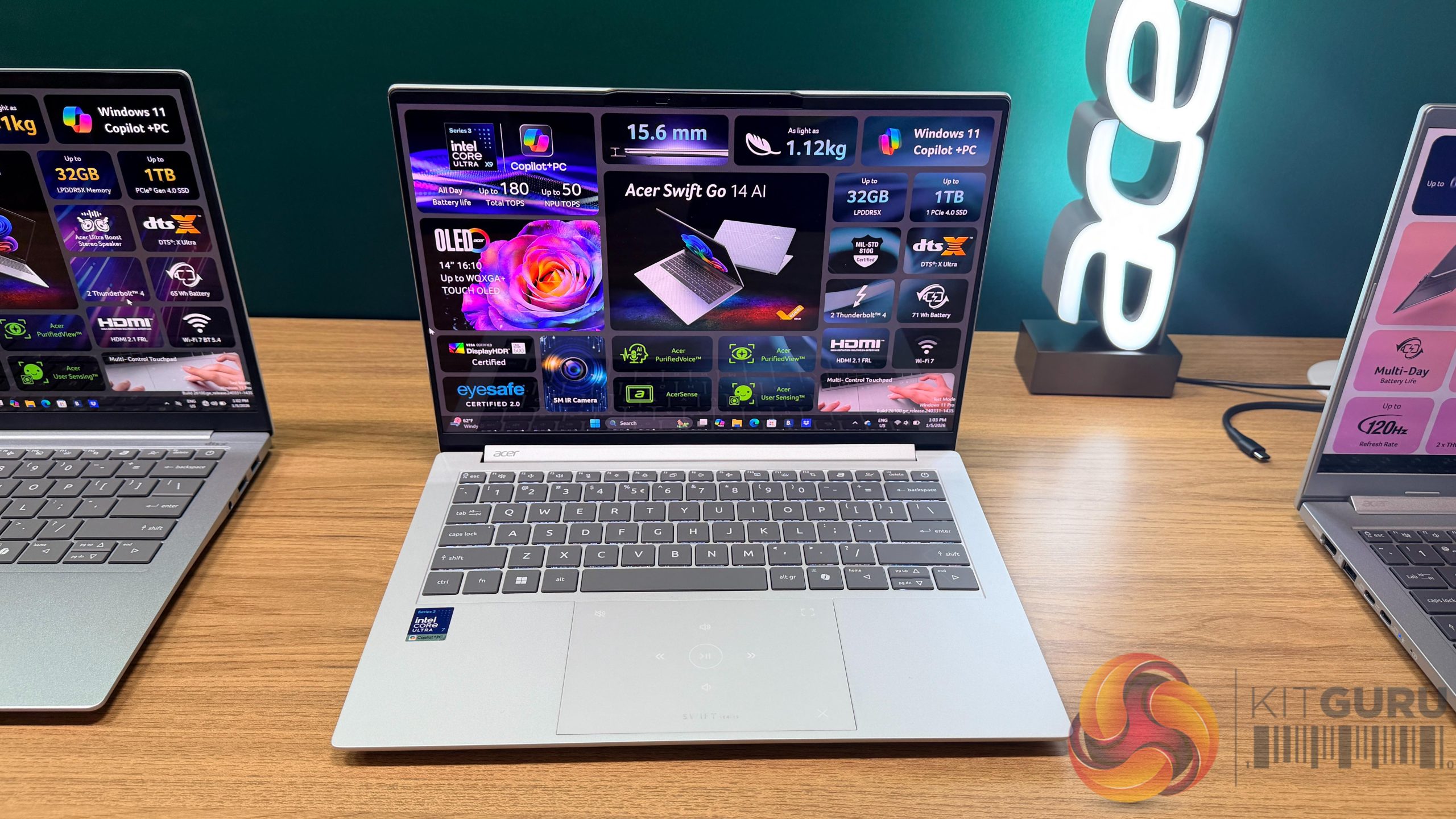
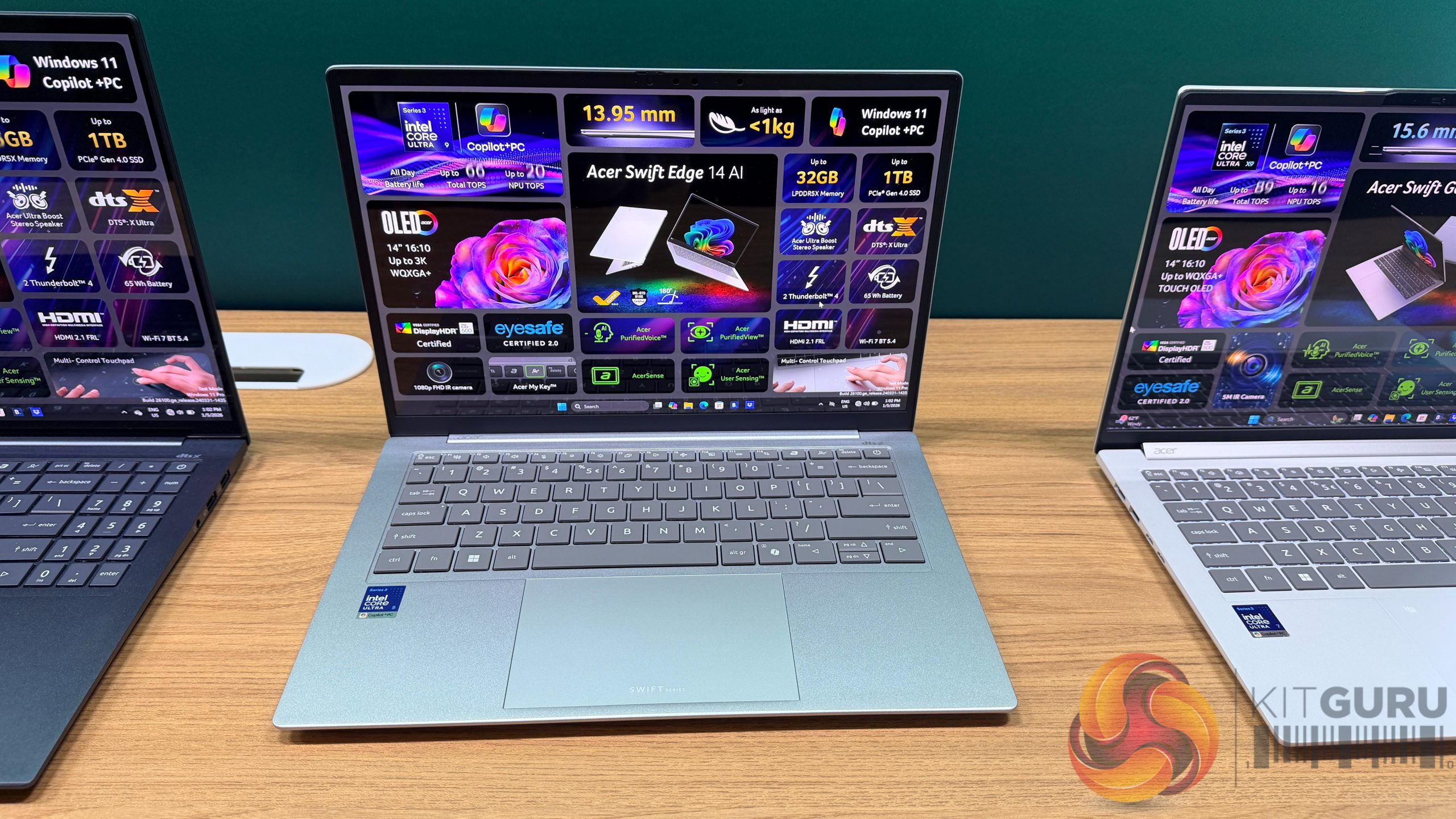
The Swift Edge 14 and 16 AI models emphasise portability, with the 14‑inch version weighing under 1kg while still offering up to a Core Ultra 9 386H, 3K OLED display options, Wi‑Fi 7, and MIL‑STD durability. The Swift Go 14 and 16 AI models round out the lineup with more mainstream pricing but similar hardware options, including OLED displays, 180‑degree hinges, and 5MP IR webcams.

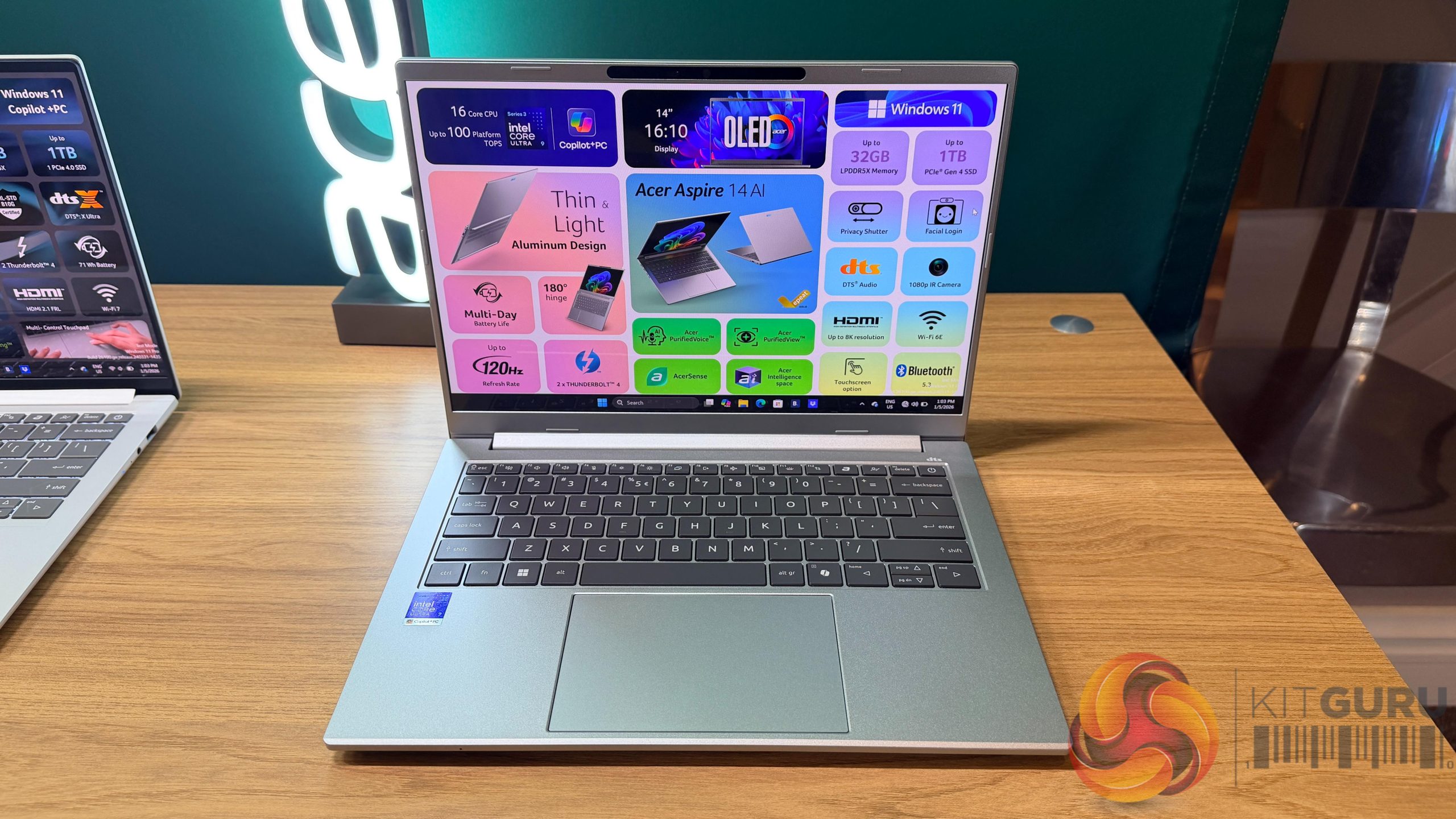
Acer is also updating its Aspire line for 2026 with the Aspire 14 AI and Aspire 16 AI. Both run up to a Core Ultra 9 386H, support up to 32GB of memory and 2TB of PCIe Gen 4 storage, and offer WUXGA displays up to 120Hz with optional OLED panels. The designs remain thin and light with 180‑degree hinges, large touchpads, and a full set of ports including Thunderbolt 4 and HDMI 2.1. Acer’s AI‑powered features like PurifiedVoice, PurifiedView, AcerSense, and the customisable My Key are included across the range.

KitGuru Says: Acer had a lot of products launching at CES this week. We'll see all of these monitors and laptops rolling out to the retail market in the coming months.

The post CES 2026: Acer debuts 1000Hz monitor, new Predator laptops first appeared on KitGuru.

Sigourney Weaver, Jason Isaacs and more officially cast in live-action Tomb Raider show

7 janvier 2026 à 11:00

Back in 2024 it was officially announced that Amazon was working on a live-action adaptation of the popular video game franchise Tomb Raider. While the titular Lara Croft was already confirmed to be played by Game of Thrones’ Sophie Turner, a large selection of the rest of the show’s cast have now been revealed.

Taking to the official Tomb Raider subreddit to make the announcement, Amazon Studios unveiled the list of supporting actors which have been cast in the upcoming live-action TV Prime Video show.

As mentioned, we already knew that Sophie Turner would be taking on the role of Lara Croft. That said, Amazon have now unveiled nearly a dozen other actors set to appear in the show, including but not limited to:

  • Jason Isaacs as Atlas DeMornay (Lara’s uncle)
  • Bill Paterson as Winston (Croft family Butler)
  • Martin Bobb-Semple as Zip (Lara’s friend)
  • Celia Imrie as Francine (Head of Advancement at the British Museum)
  • Sigourney Weaver as Evelyn Wallis (“a mysterious, high-flying woman who is keen to exploit Lara's talents”)

Tomb Raider live-action

Alongside the cast announcement, showrunner Phoebe Waller-Bridge shared the following message: “Tomb Raider boasts a plethora of iconic characters. I am thrilled to have been able to bring some personal and fan favourites to the screen while also introducing a few new rascals of our own to the mix. This cast is beyond my wildest dreams!”

The full list of announced cast members can be found HERE. Little is known about the plot for this live-action Tomb Raider, but with so many original characters being included, expect a story which is adjacent – but not directly comparable – to the games which it is based on.

KitGuru says: Are you looking forward to the show? What do you think of the announced cast? Could this be the best Tomb Raider adaptation yet? Let us know down below.

The post Sigourney Weaver, Jason Isaacs and more officially cast in live-action Tomb Raider show first appeared on KitGuru.

CES 2026: GIGABYTE rethinks GPU cooling with Windforce Hyperburst on RTX 5090 Infinity

6 janvier 2026 à 22:00

At CES this week, Gigabyte is showcasing its new RTX 5090 Infinity graphics card, which makes some rather bold changes to traditional GPU cooler design. The radically redesigned Windforce Hyperburst cooler is the star of the show here, moving away from the typical triple-fan shroud we are used to seeing towards a very unique design that we've not ever seen before on a custom-cooled GPU.

Gigabyte is positioning this as a next‑generation thermal solution. The Hyperburst system is paired with GIGABYTE’s first separated PCB layout, a design approach originally pioneered by Nvidia. By splitting the board and opening up the structure, the card enables a Double Flow Through path that pushes air across both sides of the backplate with fewer obstructions. A dedicated Overdrive Fan sits at the centre of the card and only activates under heavy load, injecting an extra column of airflow when temperatures spike.

Aside from the cooler, this GPU is your typical RTX 5090, offering the best performance currently available in a gaming GPU, with full support for the latest features like DLSS 4 and enhanced AI compute capabilities. Unfortunately, we don't have any specific data on how cool the GPU runs, or what clock speeds it achieves out of the box, but we should hear more on that in the coming months.

GIGABYTE has wrapped the new cooler in a circular, die‑cast metal frame with a matching circular heatsink and the company’s RGB Halo lighting. Despite the unconventional design, the card maintains a relatively compact footprint at 33cm long and 14.5cm tall, keeping it compatible with a wide range of cases.

KitGuru Says: What do you think of the new Windforce Hyperburst cooler? Do you think we'll see more of this design for future generation graphics cards?

The post CES 2026: GIGABYTE rethinks GPU cooling with Windforce Hyperburst on RTX 5090 Infinity first appeared on KitGuru.

CES 2026: ASRock debuts full line-up of AIO liquid coolers

6 janvier 2026 à 17:30

At CES this week, ASRock has introduced a complete next‑generation AIO liquid cooling lineup, expanding its hardware portfolio beyond motherboards and graphics cards. The new range covers high‑end enthusiast systems, workstation platforms, gaming PCs and mainstream builds, with each series targeting a different segment.

At the top of the stack, the Taichi AQUA series offers a dual‑mode top cover that can switch between a magnetic 3.4‑inch LCD display and a transparent window showing coolant flow. The Taichi AQUA 360 LCD uses a dual‑pump design rated for 500W+ TDP, a 38mm radiator, an integrated flow indicator and LCP fans with dual‑ball‑bearing construction and IP54 protection.

The WS series is aimed at workstation platforms such as AMD Ryzen Threadripper (sTR5) and Intel Xeon W (LGA4677). It features a full‑coverage cold plate designed for large workstation CPUs, along with the same dual‑pump 500W+ architecture, 38mm radiator and LCP fans. ASRock positions this series for sustained, high‑load operation.

For gaming systems, the Phantom Gaming 360 LCD combines a 3.4‑inch LCD display with a 32mm radiator and a 3‑phase, 6‑slot pump. A VRM cooling module assists with thermal management around the CPU socket, while high‑output fans and a Halo ARGB frame provide airflow and lighting.

The Steel Legend series focuses on everyday durability, retaining the 3.4‑inch LCD display, 3‑phase pump and VRM cooling module, supported by LCP fans and dual‑ball‑bearing construction for consistent airflow.

For mainstream builders, the Challenger and Pro series emphasise ease of installation and balanced performance. The Challenger models include a 3‑inch smart digital display, pre‑installed fans with hidden cabling, a quick‑release mounting bracket and multifunctional tube clips. The Pro series adds ARGB lighting and uses a tuned fan configuration to balance cooling, noise and aesthetics.

All models include a 6‑year warranty, with ASRock positioning the lineup as part of a broader effort to build a unified ecosystem across its PC hardware products.

KitGuru Says: Would you opt for an ASRock AIO cooler to go with an ASRock motherboard? 

The post CES 2026: ASRock debuts full line-up of AIO liquid coolers first appeared on KitGuru.

Asus reveals next-gen displays, new gaming peripherals and WiFi 8 devices

6 janvier 2026 à 18:30

Ahead of CES, members of the European Hardware Association, including KitGuru, were invited to Asus HQ to get an early look at upcoming gaming hardware. Here, we take you through Asus ROG's next-generation gaming monitors, as well as new peripherals and WiFi 8 devices. 

Visual output and immersion

ASUS framed its 2026 display line-up as a series of portfolios, rather than a set of isolated products. Gaming and professional are well understood market segments, but there is now increased emphasis on ‘prosumer’ products that bridge the gap.Across all markets, ASUS is clearly trying to address clarity, brightness control and long-term usability.

A key technical change highlighted early in our tour of the company’s new products was the shift to a new RGB stripe pixel layout in next-generation OLED panels. ASUS stressed that this change is central to improving text clarity and colour precision as well as overall image stability, particularly at higher brightness levels. Alongside this, ASUS is using its own BlackShield film-coating technology to improve perceived black levels and reduce glare by up to 40%. Hardness is also increased for 2.5x more scratch resistance. This enhancement for the ROG Swift OLED PG34WCDN certainly adds to the premium look/feel of this screen.

At the gaming end of the spectrum we have the ROG Swift OLED PG27UCWM (Tandem RGB OLED) and PG34WCDN (RGB QD-OLED). ASUS claims higher sustained brightness, improved colour volume (PG27UCWM) & refresh rates designed to match next-generation GPUs, with DisplayPort 2.1a support positioned as an important part of future-proofing.

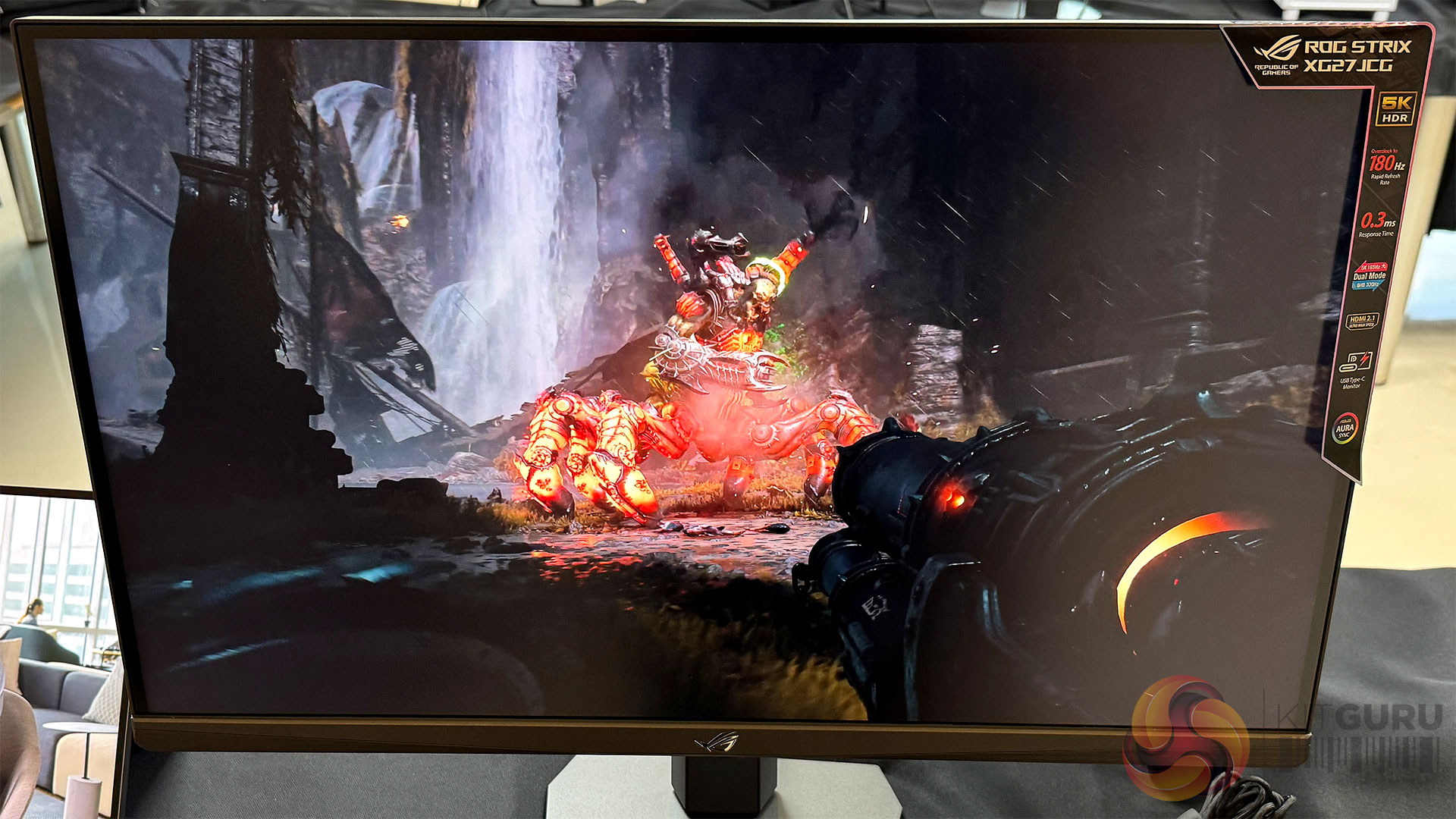
The ROG Strix 5K XG27JCG pushes resolution and refresh rate simultaneously. This 5K screen uses a fast IPS panel with a 0.3ms G2G response and 218 PPI density, guaranteeing that you won’t see any pixels from a normal seated distance. Other nice features included DisplayWidget Center, AI gaming AI features like Dynamic Crosshair, Dynamic Shadow Boost and AI Visual. This screen will initially list close to £699. The Dual Mode feature allows for effortless switching between immersive 5K at 180Hz for cinematic adventures and lightning-fast QHD (2560 x 1440) at 330Hz for peak performance.

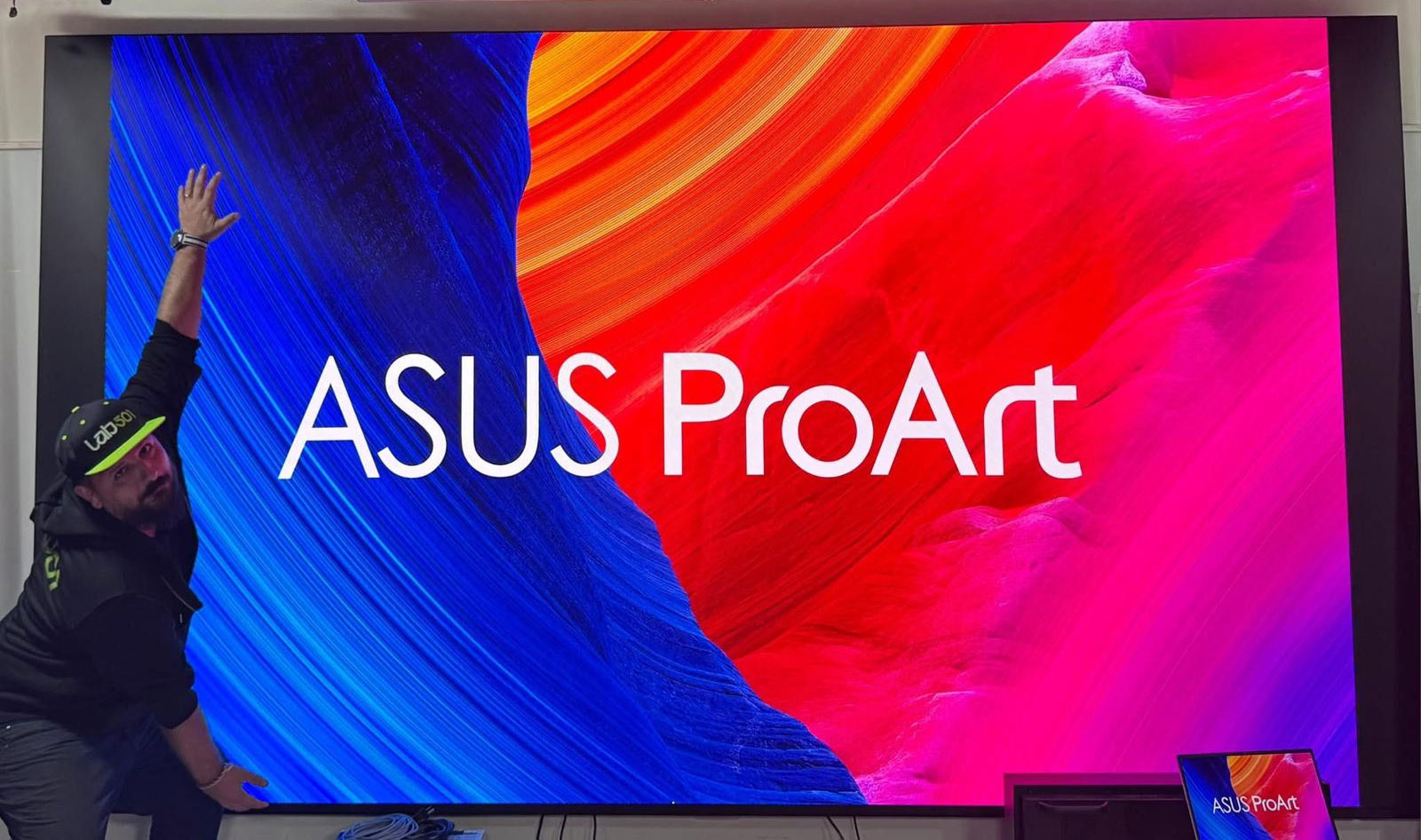
ASUS also presented a timeline of gaming monitor evolution, showing how OLED and high refresh rates have converged over recent years. Extending that timeline further into the future, ASUS demonstrated something very different during the tour – for which we were taken to a secured area on another floor. The product being guarded was the ProArt Cinema PQ09. This is a 162-inch Micro LED display with a 4K 10-bit panel, 0.93mm pixel pitch, 1,200 nits peak brightness, a claimed 1,000,000:1 contrast ratio and 99 percent DCI-P3 coverage with Delta E below 2. To help you get a sense of the true size of this monitor, we enlisted the help  (and wing span) of Tudor from Lab501. With an indicated price of around $160,000, this is obviously not a ‘general consumer product’ right now, and it is unlikely to be appearing in everyday gaming setups any time soon. That said, it serves as a useful reference point for where display technology is heading, and it underlines how much headroom still exists beyond today’s OLED panels.  

ASUS is also continuing to explore alternative ways to experience large-format displays. The ROG XREAL R1 AR gaming glasses aim to deliver a perceived screen size of up to 171” with refresh rates peaking as high as 240Hz. ASUS acknowledges that adoption of wearable displays remains uncertain, but the technical ambition is clear. Certainly if you need a large desktop are on a plane or train, then your traditional LED options will be limited – so the ROG gaming glasses could make sense for certain categories of user.

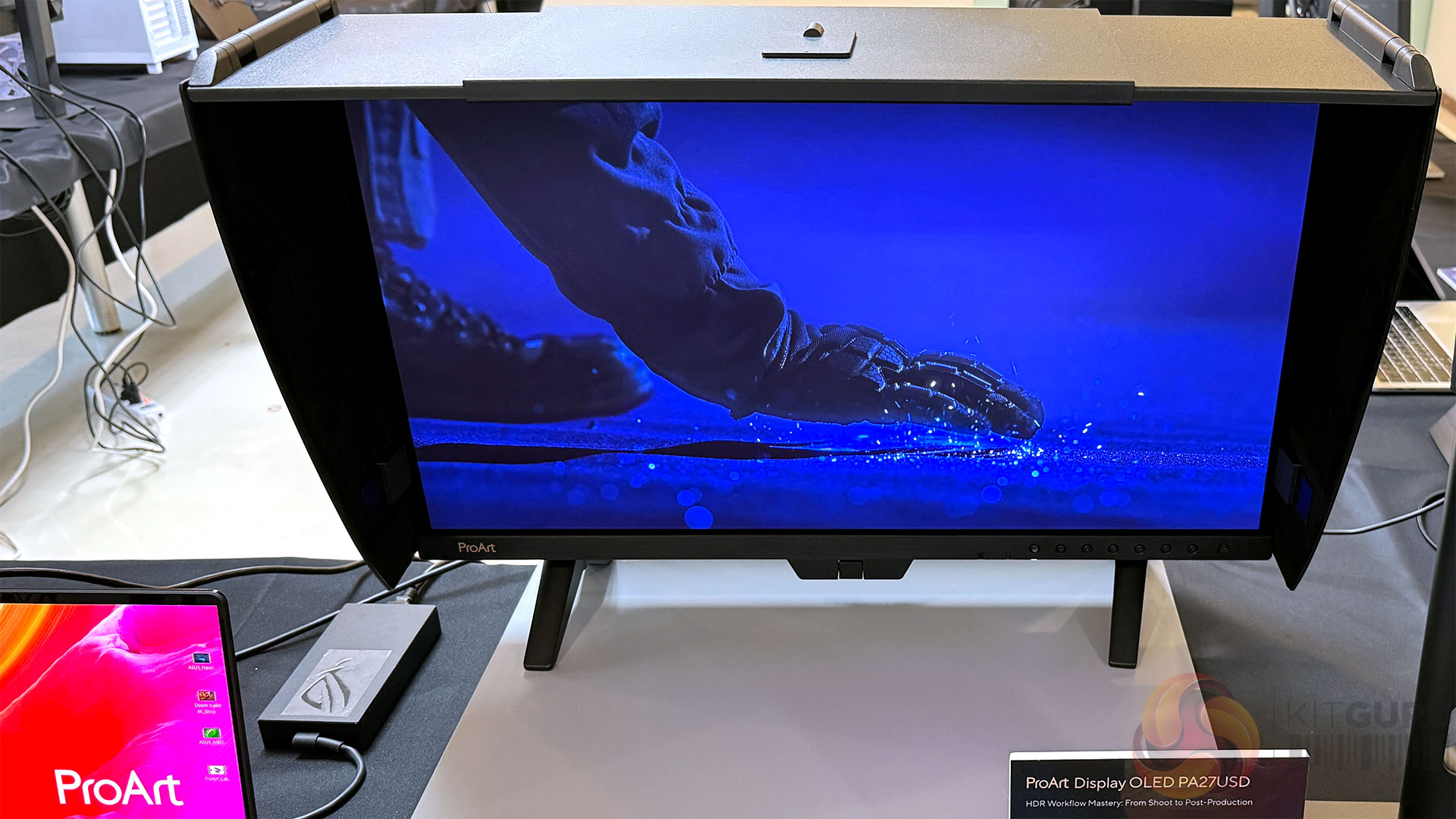
At the professional end of the spectrum, ASUS highlighted a deliberate strategy of pushing flagship ProArt products further upmarket while simultaneously broadening access for creators and prosumers. Displays such as the ProArt Display OLED PA27USD and PA32UCDMR-K are designed for users who have outgrown basic office monitors, but who don’t necessarily operate in full studio environments.

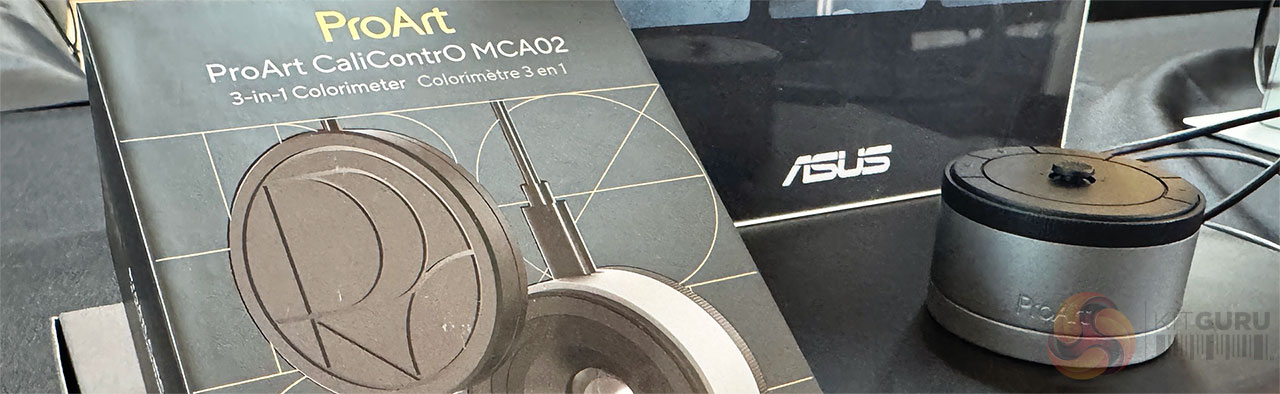
ASUS cited growing demand from content creators and hybrid professionals who need accurate colour, higher brightness and modern connectivity without stepping into prohibitively expensive territory. ASUS insists that its ProArt screens have been targeted at professional creators. As such, thePA32UCDMR-K is Calman Ready with ColourSpace integrated and is supplied with a monitor hood – as well as the latest version of ASUS' Colorimeter, the MCA02.

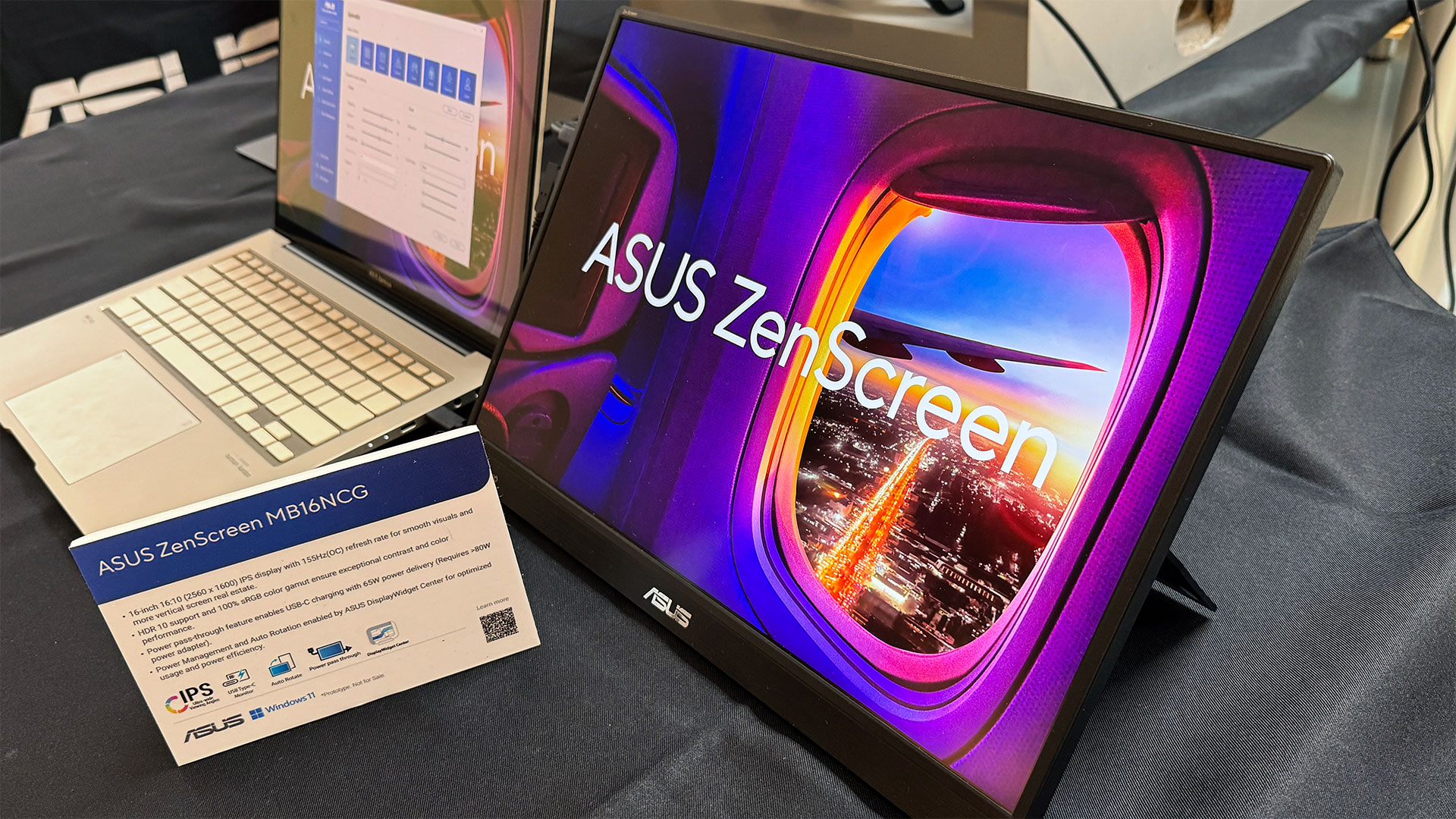
Finally, ASUS briefly covered more consumer-oriented and portable displays, including the ZenScreen OLED MQ16FC and ZenScreen MB16NCG. While these products sit slightly outside KitGuru’s core focus, the USB Type-C connectivity, power pass through, 100% sRGB high refresh rates and sub-1kg weight of 16” (16:10 ratio) models like the MB16NCG, make them genuinely interesting as laptop companions for travel and flexible work setups.

Networking and routers

Networking was presented as one of the most misunderstood performance bottlenecks in modern systems. ASUS was keen to emphasise that WiFi-7 is not obsolete, nor is it a failed standard. In fact, ASUS positions WiFi-7 as very much ‘now’, with meaningful improvements over WiFi-6 when implemented properly.

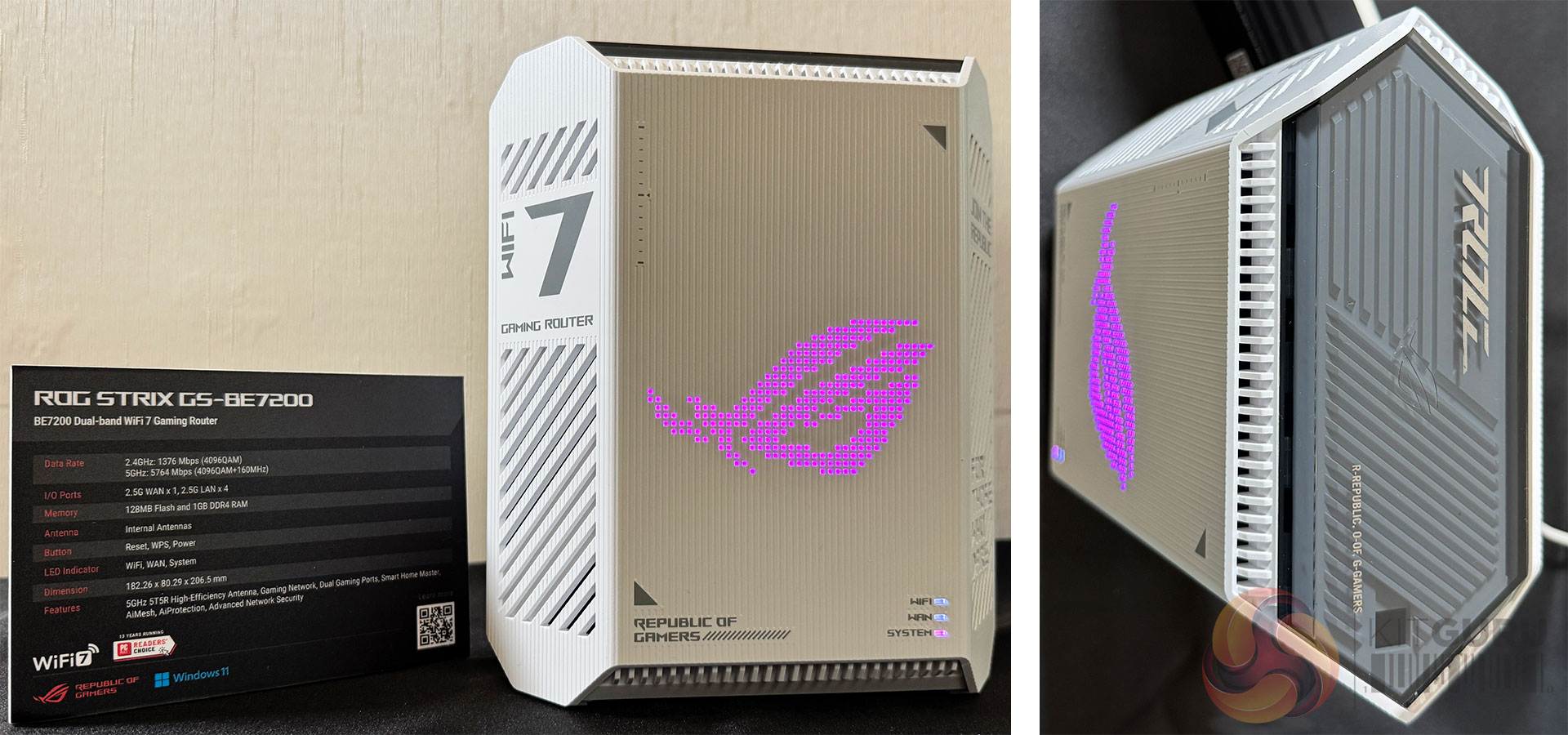
Products such as the ROG Strix GS-BE7200 were used to demonstrate what a well-executed WiFi-7 router can deliver today, including improved 5GHz performance at range, better handling of DFS channels and more consistent throughput in real homes. ASUS claims up to 15 percent better 5GHz performance compared to previous designs (5GHz 4T4R), though as with all such figures, real-world results will depend on environment and client devices.

At the same time, ASUS acknowledged that WiFi-7 adoption has been slower than expected. One reason is that many users struggled to see a compelling upgrade path from a strong WiFi-6 router to an average WiFi-7 one, particularly when headline speed increases did not always translate into day-to-day improvements. We’ve certainly found gaps between manufacturer’s claimed maximum speeds and our own real-world testing in 3-floor houses built with bricks.

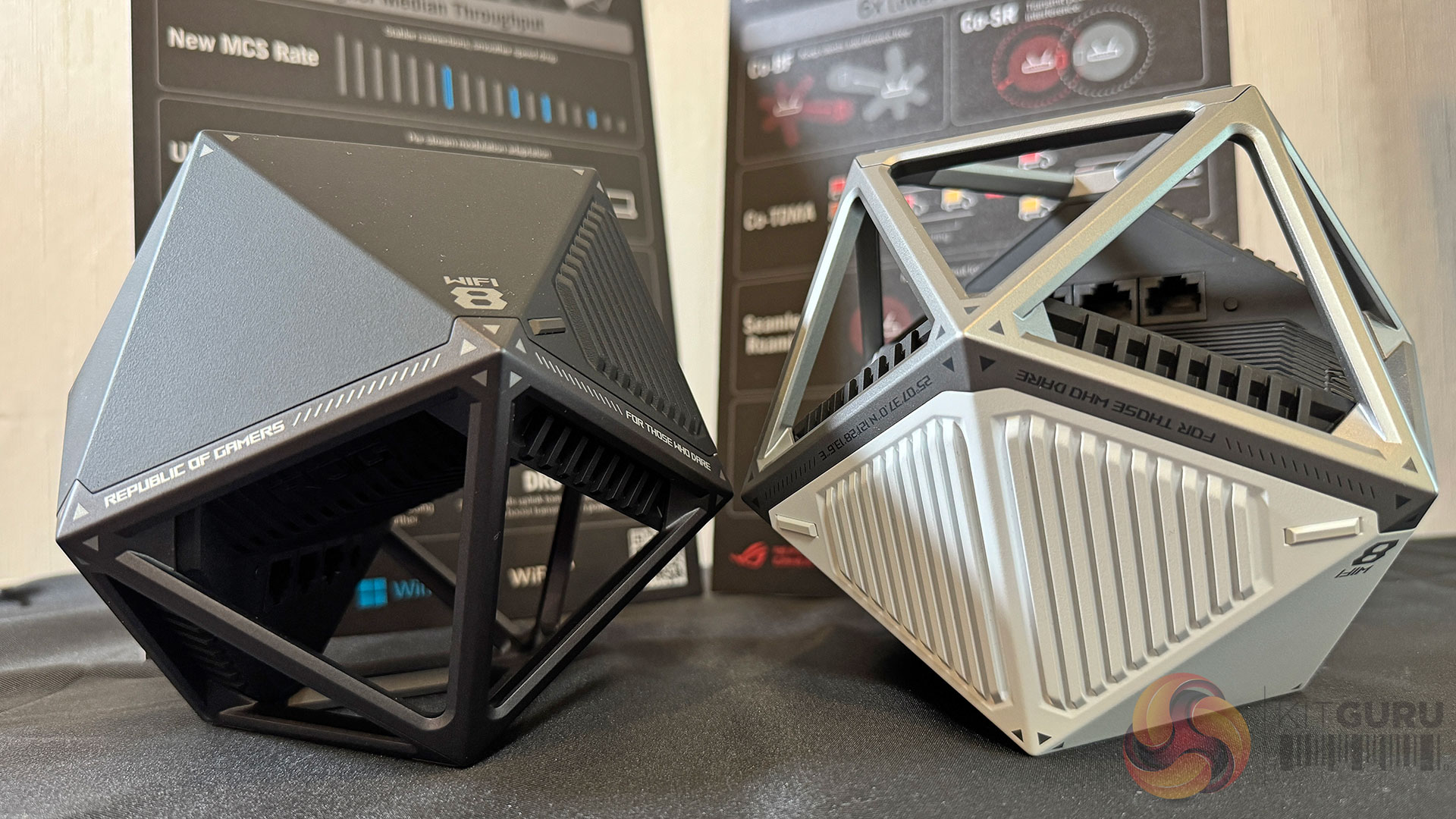
Slides covering WiFi-8 made it clear that ASUS expects early hardware to arrive ahead of 802.11bn standards receiving final ratification. The standard could be finalised around the middle of 2028 – while WiFi-8 hardware could start to ship as early as 2026. Bear in mind that we are talking about WiFi-8 routers and not clients – which will normally follow on a little later. For reference, KitGuru saw its first WiFi-7 dongle at IFA 2025, back in August.

Crucially, ASUS is framing WiFi-8 as a shift in priorities, rather than a simple speed race. Specifically emphasising the move towards aggregate bandwidth, multi-user performance and latency consistency, rather than peak single-device throughput. ASUS claims improvements of up to two times mid-range throughput, two times lower latency, and significantly higher reliability compared to WiFi-7, with a particular focus on more balanced uplink and downlink performance.

ASUS also leaned into the idea that AI-driven optimisation will increasingly sit at the network layer. Many users intuitively expect AI to make complex systems behave better without manual tuning, and ASUS positions WiFi-8 routers as platforms that can intelligently manage traffic based on device behaviour, workload type, and contention, rather than simply pushing more raw bandwidth.

On this Tech Tour, we got to hold WiFi-8 routers that bear more than a passing resemblance to next-gen TIE Fighters from Star Wars.

Alongside consumer and gaming routers, ASUS highlighted its ProArt Creator networking products, including the ProArt Router PRT-BE5000 and ProArt Switch PQG-U1080. These are positioned as practical solutions for creators and small studios who need reliable wired and wireless performance, multi-gigabit connectivity, and simple management, without stepping into full enterprise networking complexity. Moving to an expensive next-gen router at home will be far harder to justify than installing such devices in a video/creator studio environment.

Gaming peripherals

ASUS’ gaming peripherals presentation focused on refinement rather than reinvention. Across keyboards, mice, and headsets, the emphasis was on precision, consistency, and wireless maturity.

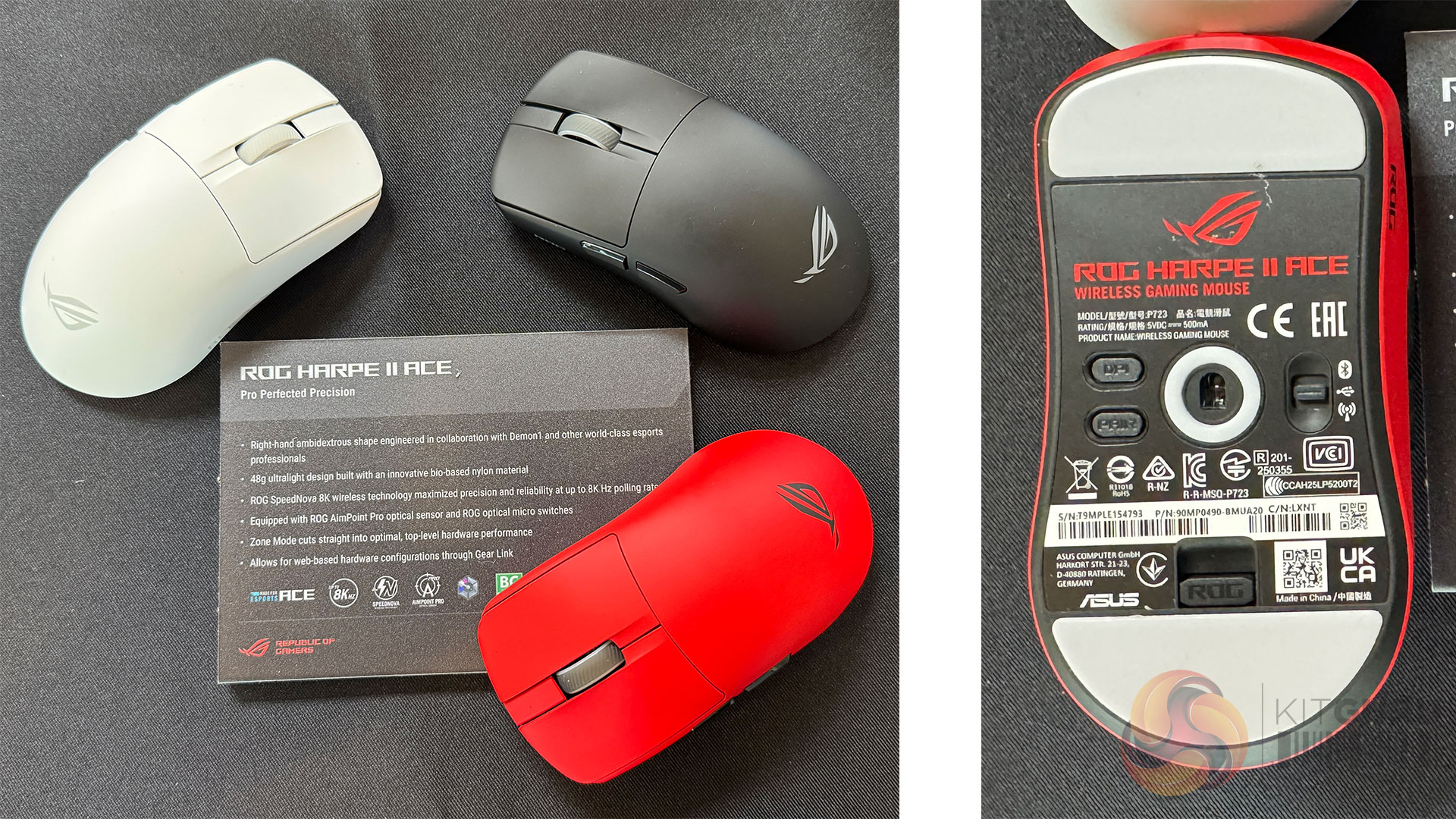
Keyboards such as the ROG Falchion Ace 75 HE, reflect the continued move towards Hall Effect and ROG HFX V2 magnetic switches, with ASUS focusing on actuation consistency and longevity. Similarly, mice like the ROG Harpe II Ace and ROG Keris II Origin build on optical sensors, high polling rates, and shapes informed by esports feedback, where marginal gains are now more about ergonomics and feel than raw specifications. Essentially, physically-lighter mice in cooler colours with faster responses.

Wireless technology is no longer treated as a compromise. ROG’s SpeedNova technology appears across multiple devices, supporting low latency, stable connections, and multi-device setups. In practical terms, wireless input now feels like the default at the high end, rather than an optional convenience. In general, you can choose your own battery life by keeping the RGB disco lights on or off.

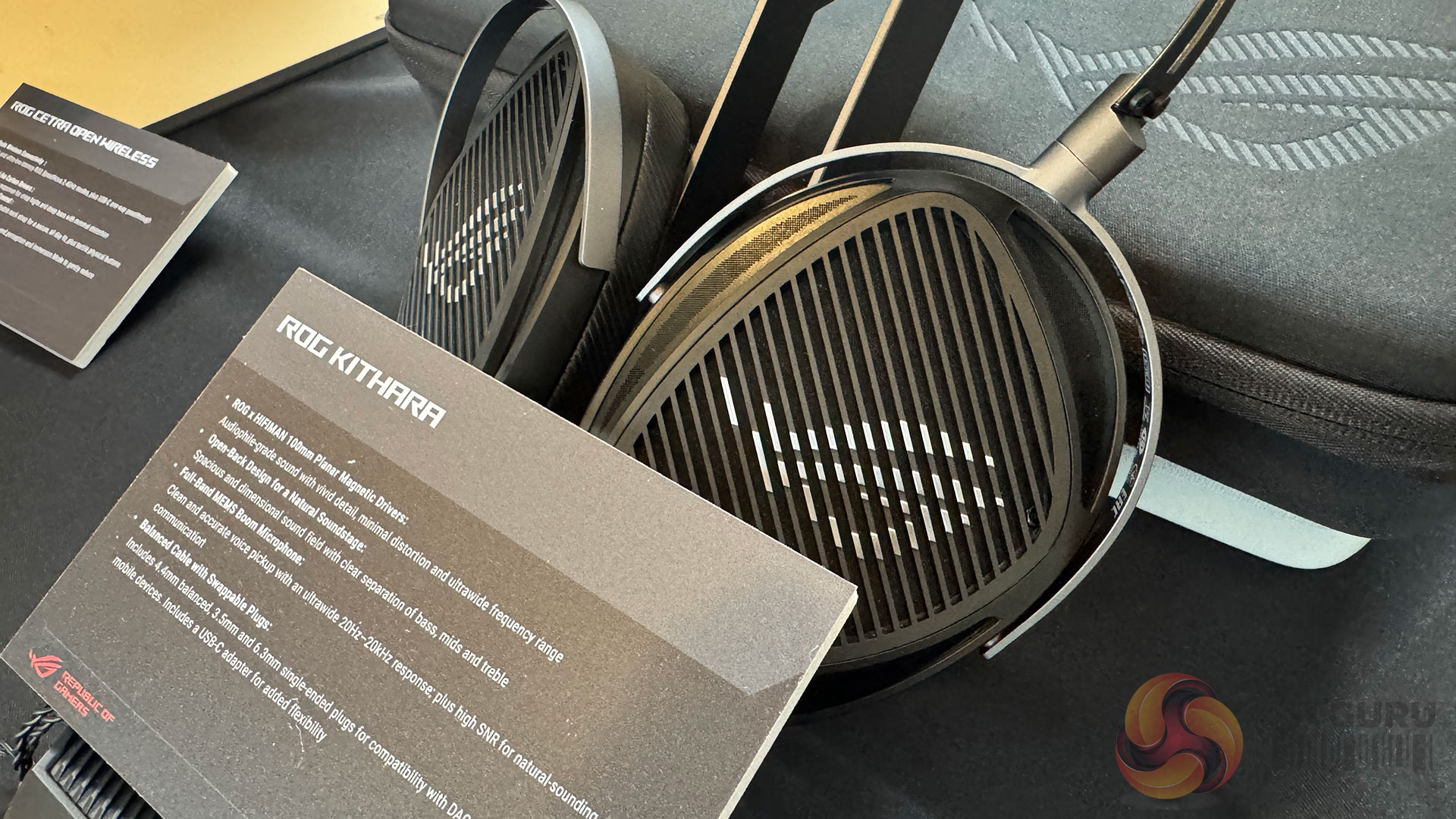
Audio was clearly the centrepiece of the peripherals briefing. The ROG Kithara was positioned as a flagship product, with ASUS indicating an expected price point around $299 at launch. This is not a budget product, but instead aims to deliver high quality audio for those who value mobility as well as audiophile-grade sound. ROG-customised HIFIMAN 100mm planar magnetic drivers deliver lifelike audio with sharp, precise detail. Engineered for competitive play, the Kithara headset features an integrated full-band MEMS microphone for clear in-game communication.

A balanced headphone cable with swappable plugs, along with a USB-C adapter, ensures uncompromised audio fidelity and broad compatibility across a wide range of devices. At this price level, expectations will be high, and independent testing will be essential to determine whether the experience justifies the price.

The KJP series of peripherals was also shown as a design-led extension of the ROG ecosystem, including headset, mouse and mouse pad. While these products are more about aesthetic and brand expression than performance leadership, they sit alongside a broader line-up that remains firmly focused on competitive use.

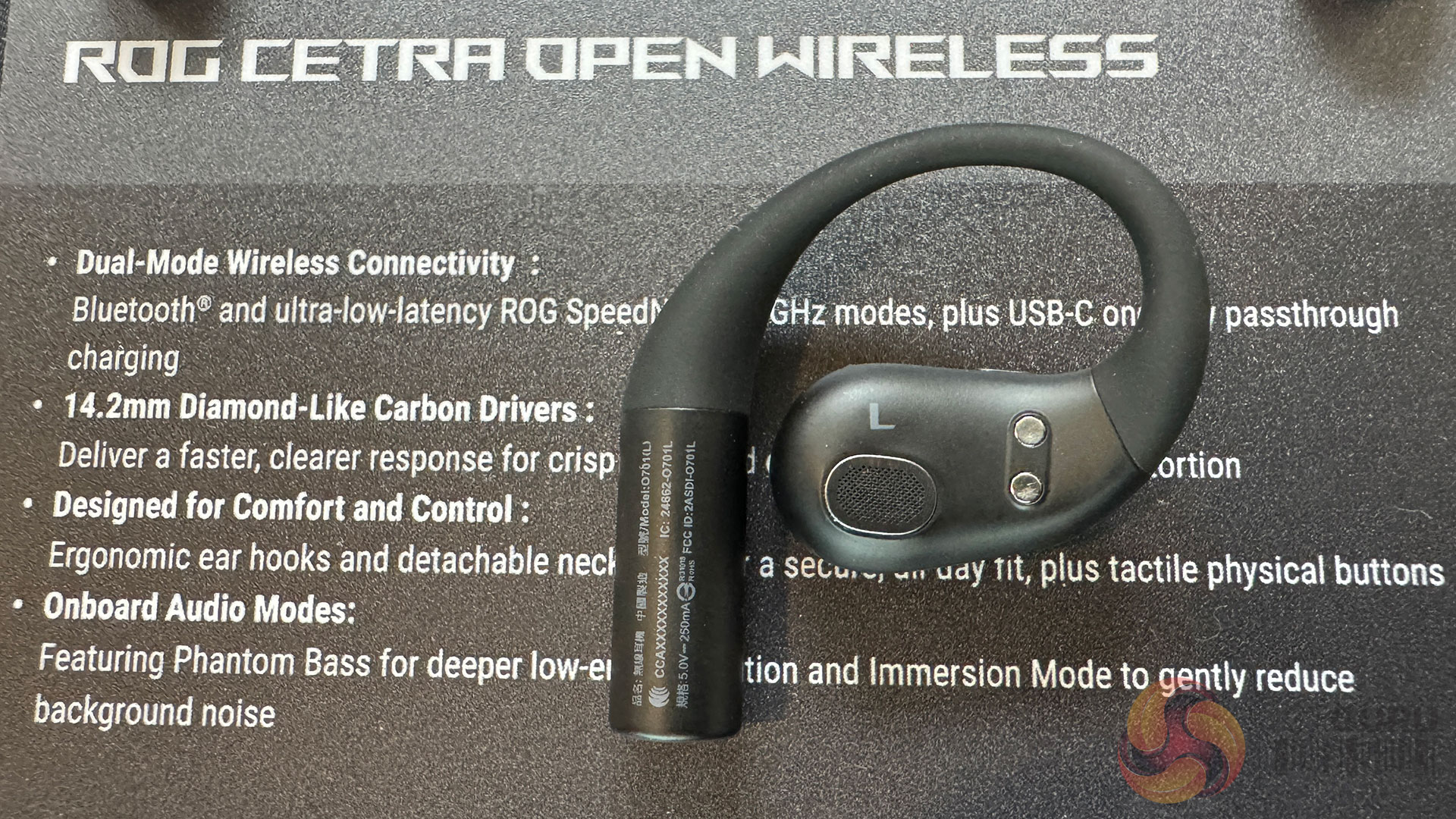
Finally, another neatly-designed audio product comes to market in the form of the ROG Cetra Open Wireless earbuds. In addition to Bluetooth, they offer ultra-low-latency ROG SpeedNova 2.4GHz – as well as USB-C one-way pass-through charging. The 14.2mm diamond-like carbon drivers promise faster, clearer response and, overall, the ‘ergonomic ear hook' design promises comfort should you decide to use them all day. There are tactical/physical buttons to make them easier to adjust – and the Cetra features Phantom Bass for deeper low-end perceived tones – as well as ‘Immersion Mode' to get rid of the noise of the outside world.

Compact compute and NUC systems 

The ASUS NUC and mini PC strategy spans a wide range of use cases, from education and commercial deployments to gaming and AI development. What became clear during the briefing is that not all AI performance figures are created equal. Specifically, there’s a lot of questionable emphasis on TOPS figures at the lower end of the performance scale.

Systems such as the ASUS NUC 16 Pro and ExpertCenter PN55 offer between 55 AI TOPS and 180 platform TOPS of AI performance, depending on configuration. In real-world terms, this level of capability is sufficient for local assistants, transcription, image processing and OS-level features such as Microsoft Copilot+. It could be useful, but it is not transformative compute. At this level, AI performance often feels like a compliance requirement rather than a compelling reason to upgrade, and it is difficult to ignore the influence of platform mandates and co-marketing incentives in shaping these products.

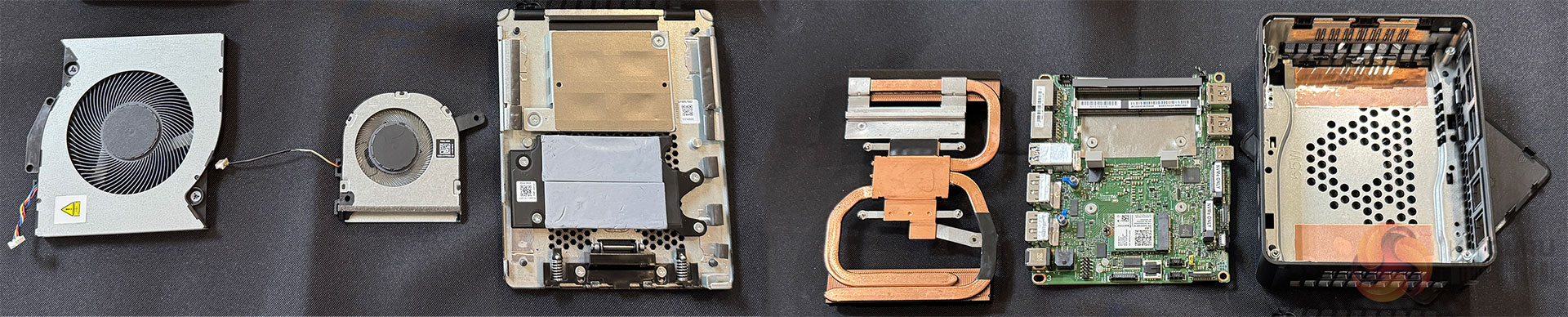
The complexities involved in building modern NUCs is not to be under-estimated. Cooling with longevity, as the components themselves continue to get better, is a challenge. 

That doesn’t make these systems irrelevant. They could definitely make sense for colleges, offices and edge deployment situations where space, power efficiency, manageability and reliability matter more than raw AI throughput. ASUS’ own categorisation of these devices as ‘Everyday AI’ and ‘Next Level AI’ is accurate, rather than hugely overstated. 

The ROG GR70 is where the compact compute story becomes far more convincing. With CPU options up to the AMD Ryzen 9 9955HX3D processor and an NVIDIA GeForce RTX 5070 Laptop GPU in a 3-litre chassis – this is a serious gaming system rather than a marketing exercise. Here, performance will be judged on frame rates, thermals and acoustics. On paper, the specification suggests a genuinely capable compact gaming machine.

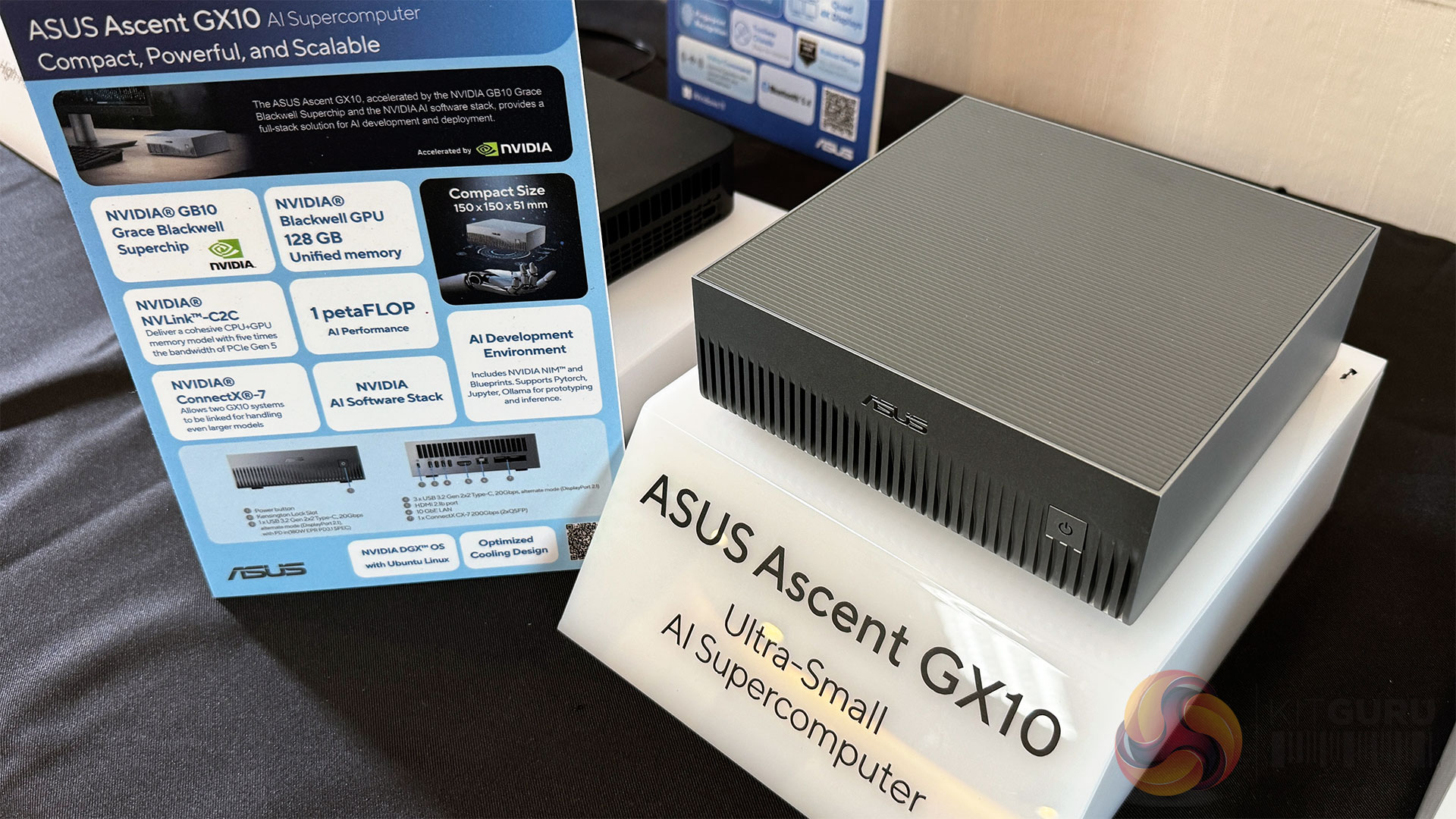
The stand-out product, however, is the ASUS Ascent GX10. With a claimed 1 petaFLOP of AI performance, powered by the NVIDIA GB10 Grace Blackwell Superchip and supported by 128GB of unified memory, this system moves decisively into desktop supercomputer territory.

ASUS claims the GX10 can handle models of up to 200 billion parameters, bringing serious AI development capability into an ultra-compact 150×150×51mm enclosure.

This mirrors the philosophy behind the larger ET900N G3 shown earlier in the tour, but in an even more accessible form. For organisations and developers looking to build, test, and refine AI models locally, offline, or in secure environments, the Ascent GX10 could prove genuinely compelling.

KitGuru says: Across displays, networking, peripherals, and compact systems, the ASUS 2026 portfolio reflects a shift towards experience and integration as the primary differentiators. Many of the performance figures discussed here come directly from ASUS briefings, and KitGuru will be looking to validate those claims through independent testing as products become available.

The post Asus reveals next-gen displays, new gaming peripherals and WiFi 8 devices first appeared on KitGuru.

CES 2026: Sapphire launches new Edge+ motherboard with embedded Ryzen AI

6 janvier 2026 à 18:00

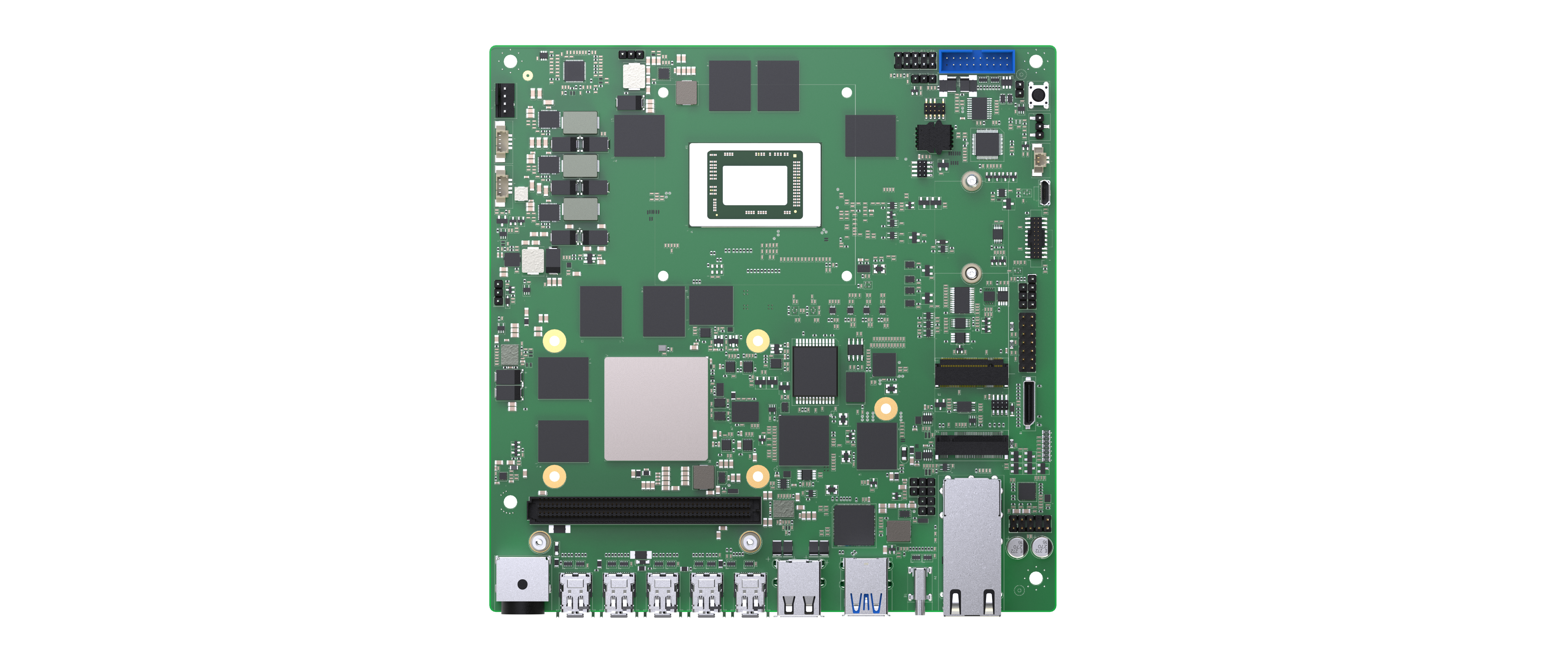
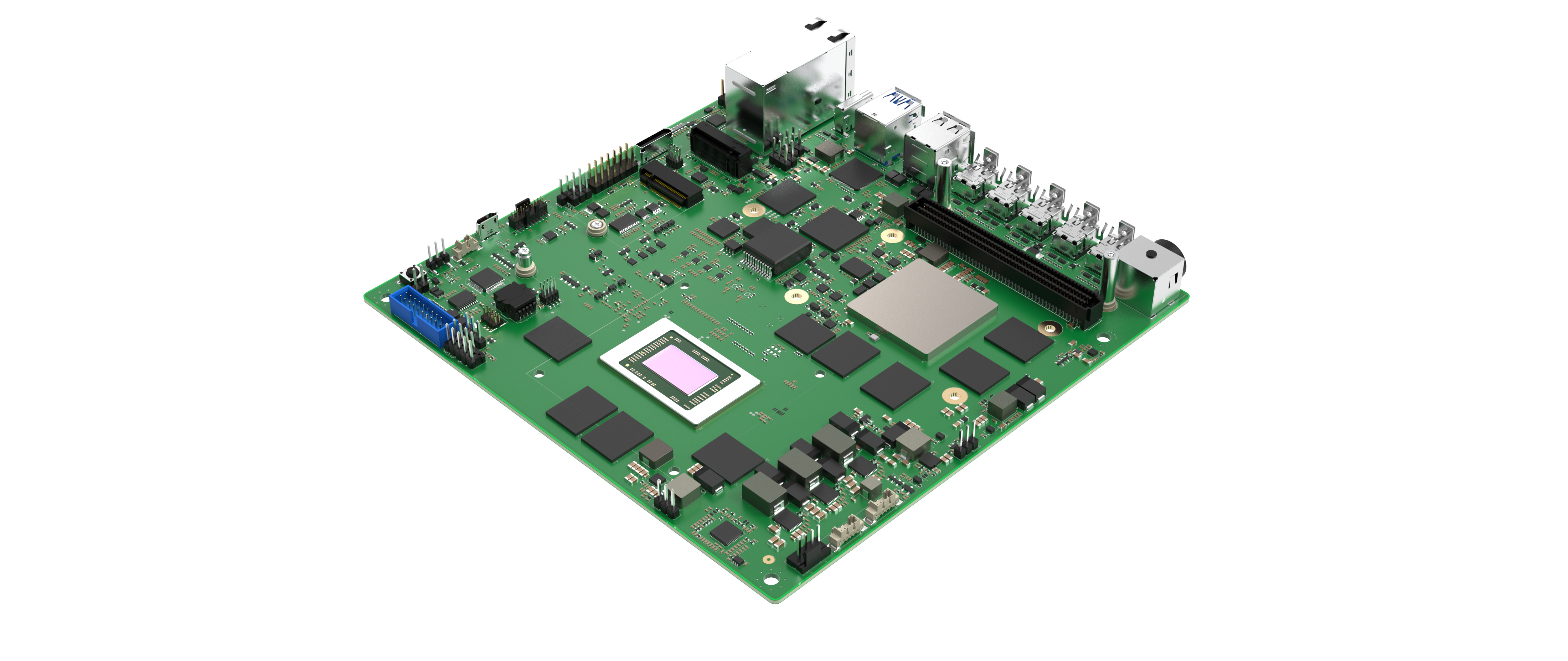
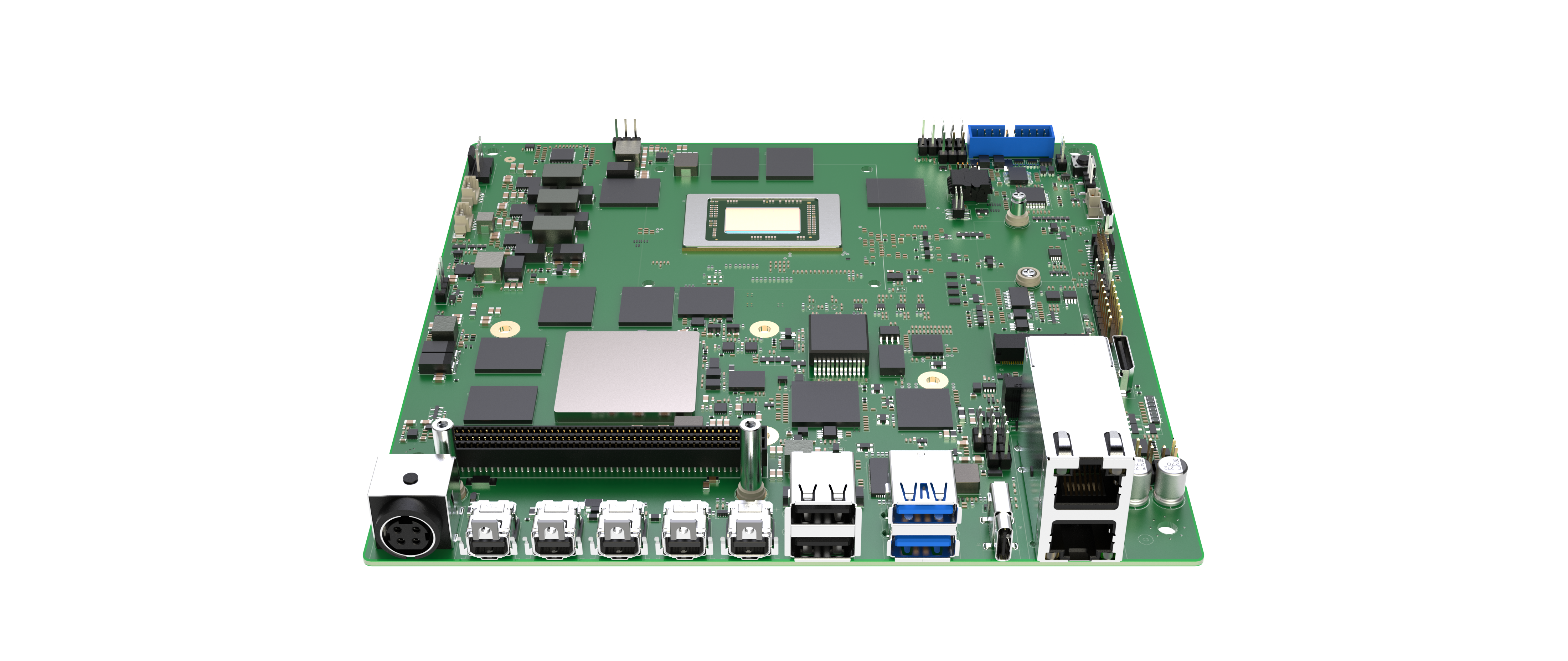
At CES this week, Sapphire has introduced the EDGE+ VPR-7P132, a Mini‑ITX AMD Embedded+ motherboard designed to handle increasingly complex AI workloads at the edge. The board combines AMD’s new Ryzen AI Embedded P132 Series APU with a Versal AI Edge Series Gen 2 adaptive SoC, creating a dual‑processor platform aimed at robotics, machine vision, industrial automation, and other latency‑sensitive deployments.

The design allows workloads to be split across CPU cores, RDNA 3.5 graphics, the XDNA 2 NPU, and the Versal device’s programmable logic and AI engines. The Ryzen AI Embedded processor manages OS, networking, visualisation, and general application tasks, delivering more than 50 TOPS of AI performance and supporting quad‑4K output, high‑speed Ethernet, USB, and NVMe storage. The Versal AI Edge Gen 2 SoC handles deterministic, real‑time functions such as sensor ingress, pre‑processing, and inference, ensuring predictable behaviour when timing is critical.
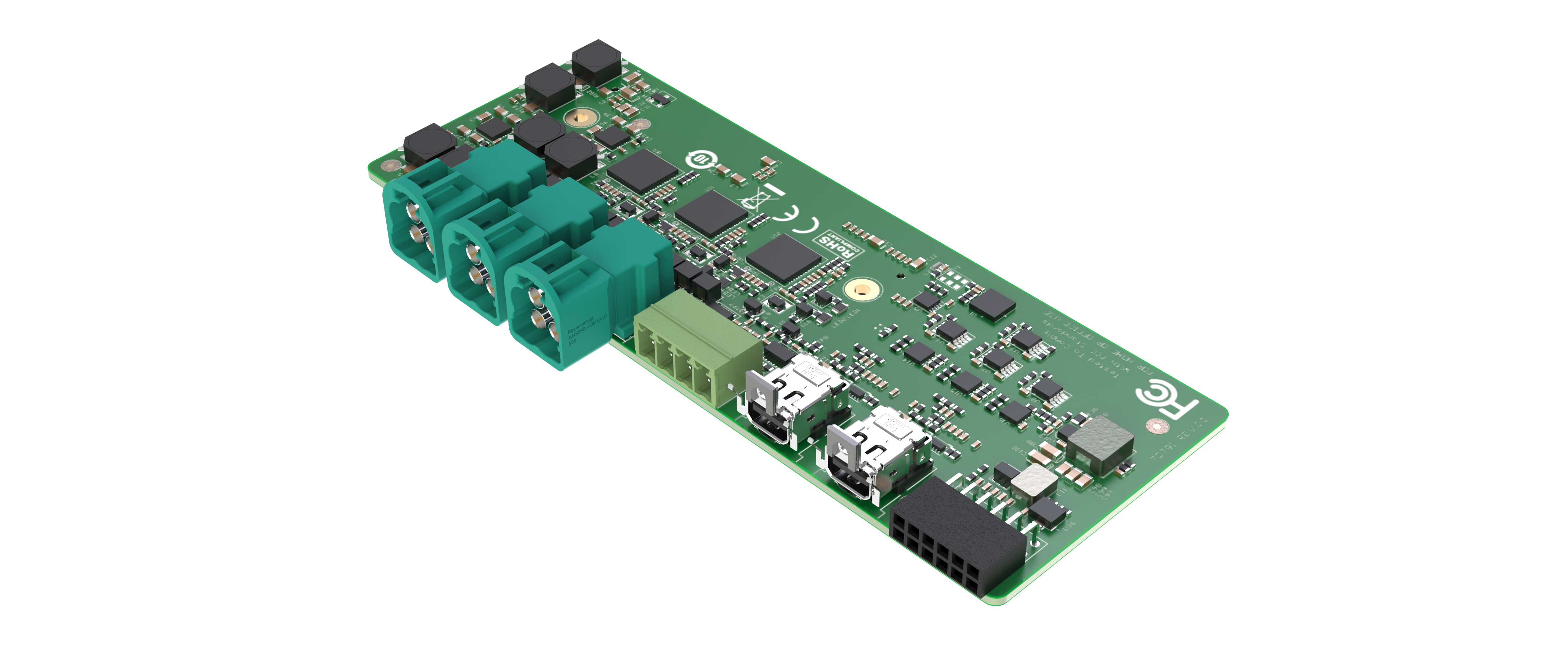
Despite its 170×170mm footprint, the EDGE+ VPR-7P132 includes five display outputs, dual 10Gb Ethernet, USB4, multiple USB and audio interfaces, and PCIe Gen4 expansion via M.2 and OCuLink. An optional I/O daughterboard expands support further with three Quad GMSL2 C/D‑PHY interfaces for up to 12 cameras, two CAN‑FD ports, and additional mini DisplayPort outputs tied directly to the Versal subsystem.
The platform is built for continuous operation, with LPDDR5 support, onboard UFS storage, TPM 2.0, and compatibility with Ubuntu, Yocto Linux, QNX, and VxWorks. SAPPHIRE positions the board as a scalable solution for developers building edge systems that need both high‑performance application processing and deterministic AI acceleration.
KitGuru Says: This isn't necessarily something that will be of interest to the gamers in our audience, but those in IT and enterprise looking to integrate AI throughout their workflows will want to keep an eye on the work Sapphire is doing in the AI Mini PC space.
The post CES 2026: Sapphire launches new Edge+ motherboard with embedded Ryzen AI first appeared on KitGuru.

Far Cry 3 seemingly next in line to receive 60fps current-gen patch

6 janvier 2026 à 17:00

Ubisoft has been one of the better publishers when it comes to updating their back-catalogue of games for current-gen hardware, with multiple Assassin’s Creed titles; Far Cry entries and most recently The Division 1 all getting 60fps patches on PS5 and Series X|S. It appears as though more such updates are in the works, with Ubisoft teasing that the iconic Far Cry 3 could be next in line.

Responding to one Twitter user who wrote: “Far Cry 3 classic edition and Blood Dragon 60fps update when? Please tell me soon!” the official Far Cry page posted a meme featuring the known ‘smug stickman’ – suggesting that such an update is in the works.

As mentioned, Ubisoft have released a ton of performance patches for various last-gen titles, including but not limited to: Far Cry 4; Far Cry 5; Assassin’s Creed Syndicate; AC: Origins; Odyssey and The Division 1. As such it is unsurprising that one of the most iconic titles ‘Far Cry 3’ would be seeing a similar treatment.

Far Cry 3 60fps

All that being said, as with pretty much all previous 60fps updates, expect little else in the way of enhancements. This means that Far Cry 3 on PS5 will likely still operate at 1440p albeit at 60fps instead of 30. Unfortunately, don’t expect any major changes otherwise – meaning it will still likely feature a rather narrow field of view (among other last-gen compromises).

Still, having as many last-gen titles as possible updated to offer 60fps at the very least is welcome to see. Hopefully we get a formal announcement soon.

KitGuru says: What do you think of Ubisoft’s ongoing support for last-gen titles? Would you like to see more games get native current-gen enhancements instead? Or is 60fps enough of an improvement? Let us know down below.

The post Far Cry 3 seemingly next in line to receive 60fps current-gen patch first appeared on KitGuru.

CES 2026: be quiet! announces its first LCD-equipped AIO cooler, Dark Rock 6 and more

6 janvier 2026 à 16:30

be quiet! is kicking off CES 2026 with a major refresh across its cooling, PSU, and peripheral lines — including its first products to feature integrated LCD displays. The company’s showcase spans new AIO and air coolers, high‑wattage power supplies, and a pair of ultra‑light gaming mice.

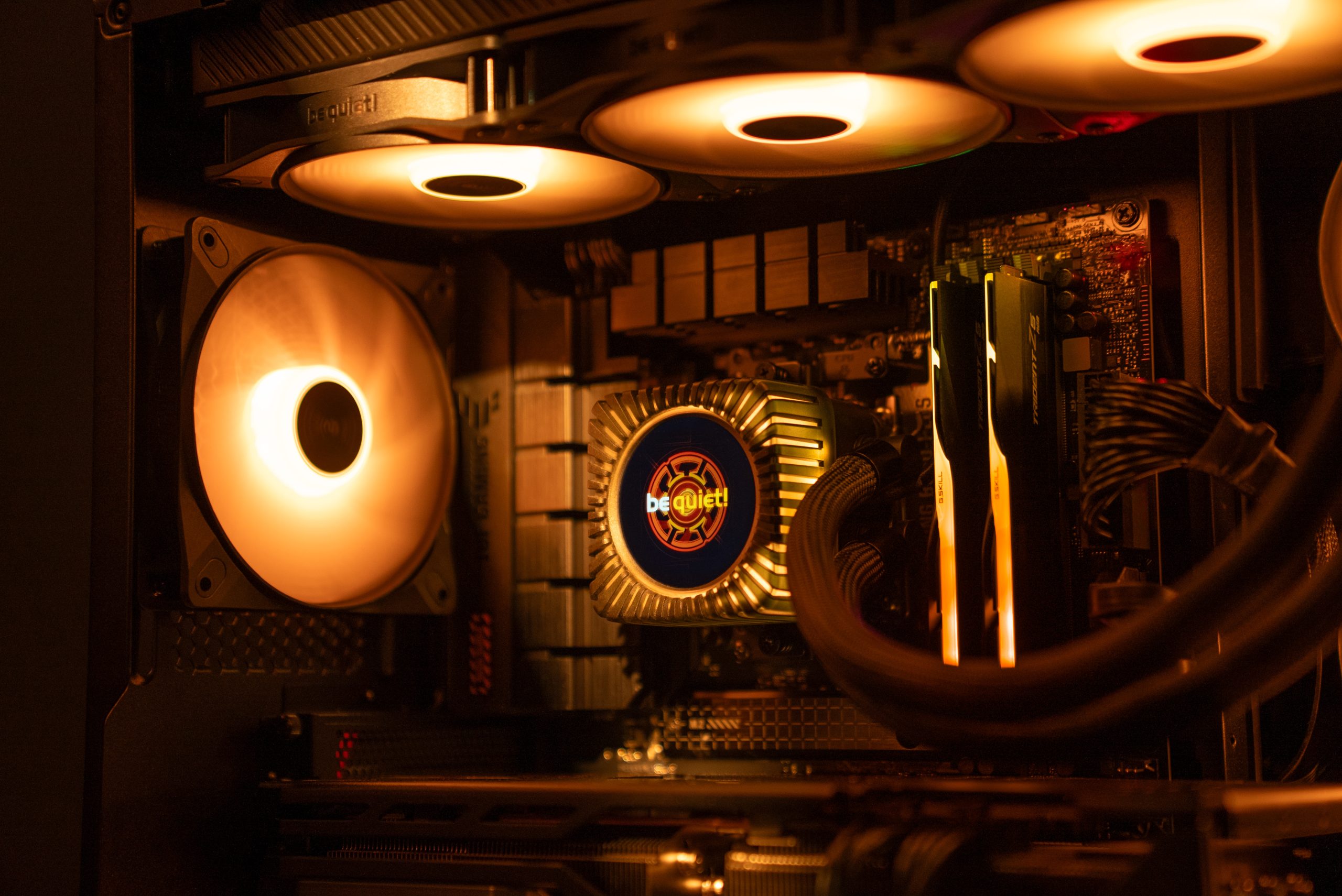
The headline announcement is the Light Loop IO LCD, an AIO liquid cooler built for high‑end and overclocked systems. It features a 2.1‑inch IPS display capable of showing system telemetry, images, videos, or custom presets, all at 500 nits of brightness. Cooling is handled by a redesigned pump, a new jet‑plate and cold‑plate assembly, and three daisy‑chained Light Wings LX PWM fans. Full control is available through the updated IO Center software, including ARGB effects and a new Screen Sync mode. The cooler will ship in 360mm and 240mm sizes, in both black and white.

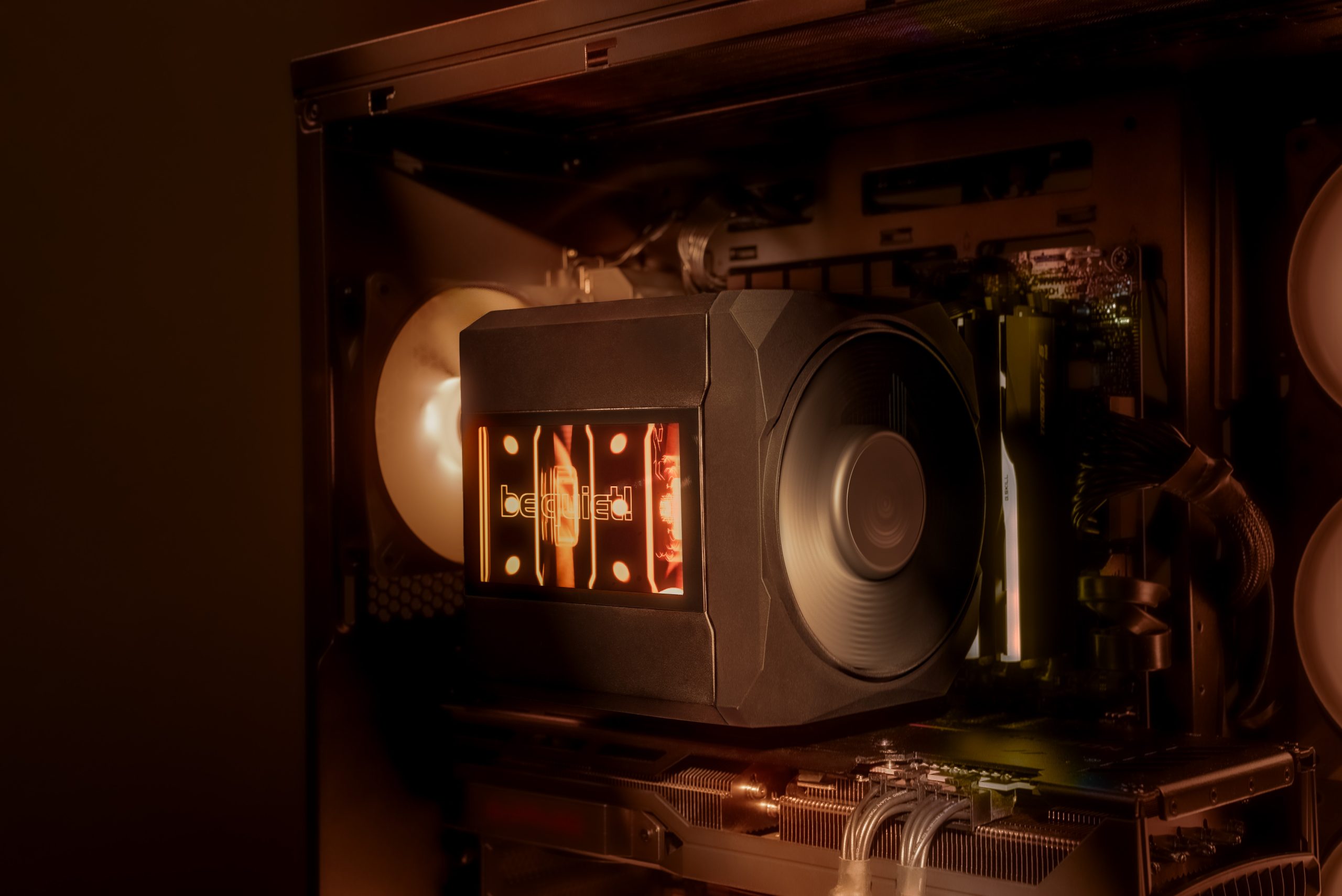
Alongside the AIO, be quiet! is expanding its flagship air‑cooling line with the Dark Rock 6 and Dark Rock Pro 6. The Pro model uses seven heat pipes and dual Silent Wings PWM fans to handle heavily overclocked CPUs, while the standard Dark Rock 6 offers a more compact six‑pipe design with a 135mm fan. Both coolers support semi‑passive operation for silent idle workloads. An early prototype of the Dark Rock Pro 6 IO LCD was also shown, adding a 4.5‑inch IPS display with the same customisation options as the Light Loop IO LCD.

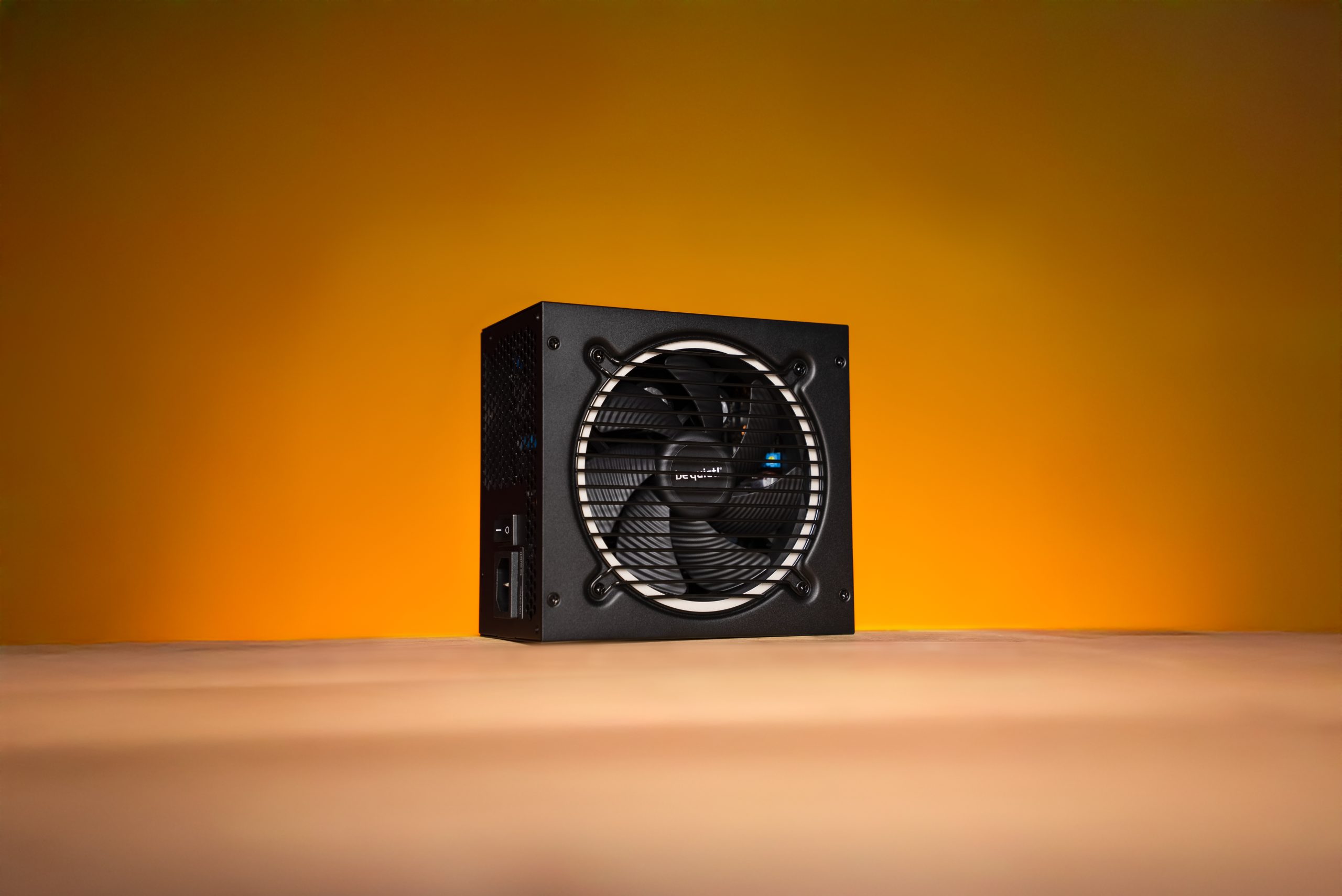
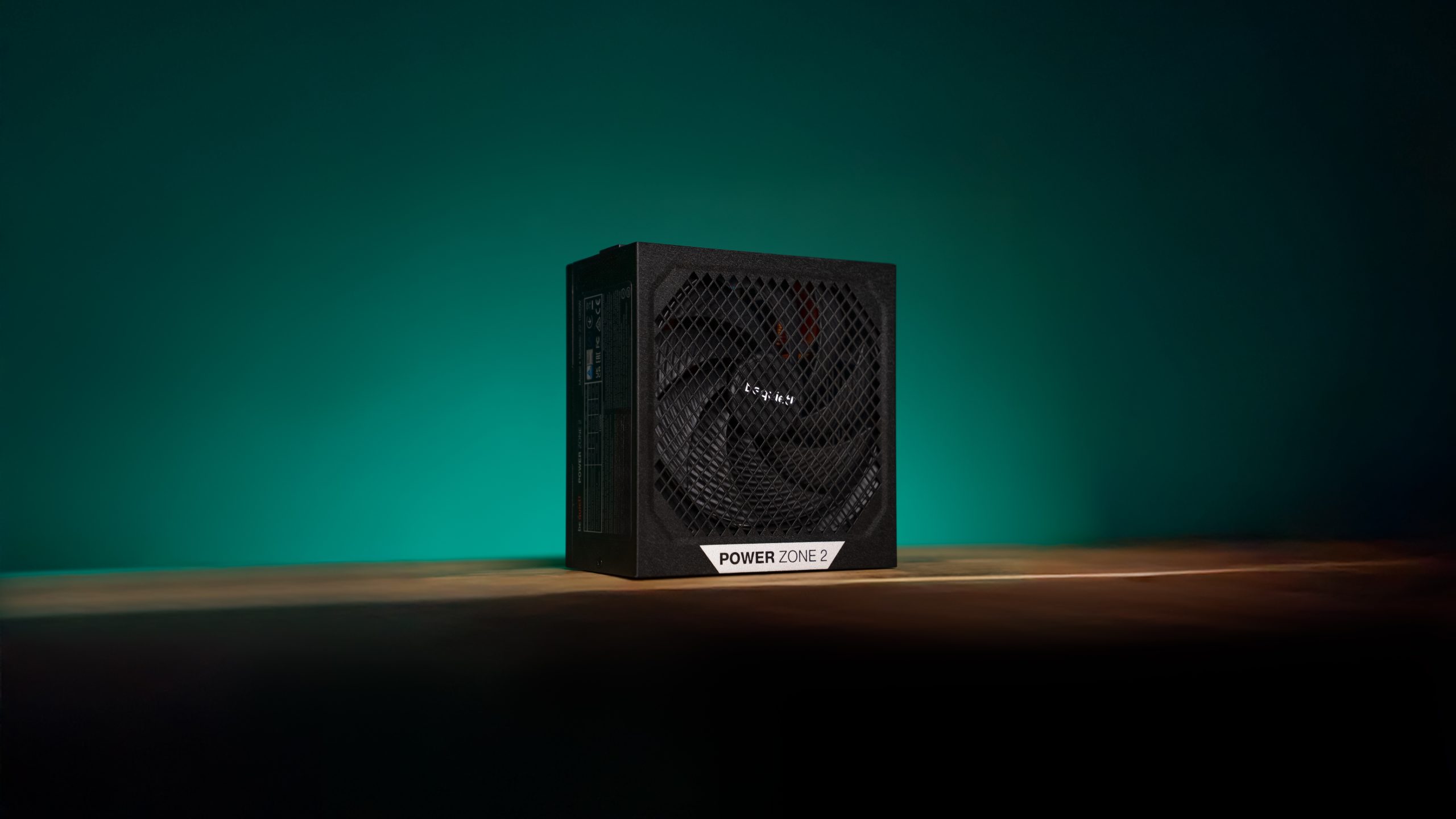
For power delivery, the company is introducing 1200W versions of its Power Zone 2 and Pure Power 13 M PSUs. The former targets high‑end builds with 80 PLUS Platinum efficiency, Cybenetics Platinum certification, and full ATX 3.1/PCIe 5.1 support. The Pure Power 13 M 1200W offers 80 PLUS Gold efficiency and semi‑passive cooling, with both units capable of handling extreme power excursions.

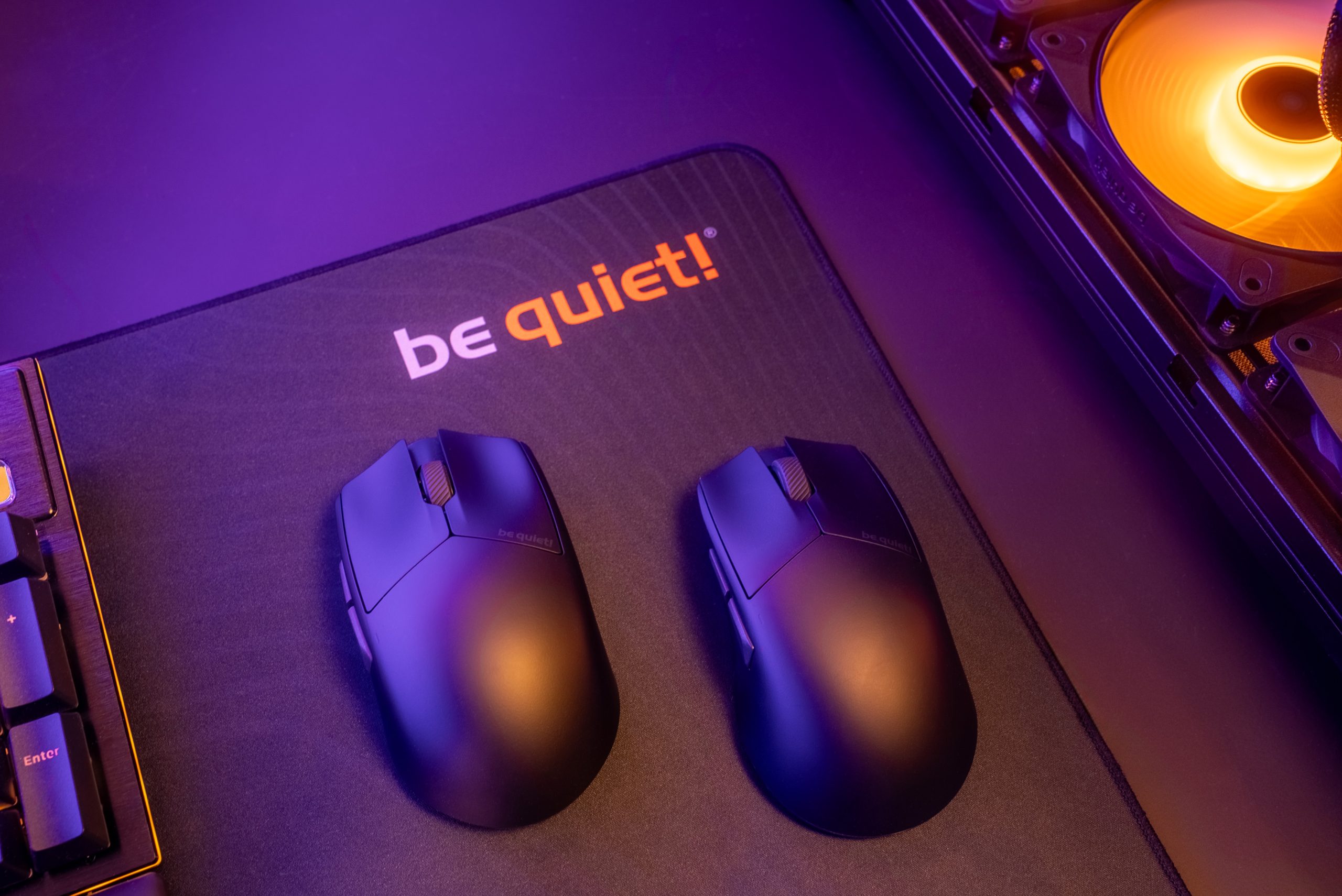
Rounding out the lineup are the Dark Perk Ergo and Dark Perk Sym gaming mice — 55g wireless models with 8,000Hz polling, a 32,000 DPI PixArt sensor, optical switches, and up to 110 hours of battery life.

KitGuru Says: Will you be keeping your eye out for any of be quiet!'s new gear in the coming months?

The post CES 2026: be quiet! announces its first LCD-equipped AIO cooler, Dark Rock 6 and more first appeared on KitGuru.

8BitDo announces unique ‘FlipPad’ vertical smartphone controller

6 janvier 2026 à 16:00

8BitDo has amassed a strong reputation over the past few years for their high quality 3rd party controllers, with an emphasis on offering throwback designs and colour schemes to systems of old. In an interesting addition to their line-up of accessories, the hardware maker has now unveiled the FlipPad: A new, unique mobile controller built specifically for vertical gaming.

Making the announcement via a brief teaser video on Twitter, the official 8BitDo account officially unveiled the FlipPad “a flip-style gamepad designed for mobile gaming.”

Said to be arriving some time this Summer, the unique vertically-aligned controller attaches to your phone using USB-C for minimal latency. After connecting the controller, the faceplate / button pad then flips to cover the lower 3rd of your phone screen.

Up until now, only one other controller maker has attempted to create such a product, with the Hyperkin Smart Boy originally being announced as an April Fool’s joke – though it was ultimately turned into a real product.

Given the fact that many earlier handhelds were designed as vertical systems, the 8BitDo FlipPad will serve as a great way to play emulated titles on your smartphone without the need for a relatively chunky telescopic accessory. Hopefully the buttons themselves feel satisfying to use.

KitGuru says: What do you think of the 8BitDo FlipPad? Could it inspire a new wave of vertical controllers? How much do you think it’ll cost? Let us know down below.

The post 8BitDo announces unique ‘FlipPad’ vertical smartphone controller first appeared on KitGuru.

CES 2026: Cooler Master launches new cases, PSUs and cooling solutions

6 janvier 2026 à 12:00

Cooler Master is using CES 2026 to show the new entries to its enthusiast stack, bringing back some of its most iconic sub‑brands. The manufacturer's showcase in Las Vegas this week focuses on the “FreeForm 2.0” design philosophy, a modular approach that spans everything from the massive new Cosmos Alpha flagship to PSUs equipped with proactive GPU protection.

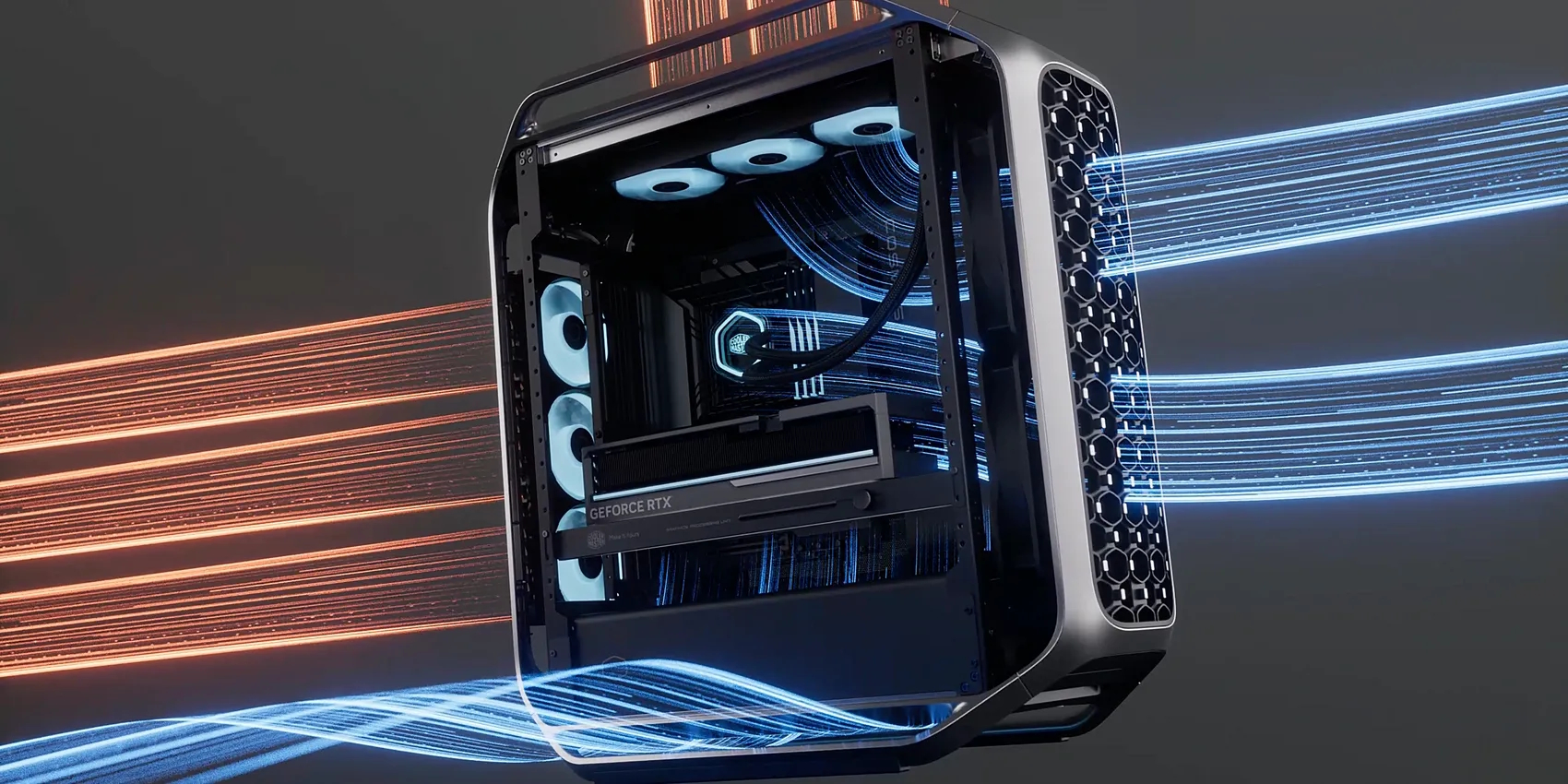
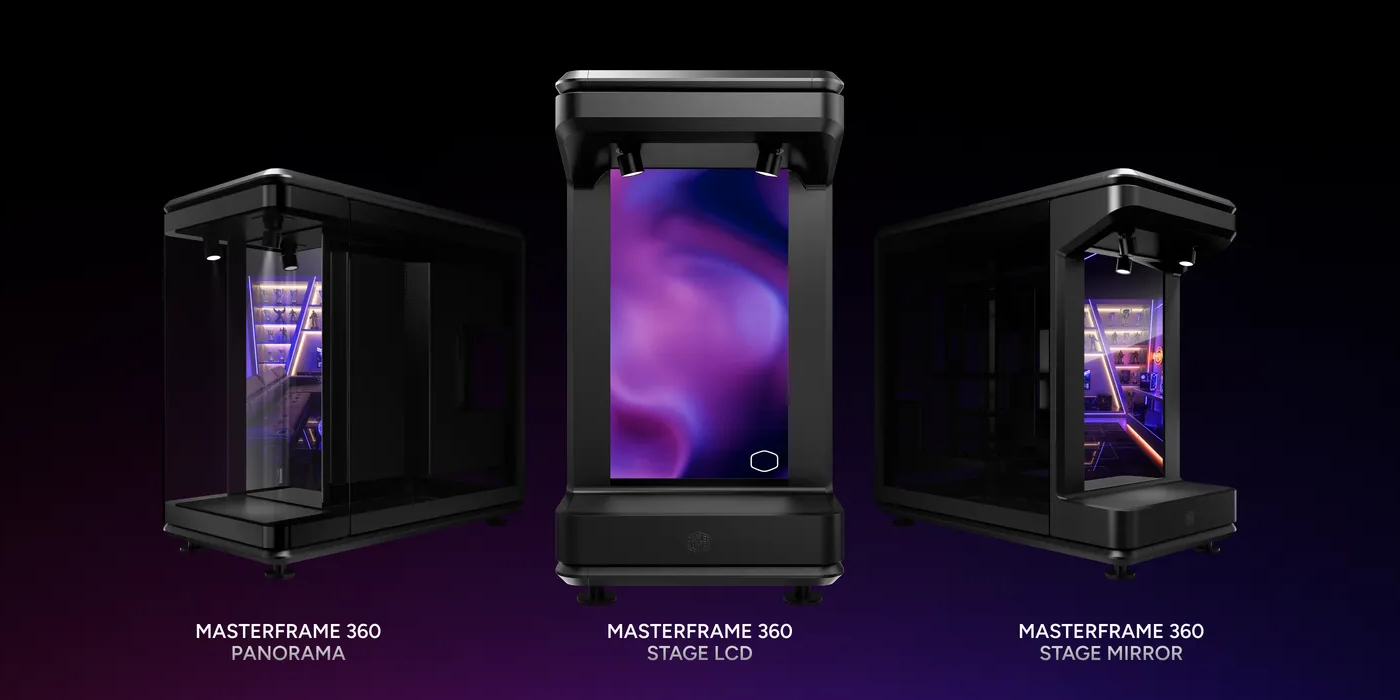
The centrepiece of the case lineup is the Cosmos Alpha, a full‑tower that serves as the spiritual successor to the C700 series. This new revision emphasises internal modularity through a sliding motherboard tray, allowing builders to shift the system’s position to prioritise either radiator clearance or increase the size of the cable‑management chamber. The chassis arrives with two extra‑thick 200x38mm fans pre‑installed and supports up to 420mm radiators. Alongside the flagship, the MasterFrame 360 series offers an open‑frame showcase designed for collectors. Available in Panorama, Stage Mirror, and Stage LCD variants, the latter includes a 15.6‑inch 1080p display at the front for personalised animations or telemetry.

For cooling, we have the return of the V8 series with the V8 ACE. This high‑end air cooler uses Cooler Master’s 3DHP technology, which integrates a 3D vapour chamber directly with the heat‑pipe structure to eliminate traditional thermal bottlenecks at the CPU contact point. On the liquid‑cooling side, the Core Nex Digital 240 and Core Nex LCD 360 make their debut, featuring a refined dual‑chamber pump design. Alongside these AIOs, Cooler Master is introducing the MasterFan A series, which features an aluminium construction, and the MasterFan M ARGB series, offering a more balanced approach to durability, acoustics, and visuals.

Perhaps the most practical advancement for modern builders is found in the MWE Gold V4 PSU series. These units introduce GPU Shield, a hardware‑level protection system integrated into the 12V‑2×6 power delivery standard. Unlike traditional passive cables, GPU Shield actively monitors the connection for abnormal thermal or electrical conditions, providing real‑time alerts and intervening before a “melting” scenario can occur.

To round out the ecosystem, Cooler Master also unveiled the Master Meter, a standalone digital tachometer, and the Master Vision 12.3‑inch external display for dedicated system monitoring.

KitGuru says: Interested in any of Cooler Master's new PC parts?

The post CES 2026: Cooler Master launches new cases, PSUs and cooling solutions first appeared on KitGuru.

CES 2026: Gigabyte refreshes 800-series motherboard lineup with four new models

6 janvier 2026 à 11:15

Gigabyte has used CES 2026 to showcase a specialised lineup of motherboards designed to squeeze every last frame out of AMD's Ryzen 9000 Series X3D processors. Leading the charge is the X870E Aorus Xtreme X3D AI Top, a flagship board focused on high‑frequency memory stability and aggressive thermal management for the latest 3D V‑Cache silicon.

The new X870E Aorus Xtreme X3D AI Top is Gigabyte's first AMD 800‑series motherboard to officially support DDR5‑9000+ memory speeds. Achieving these frequencies on the AM5 platform requires specific conditions, so Gigabyte has implemented “AI‑Trace” technology to optimise PCB routing and a 24+2+2‑phase VRM to ensure power delivery remains ripple‑free under load. To prevent thermal throttling during high‑speed memory operation, the board includes the DDR Wind Blade Xtreme solution, which allegedly reduces module temperatures by up to 9°C.

Complementing the memory cooling is a suite of thermal “Xtreme” features. The CPU Thermal Matrix is designed to more efficiently pull heat away from the socket area, dropping VRM and DDR temperatures by a claimed 8.5°C. For storage enthusiasts, the M.2 Thermal Guard Xtreme provides a large surface area for primary Gen5 SSDs, which the company states can lower drive temperatures by up to 22°C.

On the software side, Gigabyte is debuting X3D Turbo Mode 2.0. While the initial version of Turbo Mode was a simple BIOS toggle to park a CCD or disable Simultaneous Multithreading (SMT), the 2.0 revision uses an AI‑trained model to adapt these parameters in real time. By disabling SMT and focusing resources on the primary CCD during gaming, Gigabyte claims up to 25% performance gains in specific CPU‑bound scenarios. Unlike a static overclock, this mode is designed to be a “one‑click” optimisation that balances hardware power without requiring manual voltage tuning.

Beyond raw performance, Gigabyte is also catering to aesthetic and “clean build” trends. The X870E Aero X3D Wood breaks from the traditional gamer aesthetic by incorporating genuine wood‑grain textures and leather accents on the heatsinks. Meanwhile, the Project Stealth initiative is expanding with the X870 and B850 Aorus Stealth models. These boards utilise a reverse‑connector layout, moving all power and data headers to the back of the PCB to allow for a virtually cable‑free interior when paired with a compatible chassis.

KitGuru says: While DDR5-9000 is an impressive claim for the AM5 platform, it's the combination of the AI-driven Turbo Mode 2.0 and the proactive “Wind Blade” cooling that makes the new Aorus Xtreme motherboard a true high-end product.

The post CES 2026: Gigabyte refreshes 800-series motherboard lineup with four new models first appeared on KitGuru.

CES 2026: Thermaltake unveils new Retro series cases, coolers and peripherals

6 janvier 2026 à 10:30

Thermaltake is bringing the 90s back with a new range of ‘Retro’ series hardware at CES 2026. There are two new retro‑inspired PC cases, but with all the conveniences of modern designs, including the option to add a digital display exactly where you’d expect a disc drive to sit. To complement the cases, Thermaltake also has retro‑style peripherals and liquid coolers in the lineup.

Thermaltake introduced two cases designed to accommodate different build scales while maintaining that classic workstation vibe. The Retro 260 TG channels the look of a classic desktop into a modern mATX form factor. Despite its nostalgic exterior, the internals are entirely up to date, including support for hidden‑connector motherboards that route cable management behind the tray. Cooling is surprisingly robust for a compact unit, with space for up to nine 120mm fans and a 280mm top‑mounted radiator. It also fully supports Thermaltake’s 6‑inch LCD screen kit.

For those requiring more internal volume, the Retro 360 TG mid‑tower scales up the design, drawing inspiration from early‑90s workstations. This larger chassis supports ATX hidden‑connector motherboards and offers significant airflow potential, accommodating up to twelve 120mm fans. Water‑cooling support is also strong, with room for 360mm radiators on both the top and the side. Like its smaller sibling, the 360 TG includes high‑speed I/O, featuring USB 3.2 Gen 2 Type‑C and dual USB 3.0 ports.

Also part of the series is the Retro Ultra ARGB Sync AIO liquid cooler, available in 240mm and 360mm variants. It bridges the gap between old and new with a unique pump‑head design: a 3.6‑inch TFT LCD styled to resemble a miniature vintage CRT monitor. Using the TT RGB PLUS 3.0 software, users can display animations, screensavers, or real‑time temperature readings. Technically, the cooler is more than just a visual gimmick, as it uses Thermaltake’s new single‑frame fan design, which simplifies cable management and provides consistent static pressure across the radiator. Maintenance is also improved via a new four‑screw fan‑removal system, making dust cleaning or fan swaps much faster than with traditional mounting methods.

KitGuru says: Do you like the new trend of reviving the retro look of 80s and 90s PCs? Are you planning on getting some of these for a future build or upgrade?

The post CES 2026: Thermaltake unveils new Retro series cases, coolers and peripherals first appeared on KitGuru.

Hi-Fi Rush to get a physical release with pre-orders going live next week

6 janvier 2026 à 15:00

Hi-Fi Rush has had an interesting life. Developed by Tango Gameworks and published by Microsoft following their acquisition of ZeniMax Media (aka Bethesda), the rhythm-focused action title received high praise across the board and was reportedly a success on all fronts according to Xbox. Unfortunately, Tango Gameworks would later be shut down – though it was thankfully revived by KRAFTON. Now under a new label, a physical release for Hi-Fi Rush has been officially announced.

Making the official announcement, physical media specialists Limited Run Games have revealed that they are releasing a disc version of Hi-Fi Rush.

Available for PS5/Xbox in 3 different variants, the Rhythm (standard) Edition includes the base game alongside all Digital Deluxe Edition content. The Smidge Edition meanwhile offers you a physical version of the game alongside a 3-disc soundtrack with developer notes; a special edition box and a bunch of in-game bonuses.

Last but certainly not least, the Project Armstrong Edition includes all of the above plus:

  • A hardcover art book
  • Glow in the dark pin
  • Certificate of authenticity
  • 6 inch guitar replica
  • 8 inch 808 cat plush
  • Chai’s Project Armstrong pass
  • An even bigger collector’s box
Hi-Fi Physical

All three versions of Hi-Fi Rush will be available to pre-order from the 16th of January until the 1st of March, with the Rhythm Edition costing you $39.99; the Smidge Edition going for $69.99 and the Project Armstrong Edition setting you back a whole $174.99.

Given the behind-the-scenes drama surrounding Tango Gameworks and Microsoft, it makes some sense that this physical release has taken quite a while to come to fruition. Still, for those who want a disc version of one of Tango Gameworks’ best titles, it is finally happening.

KitGuru says: What did you think of Hi-Fi Rush? Is the physical version arriving too late? What do you think of each edition’s contents? Let us know down below.

The post Hi-Fi Rush to get a physical release with pre-orders going live next week first appeared on KitGuru.

“Creator-led” New Game+ Showcase announced, featuring no “paid placements”

6 janvier 2026 à 14:00

While Geoff Keighley’s Game Awards and Summer Game Fest showcases have easily become two of the biggest events for video game announcements, they’ve also garnered some controversy due to the prices required in order to appear in either event, leaving many smaller studios out of luck. Fortunately, a creator-led event has now been announced, with the New Game+ Showcase emphasising its lack of any paid advertisements.

Releasing a hype trailer in the lead up to the event, the New Game+ Showcase is set to go live on the 8th of January and will feature a total of 45 games, including the likes of Crimson Desert; Aphelion; and many more.

The New Game+ Showcase is a creator-led event “designed to put authentic excitement back at the center of game reveals.”

Featuring no paid advertisements, the showcase is focused on giving “developers and publishers a stage where their game isn’t competing for attention with dozens of sponsored slots, but instead stands out in front of communities that want to discover it.”

Created by known public figures Luke Stephens; Luality; Jake Lucky; IamRob; Blue Thunder and HUN2R, this new showcase offers plenty of strong potential – assuming it’s done correctly.

Fortunately we won’t have to wait long to find out, with the New Game+ Showcase officially going live in just a couple days on the 8th of January at 9PM UK time.

KitGuru says: What do you think of this latest showcase? Are you excited? Are there too many video game showcases at this point, or does Keighley need some extra competition? Let us know your thoughts down below.

The post “Creator-led” New Game+ Showcase announced, featuring no “paid placements” first appeared on KitGuru.

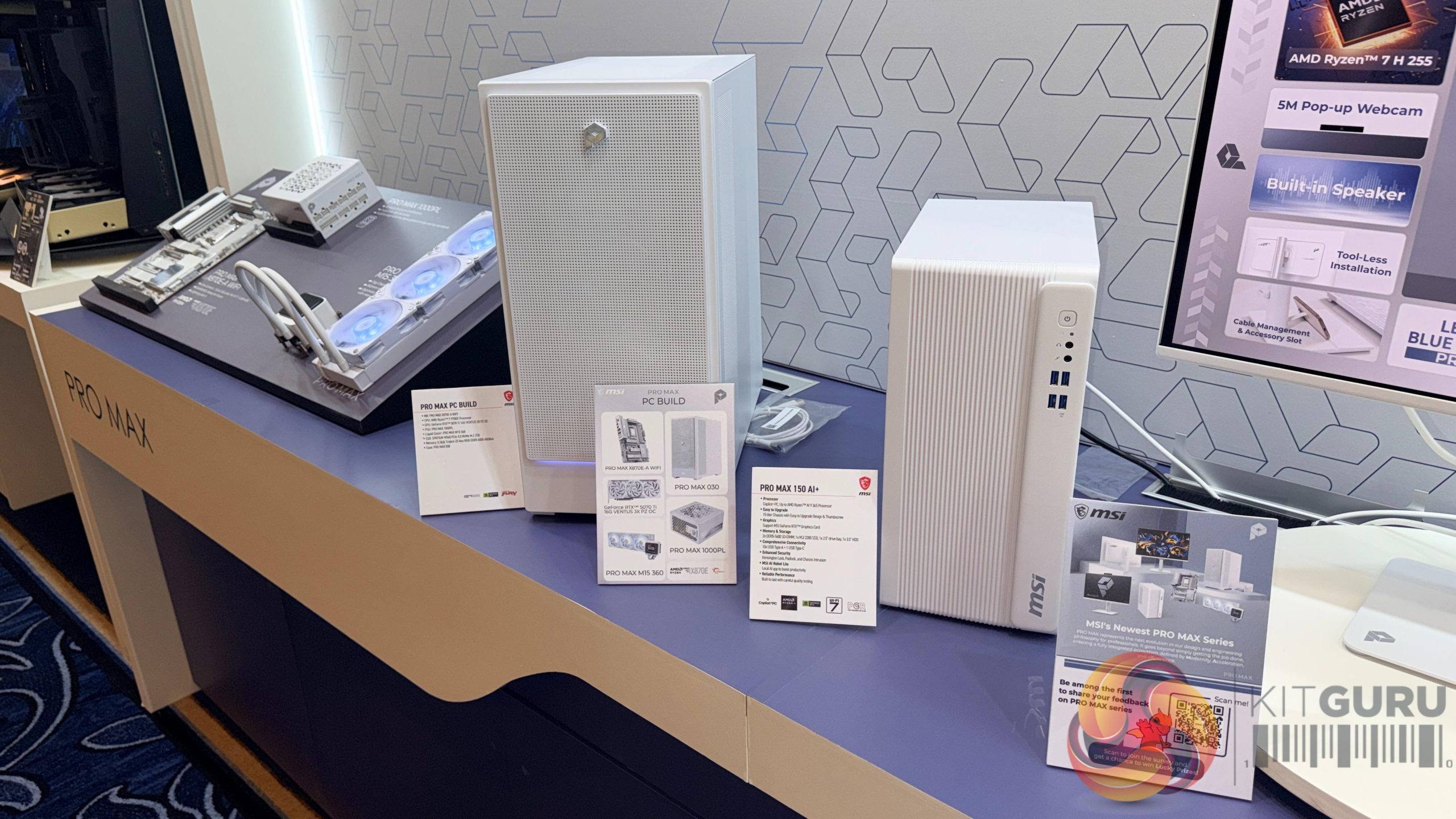
CES 2026: MSI showcases RTX 5090 Lightning Z & more

6 janvier 2026 à 13:07

We visited MSI at CES this week to get an early look at a huge range of new technology. The star of the show is the new RTX 5090 Lightning Z, a limited edition graphics card with world-beating overclocking potential. We also take a good look at MSI's new MEG PC, based around the flagship Maestro 900R chassis, alongside new peripherals, OLED monitors and more. 

Watch via YouTube below:

Timestamps:
00:00 MEG PC Build / Maestro 900R
00:33 X870E Unify X Max / Coreliquid E15 360
00:48 Motherboard Kit
01:17 Screens / features and other hardware
02:06 New Motherboards
02:17 New ‘professional’ monitors
02:48 Supercomputer / AI Edge
03:29 ‘White’ Components
03:49 Pro Max White 271UPXW12G
04:11 Pro Max 24
04:51 Power Supplies and alert software
06:06 Limited Edition 5090 GPU
07:40 Storage
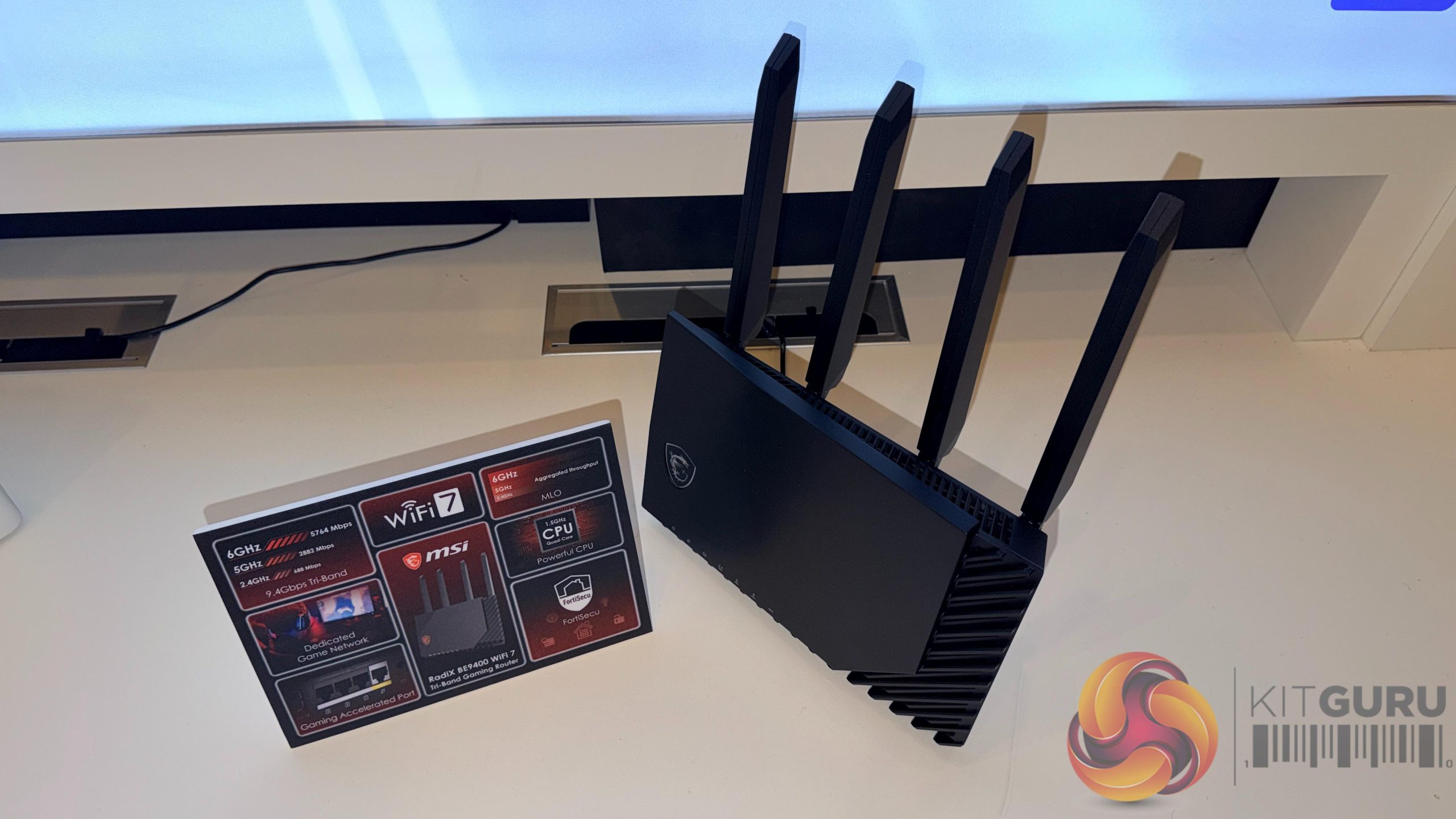
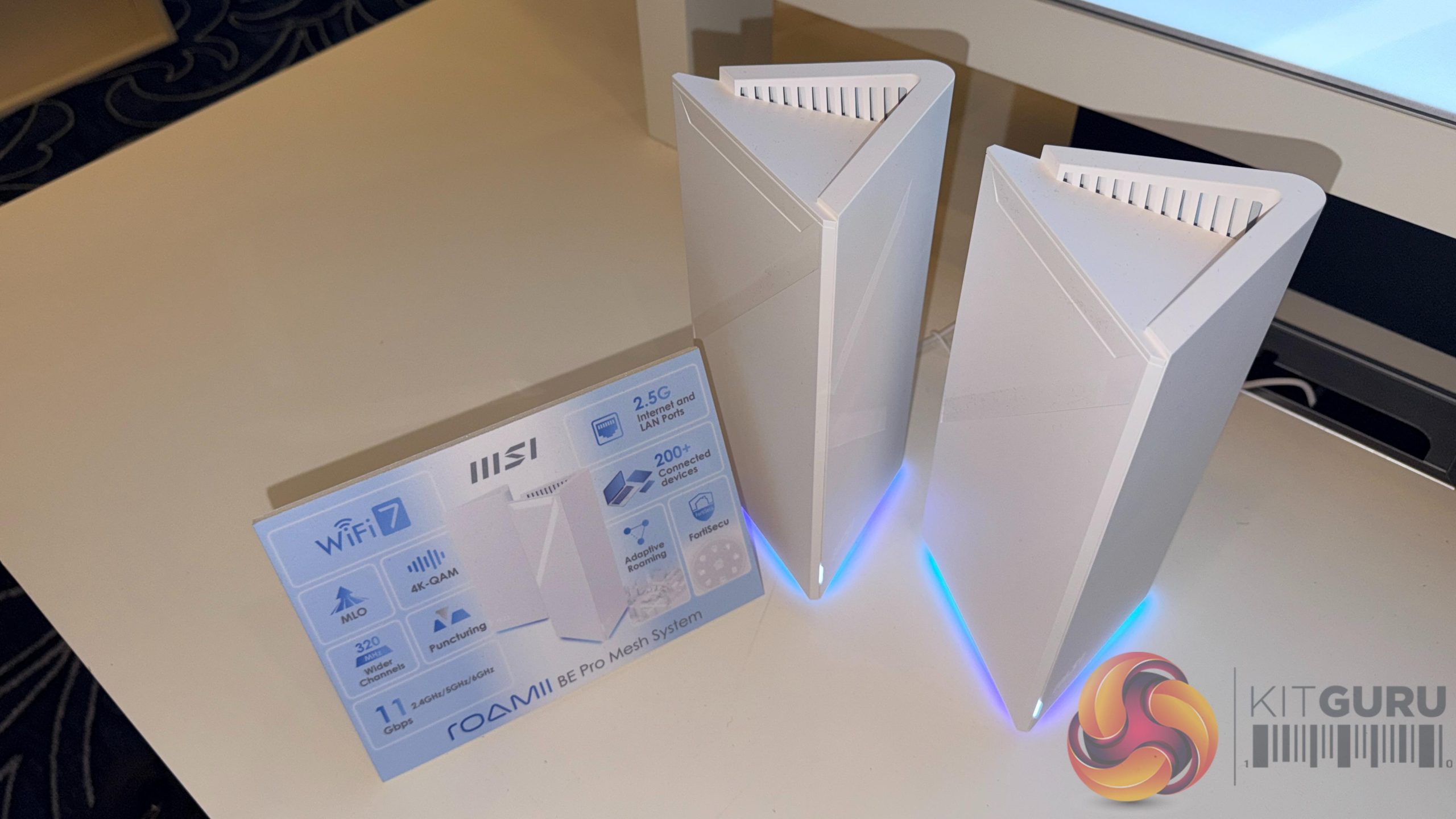
08:15 RadiX BE9400 & Roam II BE Pro Mesh
08:46 New Peripherals

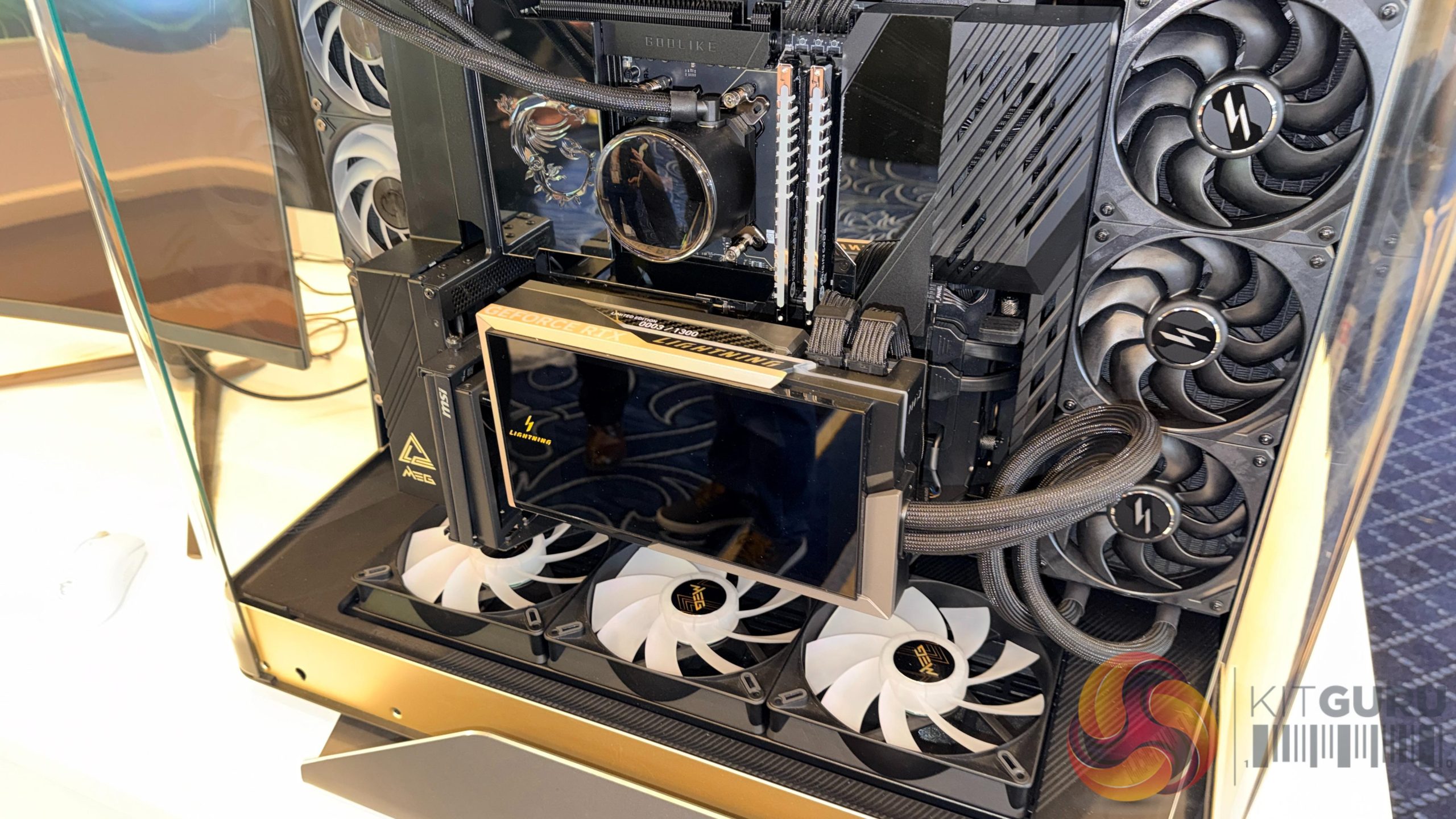
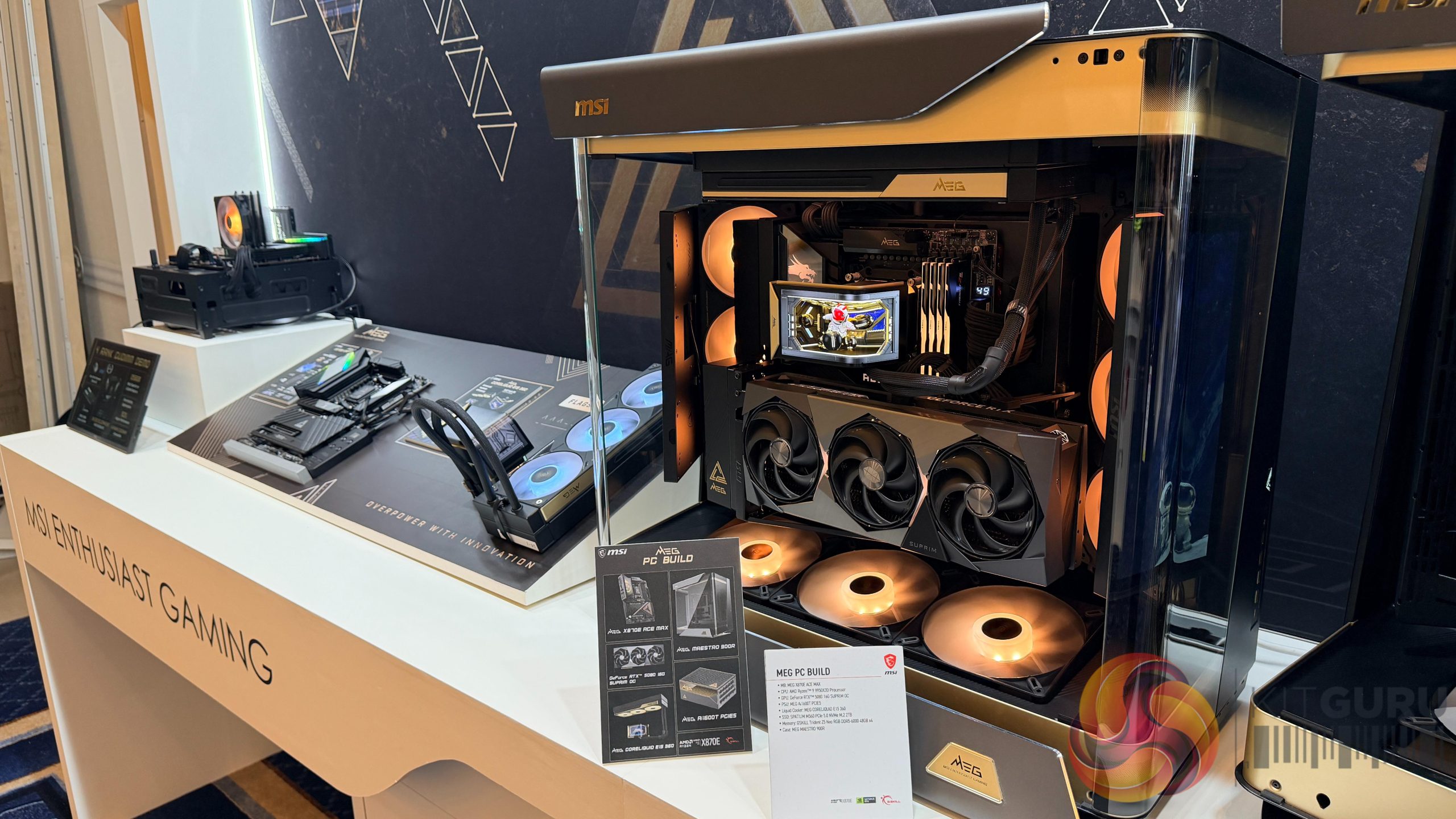
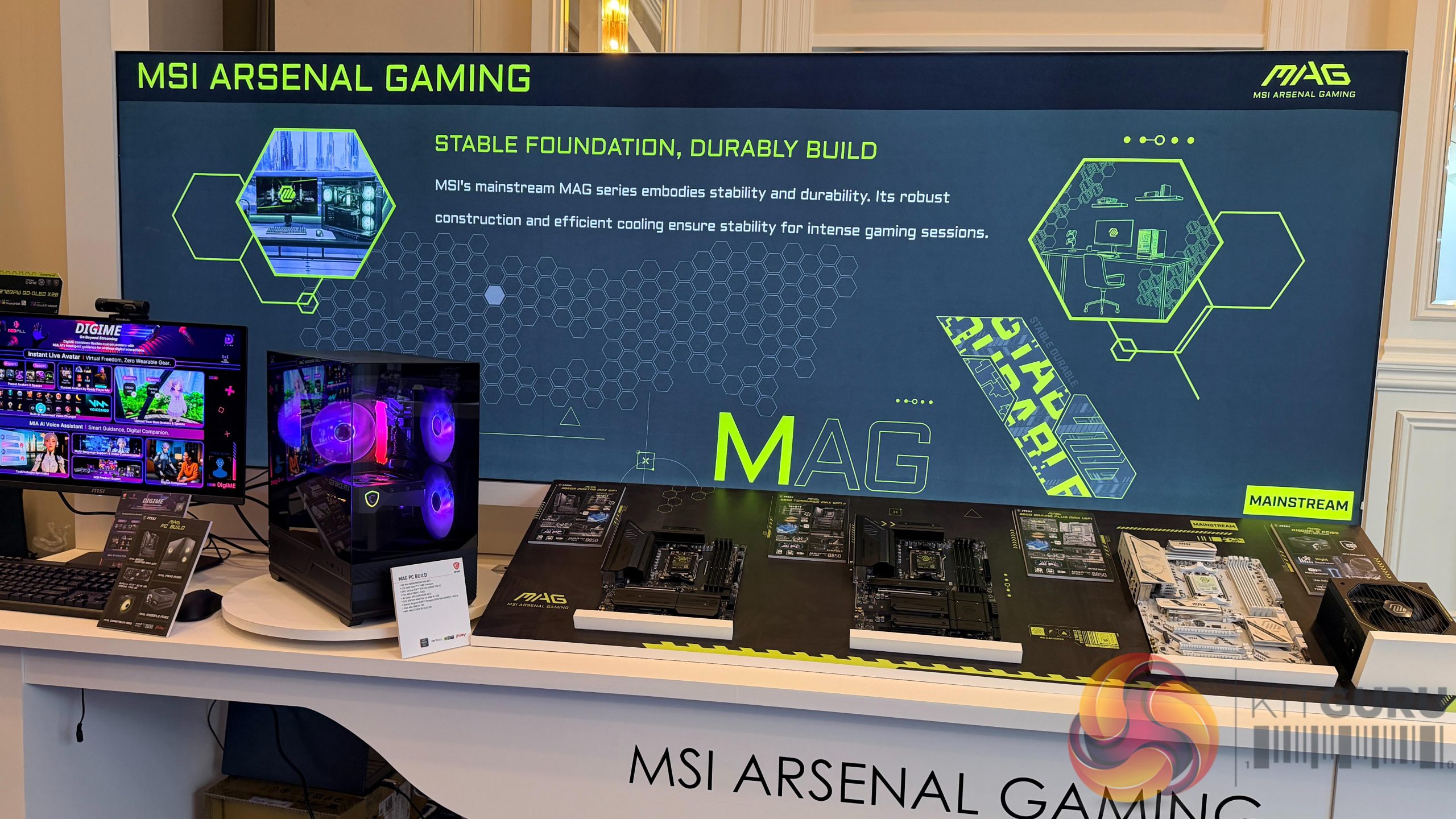
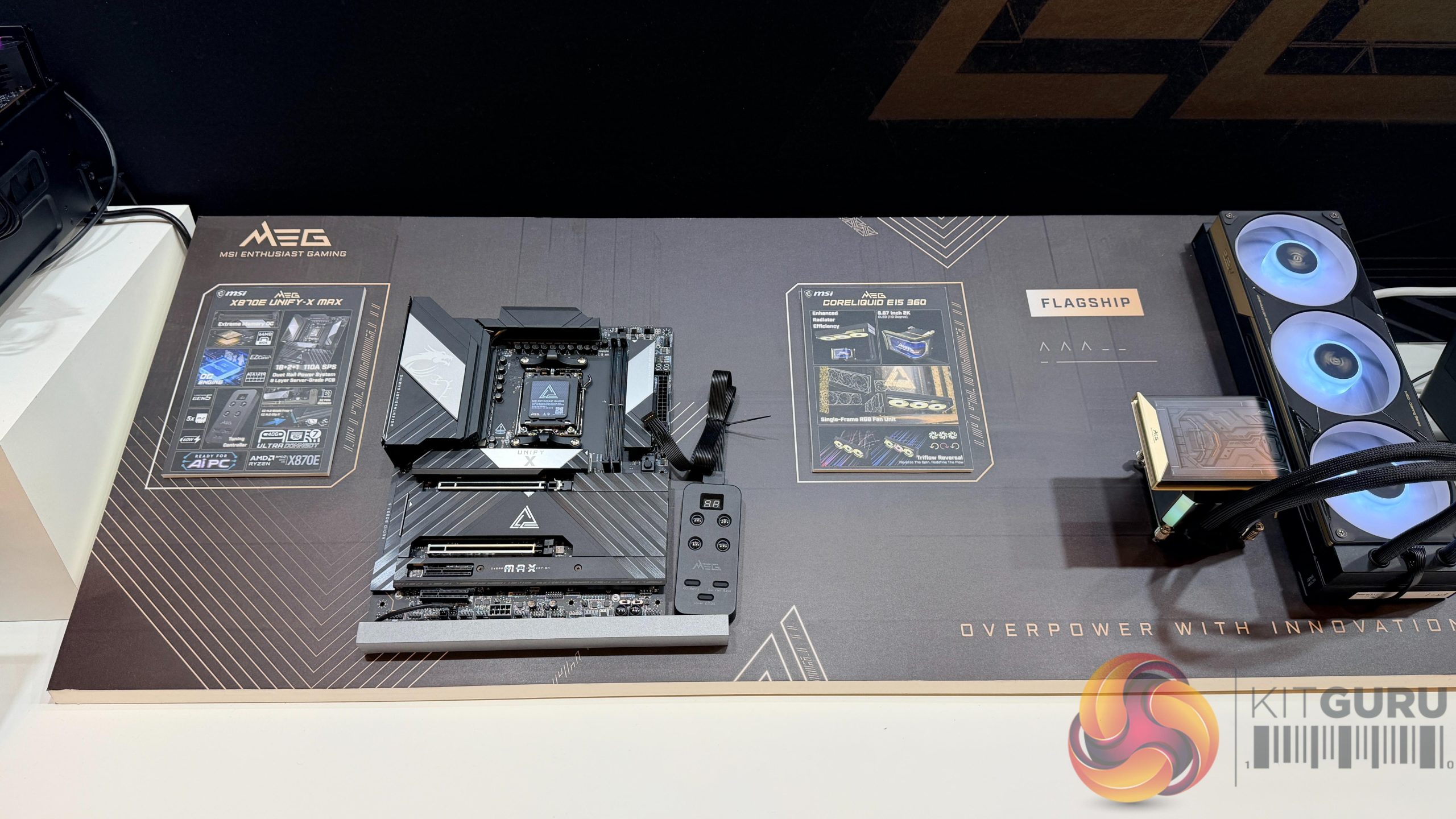
Aside from the new Maestro 900R chassis, the MEG system also utilises the new X870E Unify MAX motherboard, and a CoreLiquid E15 360mm AIO liquid cooler. The chassis allows you to rotate the motherboard by 90 degrees in all directions, and supports horizontal and vertical GPU mounting, giving you numerous ways to set up the internal layout of the system. You can also remove the central mount entirely to use as a dedicated test bench if the situation calls for it. To enhance visual appeal, there are multiple integrated displays as well, including one large one at the chassis front panel, and another inside the case, so you can monitor system stats or display custom graphics. It is unclear when the MEG PC will become available via retail channels but we should hear more on that front later in the year. In the display version here at CES, the only non-MSI component that can be seen is the RAM, which in this instance is a set of G.Skill Trident Z5 Neo RGB memory.

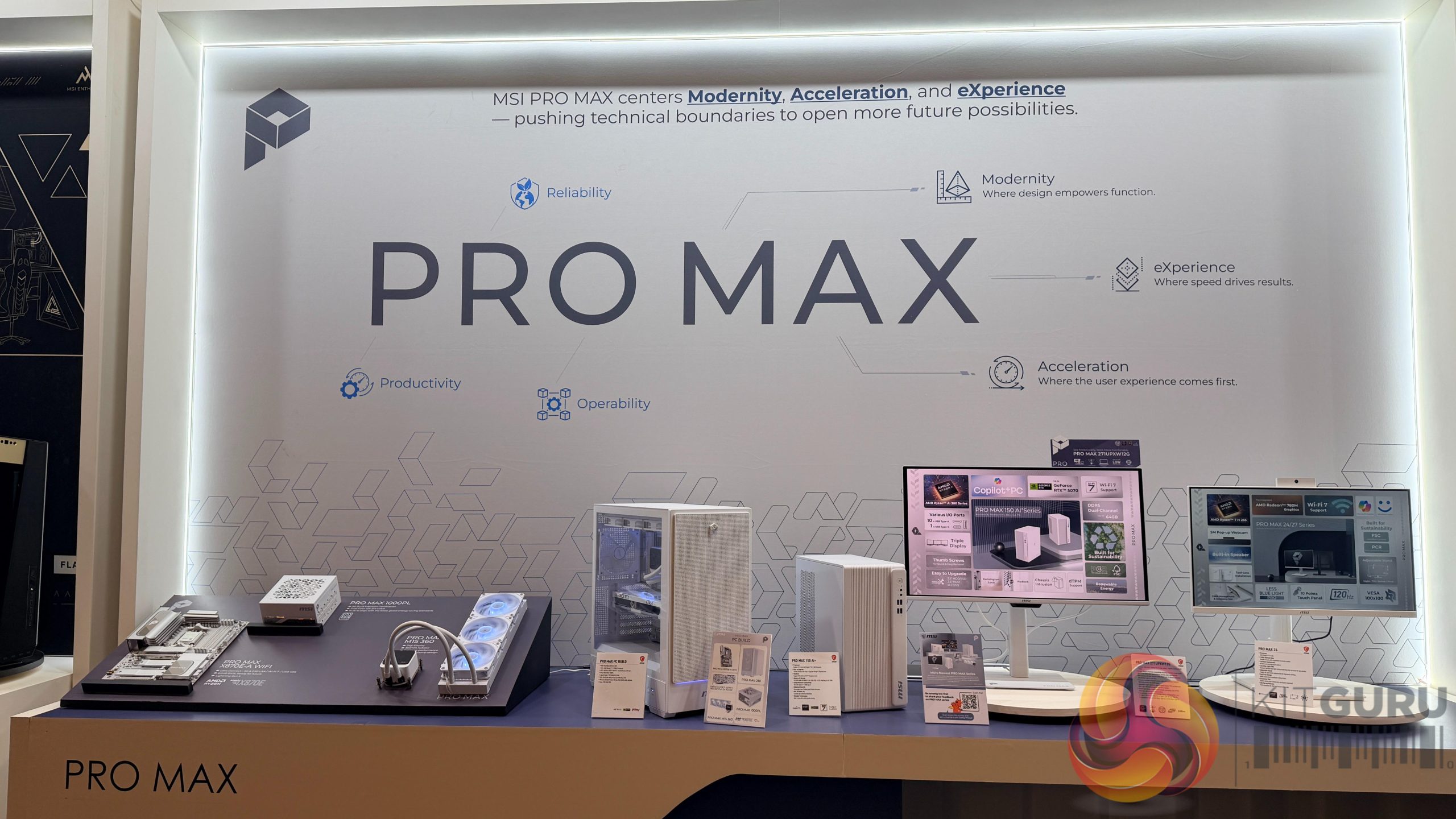
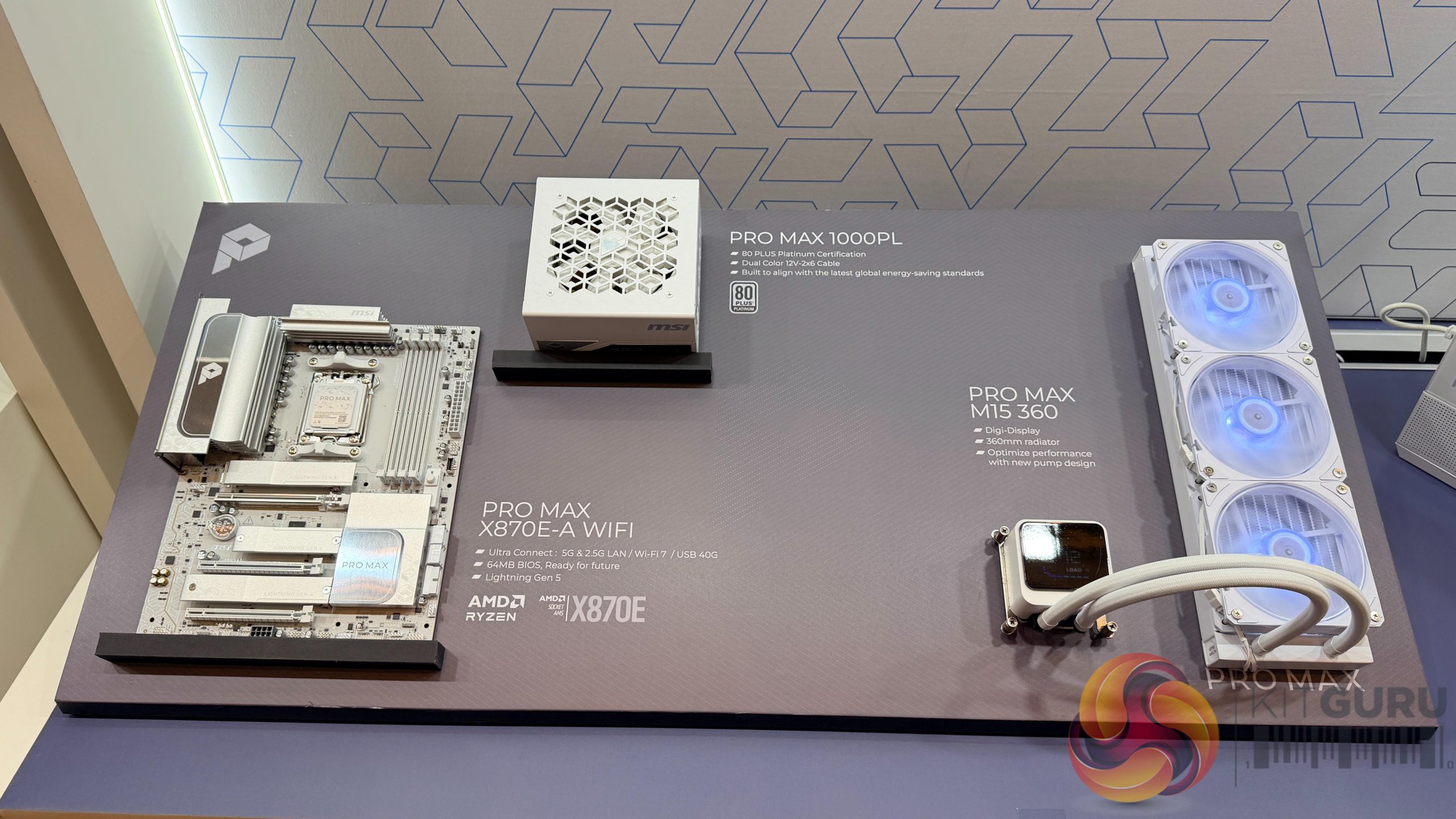
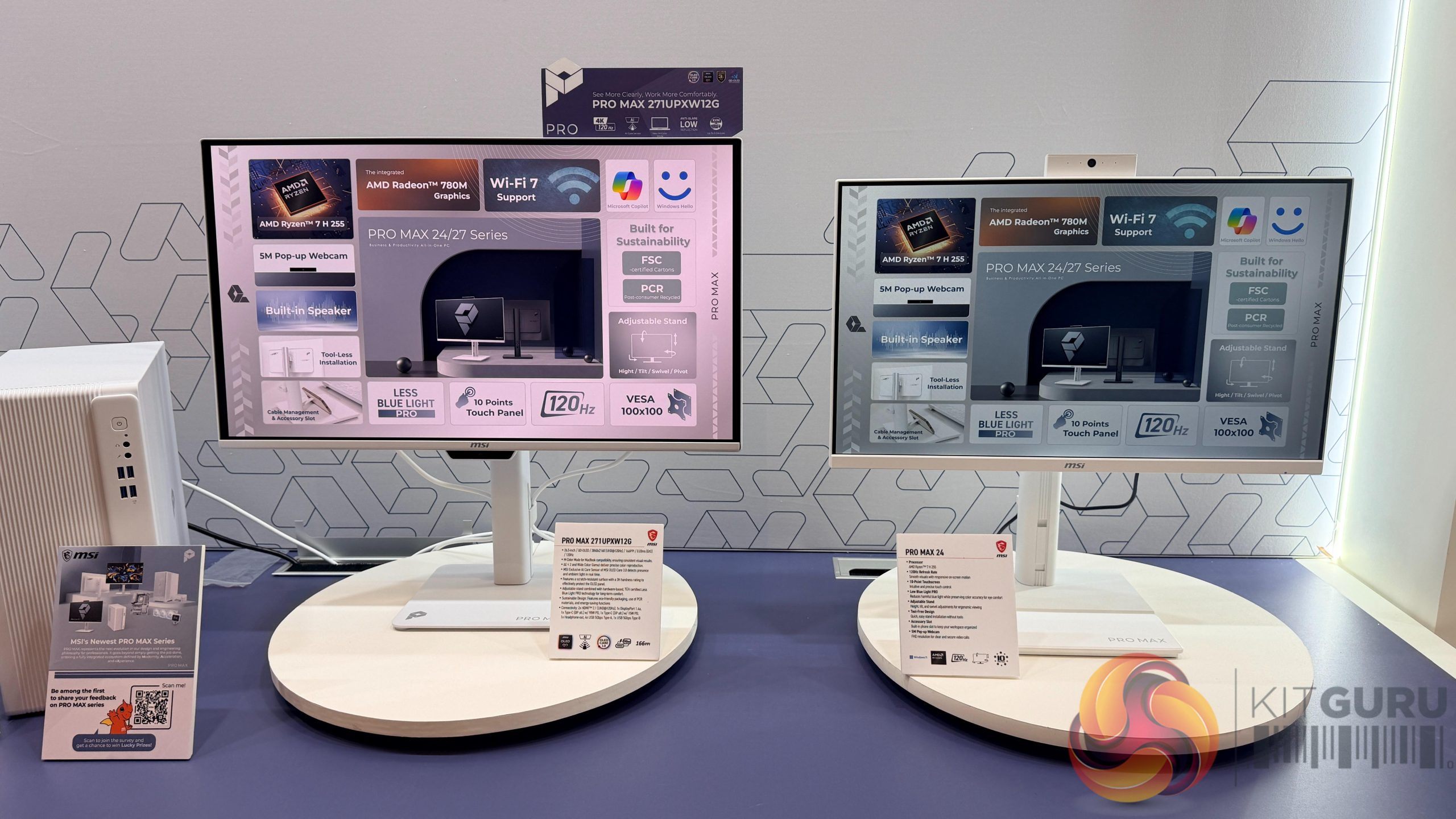
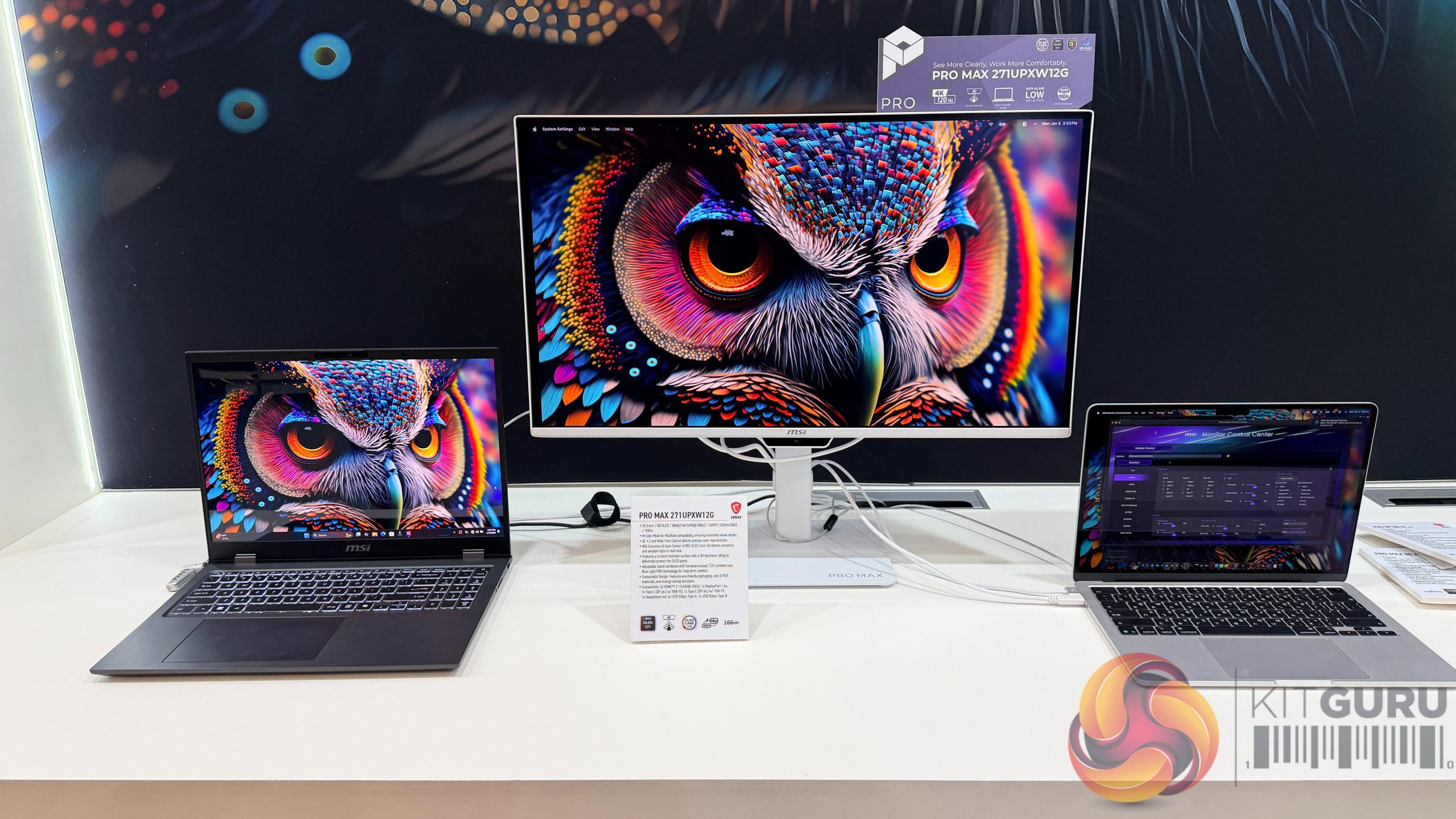
On the display front, MSI is showcasing both new gaming and professional monitors this week. On the professional side, MSI has a new PRO MAX monitor using Gen 4 QD-OLED panel with anti-glare and low-glare coating, complete with a KVM switch for those who rely on multiple devices, making this an ideal monitor choice for a home office set-up for editing. There are also new OLED displays hitting the gaming market, with new Gen 5 QD-OLED panels and a special new coating that increases surface hardness to reduce scratches, and a new sub-pixel structure that reduces text fringing, addressing one of the very few complaints early adopters had with QD-OLED monitors. We actually already have a review of one of these MSI Gen 5 QD-OLED monitors live, so you can see our in-depth analysis of the new QD-OLED panel already.

If you like the Pro Max monitor but don’t have much space, MSI also has a 24‑inch version. The difference is that this one is a complete all‑in‑one system, featuring its own integrated motherboard, CPU and integrated graphics. There’s a pop‑up camera on top, and a cable‑management hole underneath so wires can disappear neatly. It’s still a 120Hz panel, well‑balanced in colour and very flat in appearance.

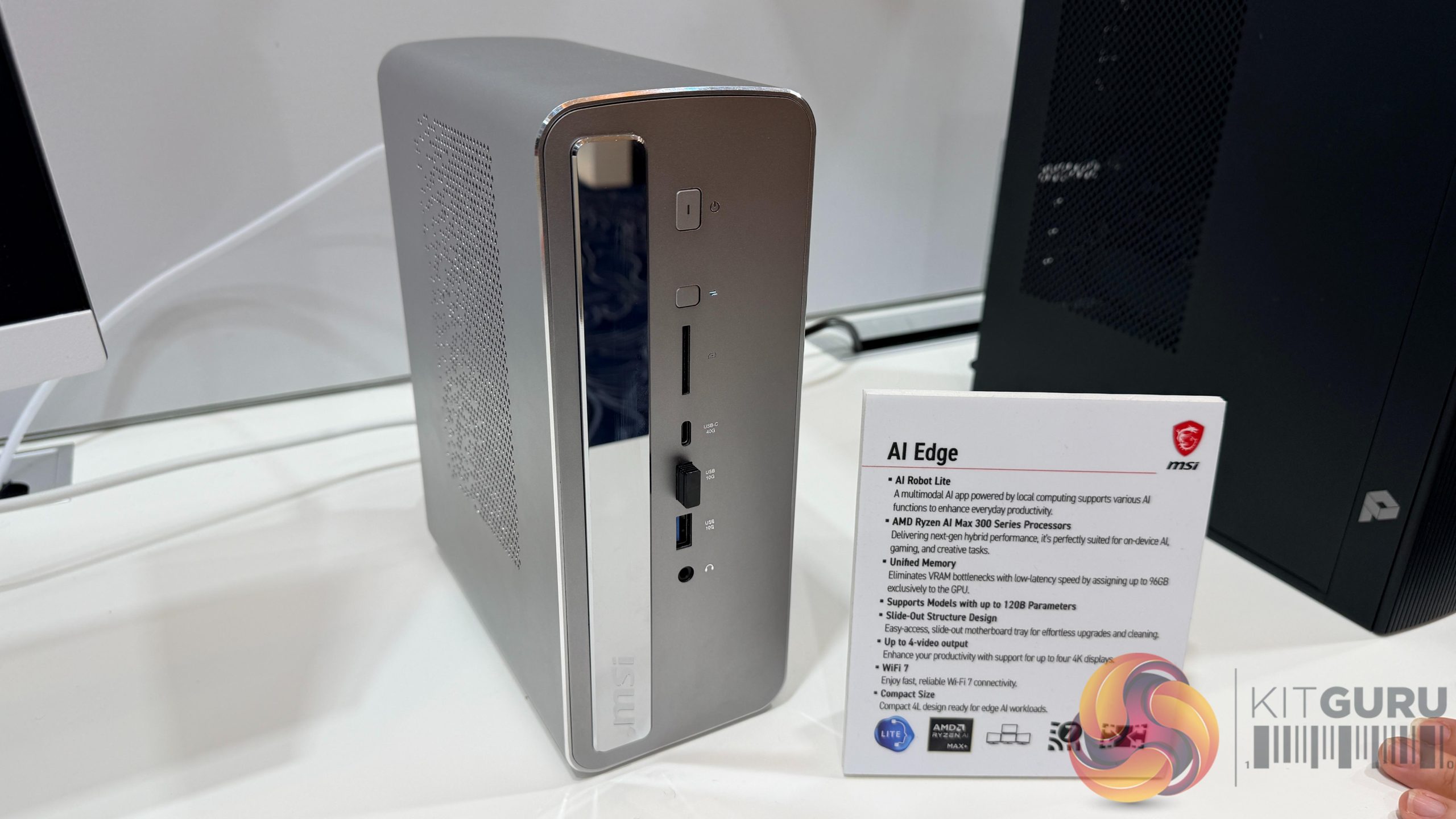
In the realm of desktop supercomputers, MSI is showing a localised AI supercomputer based on the NVIDIA DGX Spark platform, allowing you to create and run AI agents locally and upload them to the cloud when needed. The AI Edge is a slightly different concept product from MSI, likely to appear in a more complete form around Computex. For now, it’s a Windows‑bootable box that can emulate the AI environments needed to create solutions, and everything built on it will remain fully compatible with cloud‑based AI hosting platforms.

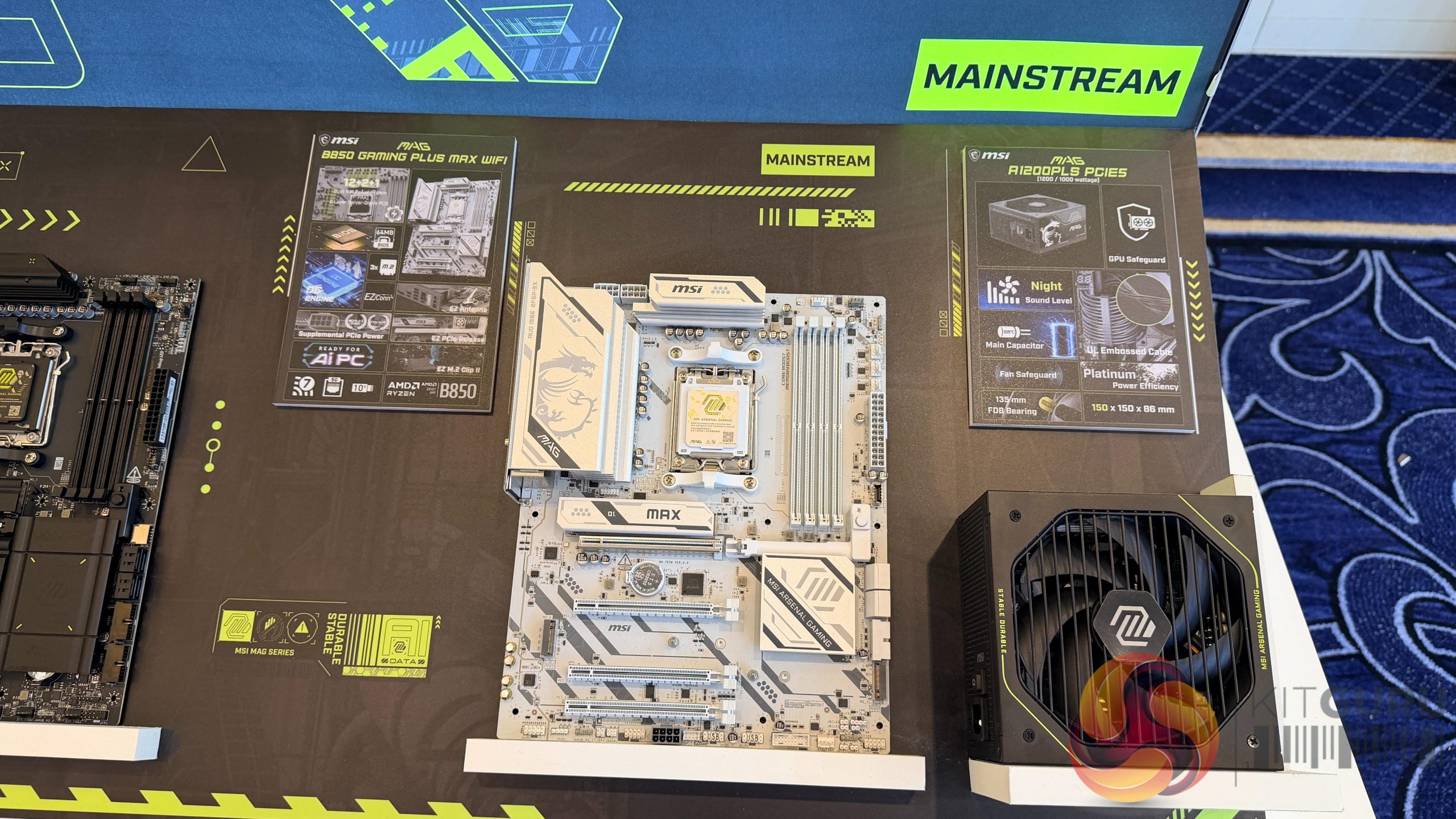
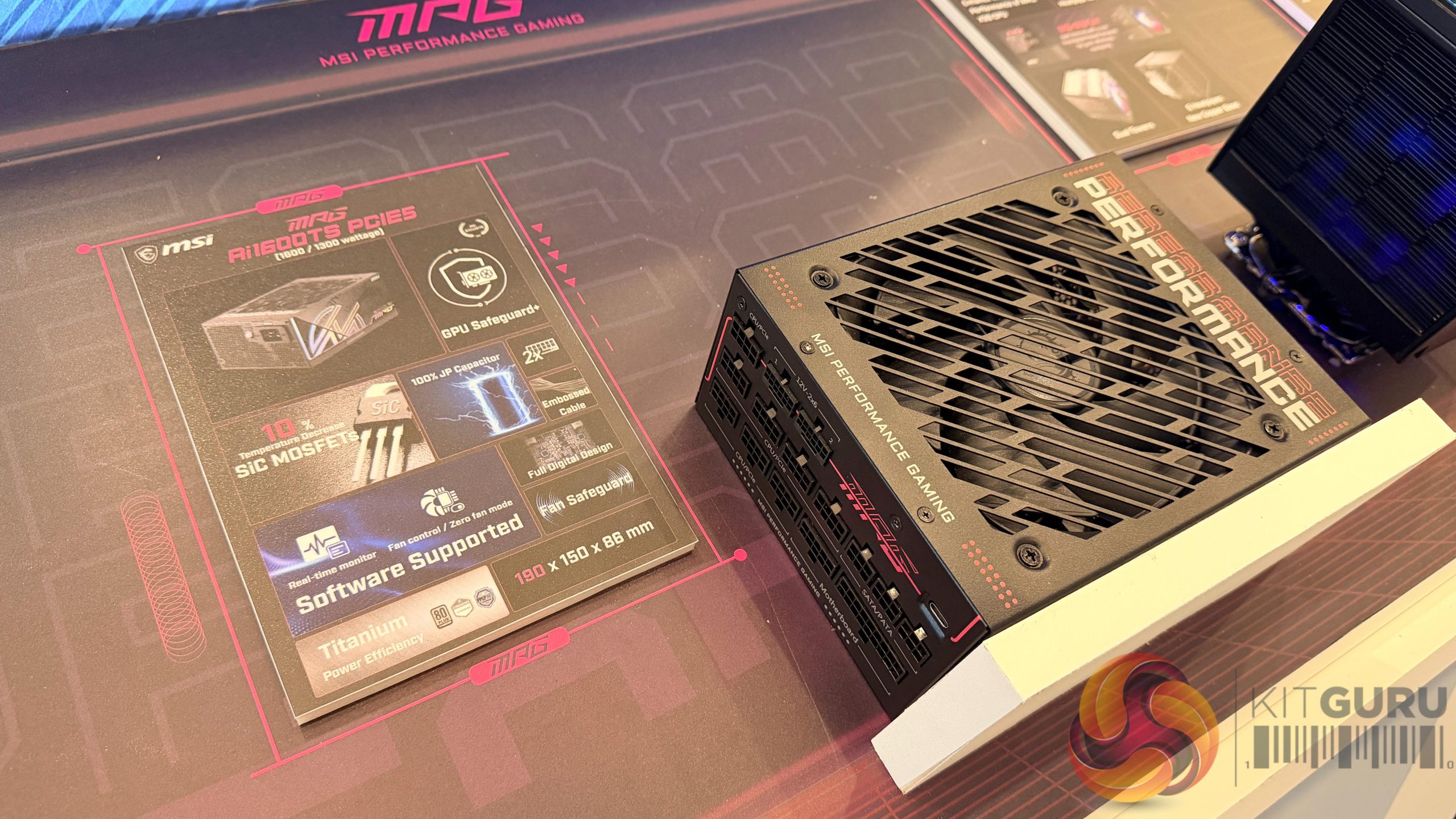
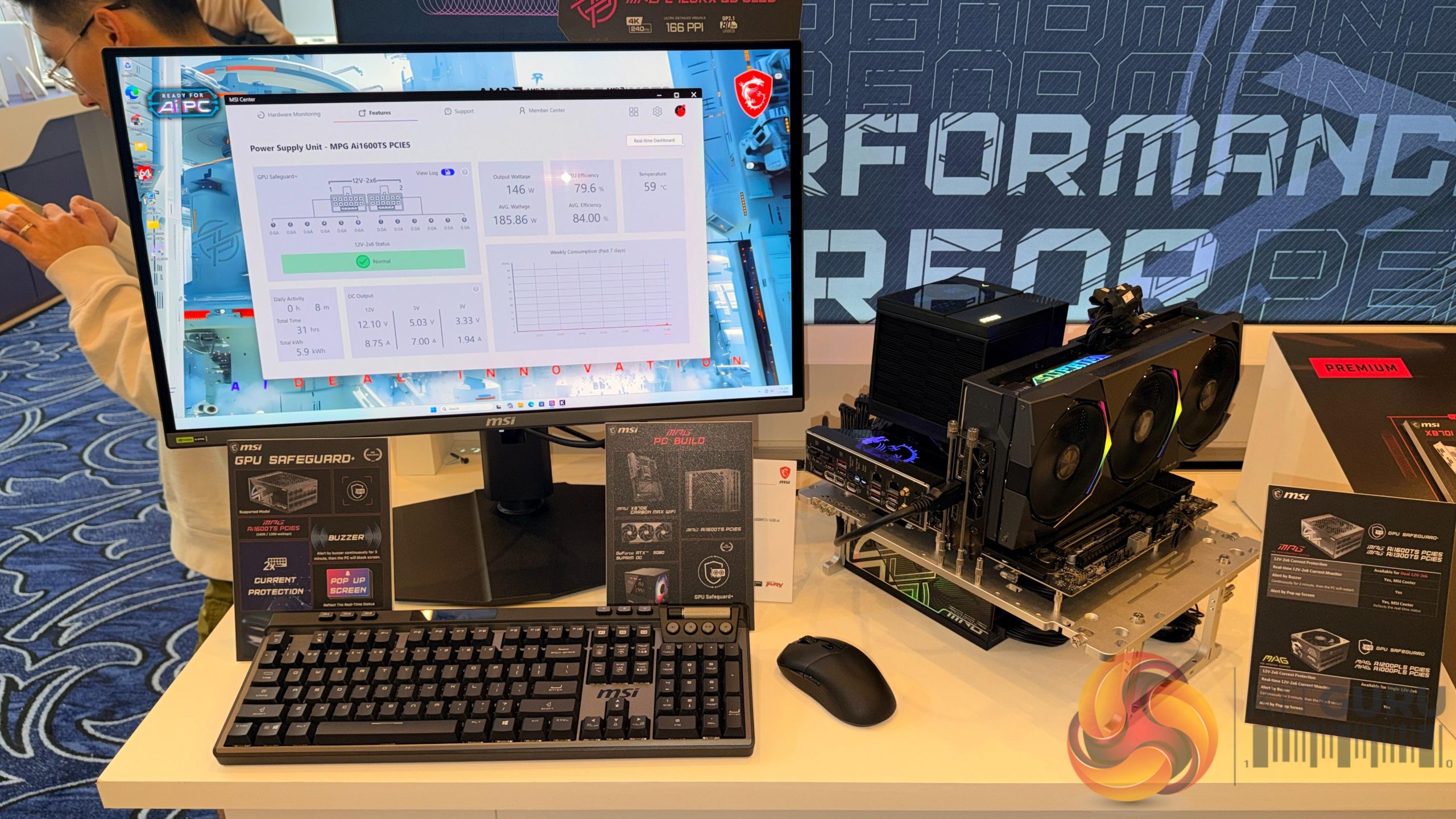
MSI also has a new range of power supplies coming. They look stylish from the outside, but something less obvious is the USB port on the back. To demonstrate what can be done with this connector, MSI has rigged up a large RTX 5090 with breaker points on each cable. On a nearby screen, you can see a live demonstration — for example, cable number two drawing 0.6 amps. When one of the assistants creates a fault, the current drops to zero, and the system triggers both an audible and on‑screen alert. In real‑world use, this would happen within seconds. The idea is that you power everything down for at least three minutes, check the generated log file, fix the issue, and then the system will return to normal.

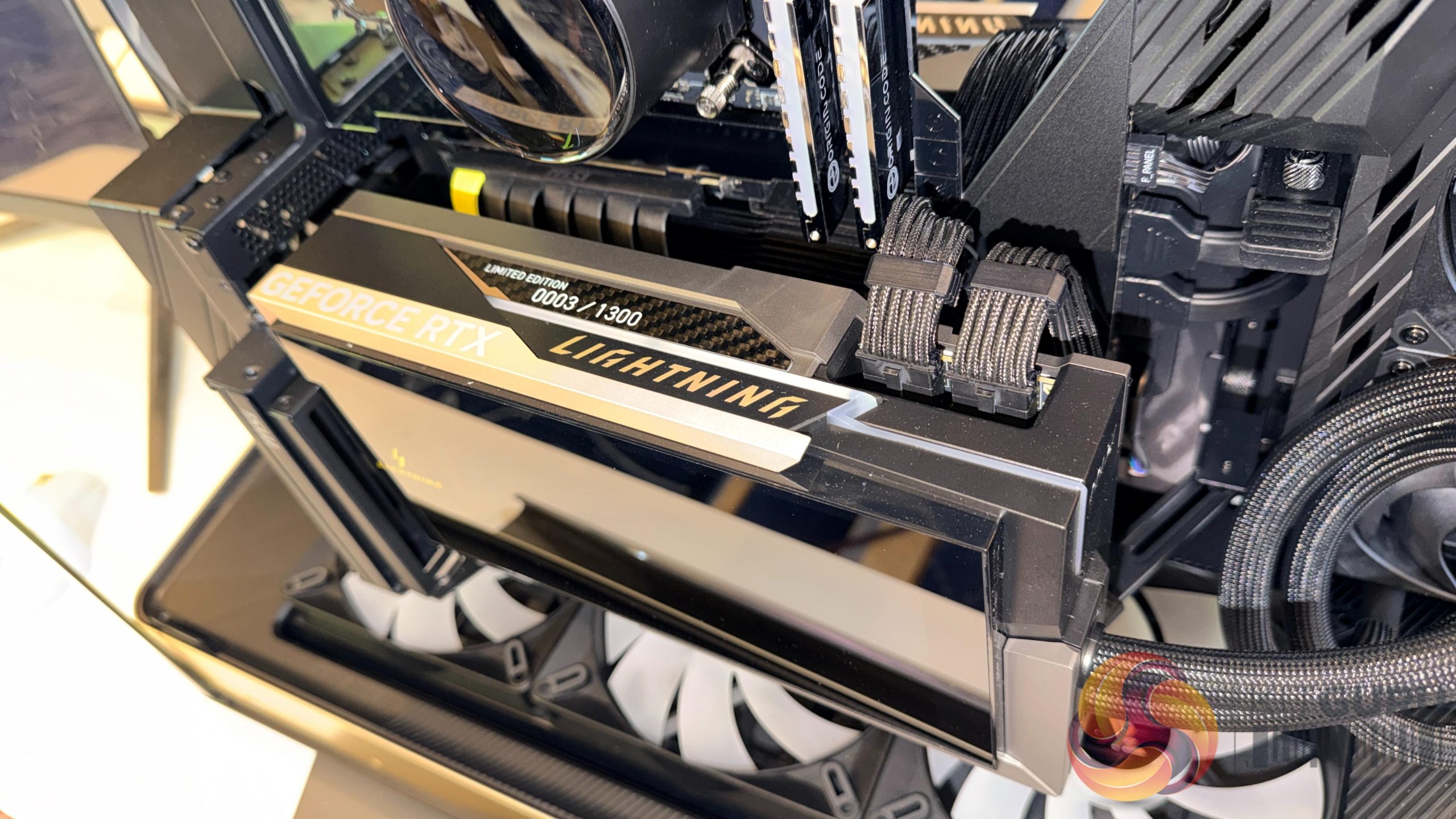
Earlier we saw the MEG system, but while the booth was being set up, something else appeared – a new MSI Lightning graphics card. The MSI Lightning has long been a favourite amongst serious overclockers and this new model has already been used to set several world records, as we reported HERE. This will be a very expensive GPU, as it is intended to be a halo product, offering the very best speeds and overclocking potential that money can buy. Only 1300 units will be made, with availability starting in February.

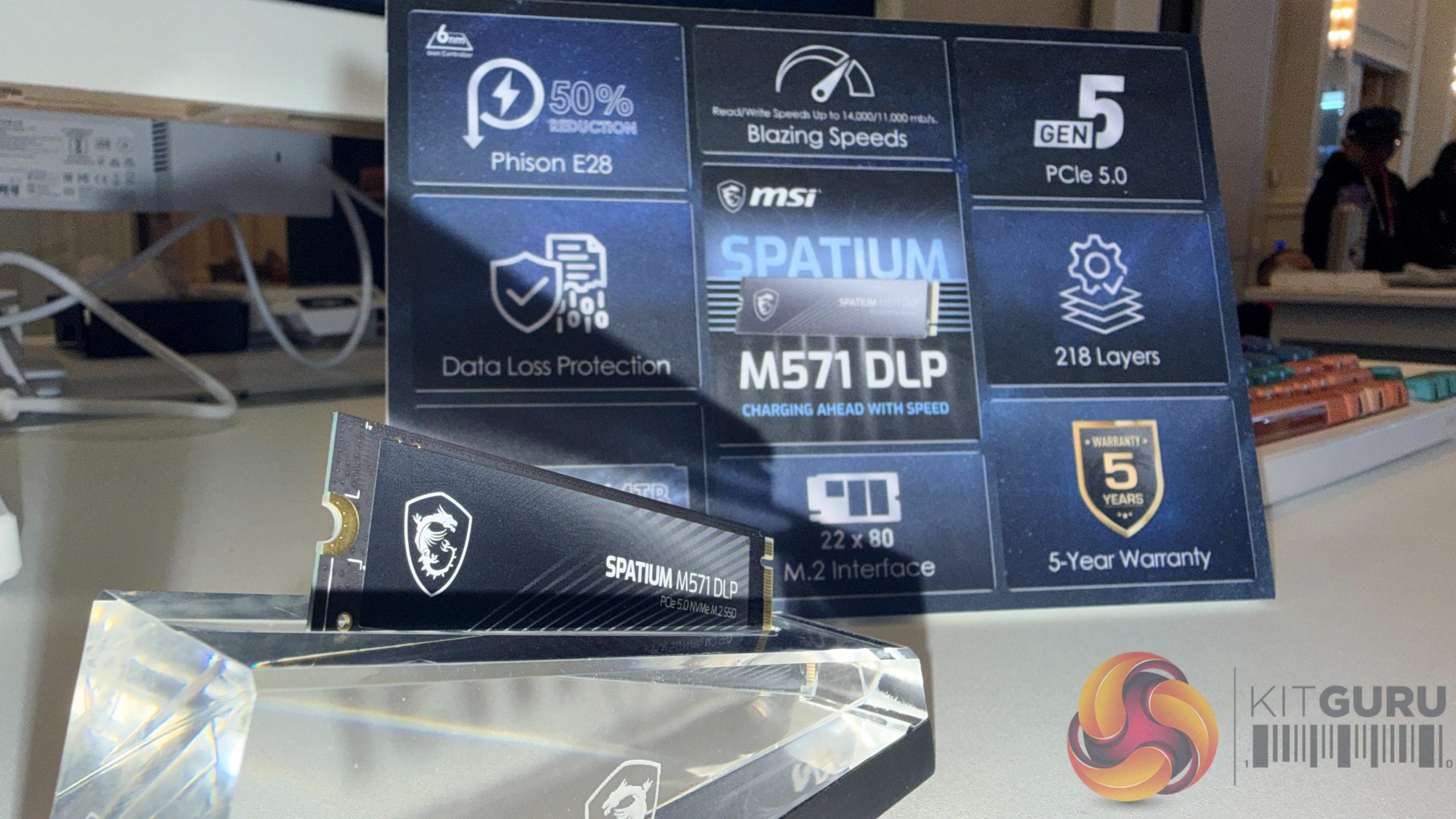
On the storage side, MSI has the Spatium N571 DLP. The stand is enormous for such a small product, but the SSD itself is a blazing‑fast Gen 5 model using a new TSMC 6nm controller. It includes enterprise‑grade technology MSI calls DLP, which is short for Data Loss Protection. This feature safeguards data during sudden power loss, so if severe weather suddenly hits and you end up with a power cut, your data should be safe when power returns.

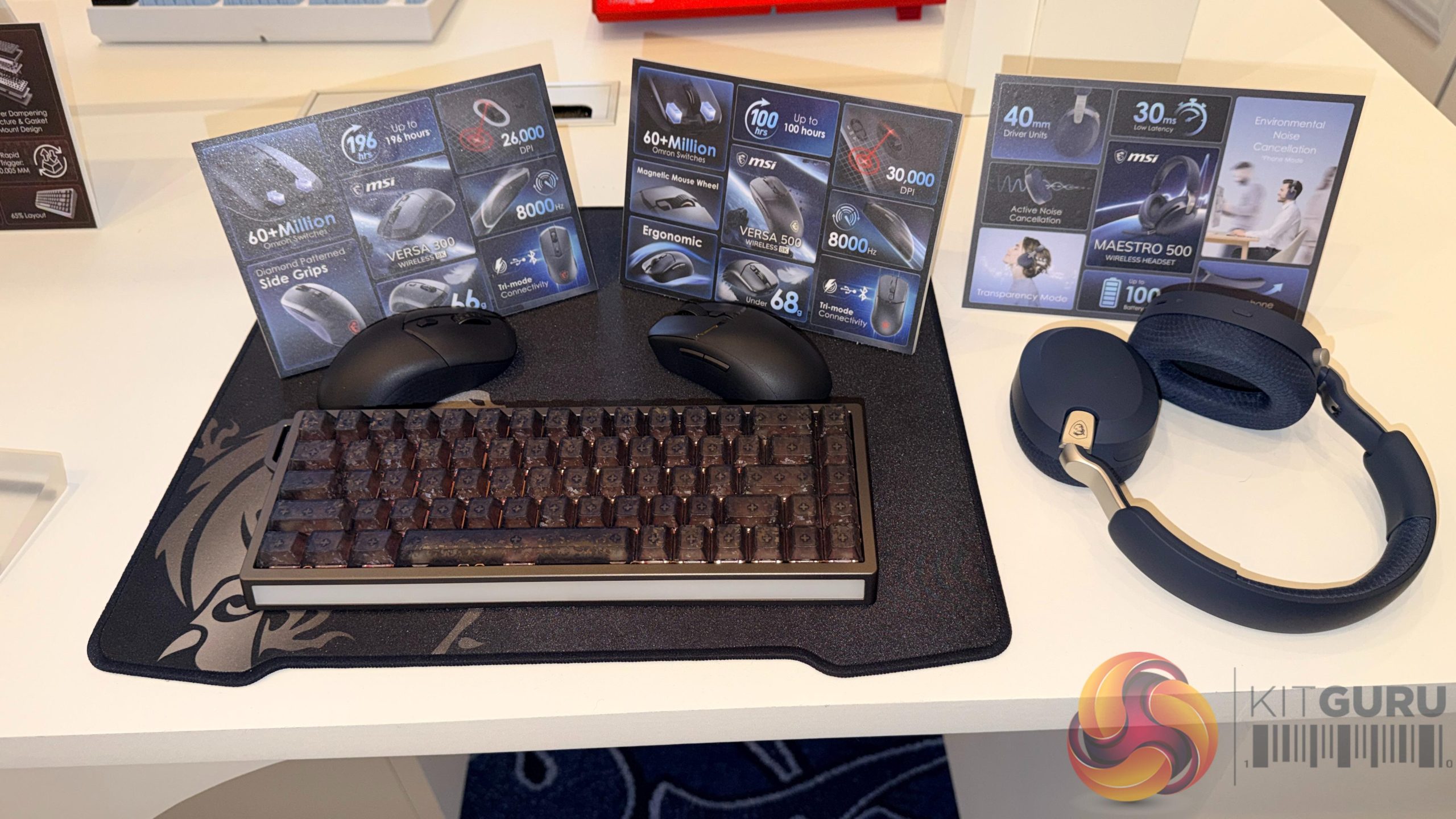
MSI has also expanded its gaming peripherals. The new 60% Strike 700 wireless keyboard is an 8K HE model using magnetic switches, allowing extremely fine control over actuation down to 0.005mm. It’s expected around Q2. There is also a new Maestro 500 wireless headset, which we found to be very lightweight and comfortable. The headset should offer up to 100 hours of battery life without noise cancellation, and close to 60 hours with it enabled.

KitGuru Says: What do you think of MSI's new product line-up for CES? Is there anything here that you'll be looking to get your hands on in the coming months?

The post CES 2026: MSI showcases RTX 5090 Lightning Z & more first appeared on KitGuru.

CES 2026: Nvidia announces DLSS 4.5, G-Sync Pulsar and more

6 janvier 2026 à 06:30

Nvidia is kicking off CES with some announcements of its own. The biggest announcement is DLSS 4.5, which will introduce a higher-quality transformer model for upscaling, along with the first wave of G-Sync Pulsar capable displays for higher levels of motion clarity. 

Nvidia already has some major DLSS-supported titles lined up for 2026, including the likes of Resident Evil Requiem, Pragmata, Phantom Blade Zero and 007 First Light. On top of this, Nvidia is also ushering in the latest major DLSS update, bringing us up to version 4.5.

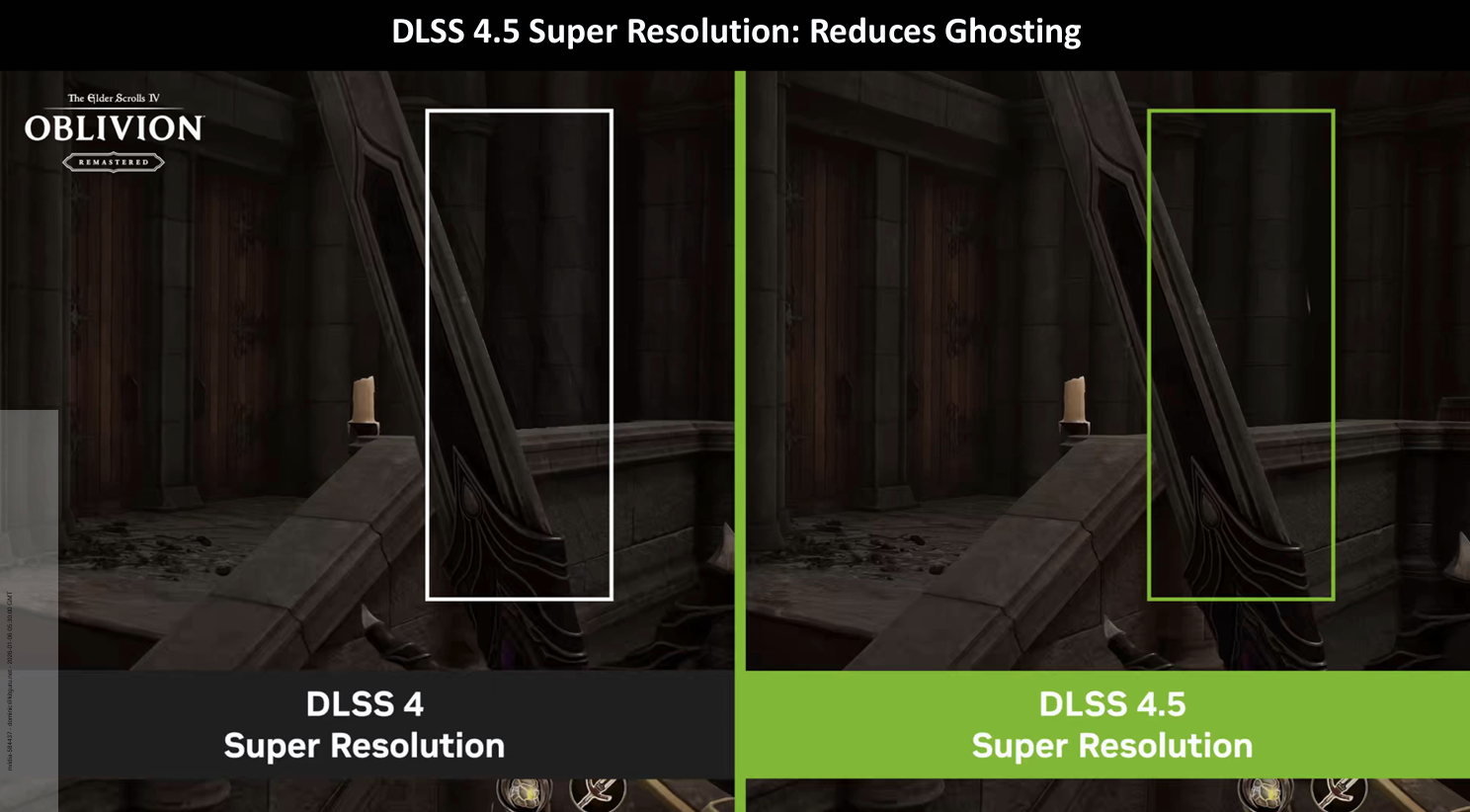
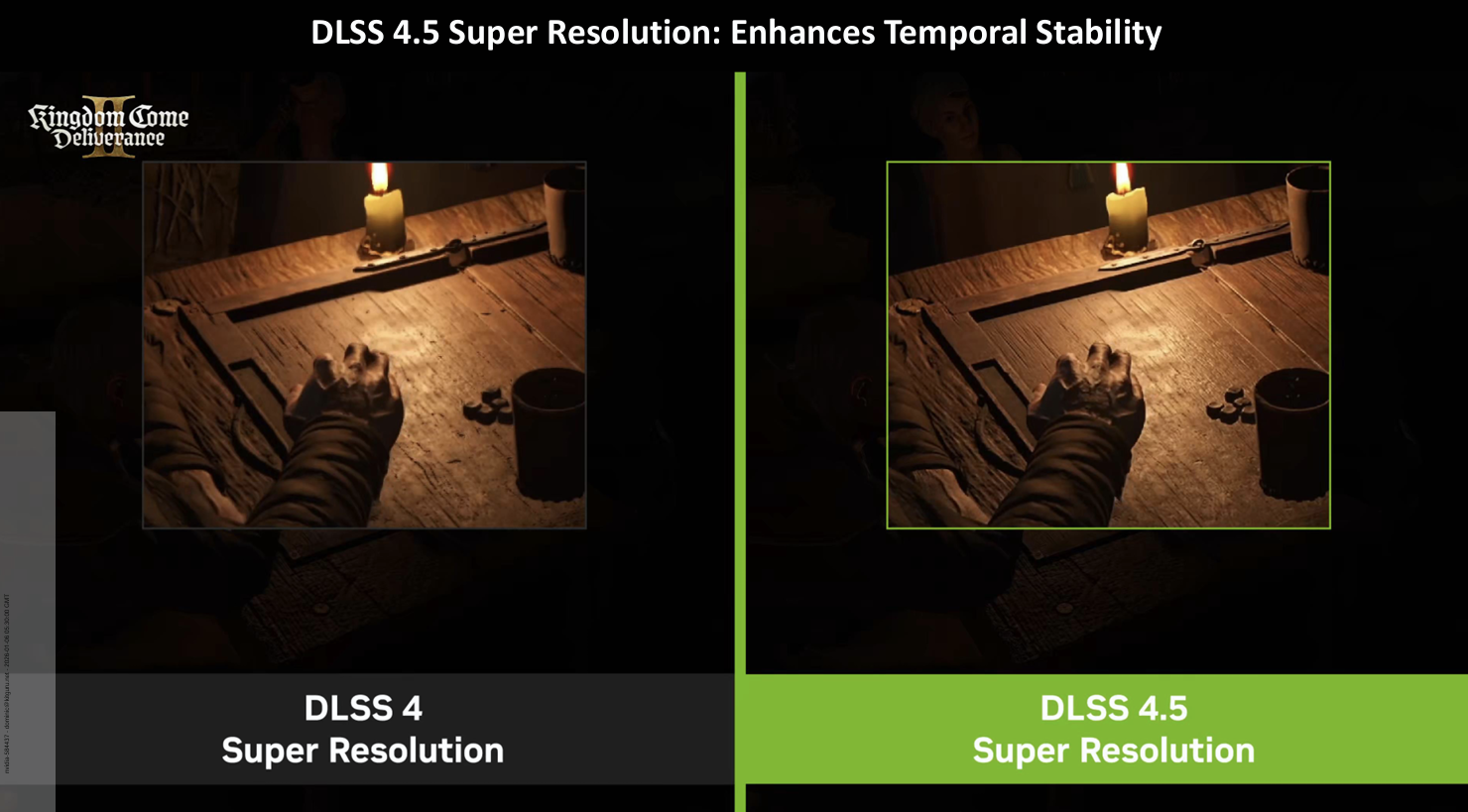
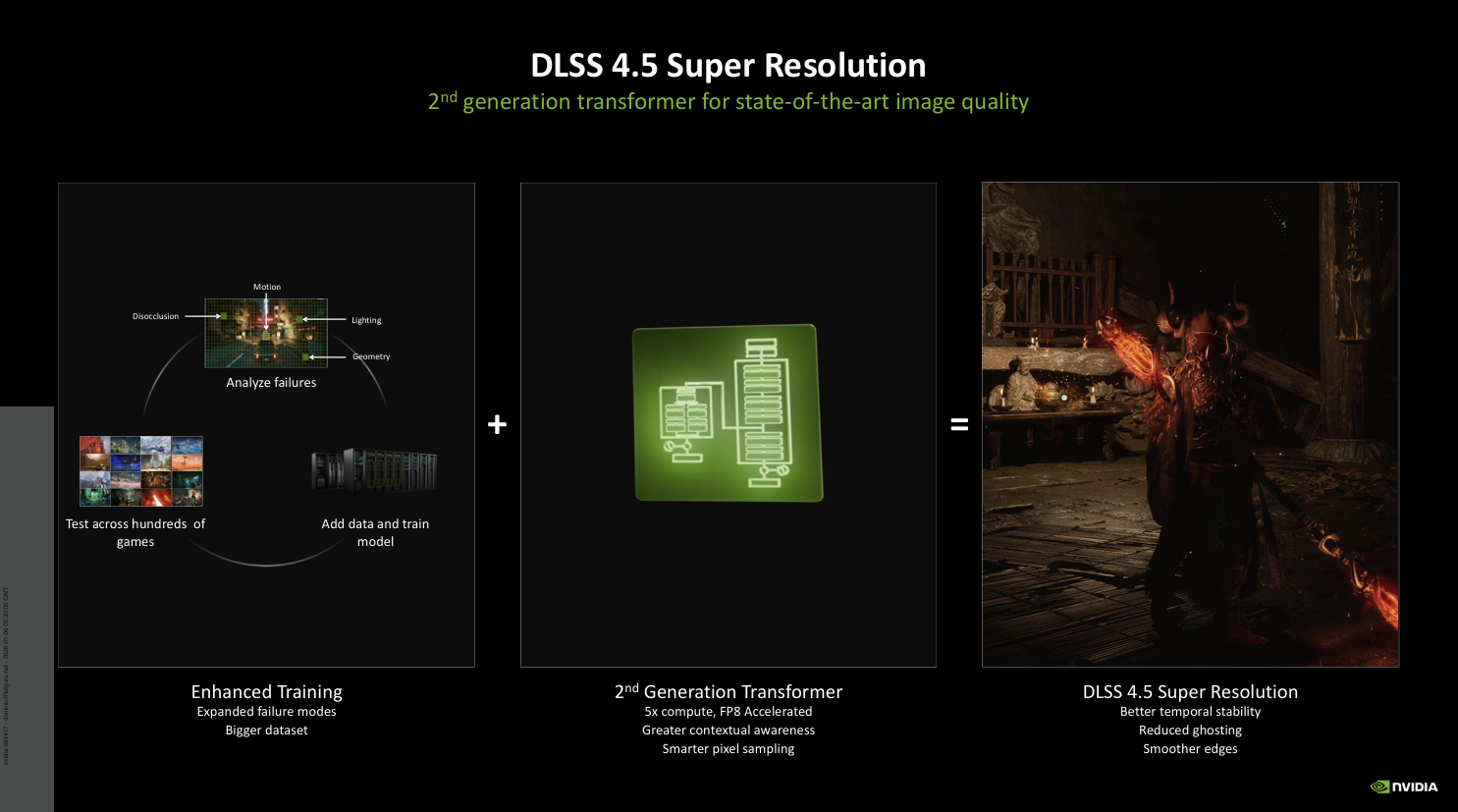
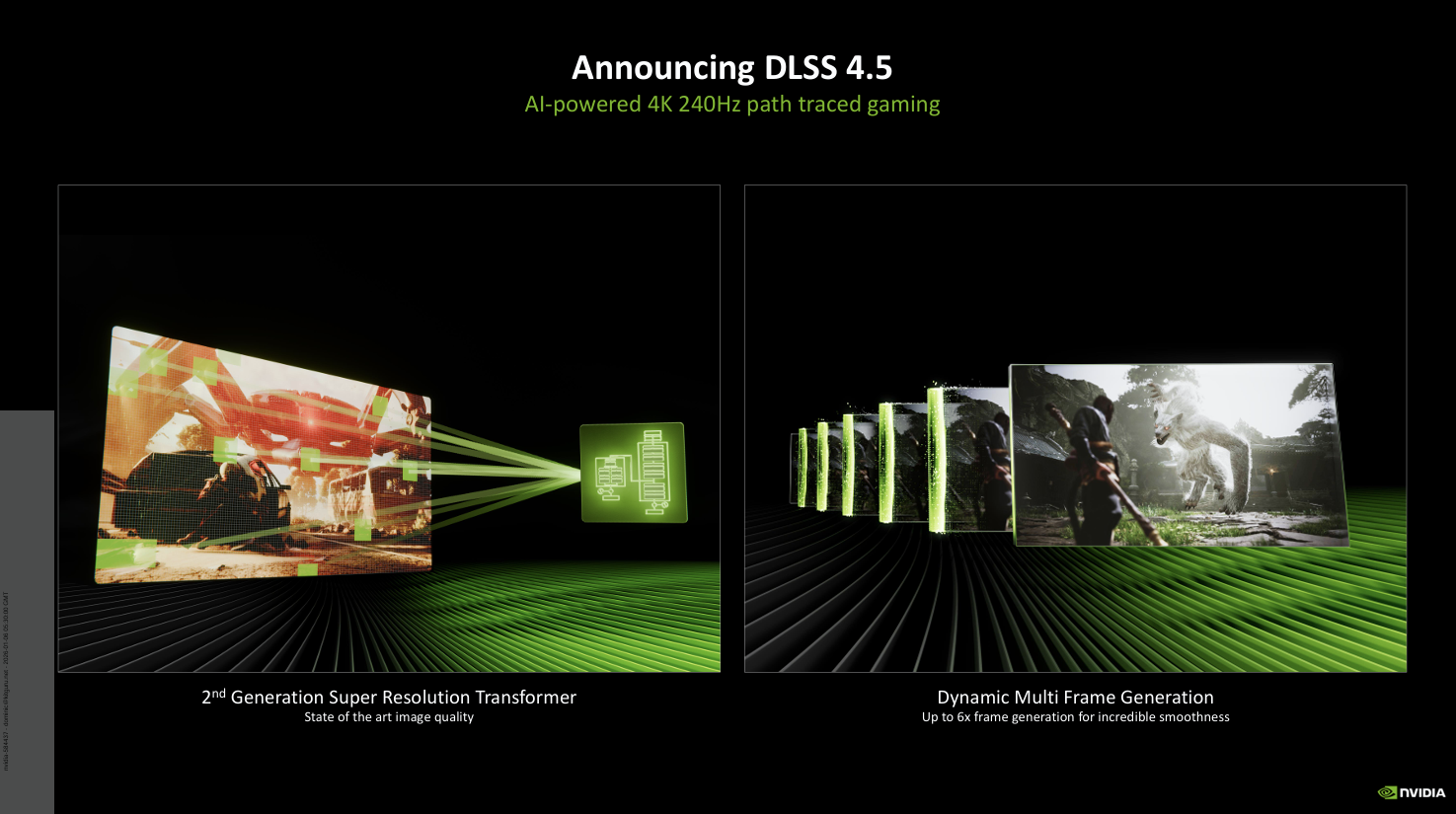
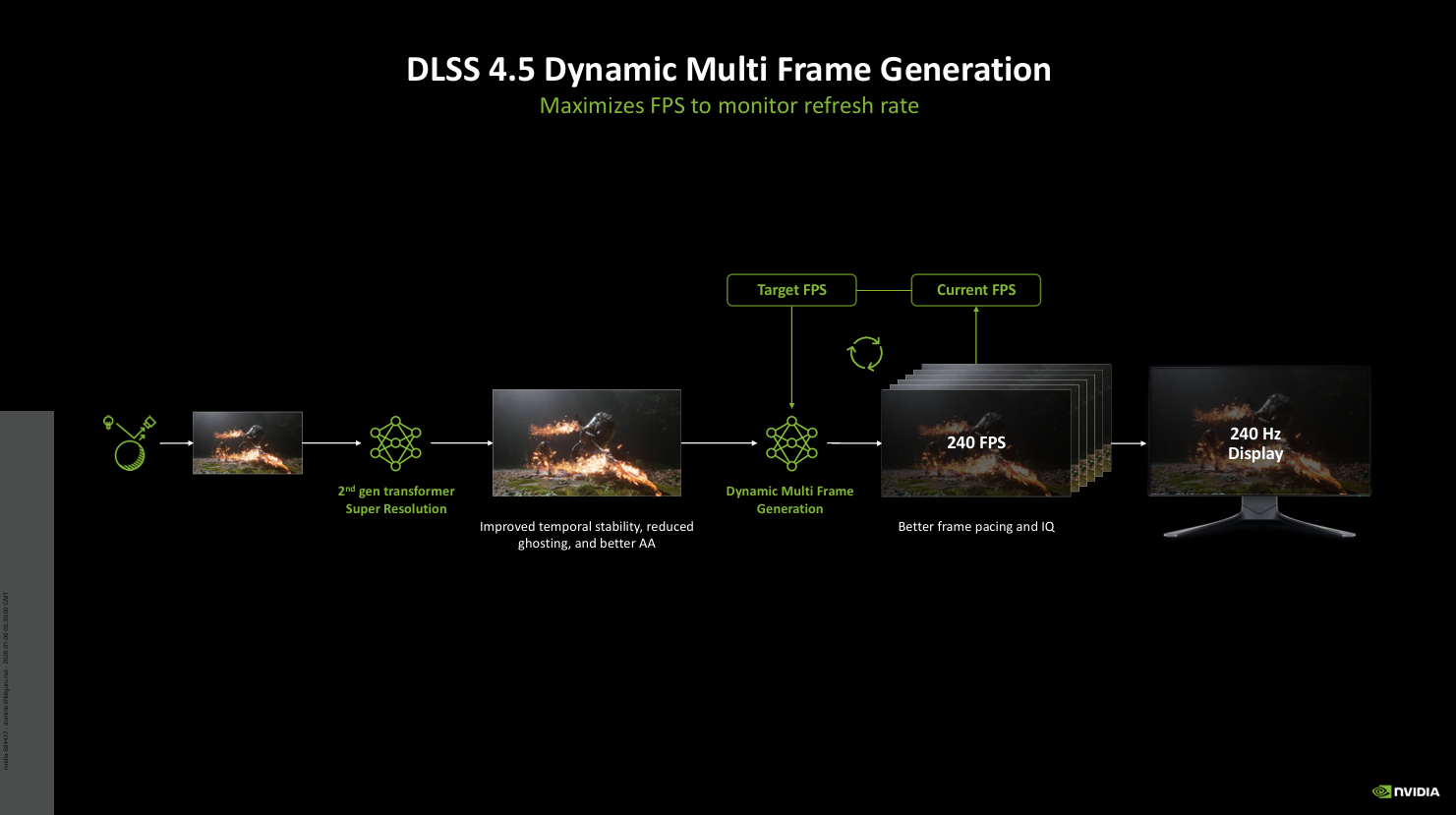
DLSS 4.5 features Nvidia's second-generation Super Resolution Transformer, which brings a number of improvements like greater contextual awareness and smarter pixel sampling, enabling better visuals while upscaling. Games like Kingdom Come Deliverance 2, Oblivion Remastered and Indiana Jones will support the update. In the slides below you can see some of the comparisons Nvidia has shared:

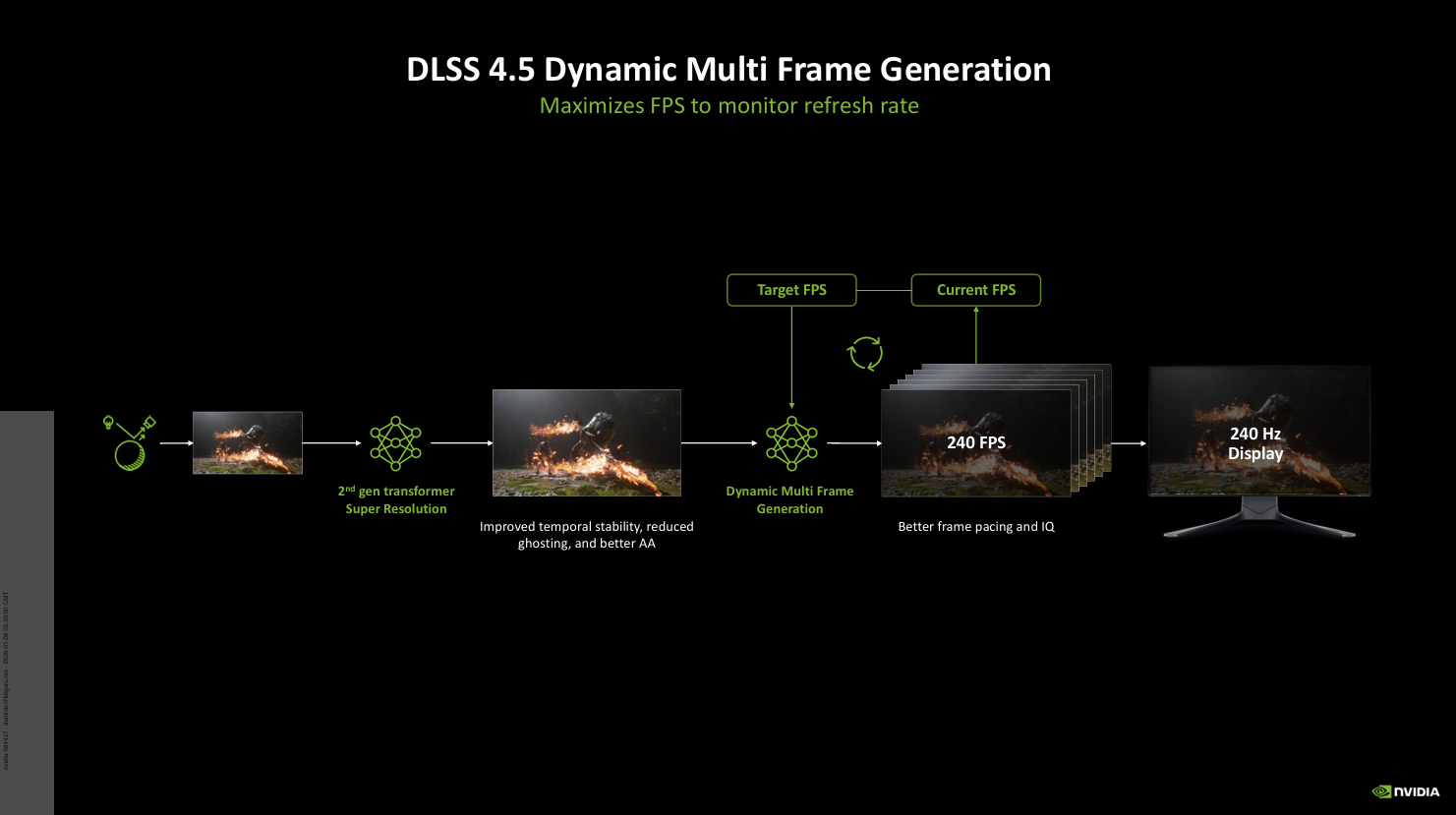
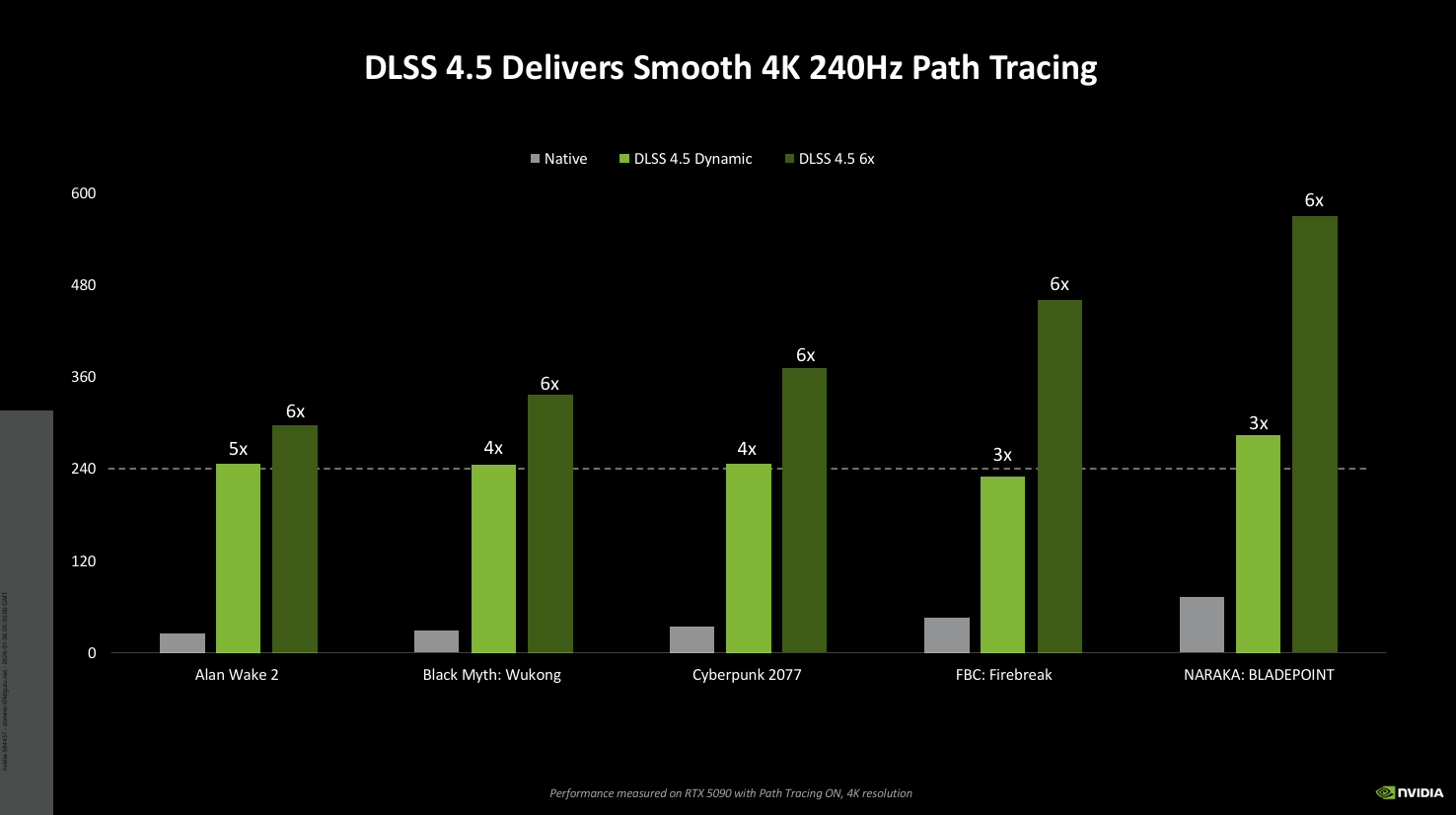
On top of the new transformer model, Nvidia is also bringing updates to Frame Generation. With DLSS 3, Nvidia released Frame Gen 2x, the standard version available on RTX 40 and RTX 50 series GPUs. Then with DLSS 4, Nvidia introduced 3x and 4x modes, exclusively available with RTX 50 series graphics cards. Now, the bar is raising again and Nvidia is set to roll out Frame Generation 6x. With this level of Frame Generation, gamers will be able to max out the refresh rates of 240Hz and 360Hz gaming monitors, which are becoming more prevalent each year, particularly at the moment with the growing adoption of OLED displays.

In the slide above you can see some of the results in games like Cyberpunk 2077 and Black Myth Wukong, showing that with 6x Frame Generation enabled, the RTX 5090 can provide 360Hz gameplay in very demanding titles, even with Path Tracing enabled. Nvidia says it has also made improvements to frame pacing and image quality, so it will be interesting to put that all to the test in the coming months while also measuring for added latency in the higher modes.

While the new DLSS Transformer model for upscaling will be available for all RTX GPU users, the new Multi-Frame Generation updates are exclusive to RTX 50 series GPUs and newer.

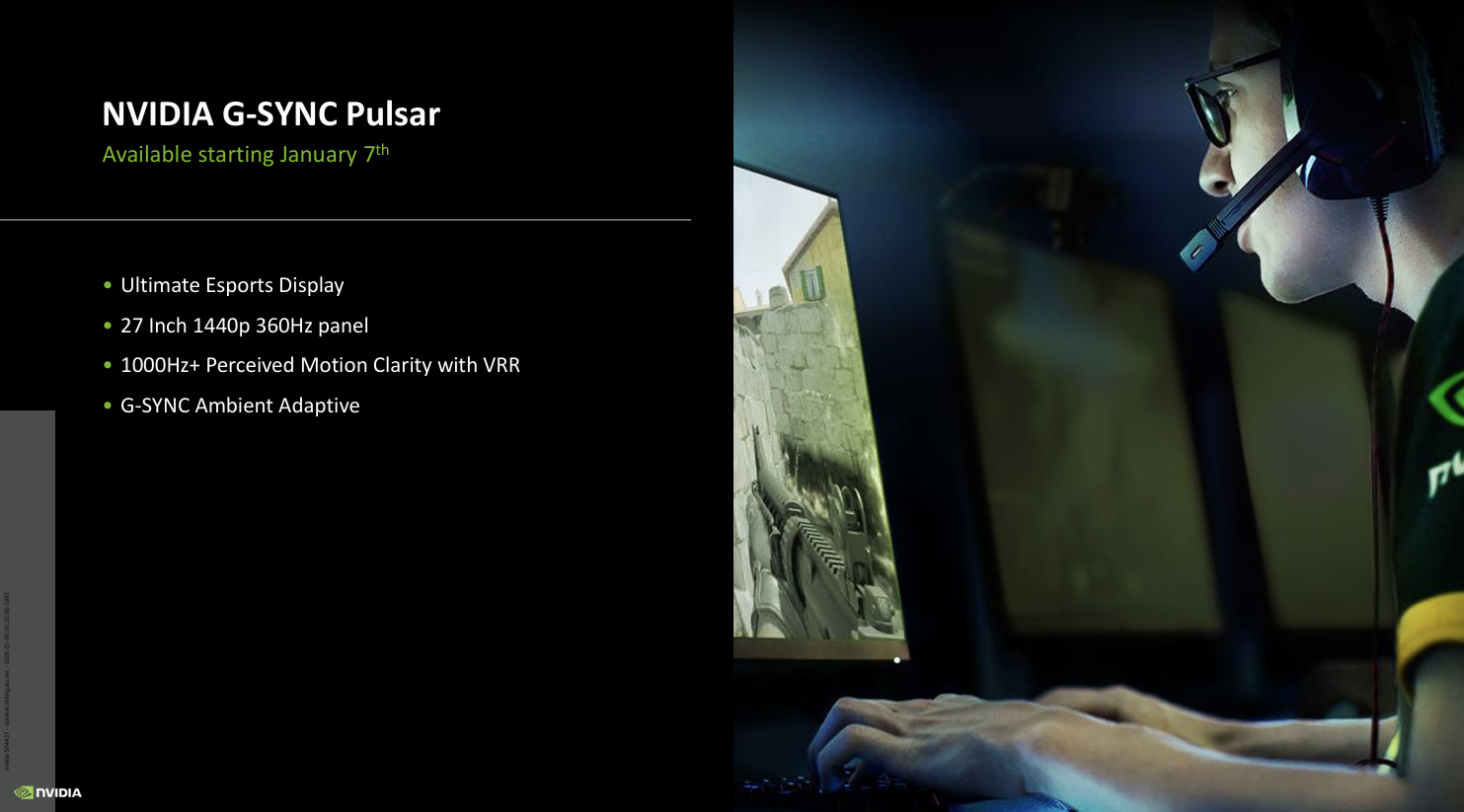
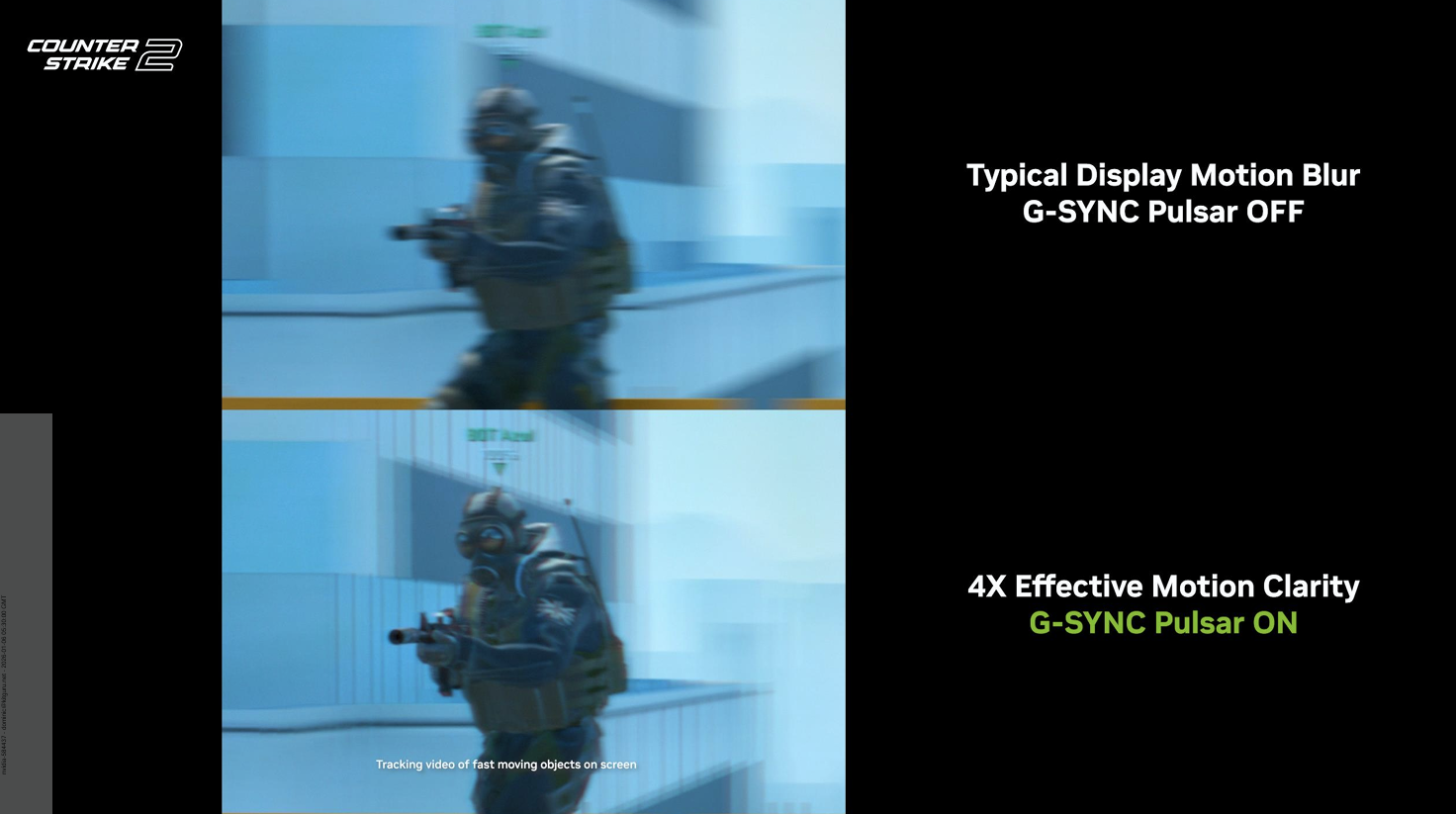
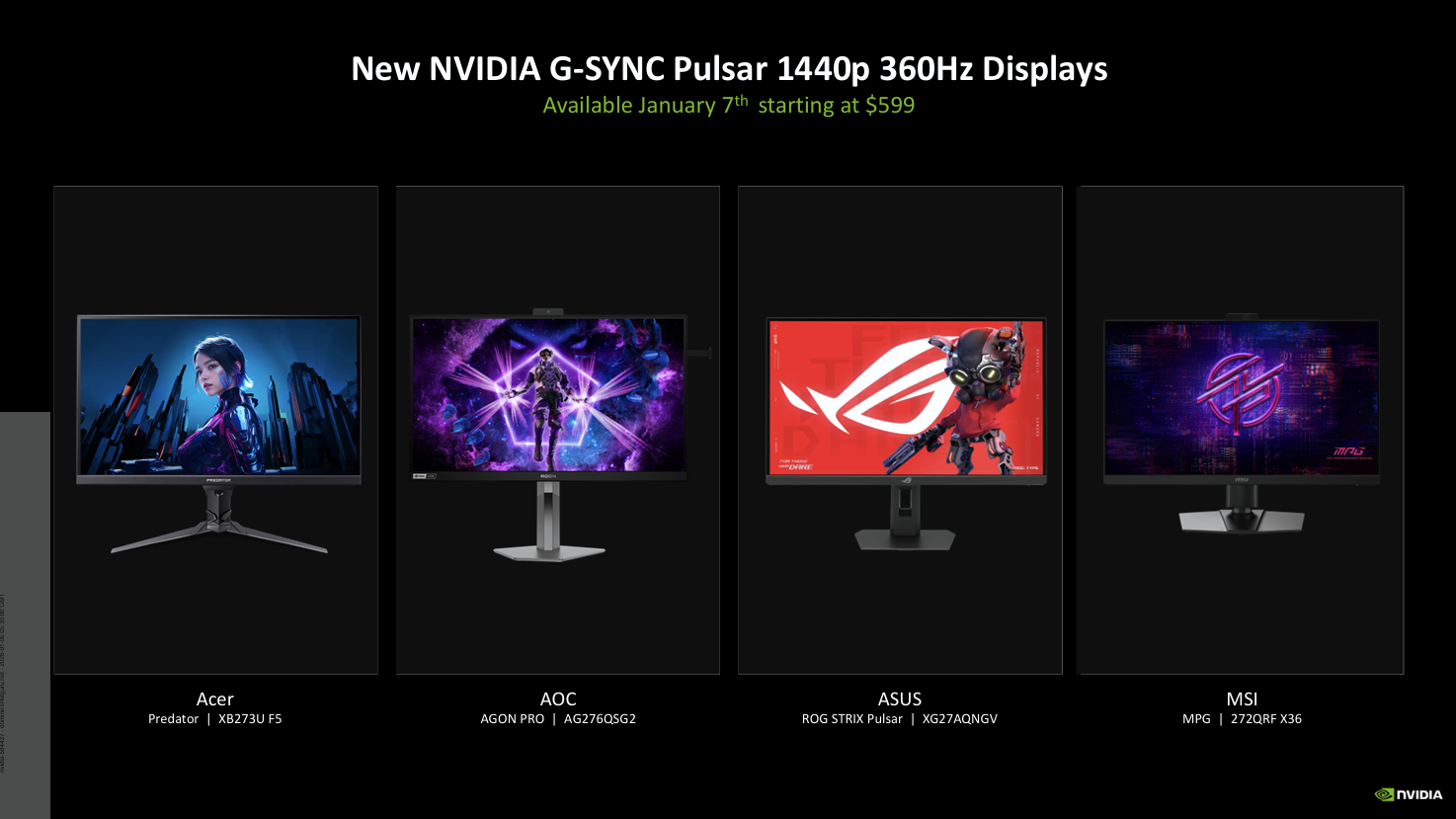
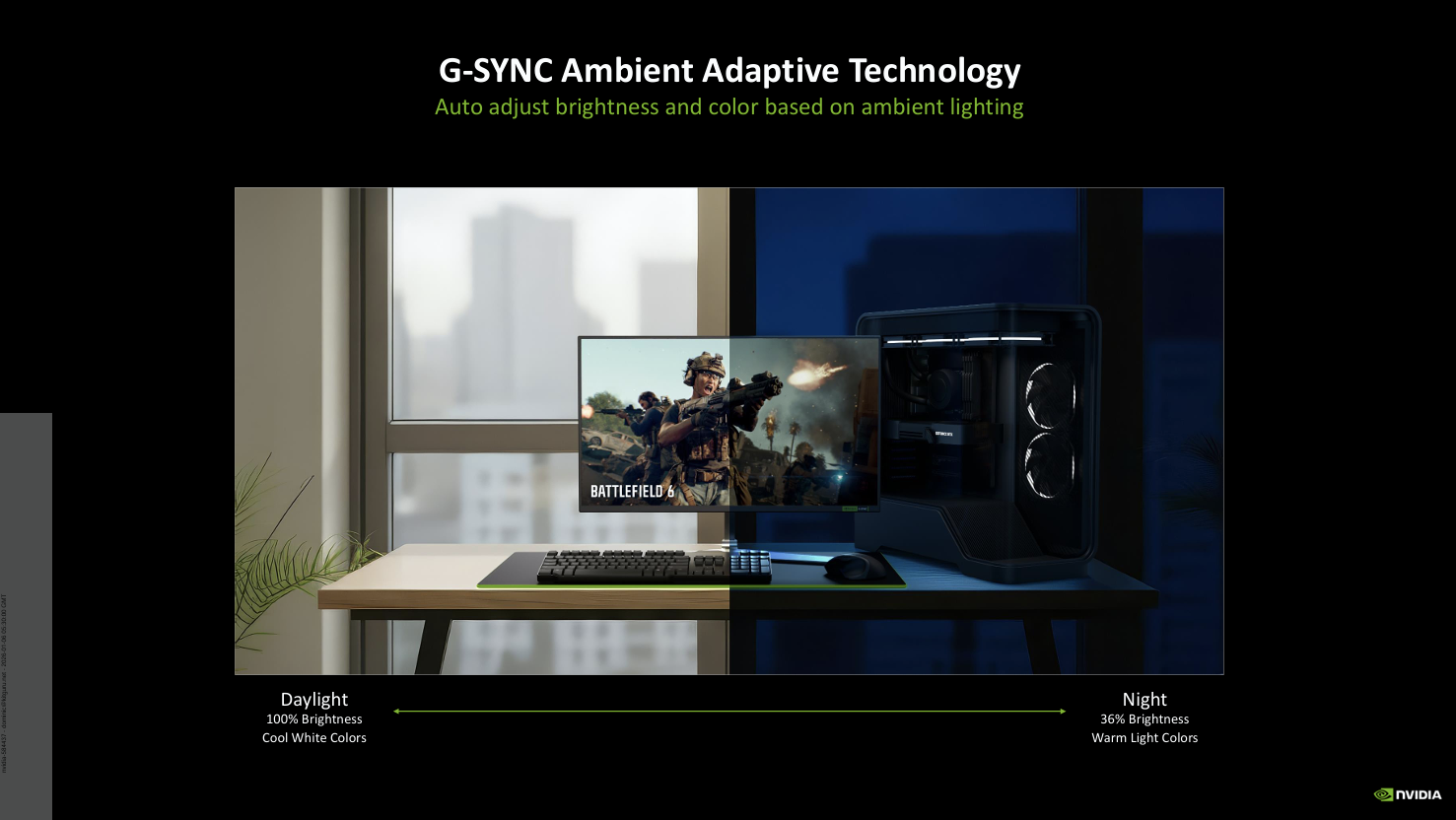
Sticking to gaming, Nvidia is also launching G-Sync Pulsar on January 7th. New displays equipped with this technology will feature QHD resolutions, up to 360Hz refresh rates and offer the equivalent motion clarity to a 1000Hz display with VRR. Nvidia is also introducing G-Sync Ambient Adaptive Technology, enabling the display to dynamically shift brightness based on lighting conditions and the time of day, so you can avoid eye-strain during late-night gaming.

G-Sync Pulsar displays from the likes of Asus, MSI, AOC and Acer will be hitting the market in early 2026, with prices starting at $599.

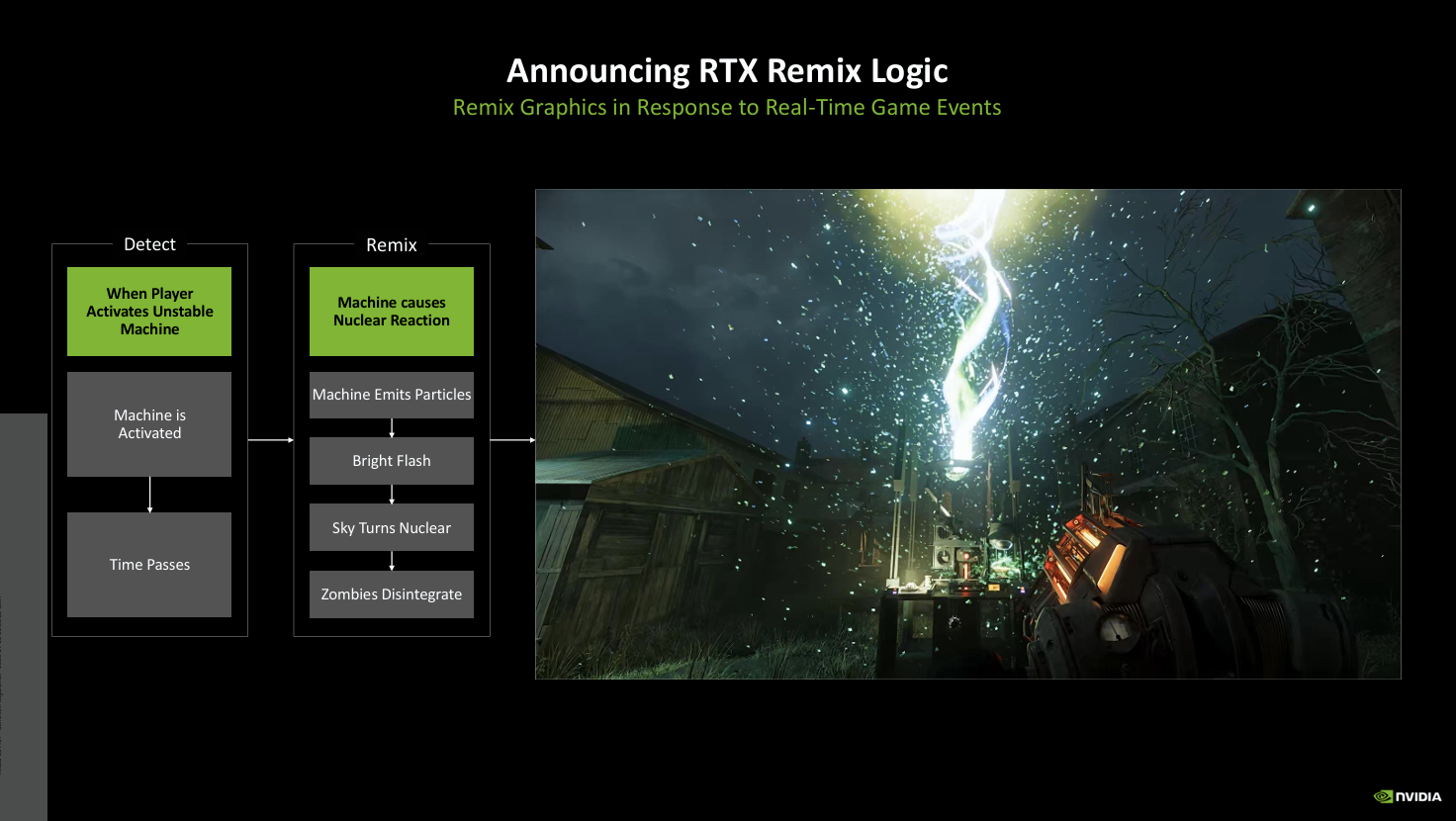
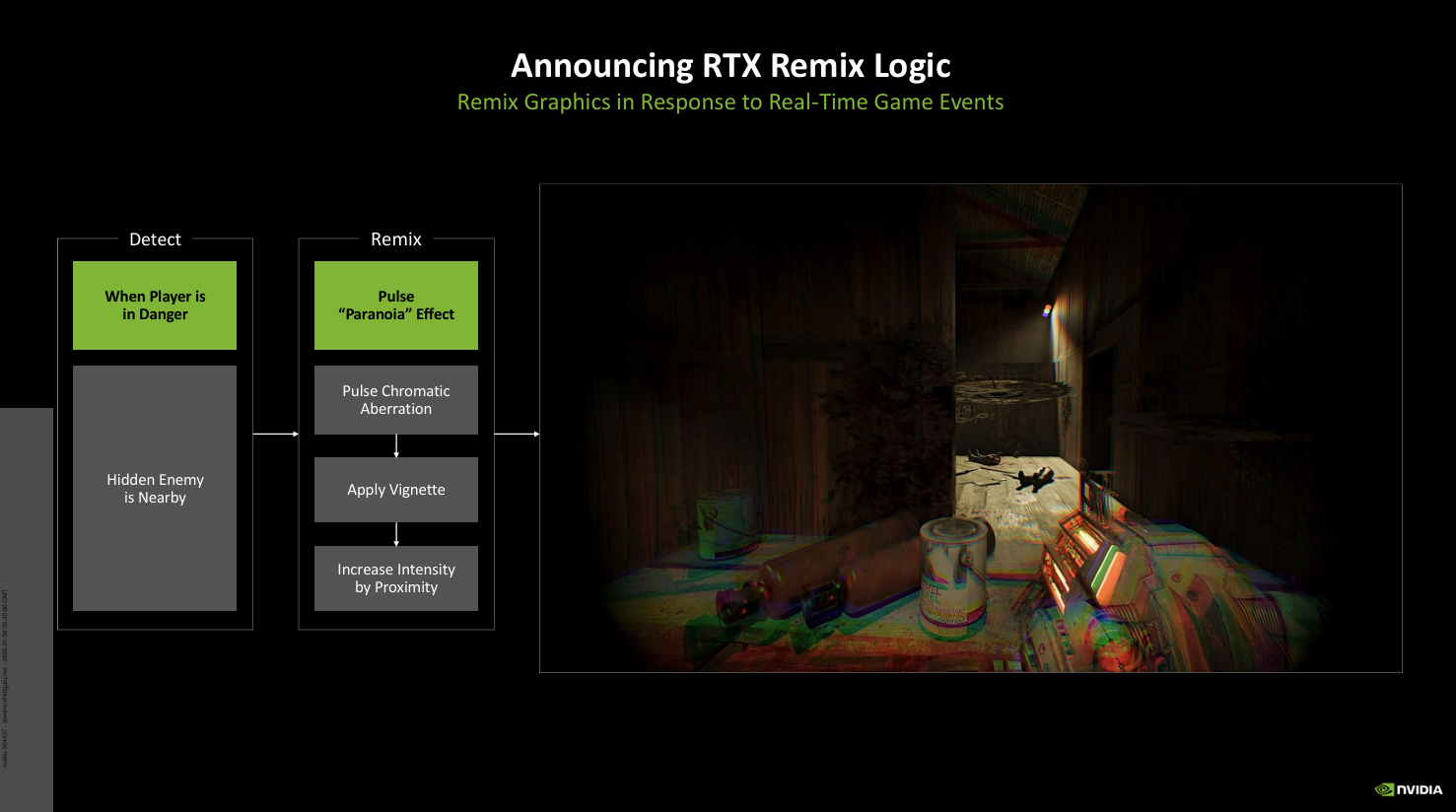
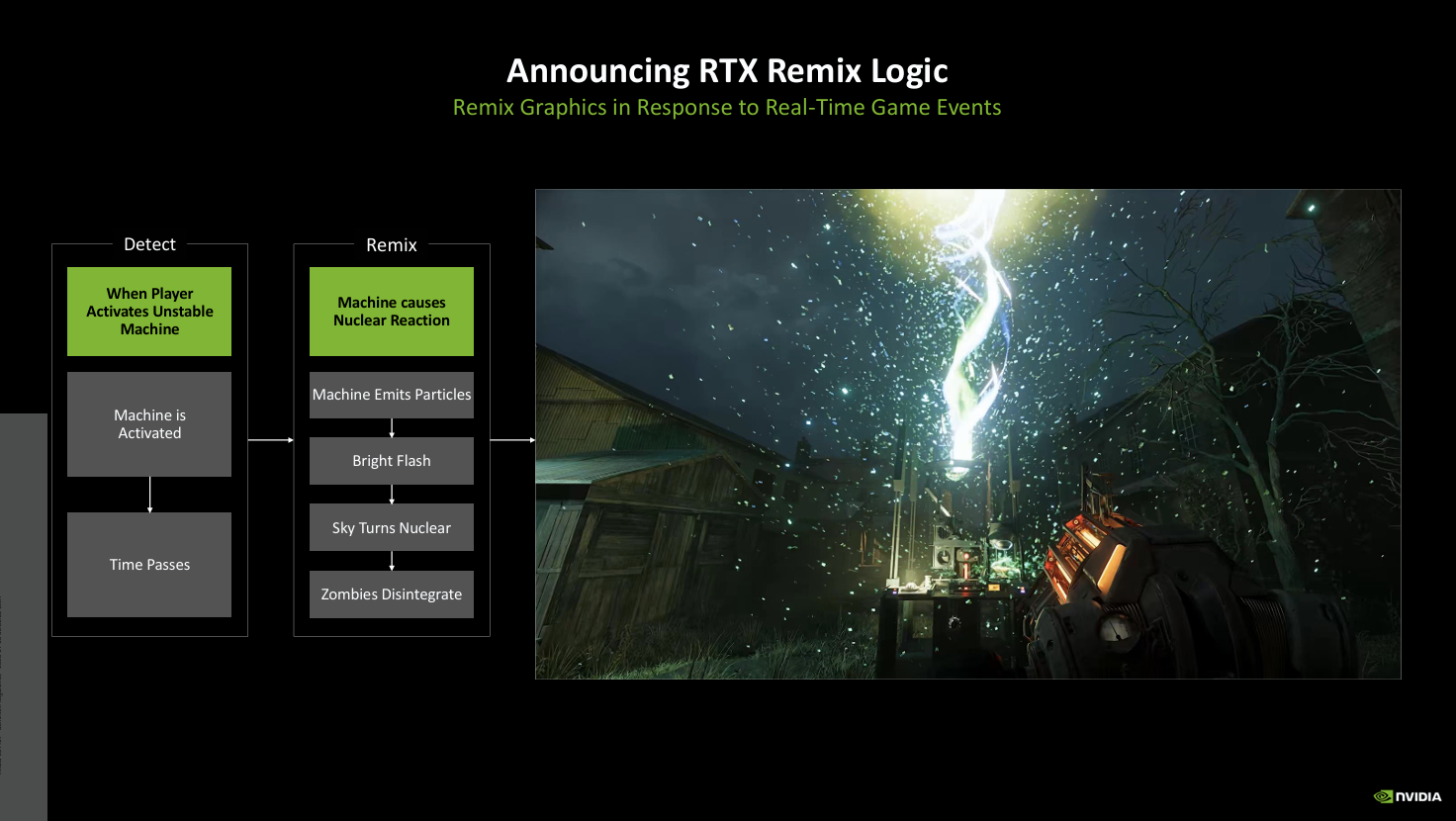
The RTX Remix modding project is also seeing some love at CES this week. RTX Remix Logic will allow modders to inject newly remixed graphical effects like particles in response to real-time game events, such as activating a machine in Half-Life 2, or adding in chromatic aberration in response to the player being in danger from a hidden enemy, creating a visual sense of paranoia.

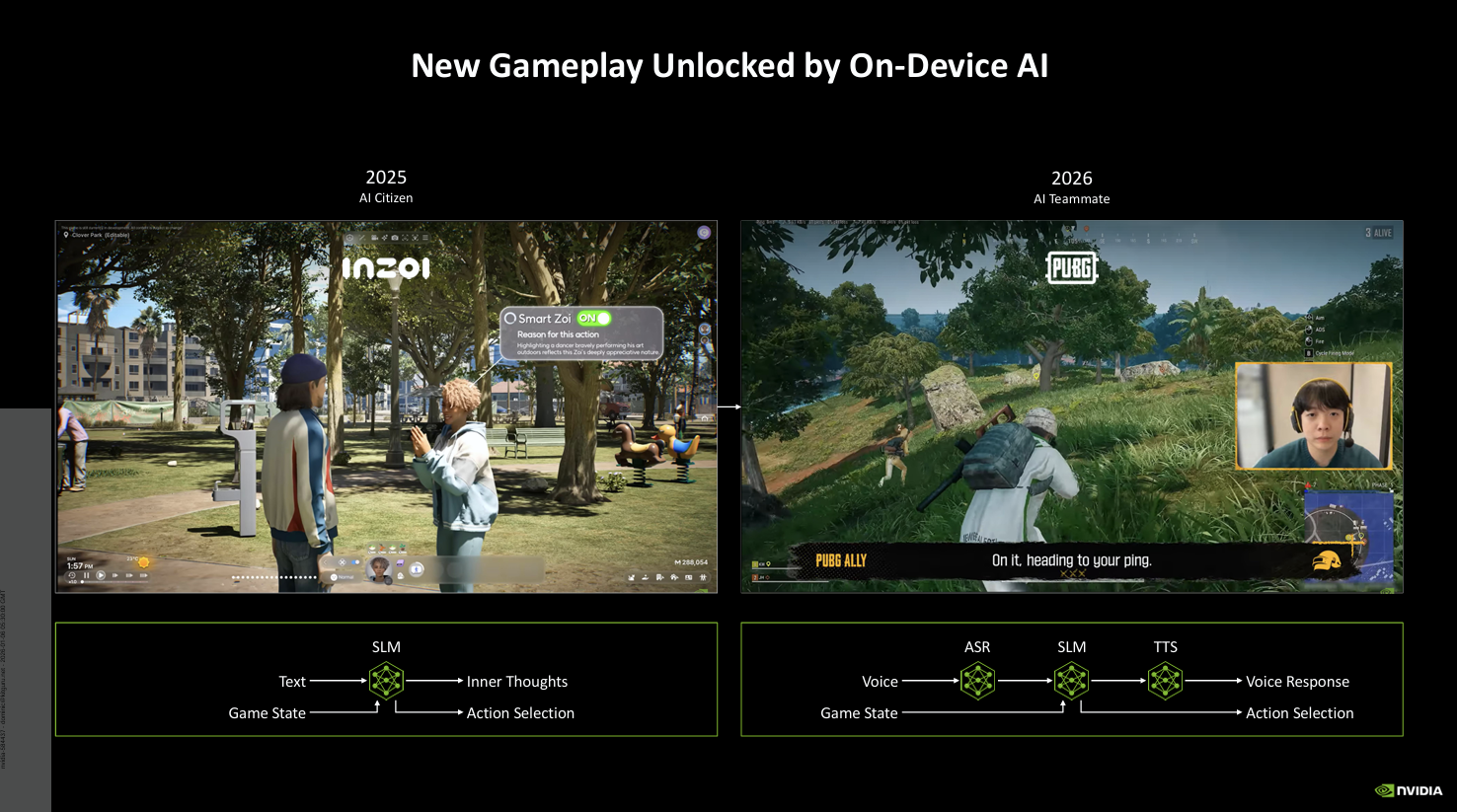
The Nvidia ACE AI suite is also being showcased with new potential use-cases. For instance, the ACE Small Language Model could be used to greatly enhance the Advisor in Total War: Pharoah, giving the player more relevant tips while building up a prospering civilisation and army.

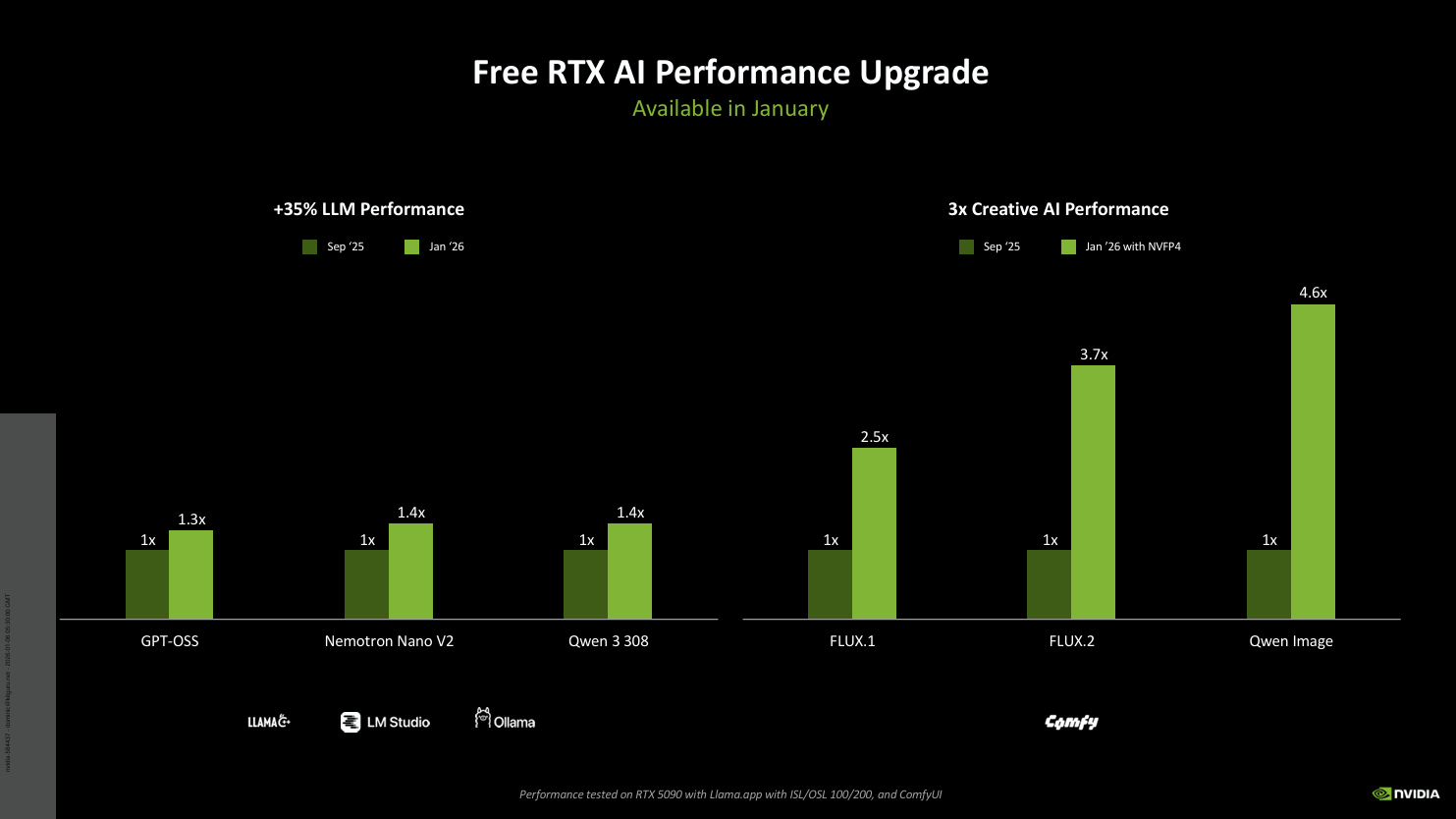
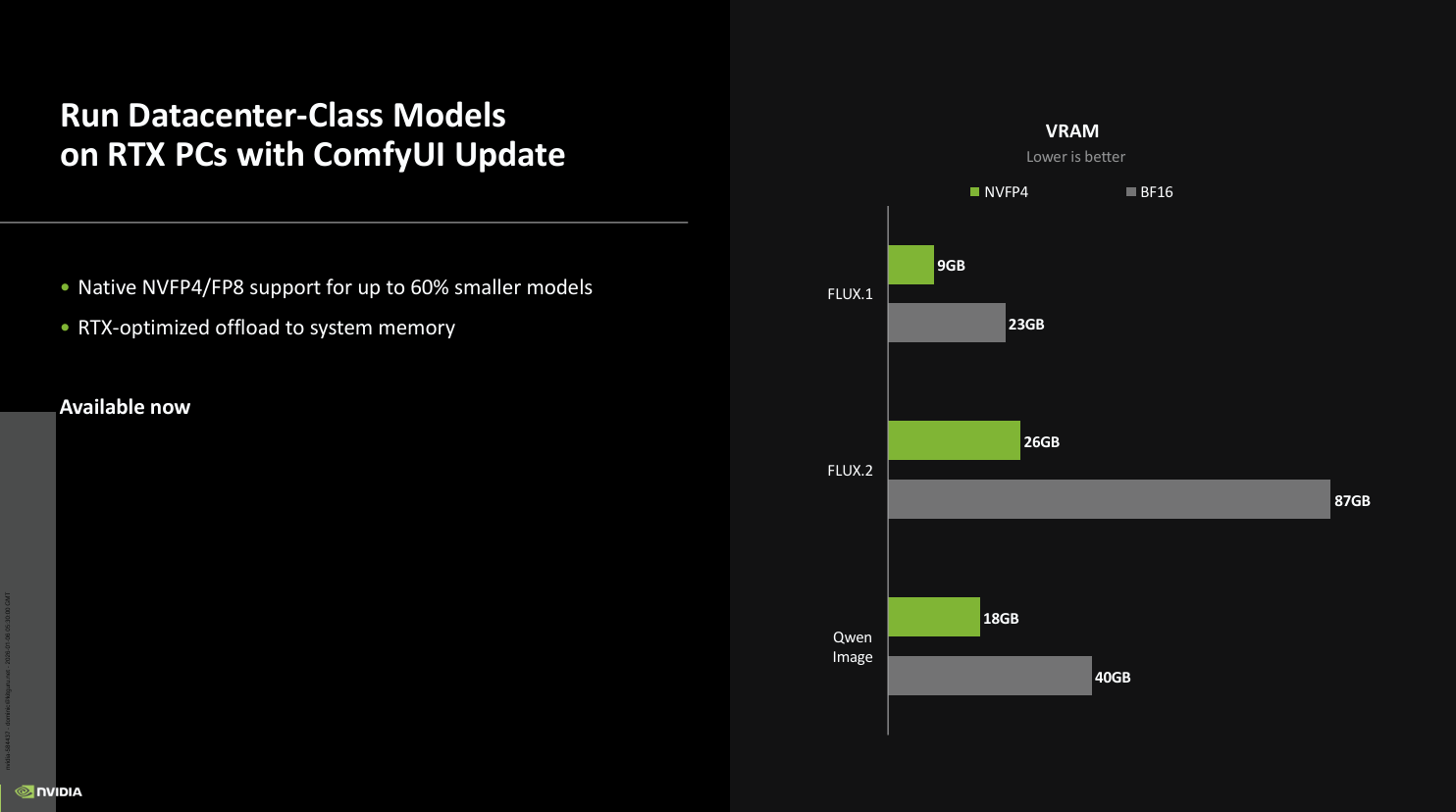
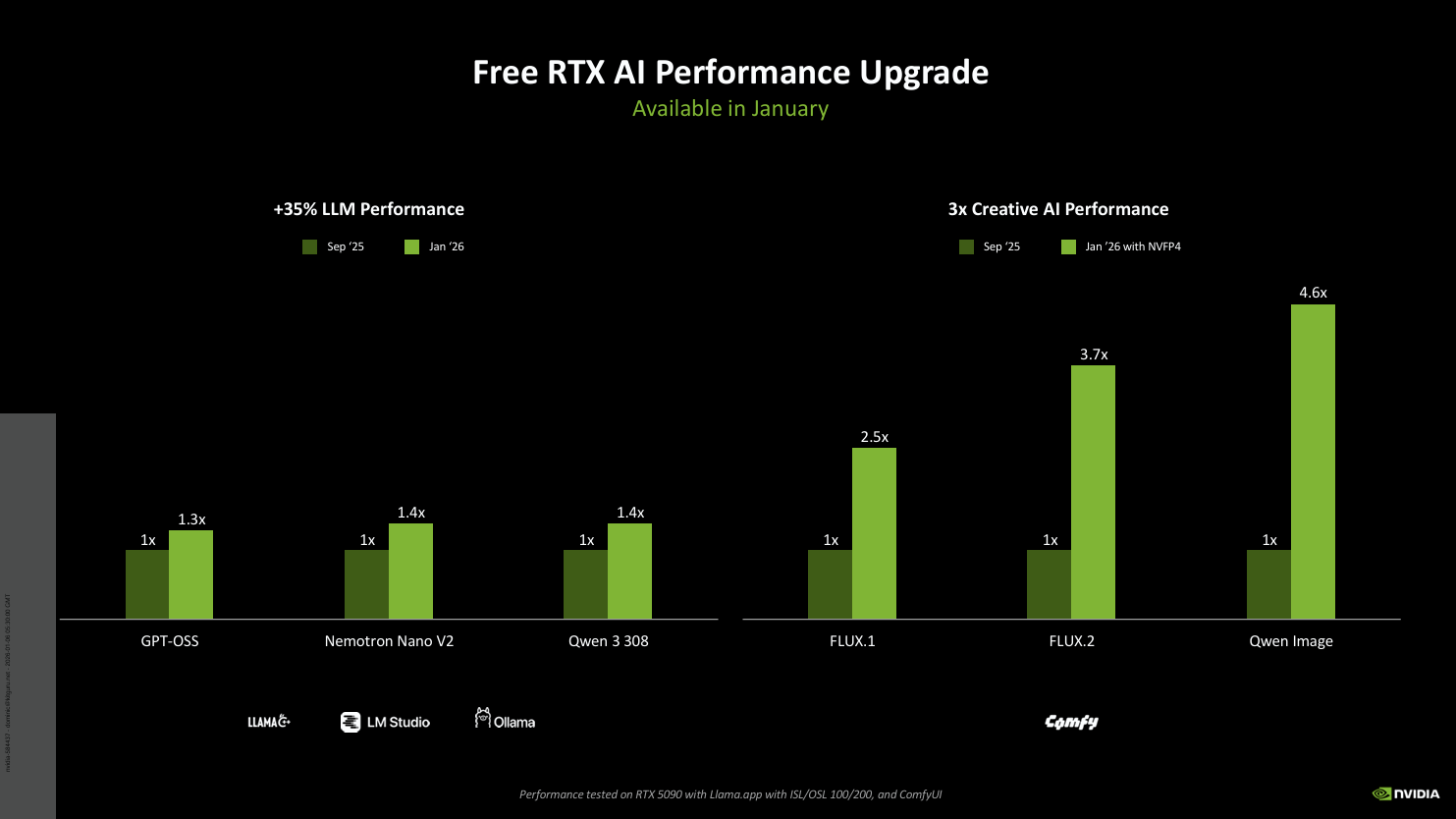
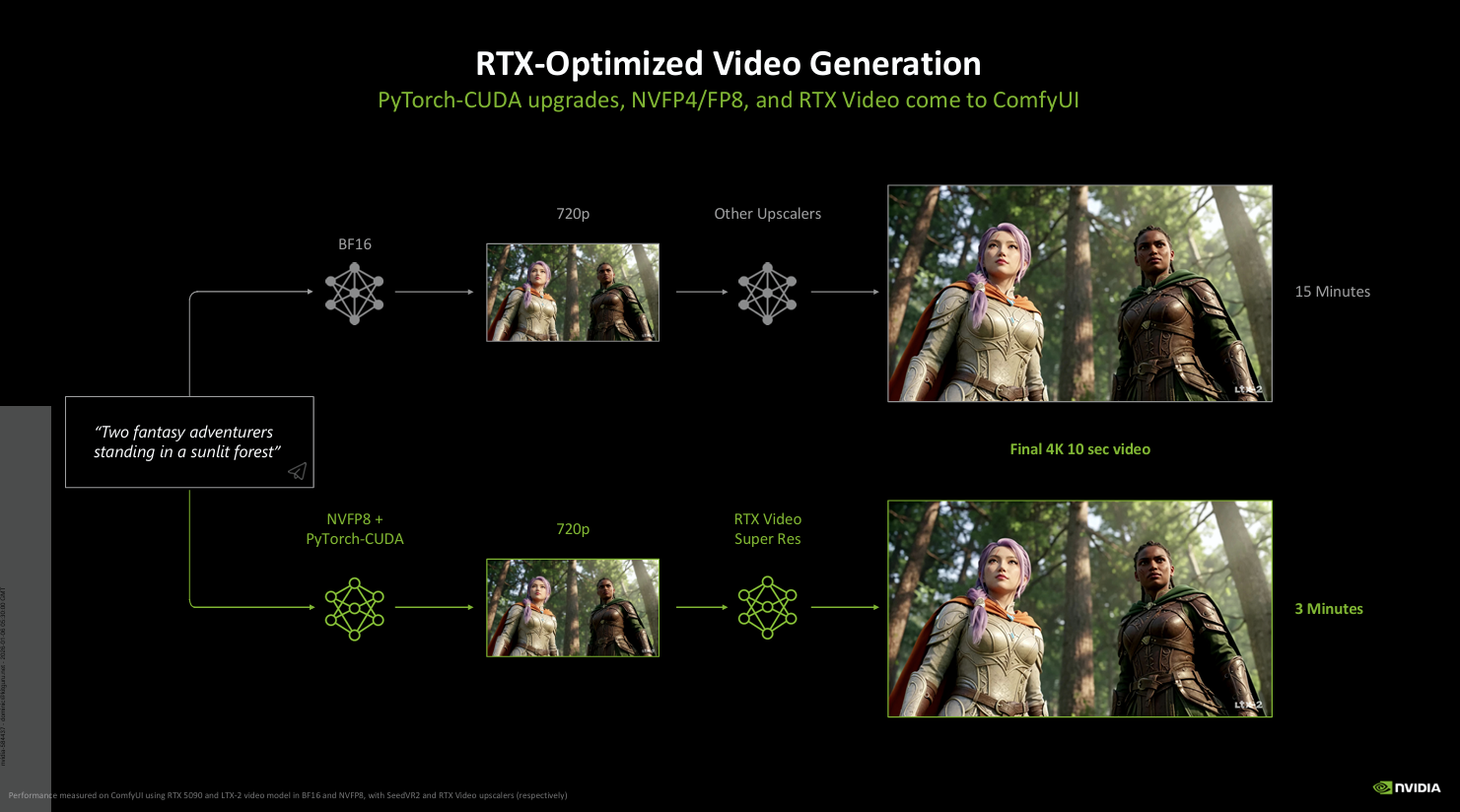
In keeping with the AI theme, Nvidia is also bringing new optimisations to make RTX GPUs more capable when running local AI projects. On an RTX 5090, tools like GPT-OSS, FLUX.1 and FLUX.2 will see performance upgrades. An upcoming ComfyUI update will also enable new optimisations to reduce VRAM usage. Nvidia is also bringing updates to enable private AI video search capabilities and Super Res for generated videos, allowing creators to make crisp 4K videos in seconds.

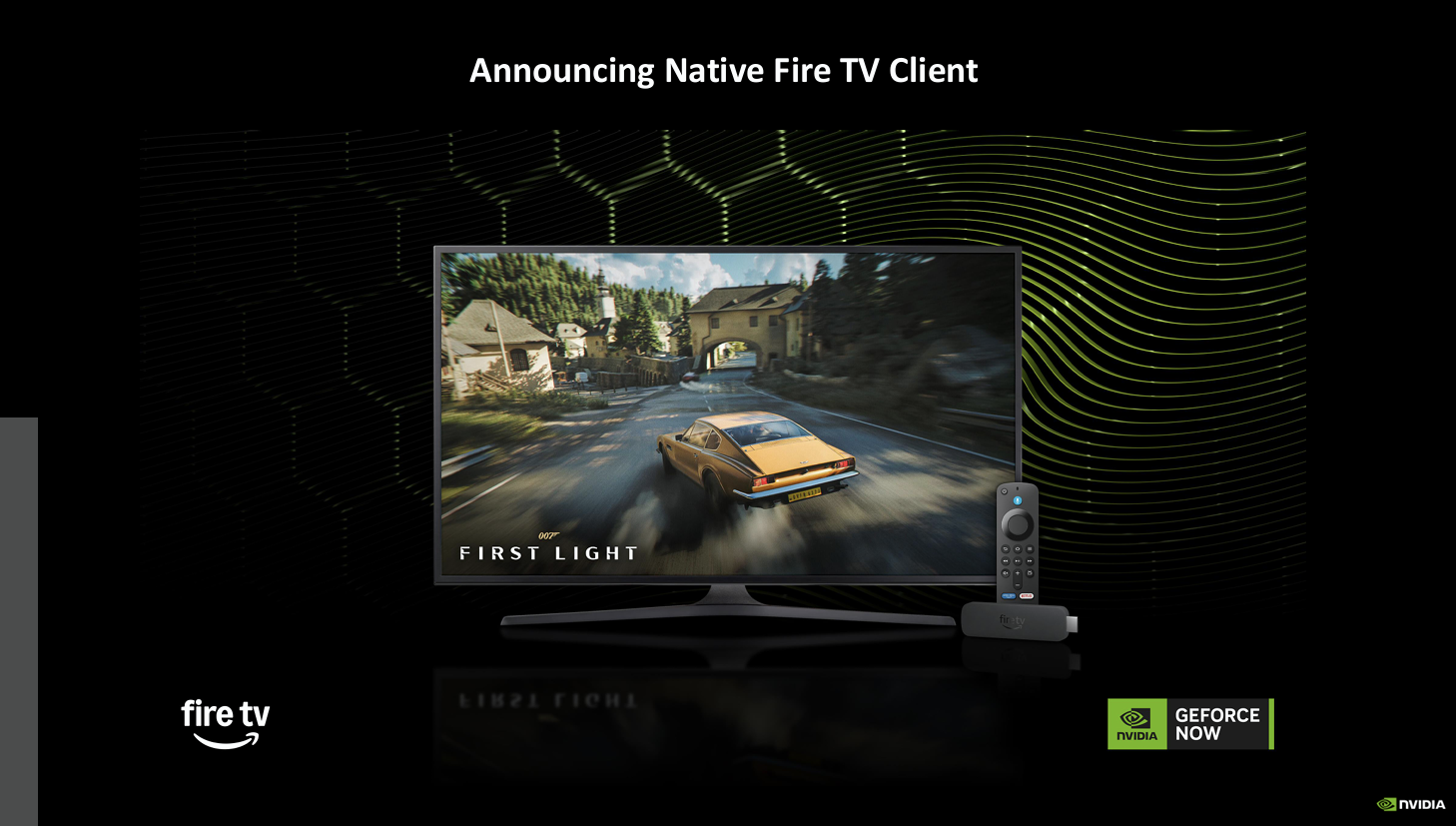
The final few announcements pertain to GeForce Now, Nvidia's cloud gaming service. Last year, the GeForce Now Ultimate servers were upgraded around the world to house RTX 5080 graphics cards. Now, Nvidia is rolling out native GeForce Now clients for more devices, including Linux-based PCs and Amazon Fire TV devices. Peripheral support is also expanding, so you can now move beyond a simple game controller to racing wheels and flight sticks for supported racing and flight sims. In the coming months, major titles like Resident Evil Requiem, 007 First Light and Active Matter will be available to stream day-one through GeForce Now.

KitGuru Says: What do you make of Nvidia's CES announcements this year? 

The post CES 2026: Nvidia announces DLSS 4.5, G-Sync Pulsar and more first appeared on KitGuru.

CES 2026: AMD reveals new Ryzen CPUs for laptops and desktops

6 janvier 2026 à 04:30

CES 2026 has officially begun and AMD is rolling out a number of new products to mark the occasion. As expected, AMD's primary focus is now shifting towards AI performance, although there are gaming-related product launches to look forward to as well.

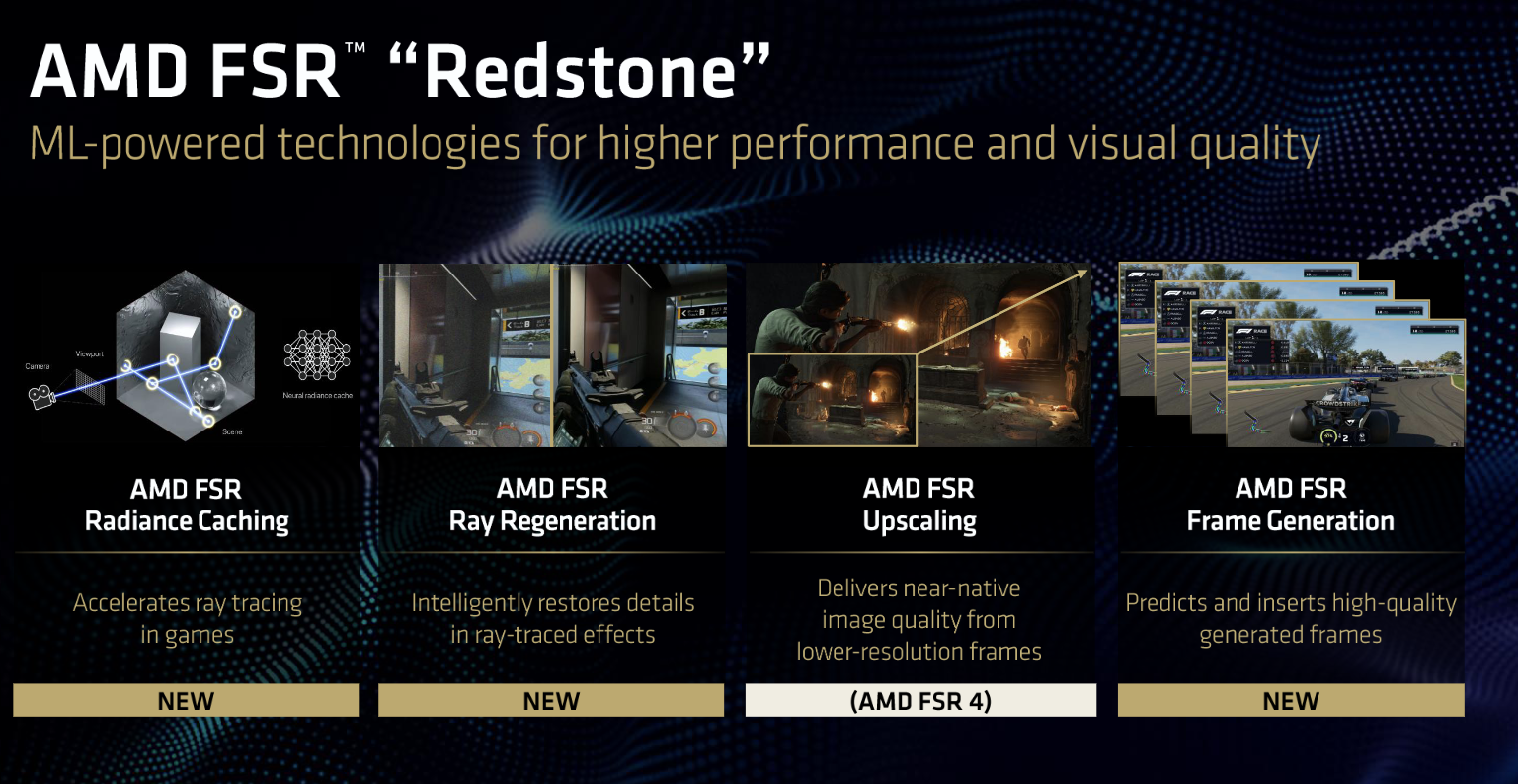
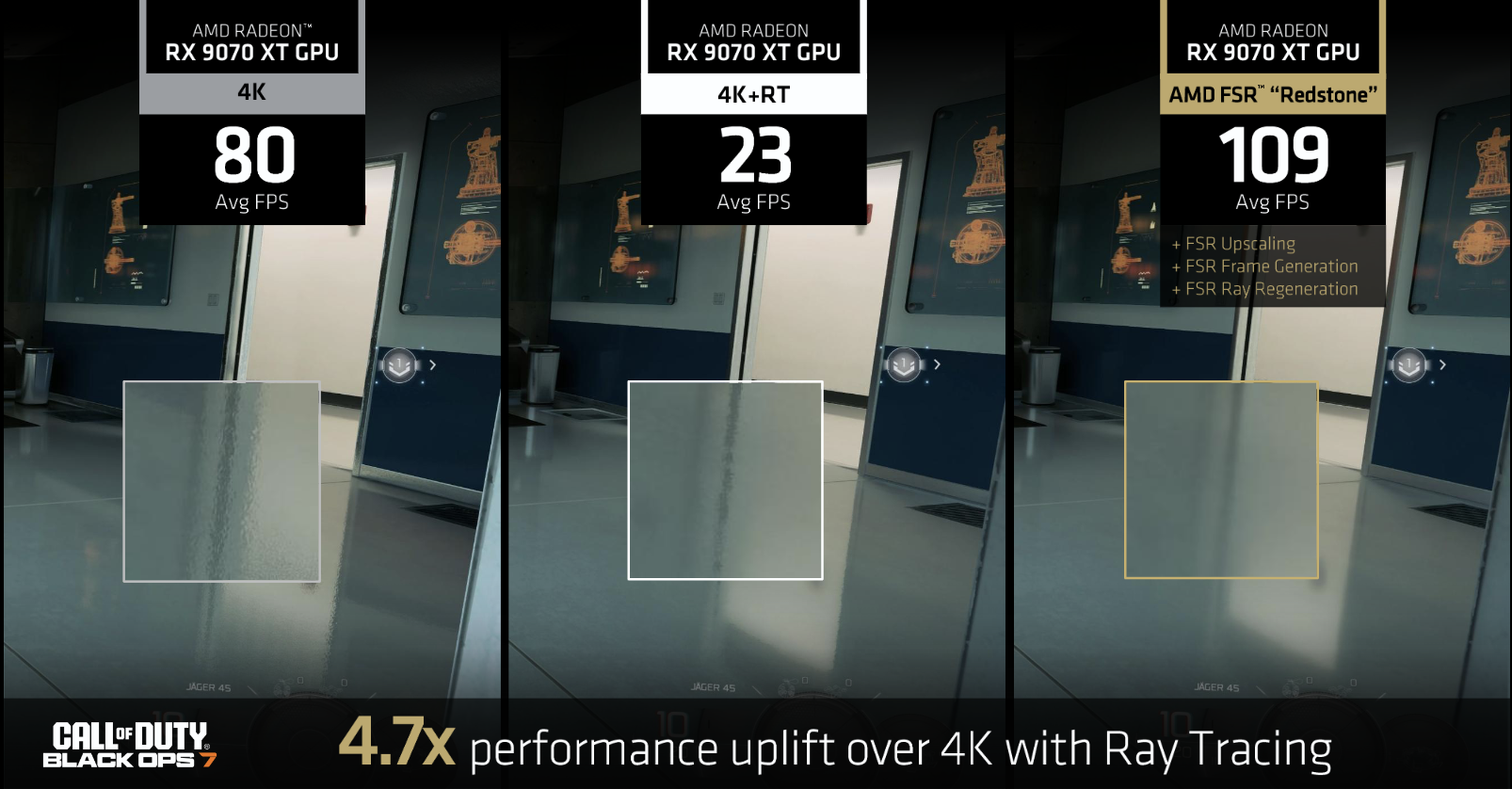
According to AMD's data, over 80 percent of the PC market will utilise NPUs by 2029. Currently, AMD has over 250 Ryzen AI PC models in circulation from various OEMs. Some of this AI-centric focus will benefit gamers, thanks to technologies like FSR 4 (Redstone), which is the new ML-enabled version of the FSR upscaler, enabling greater visual and performance gains on Radeon RX 9000 series graphics cards and newer. According to AMD, FSR Redstone can improve performance by up to 4.7x at 4K resolution with ray tracing enabled. A number of big 2025 titles have already been upgraded with this new version, including The Elder Scrolls IV: Oblivion Remastered, Silent Hill 2, Mafia: The Old Country and of course, Call of Duty: Black Ops 7.

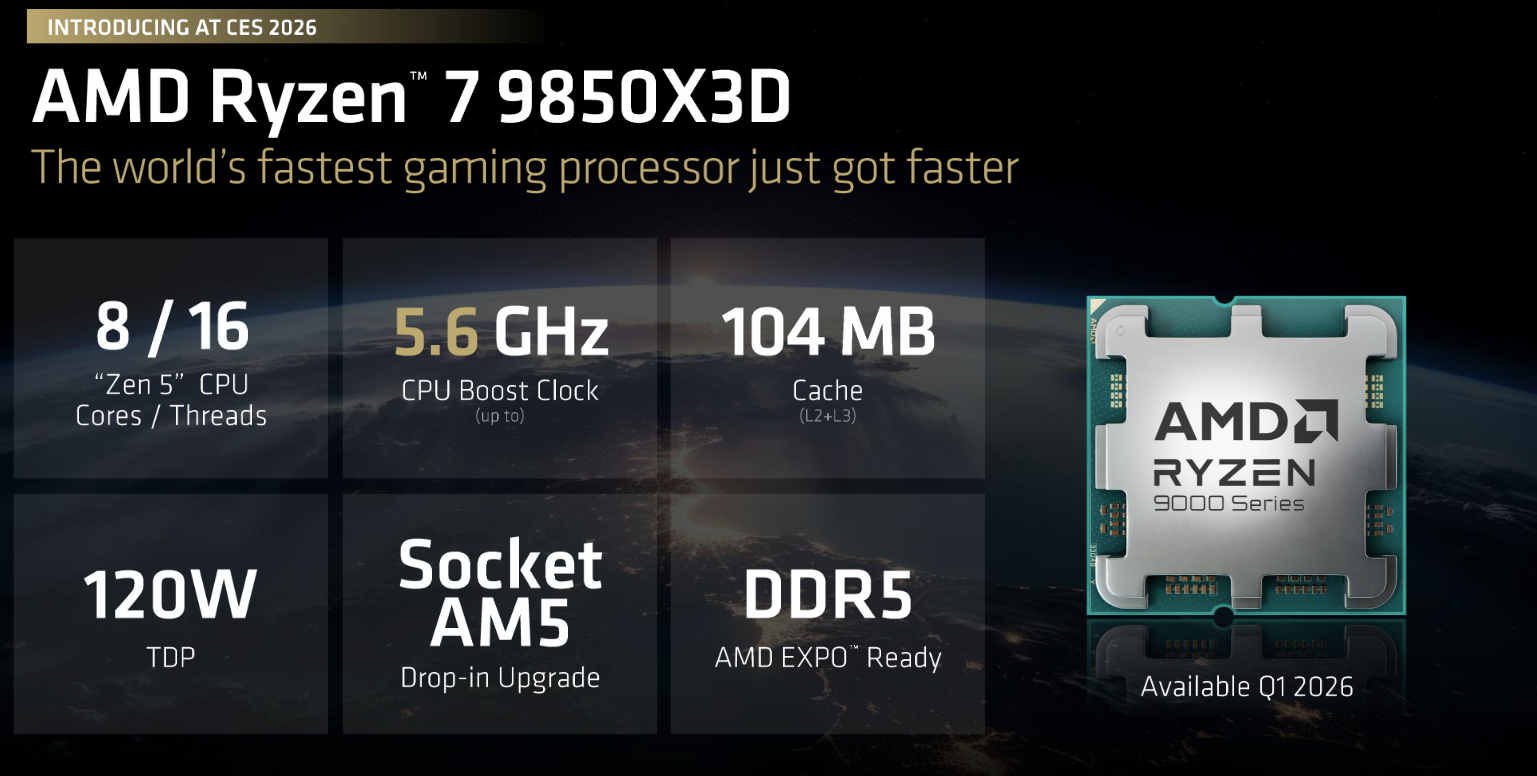
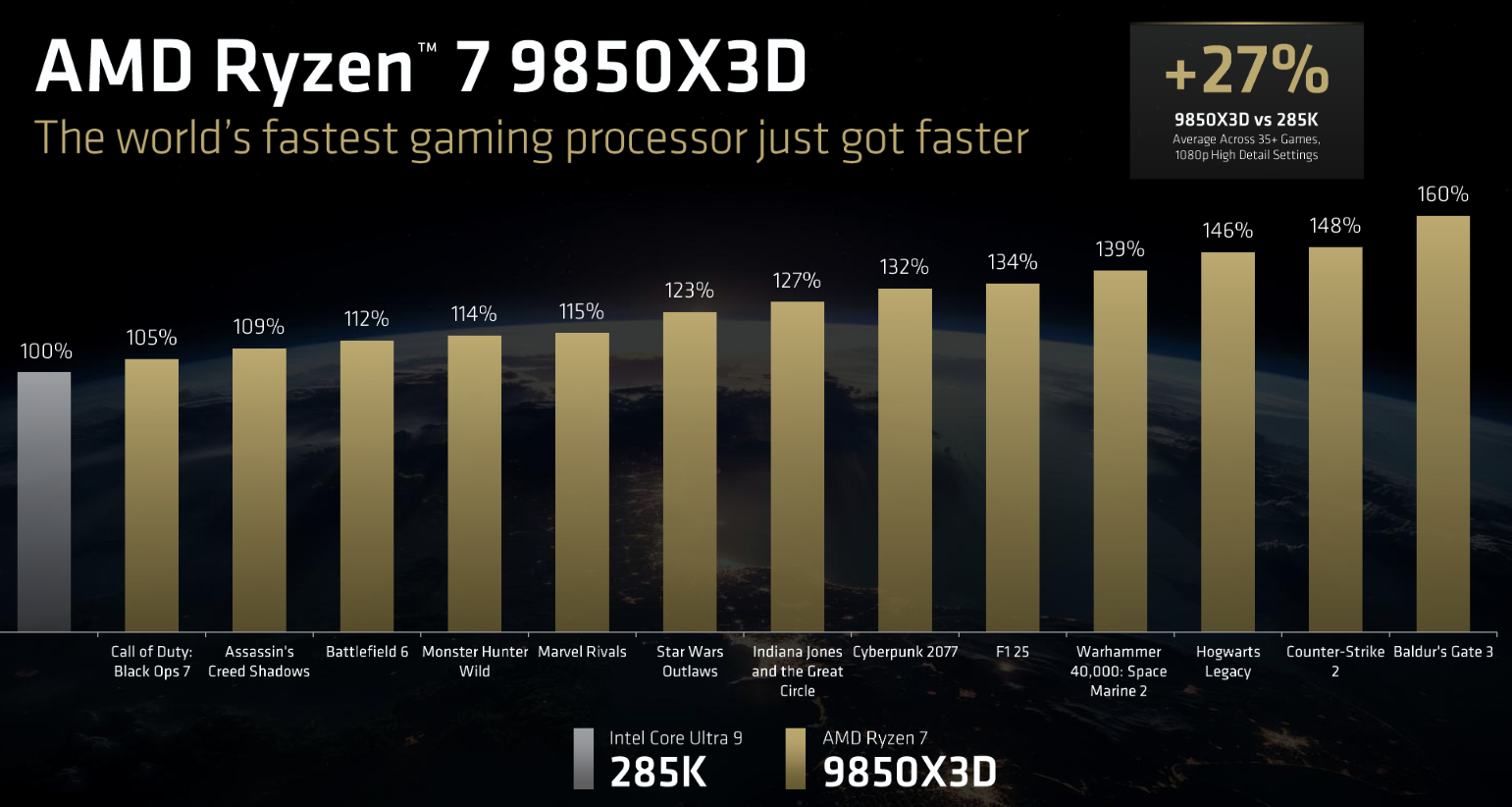
On the desktop PC front, AMD is unveiling its new Ryzen 7 9850X3D CPU today. This chip packs an 8C/16T Zen 5 CPU configuration, along with a massive 104MB of cache. It is a step above the previous 9800X3D, with a higher 5.6GHz boost clock speed. According to AMD, this chip offers as much as 60% more performance compared to the Intel Core Ultra 9 285K desktop processor in games like Baldur's Gate 3. This chip will soon be at the heart of Alienware's flagship Area 51 gaming PC, and many other OEMs are also expected to adopt it, alongside the chip's release to the DIY market.

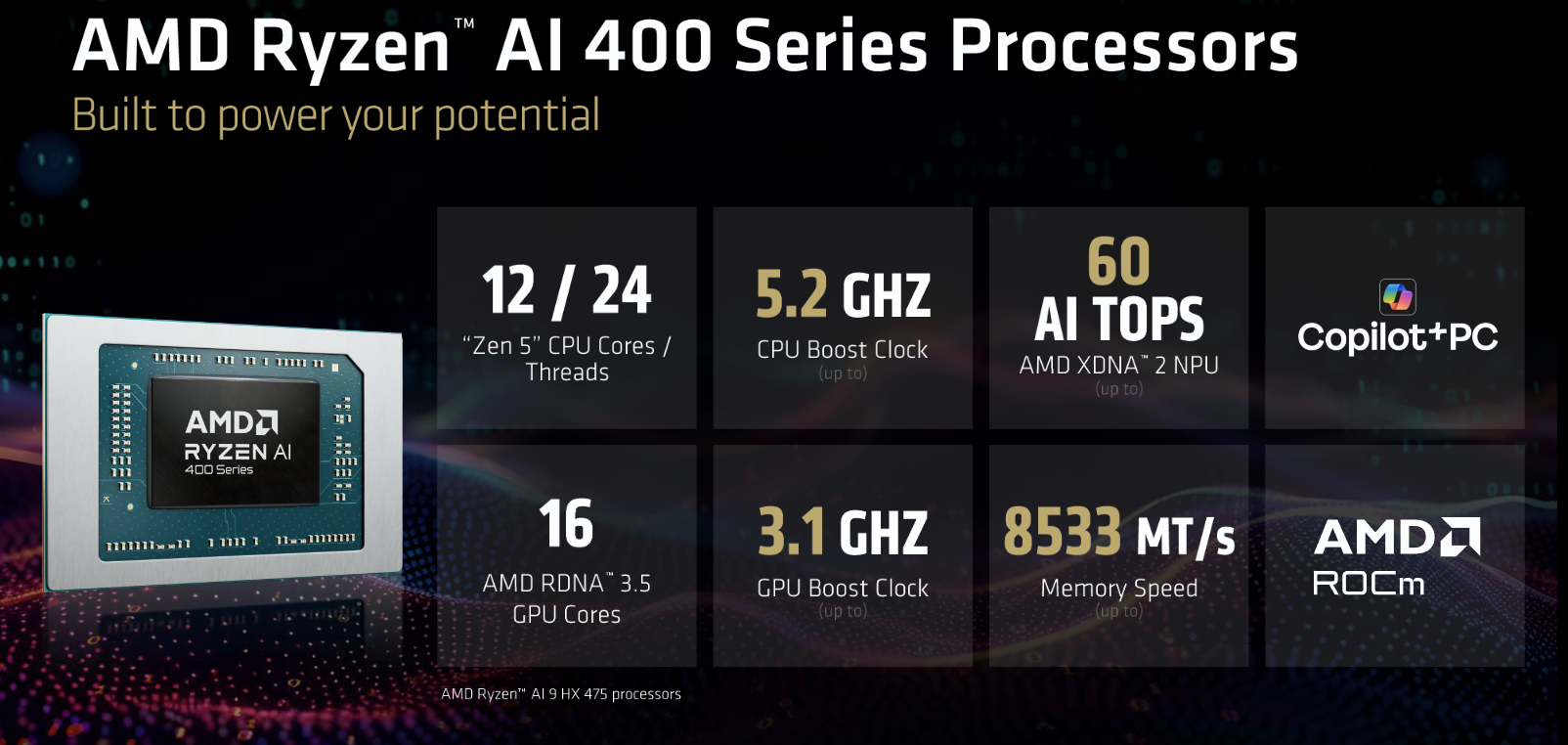
On the laptop side of things, AMD also has the new Ryzen AI 400 series processors. These CPUs aim to bring AMD into a leadership position for full stack CPU, GPU + NPU performance. These CPUs will offer up to 12C/24T with Zen 5 architecture, up to 5.2GHz boost clock and 60 AI TOPS via the XDNA 2 NPU, a 1.2X increase over the previous generation. For the integrated GPU, you'll get up to 16 RDNA 3.5 GPU cores.

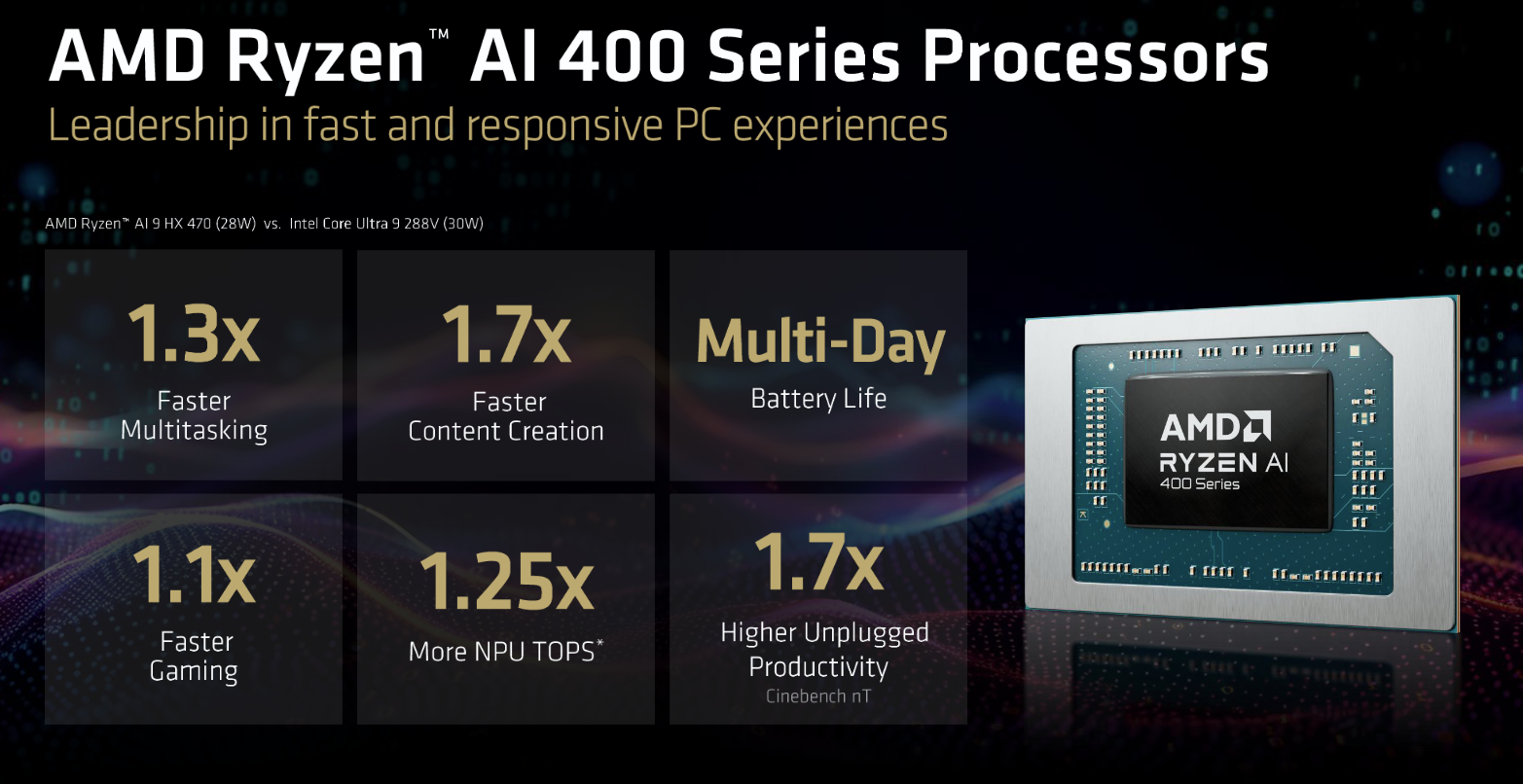
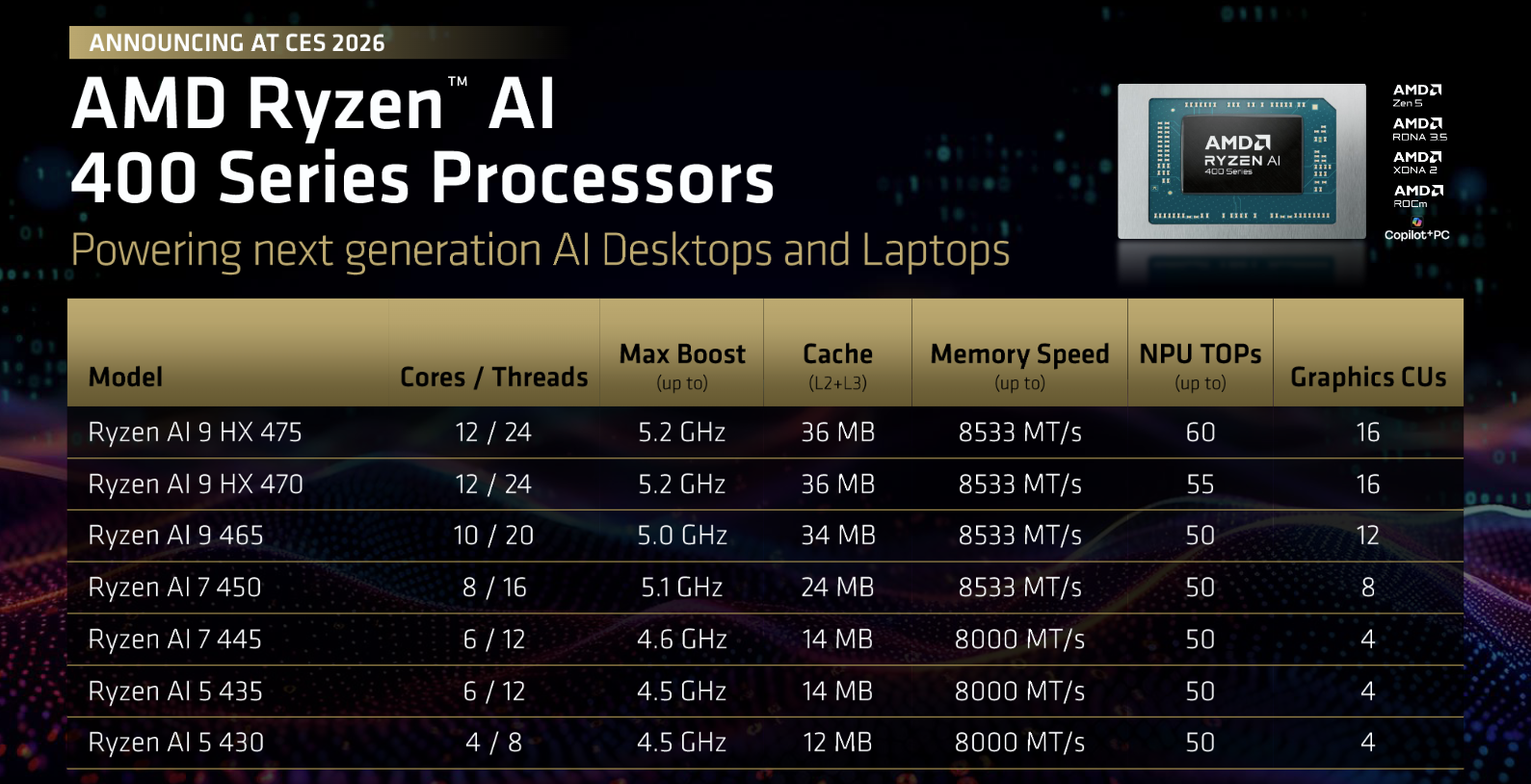
In content creation applications, AMD claims these chips will offer up to 1.7x more performance, as well as a 1.3x boost in multi-tasking. The big addition the line-up here is the Ryzen AI 9 HX 475, which will offer the highest possible specification, but there are also new Ryzen AI 7 and Ryzen AI 5 SKUs on the way as well. OEMs like Acer, Asus, Dell, HP, Lenovo, MSI, Gigabyte and more will offer laptops (or potentially mini PCs) using Ryzen AI 400 series processors in 2026.

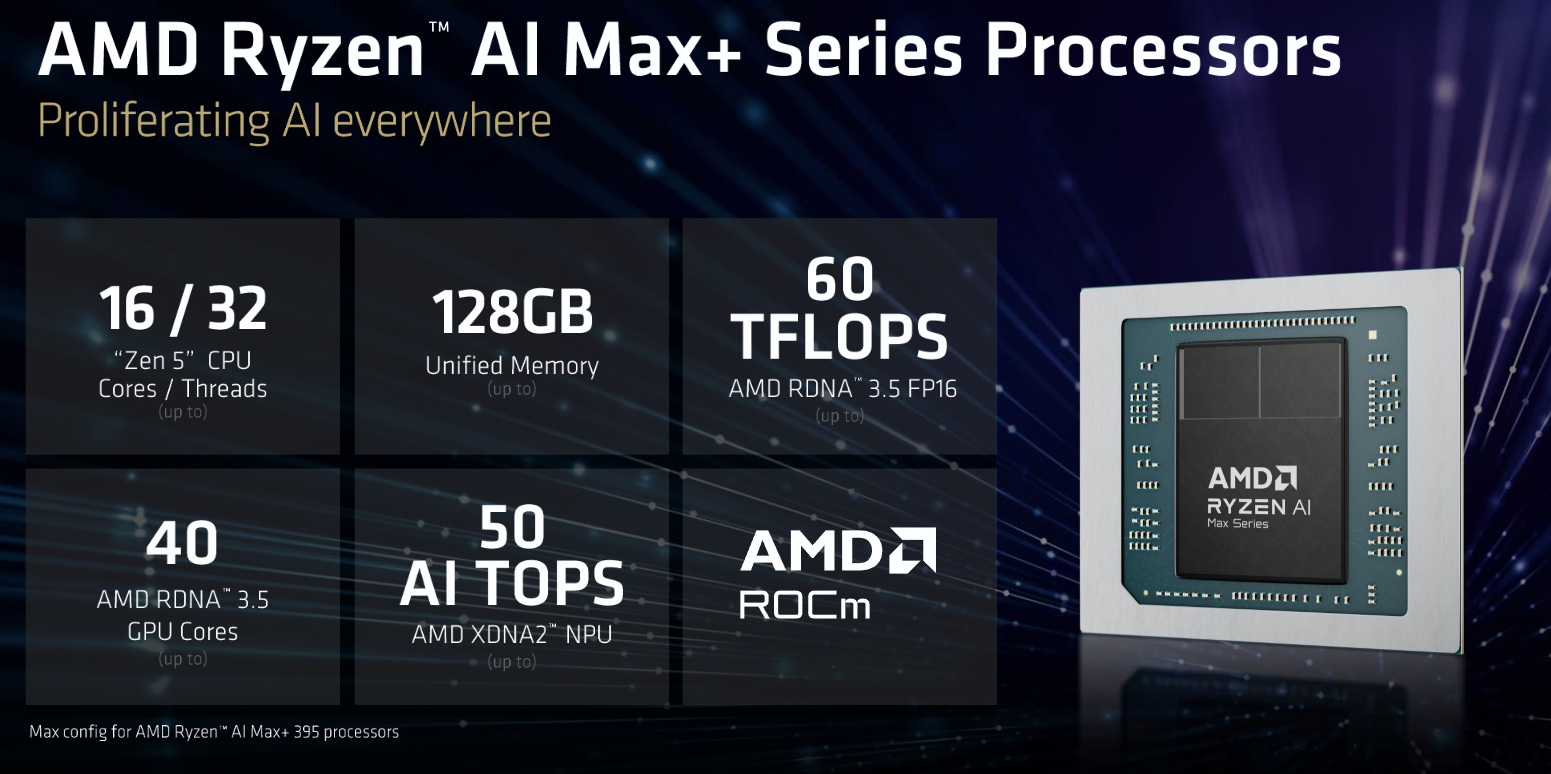
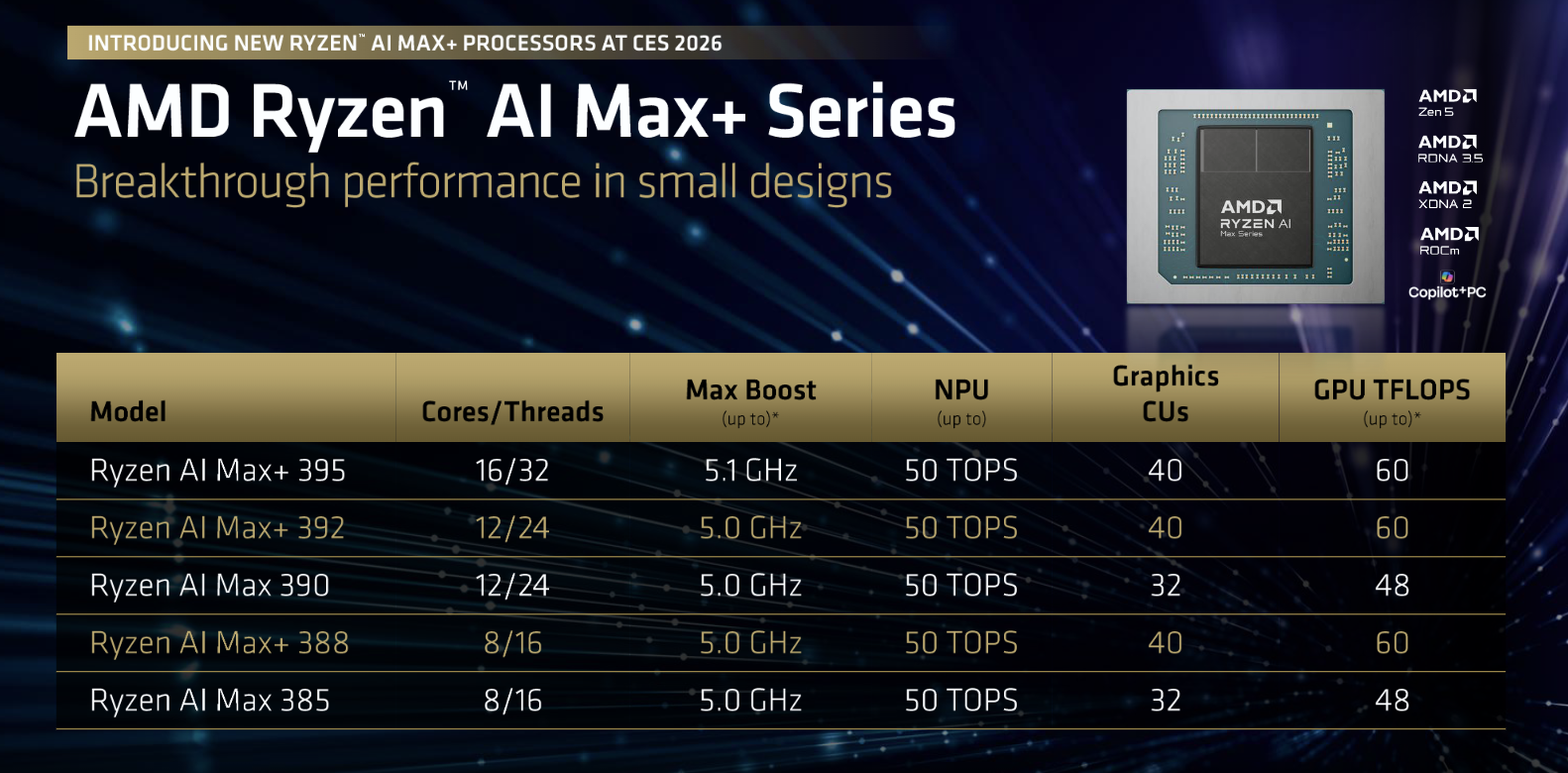
Ryzen AI Max CPUs will offer performance for AAA gaming, as well as perf needed for ‘workstation-level creation'. Systems will support up to 128GB of unified memory for AI powerhouse systems. Ryzen AI Max+ CPUs will offer up to 16C/32T, 40 RDNA 3.5 GPU cores and up to 60TOPS AI perf with XDNA 2 NPU.

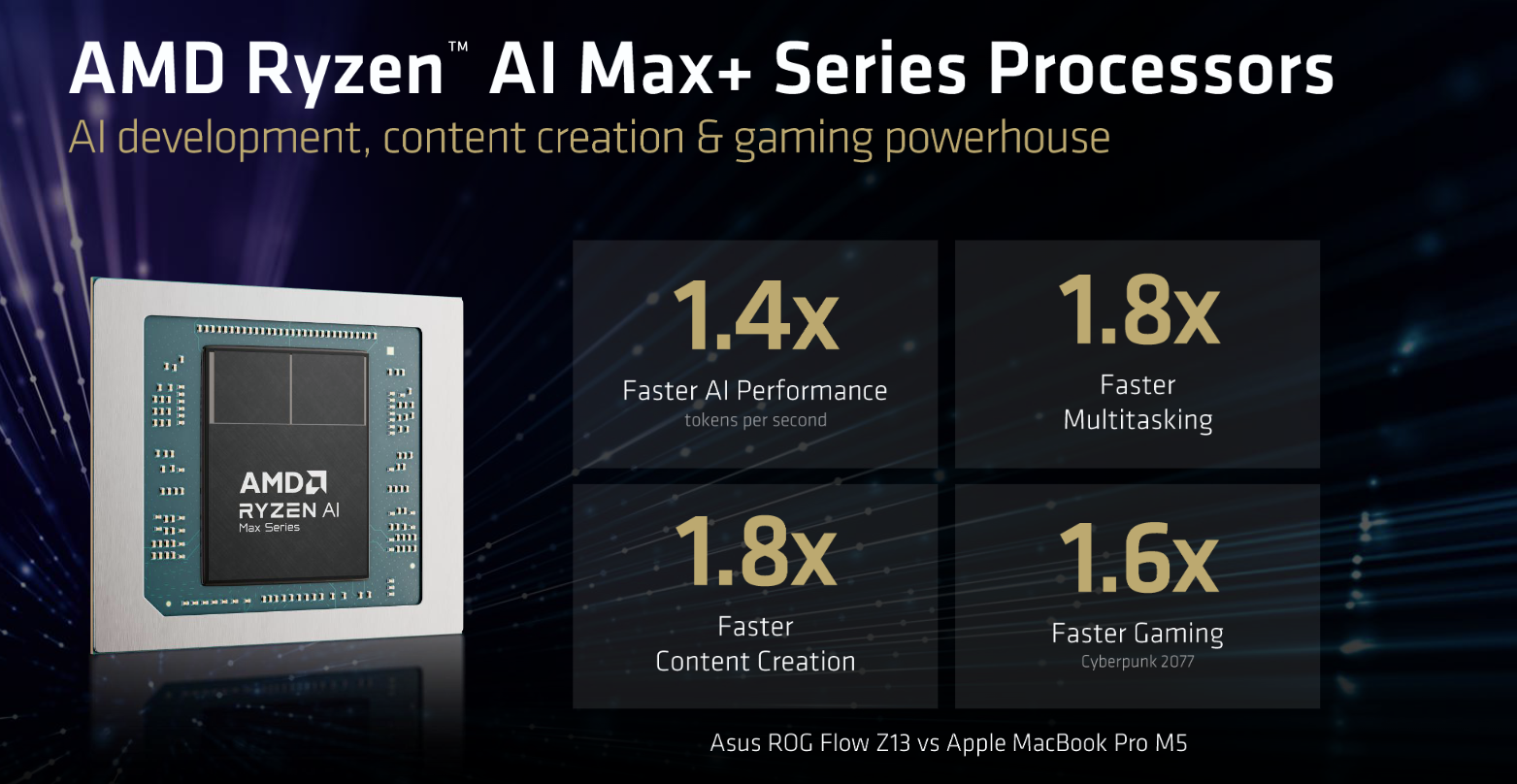
Against a MacBook Pro M5, the new Ryzen AI Max CPUs offer up to 1.4x better AI performance, up to 1.8x better content creation performance and up to 1.6x better in gaming. The Ryzen AI Max+ 392 and 388 CPUs are new to the line-up, launching in Q1 2026.

KitGuru Says: As is often the case, AMD is using CES to focus primarily on its laptop segment, with minor updates on the desktop CPU and GPU side. We should get more news on what's next for AMD in the desktop segment later in the year, likely around Computex time. 

The post CES 2026: AMD reveals new Ryzen CPUs for laptops and desktops first appeared on KitGuru.

CES 2026: HP unites OMEN and HyperX gaming brands for future gaming products

6 janvier 2026 à 00:00

It’s been several years since HP acquired HyperX from Kingston. During that time, HP has operated its own gaming brand, OMEN, alongside HyperX. Now, the company is consolidating the two, with OMEN products rebranded under HyperX to unify its gaming portfolio across PCs, displays, peripherals, and software.

Leading the CES 2026 lineup is the HyperX OMEN MAX 16, which HP claims is the world’s most powerful gaming laptop with fully internal cooling. It supports up to 300W platform power, next-gen Intel Core Ultra 200HX and AMD Ryzen AI processors, and NVIDIA GeForce RTX 5090 Laptop GPU. The system features a redesigned Tempest Cooling Pro setup, a high-polling rate keyboard, and a 240Hz OLED display.

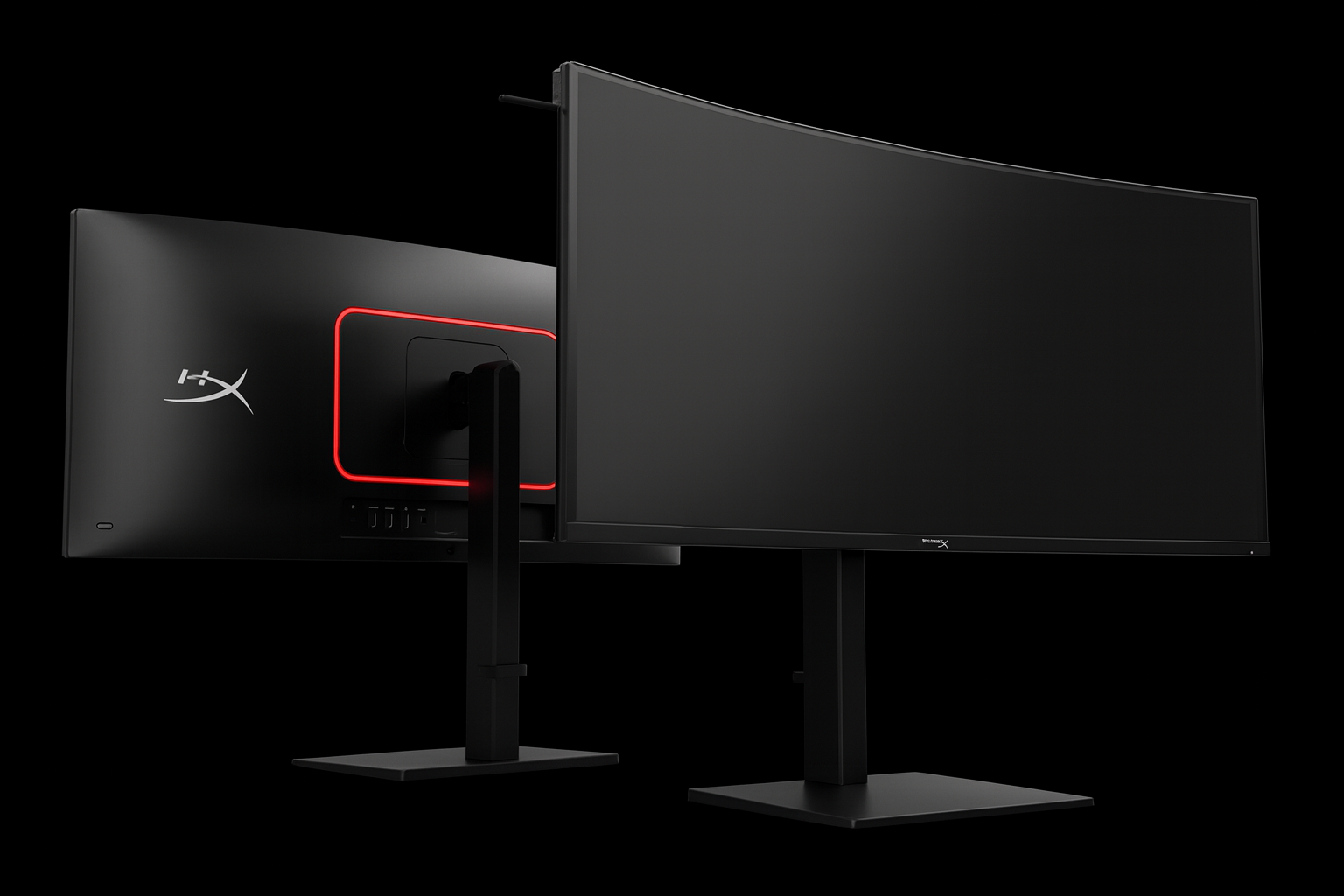
Also debuting is the HyperX OMEN OLED 34, a 34-inch QD-OLED monitor with 360Hz refresh rate, 0.03ms response time, and professional-grade color accuracy via HyperX ProLuma. It includes USB-C power delivery, a built-in KVM switch, and burn-in protection.

HP’s first Xbox-licensed arcade controller, the HyperX Clutch Tachi, features magnetic switches, customizable inputs, and support for 3D-printed mods. Finally, HP previewed a prototype EEG headset co-developed with Neurable, designed to interpret brain activity and help players improve focus and accuracy using AI and neurotechnology.

All products are expected to launch in Spring 2026, with pricing to be announced closer to availability.

KitGuru Says: Future HP gaming products will now carry HyperX OMEN branding, bringing the two sub-brands together, which should simplify things for consumers when shopping for new laptops or pre-built PCs. 

The post CES 2026: HP unites OMEN and HyperX gaming brands for future gaming products first appeared on KitGuru.

CES 2026: HP launches new OmniBook and OmniStudio PCs

6 janvier 2026 à 00:00

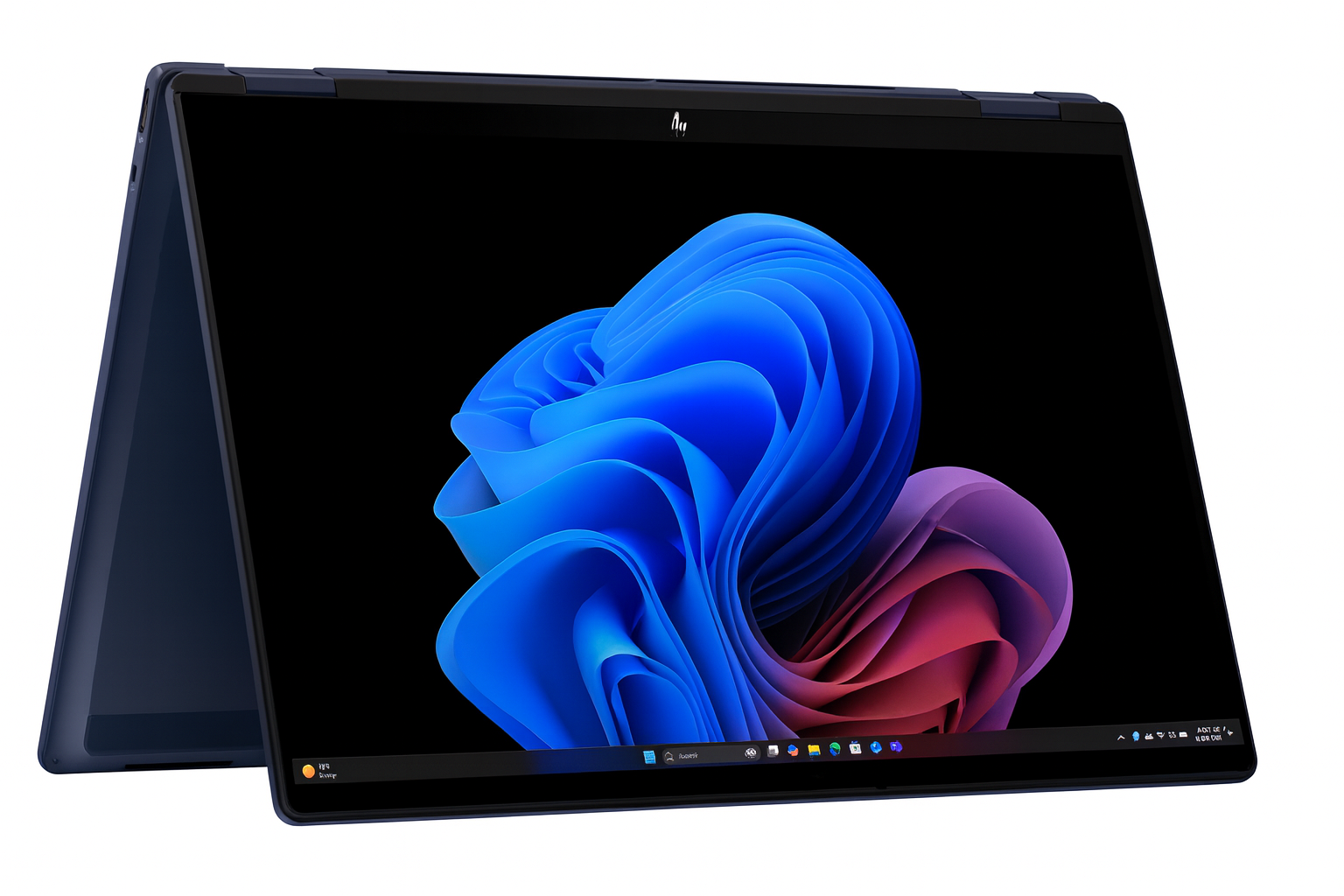
HP used CES 2026 to roll out a major refresh of its consumer PC portfolio, led by the OmniBook Ultra 14 — a flagship model the company claims is the world’s first consumer notebook offering up to 85 TOPS of NPU performance when configured with an HP‑exclusive Snapdragon X2 Elite variant.

The system also comes in Intel Core Ultra form for users prioritising GPU‑heavy AI workloads. Both versions include a 3K OLED display, a redesigned chassis that HP says is 52% lighter than the previous generation, and MIL‑STD‑810 durability testing. A new posture‑detection feature rounds out the updates.

The company is also pushing Snapdragon X2 and OLED displays across the wider OmniBook range, including a refreshed 16‑inch model in the OmniBook 3 Series that HP claims can reach up to 45 hours of battery life.

Beyond laptops, HP introduced the OmniStudio X 27, an all‑in‑one PC aimed at creators and home‑office users. It features what HP calls the world’s first Neo:LED AIO display with dual 100% colour coverage, plus next‑gen Intel Core Ultra processors and optional GeForce RTX 5050 graphics. Thunderbolt Share support allows users to control both a laptop and the AIO with a single keyboard and mouse, while Surface View enables easy sharing of sketches or notes during video calls.

HP is also overhauling its full OmniBook lineup across four series:

  • OmniBook X Series – Targeted at freelancers and power users, this line emphasises portability and premium design while offering next‑gen AMD, Intel, and Snapdragon options. These models are positioned as the most flexible in the range, balancing performance and mobility.
  • OmniBook 7 Series – Aimed at professionals who rely on video calls and hybrid‑work tools, these systems include Windows Studio Effects and Poly Studio‑tuned audio for clearer conferencing. They sit as HP’s mainstream productivity tier.
  • OmniBook 5 Series – Designed for families, students, and everyday users, the 5 Series brings OLED displays, slim aluminium builds, and responsive AI performance to mid‑range price points.
  • OmniBook 3 Series – The entry tier focuses on value while still supporting AI‑accelerated workloads, with a wide range of sizes and processor choices across AMD, Intel, and Qualcomm.

HP also updated its Chromebook Plus lineup, including new x360 14 and 14‑inch clamshell models with 2K displays and Google’s latest AI tools. Standard Chromebook models have also been refreshed with improved durability and better Android integration.

All new Windows 11 consumer PCs will ship with HP’s Digital Passport hub, plus two new software additions: Omni+ for cross‑platform password management and HP TV+ for free streaming content.

KitGuru Says: Are you planning on picking up a new laptop this year? Does CoPilot+ certification weigh into your purchase decision at all? 

The post CES 2026: HP launches new OmniBook and OmniStudio PCs first appeared on KitGuru.
❌