↩ Accueil

Vue normale

Reçu — 5 novembre 2025 6.5 📰 Sciences English

Making quantum computers more reliable

5 novembre 2025 à 09:42

Quantum error correction codes protect quantum information from decoherence and quantum noise, and are therefore crucial to the development of quantum computing and the creation of more reliable and complex quantum algorithms. One example is the five-qubit error correction code, five being the minimum number of qubits required to fix single-qubit errors. These contain five physical qubits (a basic off/on unit of quantum information made using trapped ions, superconducting circuits, or quantum dots) to correct one logical qubit (a collection of physical qubits arranged in such a way as to correct errors). Yet imperfections in the hardware can still lead to quantum errors.

A method of testing quantum error correction codes is self-testing. Self-testing is a powerful tool for verifying quantum properties using only input-output statistics, treating quantum devices as black boxes. It has evolved from bipartite systems consisting of two quantum subsystems, to multipartite entanglement, where entanglement is among three or more subsystems, and now to genuinely entangled subspaces, where every state is fully entangled across all subsystems. Genuinely entangled subspaces offer stronger, guaranteed entanglement than general multipartite states, making them more reliable for quantum computing and error correction.

In this research, self-testing techniques are used to certify genuinely entangled logical subspaces within the five-qubit code on photonic and superconducting platforms. This is achieved by preparing informationally complete logical states that span the entire logical space, meaning the set is rich enough to fully characterize the behaviour of the system. They deliberately introduce basic quantum errors by simulating Pauli errors on the physical qubit, which mimics real-world noise. Finally, they use mathematical tests known as Bell inequalities, adapted to the framework used in quantum error correction, to check whether the system evolves in the initial logical subspaces after the errors are introduced.

Extractability measures tell you how close the tested quantum system is to the ideal target state, with 1 being a perfect match. The certification is supported by extractability measures of at least 0.828 ± 0.006 and 0.621 ± 0.007 for the photonic and superconducting systems, respectively. The photonic platform achieved a high extractability score, meaning the logical subspace was very close to the ideal one. The superconducting platform had a lower score but still showed meaningful entanglement. These scores show that the self-testing method works in practice and confirm strong entanglement in the five-qubit code on both platforms.

This research contributes to the advancement of quantum technologies by providing robust methods for verifying and characterizing complex quantum structures, which is essential for the development of reliable and scalable quantum systems. It also demonstrates that device-independent certification can extend beyond quantum states and measurements to more general quantum structures.

Read the full article

Certification of genuinely entangled subspaces of the five qubit code via robust self-testing

Yu Guo et al 2025 Rep. Prog. Phys. 88 050501

Do you want to learn more about this topic?

Quantum error correction for beginners by Simon J DevittWilliam J Munro and Kae Nemoto (2013)

The post Making quantum computers more reliable appeared first on Physics World.
Quantum ferromagnets without the usual tricks: a new look at magnetic excitations

5 novembre 2025 à 09:36

For almost a century, physicists have tried to understand why and how materials become magnetic. From refrigerator magnets to magnetic memories, the microscopic origins of magnetism remain a surprisingly subtle puzzle — especially in materials where electrons behave both like individual particles and like a collective sea.

In most transition-metal compounds, magnetism comes from the dance between localized and mobile electrons. Some electrons stay near their home atoms and form tiny magnetic moments (spins), while others roam freely through the crystal. The interaction between these two types of electrons produces “double-exchange” ferromagnetism — the mechanism that gives rise to the rich magnetic behaviour of materials such as manganites, famous for their colossal magnetoresistance (a dramatic change in electrical resistance under a magnetic field). Traditionally, scientists modelled this behaviour by treating the localized spins as classical arrows — big and well-defined, like compass needles. This approximation works well enough for explaining basic ferromagnetism, but experiments over the last few decades have revealed strange features that defy the classical picture. In particular, neutron scattering studies of manganites showed that the collective spin excitations, called magnons, do not behave as expected. Their energy spectrum “softens” (the waves slow down) and their sharp signals blur into fuzzy continua — a sign that the magnons are losing their coherence. Until now, these effects were usually blamed on vibrations of the atomic lattice (phonons) or on complex interactions between charge, spin, and orbital motion.

2025-november-researchgroup-Herbrych
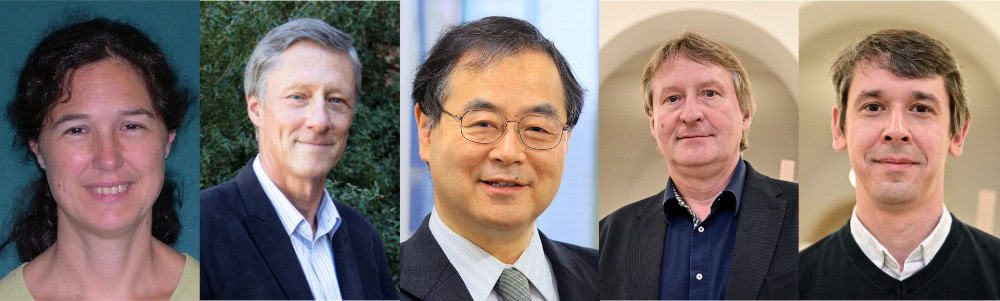
Left to right: Adriana Moreo and Elbio Dagotto from University of Tennessee (USA), Takami Tohyama from Tokyo University of Science (Japan), and Marcin Mierzejewski and Jacek Herbrych from Wrocław University of Technology (Courtesy: Herbrych/Wrocław University of Science and Technology)

A new theoretical study challenges that assumption. By going fully quantum mechanical — treating every localized spin not as a classical arrow but as a true quantum object that can fluctuate, entangle, and superpose — the researchers have reproduced these puzzling experimental observations without invoking phonons at all. Using two powerful model systems (a quantum version of the Kondo lattice and a two-orbital Hubbard model), the team simulated how electrons and spins interact when no semiclassical approximations are allowed. The results reveal a subtle quantum landscape. Instead of a single type of electron excitation, the system hosts two. One behaves like a spinless fermion — a charge carrier stripped of its magnetic identity. The other forms a broad, “incoherent” band of excitations arising from local quantum triplets. These incoherent states sit close to the Fermi level and act as a noisy background — a Stoner-like continuum — that the magnons can scatter off. The result: magnons lose their coherence and energy in just the way experiments observe.

Perhaps most surprisingly, this mechanism doesn’t rely on the crystal lattice at all. It’s an intrinsic consequence of the quantum nature of the spins themselves. Larger localized spins, such as those in classical manganites, tend to suppress the effect — explaining why decoherence is weaker in some materials than others. Consequently, the implications reach beyond manganites. Similar quantum interplay may occur in iron-based superconductors, ruthenates, and heavy-fermion systems where magnetism and superconductivity coexist. Even in materials without permanent local moments, strong electronic correlations can generate the same kind of quantum magnetism.

In short, this work uncovers a purely electronic route to complex magnetic dynamics — showing that the quantum personality of the electron alone can mimic effects once thought to require lattice distortions. By uniting electronic structure and spin excitations under a single, fully quantum description, it moves us one step closer to understanding how magnetism truly works in the most intricate materials.

Read the full article

Magnon damping and mode softening in quantum double-exchange ferromagnets

A Moreo et al 2025 Rep. Prog. Phys. 88 068001

Do you want to learn more about this topic?

Nanoscale electrodynamics of strongly correlated quantum materials by Mengkun LiuAaron J Sternbach and D N Basov (2017)

The post Quantum ferromagnets without the usual tricks: a new look at magnetic excitations appeared first on Physics World.

Reçu — 29 octobre 2025 6.5 📰 Sciences English

Interface engineered ferromagnetism

29 octobre 2025 à 09:40

Exchange-coupled interfaces offer a powerful route to stabilising and enhancing ferromagnetic properties in two-dimensional materials, such as transition metal chalcogenides. These materials exhibit strong correlations among charge, spin, orbital, and lattice degrees of freedom, making them an exciting area for emergent quantum phenomena.

Cr₂Te₃’s crystal structure naturally forms layers that behave like two-dimensional sheets of magnetic material. Each layer has magnetic ordering (ferromagnetism), but the layers are not tightly bonded in the third dimension and are considered “quasi-2D.” These layers are useful for interface engineering. Using a vacuum-based technique for atomically precise thin-film growth, known as molecular beam epitaxy, the researchers demonstrate wafer-scale synthesis of Cr₂Te₃ down to monolayer thickness on insulating substrates. Remarkably, robust ferromagnetism persists even at the monolayer limit, a critical milestone for 2D magnetism.

When Cr₂Te₃ is proximitized (an effect that occurs when one material is placed in close physical contact with another so that its properties are influenced by the neighbouring material) to a topological insulator, specifically (Bi,Sb)₂Te₃, the Curie temperature, the threshold between ferromagnetic and paramagnetic phases, increases from ~100 K to ~120 K. This enhancement is experimentally confirmed via polarized neutron reflectometry, which reveals a substantial boost in magnetization at the interface.

Theoretical modelling attributes this magnetic enhancement to the Bloembergen–Rowland interaction which is a long-range exchange mechanism mediated by virtual intraband transitions. Crucially, this interaction is facilitated by the topological insulator’s topologically protected surface states, which are spin-polarized and robust against disorder. These states enable long-distance magnetic coupling across the interface, suggesting a universal mechanism for Curie temperature enhancement in topological insulator-coupled magnetic heterostructures.

This work not only demonstrates a method for stabilizing 2D ferromagnetism but also opens the door to topological electronics, where magnetism and topology are co-engineered at the interface. Such systems could enable novel quantum hybrid devices, including spintronic components, topological transistors, and platforms for realizing exotic quasiparticles like Majorana fermions.

Read the full article

Enhanced ferromagnetism in monolayer Cr2Te3 via topological insulator coupling

Yunbo Ou et al 2025 Rep. Prog. Phys. 88 060501

Do you want to learn more about this topic?

Interacting topological insulators: a review by Stephan Rachel (2018)

The post Interface engineered ferromagnetism appeared first on Physics World.

❌