There's a huge emphasis on PC gaming at CES, and that's understandable; gaming is the primary market keeping the PC alive as a platform. Still, people need PCs for both work and play, so MSI is launching a new family of PC products that are designed specifically for multi-tasking, image processing, remote collaboration, and "data-driven workloads."
SanDisk is bidding farewell to its WD Black and WD Blue storage brands and replacing them with its new Optimus line, which it has broken down into three performance tiers: Optimus, Optimus GX, and Optimus GX Pro. A bolder design accompanies the rebrand, but what this really indicates for consumers is that SanDisk is keeping the storage party
Bigscreen founder Darshan Shankar believes Beyond headsets could be among the top five systems in use on Steam in the next few years.
On that path, Shankar hopes to fully catch up to demand for Beyond 2 headsets in February so they "ship within 1-2 business days, including custom-fit and universal-fit orders." In April, Bigscreen marks 10 years of shared co-watching in VR on Steam with Shankar suggesting over email "perhaps we'll keep the 'beta' tag forever."
Shankar said Valve's announcement of Steam Frame coincided with "one of our biggest sales days" as "the Beyond 2 has become the obvious upgrade path for those who want ultra-lightweight high-resolution micro-OLED and still use their preferred SteamVR tracking/controller setup."
With Valve preparing to launch the Frame headset, I asked Shankar whether Bigscreen would support flat screen co-watching to devices like Steam Deck. Shankar responded:
"This has regularly come up in the past decade. We've stayed focused on VR, and I think that's our strength. Many others (especially Valve) will do a good job of cross-play across PC and VR. We're focused on the areas in which we think we have an exceptional edge in capability and knowledge. We have nothing to announce yet on our software development, need more time to develop :) but we haven’t been sitting idle, that’s for sure.
Bigscreen just launched Dynamic Foveated Rendering for the Beyond 2e headset with early access in iRacing and DCS World among the first to explore support for the feature, which promises "eye tracking-driven performance improvements." I purchased a Beyond 2 without eye tracking and received it near the end of 2025 to keep my base stations in service another couple years. We'll be curious to hear reports from 2e customers when it comes to their real world performance using the feature.
"Many customers – hundreds of thousands around the world – are actively using SteamVR Base Stations and Controllers right now with their Valve Index, HTC Vive, etc., and the Beyond 2 has become the obvious upgrade path for those who want ultra-lightweight high-resolution micro-OLED and still use their preferred SteamVR tracking/controller setup," Shankar wrote. "We are firmly committed to manufacturing the Beyond 2 with SteamVR Lighthouse tracking for the next 2 years. We can say this with certainty as we've inventoried components and have setup a continuously running production line. We've signed commitments to enterprise customers as they are reliant on our hardware for their businesses."
Beyond 2 was announced in March 2025, shipping started in July 2025 with a universal fit cushion shipping near the end of the year.
"December is our biggest month of shipping, shipping more units in a single month than we typically did in an entire year with Beyond 1 in 2023 or 2024," Shankar wrote. "We faced a lot more demand than we expected, with Beyond 2 already selling approximately 3 times more than Beyond 1 did."
"We thought we would have inventory on hand for fast-shipping by August/September, but demand has just been too high. Each time we ramp up supply/production, demand was going up even further."
The Steam Hardware Survey suggests that, as of this writing, Beyond headsets still need to climb past PlayStation VR2, Meta Quest Pro and both Windows Mixed Reality and the Oculus Rifts to make it into the top five.
"Perhaps within 1-2 years, we'll be Top 5 alongside Steam Frame, Quest 3, etc," Shankar wrote. "Beyond 2e's built-in eyetracking cameras is the first computer vision-driven product we've shipped. It should be no surprise that we'll eventually have more cameras inside Bigscreen Beyond, but there is no timeline for that. Camera R&D started years ago, and it'll still take years before we release anything. The bar is very high for any camera-based feature."
"I think the size of the existing SteamVR ecosystem is underestimated, and with Steam Frame dropping Lighthouse support, we're actually seeing growing sales."
Shankar said 2026 will see Bigscreen focus on expanding the company's international presence.
"We currently sell in the US, Japan, Canada, UK, Europe, Australia, and New Zealand (>50% of sales are international). To improve the speed of European fulfillment and support, we're planning to open a facility in The Netherlands in early 2026," Shankar wrote. "It currently takes 3-10 days to ship products into the EU from our Los Angeles factory, and we aim to improve this to 1-2 days with our local European center," Shankar wrote. "We've achieved meaningful scale as a company (expecting to cross $100 million in annual revenue in the next year). We've stayed true to our values, built by passionate VR enthusiasts for VR enthusiasts, and we're here for the long run."
Okay, we know — you're tired of hearing about a hypothetical "Big Battlemage" GPU and just want Intel to launch the darn thing already. Hey, so do we! We can only report the news that comes to us, though, so until Intel pulls the trigger, we're gonna keep posting proof that the new parts exist. This latest one is arguably the most concrete
Valve has revealed the winners of the 2025 Steam Awards. Unlike the heavily produced ceremonies that rely on a mix of critics and developers, the Steam Awards remain entirely community-driven, with millions voting to decide which titles best represent each category. This year’s crowning achievement belongs to Hollow Knight: Silksong, which not only took home the Game of the Year award but also secured a second trophy for the Best Game You Suck At category.
The difference in player sentiment is most evident when comparing Steam Awards 2025 results to the accolades handed out at The Game Awards 2025. While Clair Obscur: Expedition 33 was the undisputed juggernaut of the December festival, sweeping nine categories including the primary GOTY title, it saw a much more modest reception from the Steam public, as the title only won the Best Soundtrack.
In the more niche categories, the community demonstrated a distinct sense of irony. The Sit Back and Relax Award was handed to RV There Yet?, a co-op driving game that many players find anything but relaxing.. Other notable victories included Hades II for Best Game on Steam Deck and Baldur's Gate 3, which continues its run by winning the Labor of Love award for Larian Studios. The detailed list of nominees and winners can be found below:
Game of the Year Award
Winner: Hollow Knight: Silksong
Dispatch
Clair Obscur: Expedition 33
Kingdom Come: Deliverance II
ARC Raiders
VR Game of the Year Award
Winner: The Midnight Walk
F1 25
Pavlov
Le Mans Ultimate
Emissary Zero
Labor of Love Award
Winner: Baldur’s Gate 3
Dota 2
No Man’s Sky
Rust
Helldivers 2
Best Game on Steam Deck Award
Winner: Hades II
Digimon Story Time Stranger
Ball x Pit
CloverPit
Deep Rock Galactic: Survivor
Better With Friends Award
Winner: Peak
Schedule I
Battlefield 6
R.E.P.O.
Split Fiction
Outstanding Visual Style Award
Winner: Silent Hill f
Final Fantasy VII Rebirth
ENA: Dream BBQ
My Little Puppy
DOOM: The Dark Ages
Most Innovative Gameplay Award
Winner: ARC Raiders
Escape From Duckov
Europa Universalis V
Mage Arena
Blue Prince
Best Game You Suck at Award
Winner: Hollow Knight: Silksong
Where Winds Meet
Marvel Rivals
Elden Ring Nightreign
Path of Exile 2
Best Soundtrack Award
Winner: Clair Obscur: Expedition 33
Tokyo Xtreme Racer
Rift of the NecroDancer
Deltarune
Marvel’s Spider-Man 2
Outstanding Story-Rich Game Award
Winner: Dispatch
Dying Light: The Beast
No, I’m Not a Human
The Last of Us Part II Remastered
Kingdom Come: Deliverance II
Sit Back and Relax Award
Winner: RV There Yet?
PowerWash Simulator 2
Chill with You : Lo-Fi Story
Megabonk
Slime Rancher 2
KitGuru says: Did you vote for the Steam Awards 2025? Do you agree with the winners?
Asus has officially launched its CES 2026 campaign with a trio of ROG gaming monitors that address a major issue with OLED technology: text clarity. By adopting the latest sub-pixel architectures from both LG Display and Samsung Display, the new ROG Swift and Strix models promise to deliver a native RGB-stripe experience that eliminates the fringing issues that have historically plagued OLED panels on the desktop.
Starting with the ROG Swift OLED PG27UCWM, this 27-inch display uses LG Display's 4th Gen Tandem WOLED panel at a native 4K resolution, swapping the traditional white-subpixel (RGWB) layout for an RGB-stripe arrangement. Combined with a 166 PPI, this shift is designed to produce the sharpest text rendering ever seen on a 27-inch OLED, making it suitable for gaming and productivity. The monitor also features a dual-mode toggle that lets users choose between native 4K at 240 Hz and 1080p at 480 Hz.
On the ultrawide front, the ROG Swift OLED PG34WCDN serves as a showcase for Samsung Display's 5th-Gen QD-OLED technology. It introduces a new “V-stripe” vertical-pixel structure that replaces the triangular sub-pixel matrix used in previous generations. This structural change is paired with a new BlackShield Film coating, which Asus claims deepens black levels by 40% in bright rooms and significantly reduces the characteristic purple tint of QD-OLED panels. The 34-inch curved display features a 360 Hz refresh rate, a 1800R curvature, and a peak HDR brightness of 1,300 nits, thanks to the new EL 3.0 material stack.
For those looking for the same visual improvements in a slightly more accessible package, Asus is also launching the ROG Strix OLED XG34WCDMS. This model utilises the same V-stripe QD-OLED panel and BlackShield coating as its flagship sibling but scales the refresh rate back to a respectable 280 Hz. It maintains the 1300-nit peak brightness and 1800R curvature.
Connectivity across the new lineup is quite good, with the PG27UCWM and PG34WCDN both featuring DisplayPort 2.1 (UHBR20) for maximum uncompressed bandwidth. USB-C with 90W Power Delivery is standard on the Swift models, while all three units include the latest ROG OLED Care Pro suite and a Neo Proximity Sensor to mitigate burn-in risks.
KitGuru says: The move to an RGB-stripe layout is the “holy grail” for many who use their OLED monitor for both work and play. By offering these monitors with the latest OLED tech, Asus is making a very strong case for OLED as a primary, no-compromise desktop solution in 2026.
The high-end graphics card market is bracing for a literal storm as MSI prepares to resurrect its legendary Lightning brand at CES 2026. While the company hasn't confirmed it officially just yet, a series of calculated “weather forecast” teasers on social media predict thunder and lightning for the first day of CES. On top of that, a number of record-breaking benchmark submissions have also been unearthed, pointing to an RTX 5090 Lightning announcement.
The GPU itself appears to be an absolute behemoth designed for extreme scenarios. Leaked images and early technical data point to a massive 40-phase VRAM power delivery system. Perhaps most telling of its power requirements is the presence of dual 12V-2×6 power connectors, a configuration that doubles the potential power input compared to standard enthusiast cards.
Furthermore, Lucky_n00b has shared what appears to be the maximum power limit in the BIOS for the MSI GeForce RTX 5090 Lightning graphics card, which can reach 2500W. The overclocker also stated that the sample he received didn't include a proper cooling solution. Instead, he got the “OCER” version, which consists of a bare PCB and a test heatsink.
MSI has not used the Lightning moniker for a flagship Nvidia card since the RTX 2080 Ti Lightning Z in 2019. By bringing it back to the Blackwell architecture, MSI is signalling a return to the over-the-top engineering that defined the GTX 1080 Ti and Radeon R9 290X Lightning eras. For the average consumer, these records serve as a demonstration of silicon potential rather than out-of-the-box performance. However, for those with the budget to reach the absolute ceiling of the RTX 5090, the Lightning is positioning itself as the new benchmark to beat.
KitGuru says: The return of the Lightning brand marks MSI's first real “halo” card since the 20-series. With a 40-phase VRM and dual 12V-2×6 connectors, the new Lightning card is clearly not intended for the average gamer but rather for extreme overclocking in a lab.
William Gibson's 1984 novel Neuromancer describes jacking into "the consensual hallucination" of "the matrix" with a "custom cyberspace deck" projecting one's "disembodied consciousness" there. The hardware necessary to spend time in VR is a "cyberspace deck" seen "banging against" the hip of the main character.
In 2026, the "Realworld cyberdecks" page on Reddit says "The era of virtual reality is coming, so it is also time for cyberdecks to come" as hundreds contribute new rigs weekly.
If the "era of virtual reality" is coming and a "cyberspace deck" is how we get there, what do the first “realworld” decks look like? What are their functions?
Unlocking Digital Data In VR By Locking It To The Real World
My custom deck begins at a couple terabytes of local storage of videos, photos, music, games, and other personal files. I've been able to access this data store in VR since about 2016 with Virtual Desktop. I don't buy much software from Microsoft, though, so my data has been an ill fit inside Windows. Looking ahead, I’d love to build on my data with a Framework laptop to drive VR directly with Linux. In the meantime, I'm using macOS, iOS, Windows 11, SteamOS, and various flavors of Android to operate my file systems.
Many of us already carry, at the very least, 50 gigabytes of storage in our phones everywhere we go. Is it so difficult for us to imagine a couple years more and almost everyone finding use for terabytes carried with us?
After roughly a decade of headsets from Gear VR in 2014 to Quest 3 in 2023, when the Vision Pro arrived in 2024 I first experienced a standalone system unlock terabytes of digital information to use in VR. Apple brought apps from my iPad and iPhone, sure, but I also started perusing my own personal data store on local drives wirelessly through Mac Virtual Display. When I use the feature, my Mac's screen turns off in the "realworld" and a resizable virtual panel opens in VR instead. If anybody else happens to be watching my screen my data isn't displayed there anymore. For some scenarios that's a bug, but for many it's a feature.
Gibson's fiction understood the value of cyberspace before "the matrix" could actually be. Now VR is a consumer reality and our model for personal storage of digital content collides with Gibson's idea of a deck and the technical delivery of cyberspace. For example, you discover the confines of your digital keepers when you apply personal computing to your life without any specific platform limitations. The FAT god commands us to store no file greater than 4 gigabytes. And beware special characters in thy filenames.
In my view, a "custom deck" starts with pouring one's personal data into any portable device. MicroSD cards are readable in Steam Decks and Steam Frames while thumb drives include their universal connector. So you can start building a deck starting from a $15 thumb drive or MicroSD card, and build up over time to a multi-thousand dollar laptop with the very latest graphics card to cyberspace.
Entry Level Decks
Hanging from a bag in the corner of my office is the latest personal computer from Raspberry Pi. Described as a "premium desktop computer" the Raspberry Pi 500+ is a keyboard selling for $200 with a 256-gigabyte solid-state drive built in running Linux.
Just send USB-C power into the Raspberry Pi and the keyboard starts computing. I used the included tools for the 500+ to unscrew the bottom of the keyboard and swap out its drive. The custom computer boots to the desktop quickly and now carries four terabytes of storage underneath satisfying mechanical keys.
Now I just need somewhere to display my files.
Conceptually, Raspberry Pi and I put together a custom deck of hardware and software that's cheaper and more portable than anything made by Apple. The Pi doesn't take me to cyberspace but it can display in cyberspace, and I can access it there as if from a floating terminal just like my Mac. And all of it is running in the space occupied by the keyboard traditionally used to operate a personal computer.
Wi-Fi and Bluetooth emanate from the keyboard. In the back, ethernet, USB and micro HDMI ports connect physical accessories. The biggest problem is that the year is 2026 and we don't have the easy-to-use software I need in virtual reality to access my deck's files wirelessly. Instead, I hack my keyboard PC into VR by any means necessary. That means dealing with stuff like VNC and IP addresses or perhaps a latency-inducing capture card.
The Steam Deck offers access to Linux in a more user-friendly handheld console-like form factor compared with any Pi or Mac. If logging into Steam online before you can do fun things with your computer is too restrictive, then you can build your own deck of hardware and software and log in online only if you want.
A Framework For The Future
Readers who invest multiple thousands of dollars in their personal computing rigs know $200 or even $500 doesn't truly buy a "premium desktop computer". If a Raspberry Pi can only display a flat screen in VR, then a Framework laptop should be able to fully embrace the concept of a cyberdeck carrying an NVIDIA RTX 5070 and 64 gigabytes of RAM.
My ideal configuration for a personal computer essentially matches the price of a top-of-the-line headset for a top-of-the-line deck that's upgradeable for years. To me, it doesn't really matter if my "deck" starts with my data on a thumb drive in a well-structured folder system, or if there's a complex operating system and graphics card and central processor with a virtual assistant managing my data. The computer becomes "custom" and "personal" when I put my data inside.
The aim is to bring personal computing with me wherever I go. It's not to the cafe or on a plane I really care about my deck of data and hardware going. Sure, those places would be great, but the most important place a deck goes is in VR.
Everyone Already Owns A Cyberdeck Lacking Direct VR Support
Bigscreen Beyond 2 needs a deck.
A cyberdeck is the missing key to Bigscreen Beyond.
As long as you're seated there in your chair and have a good supply of clean power, conceptually speaking, Bigscreen Beyond and a Framework laptop should put you in cyberspace when the headset touches your face.
Yes you need lasers sweeping the room right now for Beyond and a network connection added to this core experience would bring a lot. Yes you could also add accounts, friends, entitlements, digital rights management and thousands upon thousands of other services and software packages as with any open computer.
Whether Beyond is running from a desktop PC or the Framework laptop is a secondary concern. All that fundamentally matters is that when you go to VR you have at your fingertips a storage device you can separate from your computer with all your personal and favorite files organized, indexed, searchable, accessible and playable.
As of this writing, data portability in the "cloud" typically means waiting hours or days to download a store of information from a provider. There's a more immediate and extreme example of data portability, however, and we've had it for decades with removable storage systems.
If you have the freedom to immediately unplug both your content and yourself from the network and the headset, you also have the freedom to take your stuff with you anywhere and everywhere, in VR or otherwise.
From MP3 Players & Headphones To PCs & Assistants
Over the last quarter century, the MP3 player became the iPod and music libraries became the launchpad for iPhone – a new kind of hyper-connected deck filled with personal information. From iPhone and Android, our pocket decks consumed almost every product category of personal computing and remade a few others.
Something new is happening with spatial computing starting with experiences in virtual reality and extending into passthrough views and mixed reality. Any surface can become a touch-sensitive display. And our existing touch-sensitive displays become even more useful accepting touch input while turning off the flow of photons. They just send that data as bits over the network when needed. With reskinnable passthrough views, that "deck" in hand can become anything from a camera to a map to a tool to drag objects. Even non-interactive displays can become frames for new functionality. Watch a movie with closed captions while a friend seated on the same couch enjoys the same film in 3D without any text distractions.
That's just for starters. Now imagine looking down at your phone in hand in VR and swiping along its surface, but in the real world the screen is off. Or imagine playing Breath of the Wild while standing in Hyrule and holding a Sheikah Slate.
Like the words "virtual reality" before we could go there anytime, the word "cyberdeck" right now still exists largely in the realm of fiction, except to the people posting to a creative subreddit. It is still mostly a concept. But as a concept, consider the possibility that VR is taking so long to become accepted by mainstream audiences because we lack our companion devices, data, and services as we walk around another universe. To interact with VR, we hold a pair of controllers standing in for hands instead of a cyberdeck displaying a map of where to go.
Bring on the pucks to access cyberspace with terabytes carried between headsets and glasses. In the meantime, Neuromancer is in production for Apple TV.
Qualcomm is expanding its latest-generation Snapdragon chip line for Windows laptops with the Snapdragon X2 Plus, and with the new addition comes the promise of a "legendary leap in performance." It slots underneath the existing Snapdragon X2 Elite that was unveiled several weeks ago and fleshes out Qualcomm's arsenal for its continued Arm-based
HP is trotting out a bunch of new laptop and desktop designs (among other things) at the Consumer Electronics Show in Las Vegas this week, one of which is its sleek OmniBook Ultra 14 powered by Qualcomm's Snapdragon X2 Elite chip. According to HP, it's 52% lighter than the previous generation, and 5% thinner than a 2025 MacBook Air 13 (M4).
It
Zeroth Robotics has officially stormed CES 2026 with a fleet of five AI-powered mechanical companions designed to infiltrate our homes, workplaces, Christmas wish lists, and Pixar fever dreams.
Quite undisputedly, the star of the show is the $5.600 W1 WALL-E lookalike, which brings everyone’s favorite trash-compacting romantic into the
Exceleram #42 is engineered to exceed expectations, even before you’ve asked for them. Featuring dual XMP/EXPO profiles at 6000 MT/s for both AMD and Intel, along with modest 32-38-38-96 primary timings, this kit is built for cross system compatibility. Stay tuned as we test this kit and compare it with other options available.
LG has revealed the OLED evo W6 at CES 2026, which is its latest take on the wallpaper TV niche. This wafer-thin, reflection-free TV (or is it an electronic wallpaper?) is meant to be flush-mounted to your wall and even boasts nearly four times the brightness of standard OLEDs.
Measuring in at an impressive 9mm thick (versus roughly 12.7mm
As is customary at most Consumer Electronic Show (CES) events for a long while now, there is much ballyhooing on the latest TV technologies and product offerings. This year is no exception, and one of the more interesting announcements is TCL's new flagship X11L series, which looks to rival OLED and take on a rash of new RGB LED models with
Shure has officially brought its most iconic MV88 mobile microphone into the modern era at CES 2026, ditching the Lightning connector for a more universal USB-C setup that finally bridges the gap between iPhone and Android creators.
The original MV88, first released in 2015, became a staple for iPhone users who valued high-fidelity stereo
After collaborating with Microsoft on the ROG Xbox Ally X and Ally, ASUS is now teaming up with XREAL to launch a pair of AR glasses that seamlessly connects with the handheld with "zero setup" to deliver a massive floating display. The new ROG XREAL R1 glasses also come with the promise of easy syncing with PCs and handhelds in general, as
Today at CES, Qualcomm signaled its dominance in the burgeoning world of Physical AI by unveiling a massive expansion of its industrial and robotics portfolios. This expansion ought to put the company in position to be a comprehensive provider of edge computing technology for everything from tiny smart cameras to full-size humanoid robots.
Central
Kioxia is expanding its range of client solid state drives with its new BG7 series. Most of the new SSDs feature the company's 8th generation BiCS Flash 3D featuring CMOS directly Bonded to Array (CBA) technology. The only exception is the smallest 256GB capacity model, which employs BiCS Flash generation 6 chips.
The big takeaway here
Following reports that NVIDIA discontinued production of its two-generations old GeForce RTX 3060 in August 2024 and, more recently, chatter that supplies of the mid-range GPU in the retail channel were running out, a fresh rumor has emerged indicating that the Ampere part will be resurrected for another production round this quarter.
That's
Starting off as a mid-tier developer, Bloober Team have gone from strength-to-strength with each successive release – culminating in the successful launches of Silent Hill 2 Remake in 2024 and new IP Cronos: The New Dawn last year. While some of Bloober’s future projects have been confirmed, it appears as though the studio is working on another new IP known as ‘Onyx: The Dark Grip’.
Though the title was first registered all the way back in 2024, it wasn’t until now that the trademark had been officially published and publicised.
As mentioned, Bloober Team have worked on quite a few different projects in recent years, with multiple more confirmed to be in development – including a remake of Silent Hill 1 and an original title in development for the Nintendo Switch.
Additionally, Bloober Team began teasing something a couple days back, launching a website which included a seemingly random string of letters (RemosdNeulSerorehsoOvamCeyerd) alongside a timer counting down to the 14th of February 2026.
Whether these two things are related, we will have to wait and see – but it seems like more than a simple coincidence.
KitGuru says: What do you think of the name Onyx: The Dark Grip? Could this be the previously-announced Nintendo exclusive or do you think it's a 3rd project? Let us know down below.
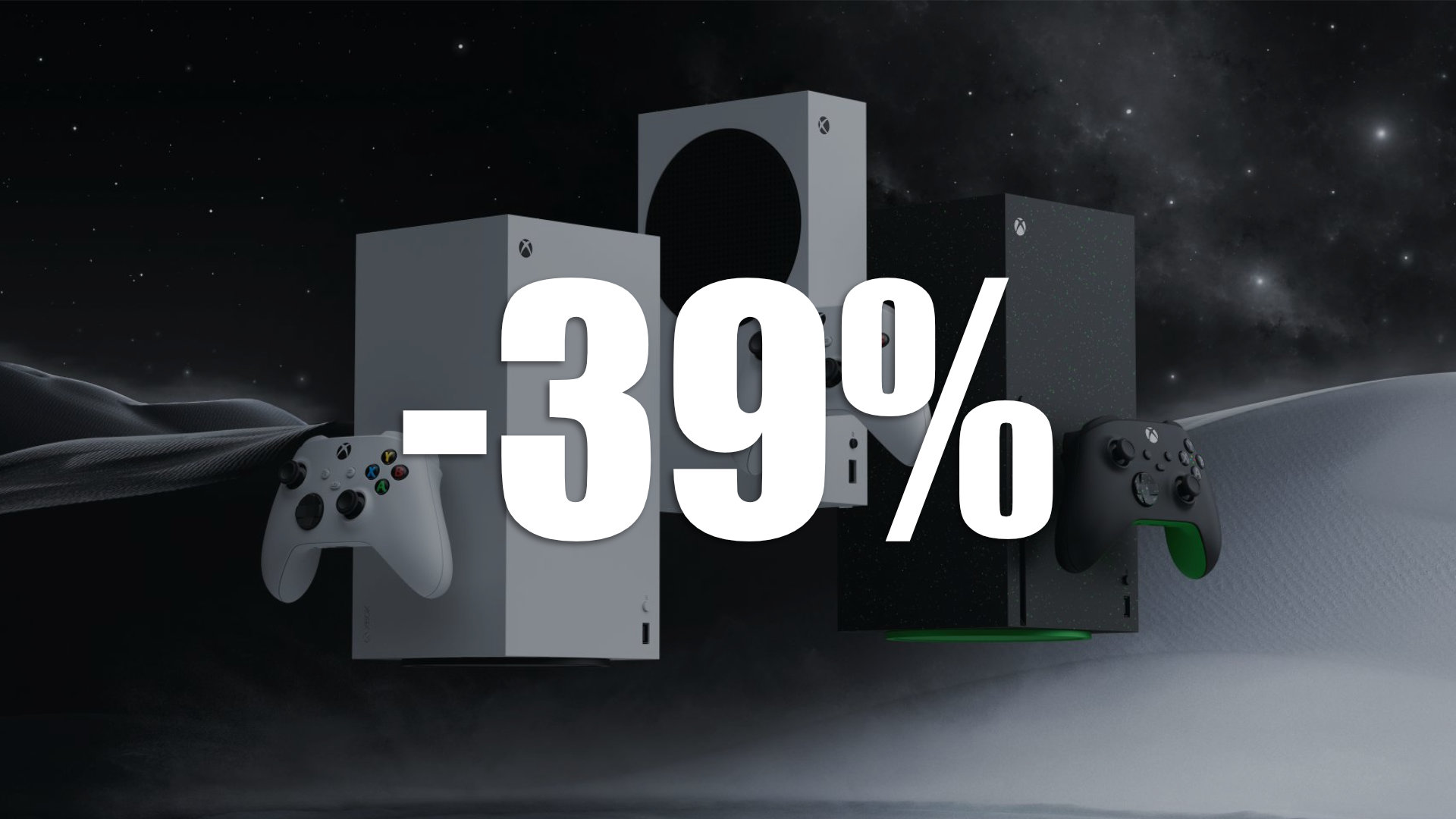
With 2025 officially behind us, we’ve started to get some more concrete details on exactly how the video games industry performed over the past 12 months. According to analysts, Xbox had “comfortably the worst year on record” in the UK last year with sales dropping by a substantial 39%.
Taking to Twitter, known industry insider/analyst Christopher Dring shared some data regarding the performance of the video games industry in the UK throughout 2025, revealing that:
“Sales of Xbox consoles were down 39% in the UK during 2025, making it comfortably the worst year on record for Xbox consoles.”
Considering the fact that Xbox was already struggling somewhat to sell units when compared to PlayStation, such a massive drop is even more notable.
That’s not to say that PlayStation had a record-breaking year however, with Dring confirming that sales of the PS5 in the UK throughout 2025 were down 12% when compared to 2024. Of course, the PS5 has consistently sold a high volume of systems each year and so such a drop is expected half a decade into the console’s lifecycle.
Still, with rumours claiming that the ongoing RAM issues could lead to a delay in next-gen consoles, it will be interesting to see how both PS5 and Xbox sales continue to shift with each passing year.
Bright Memory Infinite was one of the first Xbox Series X games to be shown off all the way back in 2020. While the game did not blow up in popularity, it seemed to have achieved what it set out to – all the while getting a bunch of major and welcome updates. Half a decade on however and the team have moved over to their next project – which is said to be a “3rd person action shooter set in Republic of China.”
“Hello everyone! FYQD-Studio is developing a third-person action shooter set in Republic of China, amidst a time of turmoil and collapsing order, rival gangs clash in the shadows, as violence and conspiracy quietly spread through the streets.”
Though little else was offered in the way of gameplay details, the team did confirm that the project “is currently in development, focusing on art assets and motion capture” with more information promised to be “coming soon.”
Alongside the announcement, the team shared a selection of screenshots, showcasing a game that appears to be rich in atmosphere and vibes – though of course we will have to get our hands on the title to know for sure.
It is interesting to see that FYQD’s next project is a 3rd person title, given that Bright Memory Infinite was an FPS experience. That said, the game did receive a free update later in its life offering a 3rd person mode; perhaps in preparation for their next project.
Regardless, it will be interesting to see exactly what this new game is when it is more formally announced / shown off some time later this year hopefully.
KitGuru says: Did you try Bright Memory Infinite? What did you think? Are you surprised to see them switching to 3rd person for their follow-up project? Let us know down below.
Throughout 2025 we saw an increasing number of leaks and rumours surrounding Ubisoft’s long-awaited Prince of Persia The Sands of Time Remake alongside details pertaining to their as-of-yet-unannounced Assassin’s Creed Black Flag Remake. With both titles said to be arriving in the coming months, it appears as though Ubisoft are gearing up to unveil both projects soon.
As discovered by fans of both franchises, Ubisoft recently registered two new websites – one for Prince of Persia The Sands of Time Remake and another for the yet-to-be-announced Assassin’s Creed Black Flag Resynced.
For the uninitiated, the Sands of Time Remake was first announced back in 2020 alongside an early 2021 release date. Due to a strong (negative) reception towards the trailer however, the game went back to the drawing board and has yet to be seen properly since.
As mentioned, Ubisoft have yet to officially announce Assassin’s Creed Black Flag’s remake, however leaks have claimed that the project will remove modern day elements in favour of more Edward Conway content. Perhaps more controversially, the remake will reportedly also feature an added degree of RPG mechanics – though likely less than Odyssey/Valhalla.
Considering both domains have been registered, it seems as though Ubisoft is pretty much ready to unveil both of these projects. When will this occur however? We’ll have to wait and see, but it wouldn’t be surprising if Ubisoft were to announce one of their showcases in the coming days/weeks.
KitGuru says:; Are you excited for Ubisoft’s 2026? Which of these two remakes are you more looking forward to? Are you expecting much of a difference between the initial Sands of Time trailer and the final product? Let us know down below.
The death of the mechanical laptop fan may be closer than expected. YPlasma, a deep-tech startup based in Newark and Spain, has announced it will unveil a revolutionary solid-state cooling solution at CES 2026. Replacing traditional rotary fans with “Dielectric Barrier Discharge” (DBD) plasma actuators, the company claims to have achieved high-performance cooling with zero moving parts, zero noise, and a form factor thinner than that of a typical cooling solution.
To achieve this feat, YPlasma (via Techpowerup) is using a 200-micron cooling film, an ultra-thin layer that uses electrically charged plasma to generate a high-velocity “ionic wind”. While ionic cooling has been explored before, it typically relied on “corona discharge”, which suffered from needle erosion and the production of harmful ozone. YPlasma's DBD approach uses a physical dielectric barrier to stabilise the discharge, making it ozone-free and durable enough to last the entire lifespan of a consumer device. Because there are no bearings or blades, the system operates at a virtually silent 17 dBA.
The 200-micron thickness also allows thermal engineers to integrate cooling directly into the chassis walls or heat sinks, potentially enabling a new generation of “hyper-thin” laptops that don't have to throttle performance due to a lack of airflow. Interestingly, the actuators are also the first in the world capable of dual-mode operation, providing both cooling and heating within the same film.
YPlasma will be hosting a live demonstration of a plasma-cooled laptop prototype at CES 2026 on Wednesday, January 7th.
KitGuru says: If YPlasma can deliver on its promise, this could be the most significant shift in PC cooling since the transition from passive heatsinks to active fans.
 Connexion
 There's a huge emphasis on PC gaming at CES, and that's understandable; gaming is the primary market keeping the PC alive as a platform. Still, people need PCs for both work and play, so MSI is launching a new family of PC products that are designed specifically for multi-tasking, image processing, remote collaboration, and "data-driven workloads."