Square Enix has confirmed that its Final Fantasy Pixel Remaster series has officially surpassed six million units sold worldwide. The collection, which revitalises the first six entries in the long-running RPG franchise, has proven a commercial success since its initial rollout in 2021, validating the publisher's strategy of preserving its back catalogue with uniform standards for modern platforms.
While Square Enix has often faced criticism for its handling of legacy ports, the Pixel Remaster initiative appears to have struck the right chord with gamers. The project involved a complete overhaul of Final Fantasy I through VI, unifying the visual style across the NES and SNES eras. The original pixel artist, Kazuko Shibuya, returned to redraw the 2D character sprites, ensuring the new assets remained faithful to the source material. On the audio front, legendary composer Nobuo Uematsu supervised and orchestrated arrangements of the soundtracks, replacing the synthesized tunes of the 8-bit and 16-bit hardware.
The sales figures shared by Square Enix reflect performance across a staggered release schedule spanning multiple years and ecosystems. The first wave hit Steam, iOS, and Android between July 2021 and February 2022. Following sustained demand from console players, the collection was released on PlayStation 4 and Nintendo Switch in April 2023. Most recently, the series landed on Xbox Series X|S and the Microsoft Store in 2024, making the collection playable natively on all major current-gen hardware.
Beyond the audiovisual facelift, the commercial longevity of the bundle is likely aided by the inclusion of modern convenience features that respect player time. Square Enix implemented toggle-based boosters, allowing users to adjust experience gain, automate combat, or disable random encounters entirely. These optional tools have made the notoriously grind-heavy 8-bit entries significantly more palatable for a contemporary audience accustomed to faster pacing.
KitGuru says: It took Square Enix a few tries to get these ports right, but the sales numbers don't lie. With six million copies sold, the Pixel Remaster series stands as one of the publisher's most successful attempts at leveraging its heritage.
This year's Game Awards has once again proven its dominance in the gaming calendar, setting a new viewership record for its 2025 broadcast. According to data reported by the organization, The Game Awards secured an estimated 171 million global live views, marking an 11% increase over the 154 million figure recorded in 2024.
Note that this figure represents strictly live tune-ins for the main show. It excludes the long tail of trailer views, social media clips, and viewership from premium partners like Prime Video. The data is aggregated across major open platforms, including YouTube, Twitch, TikTok Live, Steam, X, and Facebook, as well as major regional players such as JioHotstar in India and various Chinese streaming services.
Platform-specific metrics paint a picture of steady growth rather than explosive spikes. On YouTube, the official 4K stream saw an 8% rise in concurrent viewers, contributing to a total platform peak of over 2.4 million when co-streams are factored in. Twitch performance remained good as well, with peak concurrents climbing 5% to settle just above 1.8 million.
This trajectory continues a decade-long trend for the event, which has grown from a modest 1.9 million viewers in 2014 to the juggernaut it is today. The most significant historical leaps occurred in 2018, when it jumped to 26.2 million, and in 2020, when it hit 83 million. The 2025 numbers suggest that while the growth curve is flattening, the ceiling has not yet been reached.
KitGuru says: Did you watch the show? What platform were you watching it on?
Iron Rebellion prepares for the future with today's update, giving the multiplayer VR mech game overhauled AI units, new modes, and more.
Now available on Quest and Steam, developer Black Beach Studio describes today's 'Foundations Update' as a “meaningful step toward the next phase of the game’s development.” This introduces Abandoned Sector 9, an official new map originally created by a community Discord member, Kforce, that's since been revamped by the studio's lead artist.
Stating Abandoned Sector 9 represents the team’s updated visual direction, Black Beach Studio calls it the “highest-fidelity environment ever produced” for Iron Rebellion. This map features flooded alleyways, fractured overpasses, and broken megastructures across a dense battleground, which the studio advised offers a preview of this universe's future.
0:00
/1:09
This update also introduces a complete AI systems overhaul to help Iron Rebellion's expanding PvE direction. “With new behavior profiles, adaptive threat response, and moment-to-moment context awareness, AI units now support more reactive, varied, and engaging encounters across every existing mode and all future cooperative experiences,” states the team.
Two new gameplay modes are live: Death Match is a timed free-for-all mode, while Gun Game sees you advance your loadout by killing enemies using a randomly selected mech class.
Finally, Iron Rebellion also received a full networking rewrite that the developer states separates the backend from its previous team-dependent structure, allowing them to introduce new game types in upcoming updates.
“This update moves us one step closer to the types of experiences we want to build,” said Justin Spice, Founder of Black Beach Studio in a prepared statement. “The new AI opens up design space we didn’t have before, and Sector 9 shows where we’re taking the world visually. There’s a lot ahead, and this update is an important part of getting there.”
Iron Rebellion is out now on the Meta Quest platform and Steam.
A free-roam immersive VR installation in New York City explores the wreck of the RMS Titanic in 1912.
Titanic: Echoes From The Past is from Eclipso, a company focused on large-scale location-based experiences. The experience lasts over half an hour as it places guests in walk-around virtual reality aboard a modern ocean research vessel investigating what remains of the infamous sinking in the North Atlantic in April 1912.
The Titanic Experience
After a brief narrative setup establishing guests as explorers aboard a research vessel, the experience begins with a 3,800 meter descent to the Titanic wreck site alongside a deep-sea submersible. The mangled remains of the ship are scattered across the ocean floor, immediately setting a somber tone. From there, the experience transitions into a dramatized retelling of the ship’s ill-fated maiden voyage, following the fictionalized perspective of an actual passenger.
VR’s ability to convey scale is on full display inside the engine room. The ship’s massive steam-powered machinery towers overhead, with enormous rotating components working in unison to propel the vessel forward. Standing beneath them, it becomes easy to grasp the raw industrial power required to move a ship of this size across the Atlantic.
After leaving the engine room, guests step out onto the boat deck, with the ocean stretching out in every direction. This is one of the first moments where the size of the ship really lands. There is room to walk, pause, and look around, and the openness of the deck contrasts sharply with the enclosed spaces below.
Captain Edward Smith is introduced shortly thereafter, and guests are free to walk the deck alongside him. Nothing feels rushed. The experience allows time to explore at your own pace, as well as interact with certain items in each scene. A brief stop at the ship’s gymnasium offers a quieter moment, providing a glimpse into daily life aboard Titanic before everything changed.
The experience then moves to the Grand Staircase, one of the most recognizable locations on the ship. Standing beneath the glass and wrought iron dome, the scale is striking. Characters move through the space at full human scale, carrying on conversations you can listen in on as you pass. The scene lets the environment and its occupants do the storytelling.
The penultimate sequence takes place on the bridge during the moments leading up to the collision. Guests are close enough to watch the iceberg slide past the ship, its size hard to ignore as it looms nearby. After that, you're given one last look at the ship as it looked before setting to sea.
Eclipso's location on West 57th Street in Manhattan. Photo: Craig Storm
The Technology of the Experience
Eclipso’s New York City location occupies a 10,000 square foot space on the west side of Manhattan. Guests arrive and are staged in a hallway that provides background information on Titanic before entering the experience. When ready, they are fitted with a headset by an Eclipso staff member.
The facility uses HTC Vive Focus 3 standalone VR headsets. Each headset is paired with plastic ear coverings that help direct audio toward the ears while also reducing ambient noise from other guests. The result is a more focused audio experience without fully isolating participants from their surroundings.
What stands out immediately is how simple and friction-free the setup process is. Guests are not required to wear body trackers, attach external sensors, or strap on a PC backpack. Within roughly a minute of putting on the headset, participants are free to begin exploring. According to staff on site, the majority of guests at this location have never used a VR headset before, making ease of use a clear priority.
During a scene where guests are transported downward through an opening in the wreck, a holographic grid appears beneath them, grounding the visuals and helping reduce potential motion discomfort. It is a touch that reflects thoughtful design choices aimed at keeping the experience comfortable without breaking immersion.
The Shared Experience
The combination of simple, effective VR hardware and thoughtfully designed software creates a totally compelling experience. As I moved through the various scenes, I found myself deliberately pushing toward the edges of the physical space, trying to trigger the virtual boundary system. More often than not I was able to walk freely without interruption. I only encountered the boundary wall in a few cases and, had I not been actively testing the limits of the space, I likely would not have noticed the boundaries at all. The experience is so freeing many might try to test those limits.
Other participants appear as ghost-like outlined human forms. I was surprised by how much interaction naturally occurred between us. Because the space is so large, we were often spread out, focused on different details within the same scene. More than once, we called out to each other to come take a look at something nearby. The simple white outline made it easy to understand where others were positioned without introducing a complex avatar that might have pulled attention away from the environment itself.
Impact & Memories
There's an open seating area with a large window to look into most of the VR space for people who might not be interested in experiencing it themselves. There are no monitors, though, showing into VR, so it's possible some fear of missing out will set in for anybody seeing their group walk out into the space in their headsets.
After completing the experience, I spent some time watching other groups as they finished their sessions. I could tell one group had reached the staircase scene because they started dancing together. Watching that kind of immersion engaging with a historical event that occurred more than a century ago reinforced immersive VR's use as a powerful tool for learning, even as its entertainment value remains obvious. In a shared, guided setting like this, immersive technology can make history feel more immediate and memorable in ways traditional museum exhibits often struggle to match.
An Eclipso staff member told me they've had success with schools booking class trips to the facility, and the response has been positive from students and educators alike. Observing reactions firsthand, it's easy to understand why. The experience demonstrates how immersive VR can complement existing approaches to teaching history by creating moments that students can experience with a sense of scale and presence, and that they are likely to remember long after they leave.
Window covering outside the Eclipso facility. Photo: Craig Storm
Final Thoughts
Titanic: Echoes From The Past lets the environment lead. The experience is guided by narration leaving room to look around, walk around, and absorb the scale of each location. Standing beneath the engines or walking the deck works because VR used in this way gives you the time and perspective to take those moments in.
The experience is also exceedingly easy to get into and that really matters. Setup is quick, the headset never becomes a distraction, and nothing about the process feels intimidating. Watching first-time VR users move comfortably through the space makes it clear ease-of-use was a real priority here, and not an afterthought.
By the time it was over, I felt like I had actually spent time in a place rather than simply having observed a retelling. The immersion worked. Leaving the location in Manhattan, I realized I had visited a ship and taken in its scale and atmosphere without the romance of James Cameron's direction or the historical characterizations of people like the "Unsinkable" Molly Brown. VR's scale and the immense freedom to walk openly across the Titanic gave me a deep and lasting sense of having been aboard the ship in a place it never reached.
Eclipso operates a network of locations in other major cities with additional experiences planned for New York and elsewhere. Tickets to Titanic: Echoes From The Past start at $31 per person at writing time with quotes upon request for group outings.
For the second time this month, Apple's recently launched AirPods Pro 3 are down to an all-time low price with a 20% discount over MSRP on tap. If you're looking for a last-minute holiday gift idea, this is a fantastic option. It also underscores why we often recommend against paying full price for audio products, even ones that just launched,
SpaceX/Starlink has confirmed that one of its satellites suffered a major hardware failure in orbit, resulting in the release of debris and a total loss of communications with the vehicle. The errant craft is expected to re-enter Earth's atmosphere over the next few weeks.
On December 17, Starlink experienced an anomaly on satellite 35956,
When it comes to technology, there's rarely a one-size-fits-all solution. Some people have a penchant for AMD chips, while others prefer Intel. The wider the net, the more diverse the options become, especially as you venture beyond the realm of core processing hardware and into the enormous field of consumer gadgets. So with that in mind,
French authorities have launched a high-stakes investigation into possible foreign interference following the discovery of sophisticated malware aboard the Italian passenger ferry the Fantastic, which could have allowed remote users to take control of the ship systems and controls.
When the ship was docked recently in the port of Sète,
Big workloads that lean on a GPU often require gobs of memory, especially when dealing with large language models (LLMs) and other AI workloads. Hence the reason why NVIDIA in October announced an upgraded version of its RTX Pro 5000 Blackwell with a generous 72GB of GDDR7 memory with ECC. Now two months later, NVIDIA says the beefer variant
On Point, an arcade shooter inspired by WarioWare, gets new game modes and more with its full release on Quest and PC VR.
Launched last year in early access, On Point is a '90s-inspired VR light-gun shooter by Australian developer Actuator Digital. It's now entering full release with a considerable revamp, introducing two new modes: 'One-Off' lets you play individual mini-games of your choice, while 'Marathon' sees you try getting through all 115 mini-games in a row.
0:00
/1:20
Several existing modes have been reworked, and you now earn arcade tickets as you play to unlock more options. There are also new environments and 60 more mini-games to choose from, some of which are variants of the existing options. Other changes include remade menus for an improved UI, additional accessibility options, new leaderboards and balancing tweaks.
We previously interviewed Actuator Digital around the early access launch, discussing the risks of making indie VR games with CEO Sebastiaan Fehr. This also touched upon On Point's inspirations, why the studio picked a more cartoonish approach, and more. You can find that in full here.
Companies are starting to tease what they have in store for the annual Consumer Electronics Show (CES) in Las Vegas next month, and one item that caught our eye is the Displace Hub, a battery-powered wall mounting system that transforms your TV into a "truly wireless, smart display." It's based on the same mechanism as the Display TV introduced
Started all the way back in 1997, One Piece is one of the longest-running and most popular anime of all time – going stronger than ever after a quarter of a century. As with many successful anime franchises, One Piece has gotten plenty of video game adaptations over the years. One of its most popular series is the Pirate Warriors sub-franchise, with Bandai Namco now confirming that it has sold over 10 million copies.
Releasing a trailer thanking fans, publisher Bandai Namco confirmed that the One Piece Pirate Warriors series has sold a total of 10 million copies.
Beginning in 2012, One Piece Pirate Warriors is a musou-styled game similar in vein to the likes of Hyrule Warriors, Persona 5 Strikers and of course Dynasty Warriors. Since the first entry’s release, we’ve gotten 4 Pirate Warriors games in total with the most recent being Warriors 4 – arriving in 2020.
Still, with Pirate Warriors 4 alone selling 4 million copies – and the series as a whole having now exceeded 10 million – there is clearly plenty of demand for more video games set in the world of One Piece.
KitGuru says: What do you think of One Piece as a manga/anime? Are any of the games worth checking out? In your opinion, what’s the best video game of all time based on an anime? Let us know down below.
Recently, we learned that Sony and Bungie had resolved a plagiarism dispute over Marathon with an artist. Coincidentally, the game's original art director has now left the company.
Joseph Cross, who had a long career at Bungie spanning work across Destiny and Marathon, has left the company. Most recently, Cross had served as the art director on Marathon. As spotted by The Game Post, Cross has updated their LinkedIn profile to confirm that they are no longer working at Bungie.
Kotaku spoke with Cross after the news began spreading and learned that they left Bungie of their own accord, so there was no firing. Cross is leaving Bungie just after the company solidified the release plan for Marathon, which will now be launching in March 2026, with a $40 price tag. As plans for the final game have been locked in, the lack of art director during these final months of development should have no impact on the release.
Marathon was originally supposed to release this year but had to be delayed while the team generated new assets to avoid plagiarism issues. With this extra time, Bungie was also able to address some crucial feedback from the game's closed alpha test, adding more PvE events into the maps and adding features like proximity voice chat for better in-game communication.
KitGuru Says: Are you looking forward to Marathon? I'm still hoping for an open beta early next year so I can give it a try myself.
Global analytics firm Newzoo has provided an optimistic year-in-review for 2025 in gaming. The broader global picture shows an industry on the rise, driven heavily by a resurgence in PC gaming and the arrival of the Nintendo Switch 2.
Newzoo (via VGC) projects that the global video game market will close 2025 with a total value of $197 billion, representing a healthy 7.5% increase over 2024. Although steeper than in recent years, analysts warn that looming economic factors like tariffs, the rising cost of living, and emerging memory shortages could dampen this momentum as we head into 2026.
The breakdown of this growth offers an interesting insight into current player habits. Mobile gaming remains the dominant revenue generator, expected to reach $108 billion, up 7.7% year on year. However, the PC sector has emerged as the growth leader, rising 10.4% to reach $43 billion. This expansion outpaces the console market, which is forecast to grow modestly by 4.2% to $45 billion.
According to Michiel Buijsman, Newzoo’s Chief Market Analyst, the surge in PC revenue isn't necessarily due to a sudden influx of new players, but rather existing enthusiasts spending more deeply within the ecosystems they already inhabit. The top 10 PC games by revenue in 2025 were all released in 2025, and notably, none were free-to-play titles. This list included a mix of established brands and three completely new IPs, highlighting the platform's openness to system-driven design and varied experiences.
In contrast, the console market remains heavily reliant on established familiarity. The top 10 revenue generators on console were exclusively existing franchises, with half of the list comprised of annual releases. Electronic Arts appears to be the primary beneficiary of this trend, publishing nearly half of the top-performing titles. However, the standout success on the console front is undoubtedly Pokémon Legends Z-A, which managed to crack the top rankings despite being exclusive to a single platform.
Perhaps the biggest surprise taken from the engagement data is the reversal of fortunes between the industry's two biggest shooters. While Call of Duty: Black Ops 7 ranked only in the top 10 console titles by monthly active users (MAUs), Battlefield 6 has demonstrated remarkable staying power. EA's shooter appeared across all revenue and engagement lists for both PC and console, suggesting that 2025 will go down as the year Battlefield finally reclaimed the crown from its rival.
Significant structural changes and indie success also defined the year. Sandfall Interactive’s Clair Obscur: Expedition 33 capped off a stellar year for independent developers by sweeping The Game Awards, proving that non-AAA titles can still dominate the discourse. Meanwhile, on the corporate side, the industry is grappling with consolidation, exemplified by EA's move to take the company private.
KitGuru says: If PC growth momentum continues over the coming years, the platform has a pretty good chance of catching up to consoles. If someone said this 20 years ago, it would probably be called crazy, but today, it's closer to reality than ever.
The ASUS Prime AP202 is the newest microATX case in the Prime family. It sports a bent glass panel and patented slot vent so separate the PSU/storage compartment from the rest of your system while still offering the benefit of floor based cooling. With quality in mind, this case may cost more than other microATX cases but could be a great fit to those who want that sturdiness and design in the more compact size compared to classic ATX cases.
Popularised by the likes of Spotify, most services nowadays offer their users a year-in-review of sorts, in which you can learn about your consumption habits from the past 12 months. While Xbox has offered wrap-ups for previous years, an insider is claiming that budget reallocations have led to Microsoft cancelling 2025’s Xbox year-in-review.
As reported by known insider Jez Corden, Microsoft is not planning to have their own year-in-review for 2025. While this decision is rather odd as it is unlikely to be too costly to temporarily host a site featuring stats which the console manufacturer already tracks on a daily basis, according to Corden:
“A lot of the ‘marketing budget’ that would've typically been allocated to something like an ‘Xbox Wrapped’ is being poured into efforts to celebrate [upcoming] major milestones for Xbox, its brands, and some of its games” (such as Xbox’s 25th anniversary, Blizzard’s 35th and Bethesda’s 40th).
While there is no denying that 2026 could be a big year for Microsoft, the optics of being unwilling to spend a bit of money on a community-focused wrap-up using pre-existing stats and some basic graphics is concerning to say the least.
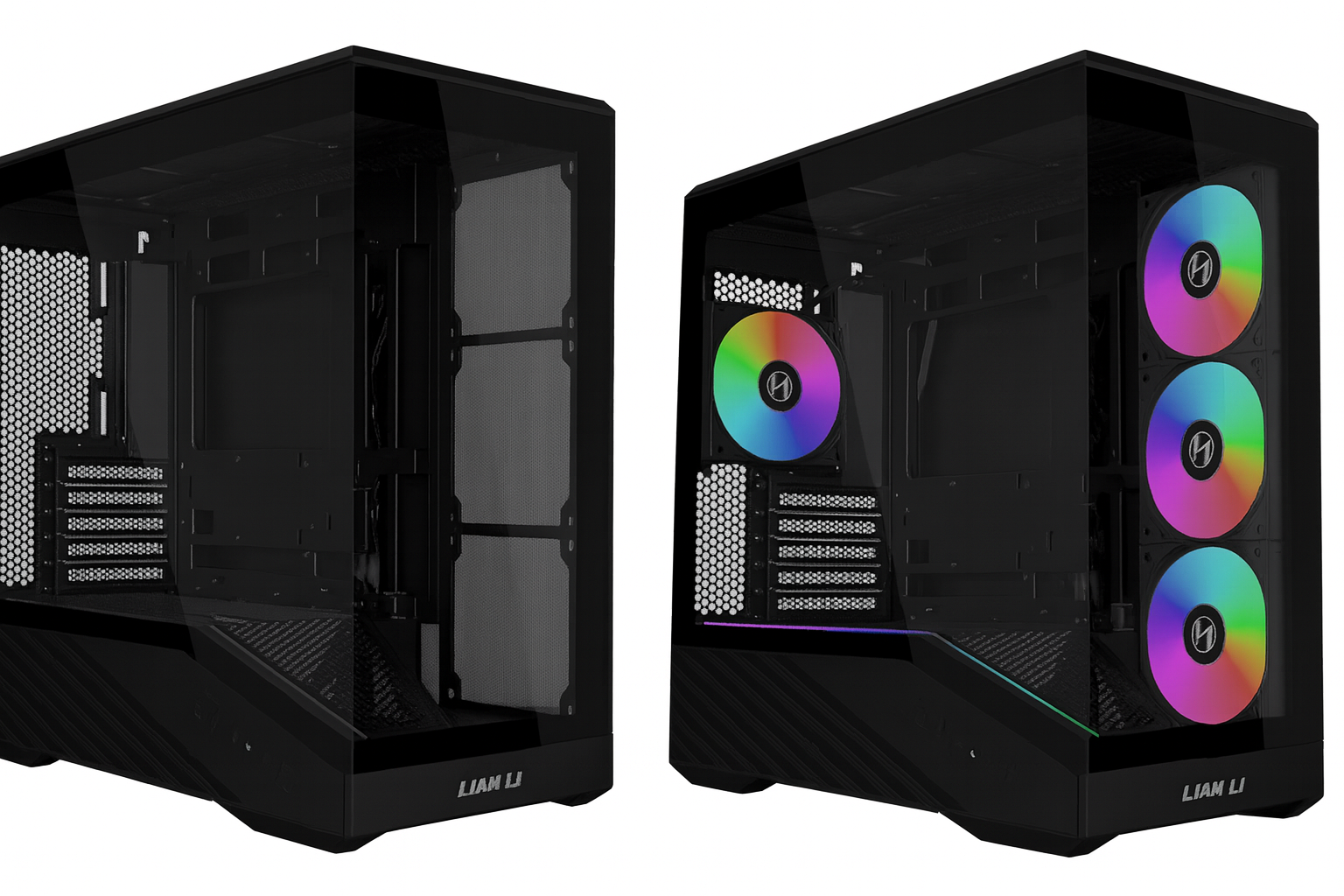
Ahead of CES next month, Lian Li has introduced the Vector V100 MINI, a compact Micro-ATX case based on the original V100 design. The smaller form factor retains broad cooling support, with room for up to three 120mm side fans, three 120mm or two 140mm top fans, and one 120mm rear fan.
The case supports both standard and back-connect Micro-ATX motherboards. Front and side tempered glass panels provide a 270° view of the interior, while an integrated ARGB strip along the PSU shroud offers lighting control through motherboard software. Despite its reduced size, the V100 MINI accommodates high-end hardware. GPUs up to 415mm can be installed, supported by an adjustable anti-sag bracket. A cable opening in the PSU shroud helps maintain clean routing. Storage options include support for two 2.5″ SSDs or one 3.5″ HDD plus one 2.5″ SSD at the bottom, and an additional 2.5″ SSD behind the motherboard tray.
You can see the full spec sheet in the table below:
Specification
Vector V100 MINI
Vector V100R MINI
Dimensions
(D) 436 x (W) 221.5 x (H) 443.9mm
Color
Black
Material
Steel, Plastic, 4.0mm tempered glass
Motherboard Support
Micro-ATX / Mini-ITX
Back Connect Motherboard
Micro-ATX
Expansion Slot
5
Storage
Behind MB Tray: 1 x 2.5” SSD
Hard Drive Cage: 2 x 2.5” SSD, or 1 x 3.5″ HDD & 1 x 2.5″ SSD
(If PSU over 150mm, only support 2.5” SSD x 1 or 3.5” HDD x 1)
GPU Length Clearance
415mm (Max)
CPU Cooler Height Clearance
163.5mm (Max)
PSU
ATX (Under 200mm)
Fan Support
Top: 120mm x 3 or 140mm x 2
Side: 120mm x 3
Bottom: 120mm x 2
Rear: 120mm x 1
Radiator Support
Top: 360 / 240
Included Fans
N/A
Side: 120mm ARGB/PWM Fan x 3
Rear: 120mm ARGB/PWM Fan x 1
I/O Ports
Power Button x 1
Reset Button x 1
USB 3.0 x 2
USB 3.1 Gen.2 Type C x 1
Audio x 1
Dust Filters
Bottom x 1
Warranty
1-Year
The Vector V100R MINI variant ships with four pre-installed 120mm ARGB PWM fans: three reverse side intakes and one rear exhaust. Both versions of the Vector 100 Mini are available starting today, priced at $49.99/€49.90 for the standard version and $64.99/€64.90 for the Vector V100R Mini.
KitGuru Says: For builders on a budget, this case checks a lot of the right boxes, with plenty of pre-installed fans and the aesthetics to match higher-end options.
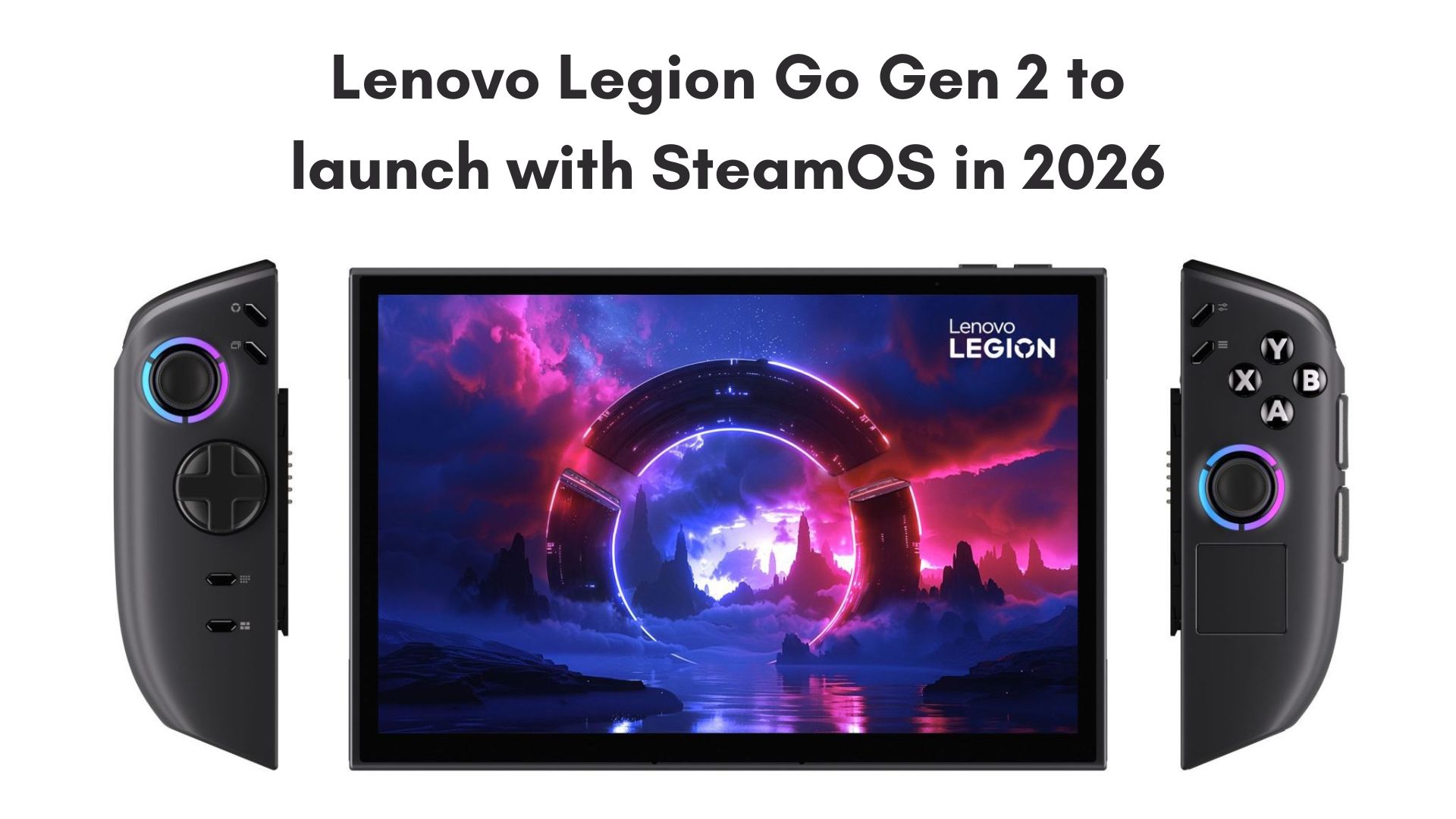
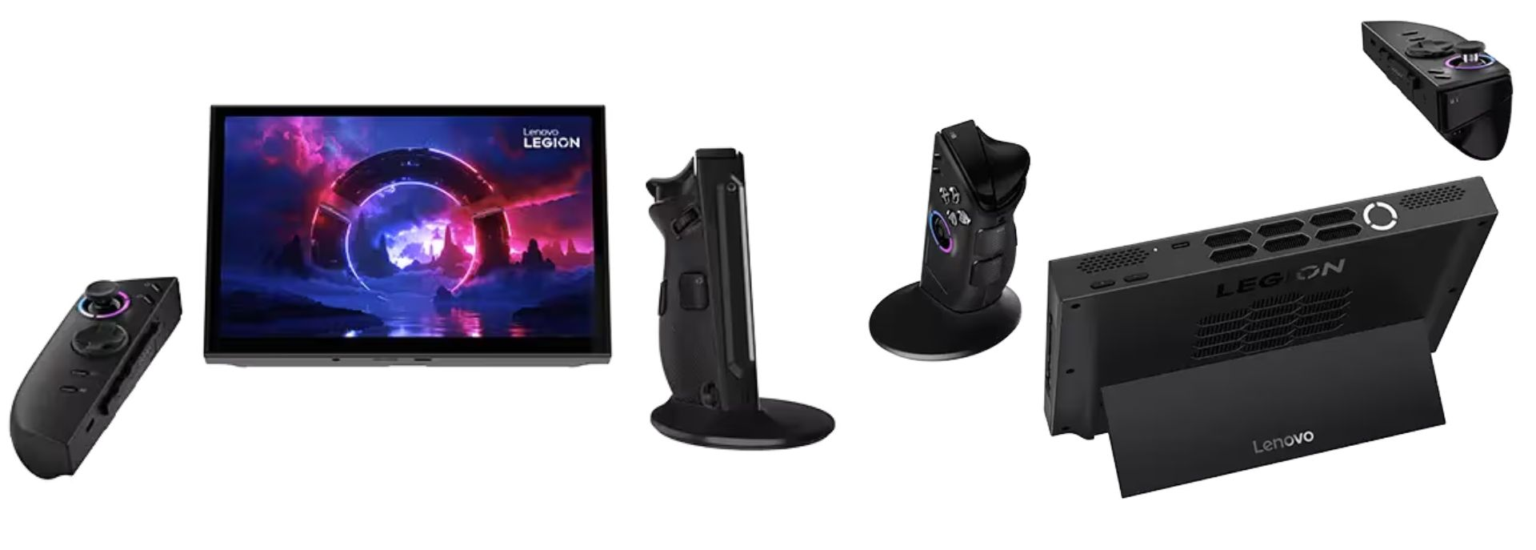
If recent reports are to be believed, Lenovo is planning to announce a new handheld at CES 2026. According to a new report, the manufacturer is preparing to unveil a version of its Legion Go Gen 2 running Valve's SteamOS, making it the first Ryzen Z2 Extreme-powered console running Valve's OS natively.
This development would mark Lenovo's second foray into the SteamOS ecosystem, following the Legion Go S. However, this Gen 2 model with SteamOS targets the high-end enthusiast. According to Windows Latest, the hardware configuration mirrors the Windows variant, meaning it would pack AMD's Ryzen Z2 Extreme APU, featuring eight Zen 5 cores and integrated Radeon 890M graphics. This CPU is backed by up to 32GB of LPDDR5X-8000 memory and a PCIe Gen4 M.2 2242 SSD with capacities up to 2TB.
The display specifications remain equally impressive, with the unit retaining the 8.8-inch PureSight OLED panel found on its Windows sibling. This screen offers a 1920×1200 resolution at a 16:10 aspect ratio, a 144Hz refresh rate, and 500 nits of peak brightness. To keep this hardware running without a wall socket, Lenovo has equipped the device with a 74Wh battery and 65W USB-C charging.
If this report proves true, then the Legion Go Gen 2 would become the first officially supported device to pair the Ryzen Z2 Extreme with SteamOS, potentially offering a significant performance leap over the current Steam Deck OLED. For now, we await official confirmation, which could arrive during CES next month.
KitGuru says: This device would offer a significantly more powerful alternative to the Steam Deck. Now we'll just have to wait and see how much it will cost.
PowerWash Simulator was a success not only thanks to its unique concept and satisfying gameplay loop, but also as a result of multiple unexpected crossovers from throughout media. It seems the team at FuturLab are utilising the same blueprint for its sequel, with the recently-released Powerwash Simulator 2 set to crossover with the popular Cartoon Network show Adventure Time.
Releasing a teaser trailer to make the announcement, the team at FuturLab confirmed that PowerWash Simulator 2’s first paid DLC will be crossing over with the popular 2010’s Cartoon Network show Adventure Time, writing:
“It's time for an adventure! No, that's not right…It's Adventure Time! Glove up those grabbers, the Candy Kingdom is covered in schmutz. Coming to PowerWash Simulator 2 Spring 2026. Get your buns over to Steam and Wishlist now.”
Very few details have been shared regarding this DLC, with the only confirmed aspect being that it will consist of 5 new levels to explore and clean up – similar to the first game. Assuming pricing remains equal too, then expect this Adventure Time DLC to cost roughly £6.50; though we will have to wait and see.
In case you missed it, FuturLab previously shared their DLC roadmap for PowerWash Simulator 2, confirming that the title will receive 3 paid DLC packs throughout 2026 (likely all crossovers) alongside 3 sets of free ‘Caldera Chronicles’ content drops.
Throughout its life, we saw PowerWash Simulator crossover with all sorts, from Final Fantasy to Shrek; Tomb Raider; SpongeBob; Back to the Future and even Wallace and Gromit. As such, expect plenty of more paid and free DLC from PowerWash Simulator 2 throughout 2026 and hopefully beyond.
KitGuru says: What do you think of the first DLC pack? Do you enjoy PowerWash Simulator’s crossovers? What game / film / TV show set would you like to power wash? Let us know down below.
Pretty much since its creation, the Epic Games Store has gone all-in on its end-of-year promotions – offering a different title for free every 24 hours leading up to the new year. With a little under two weeks to go until 2026, Epic has officially kicked off its 2025 Christmas game giveaway.
From now until the 1st of January, the Epic Games Store will be giving away a different title for free every 24 hours. Available to add to your library right now (until 4pm UK time) is Jotunnslayer: Hordes of Hel – an isometric arena survival rogue-like in which you “Engage in adrenaline-fueled battles, fighting off endless waves of enemies as you strive to survive. Complete various objectives, defeat the final boss, and earn the ultimate prizes.”
Featuring multiple playable characters, meta progression, unlockable perks and more, there is plenty to enjoy with Jotunnslayer: Hordes of Hel.
As mentioned, Epic is offering a new game for free every 24 hours and so come 4PM today, Jotunnslayer will be replaced by an as-of-yet-unknown title. With pleasing visuals, fun looking gameplay and a price tag of ‘free’ however, there is no reason not to add Jotunnslayer: Hordes of Hel to your library.
KitGuru says: Will you be checking out the Epic Games Store each day? Had you heard of Jotunnslayer: Hordes of Hel previously? What game have you been holding out on, hoping it’ll come to Epic? Let us know down below.
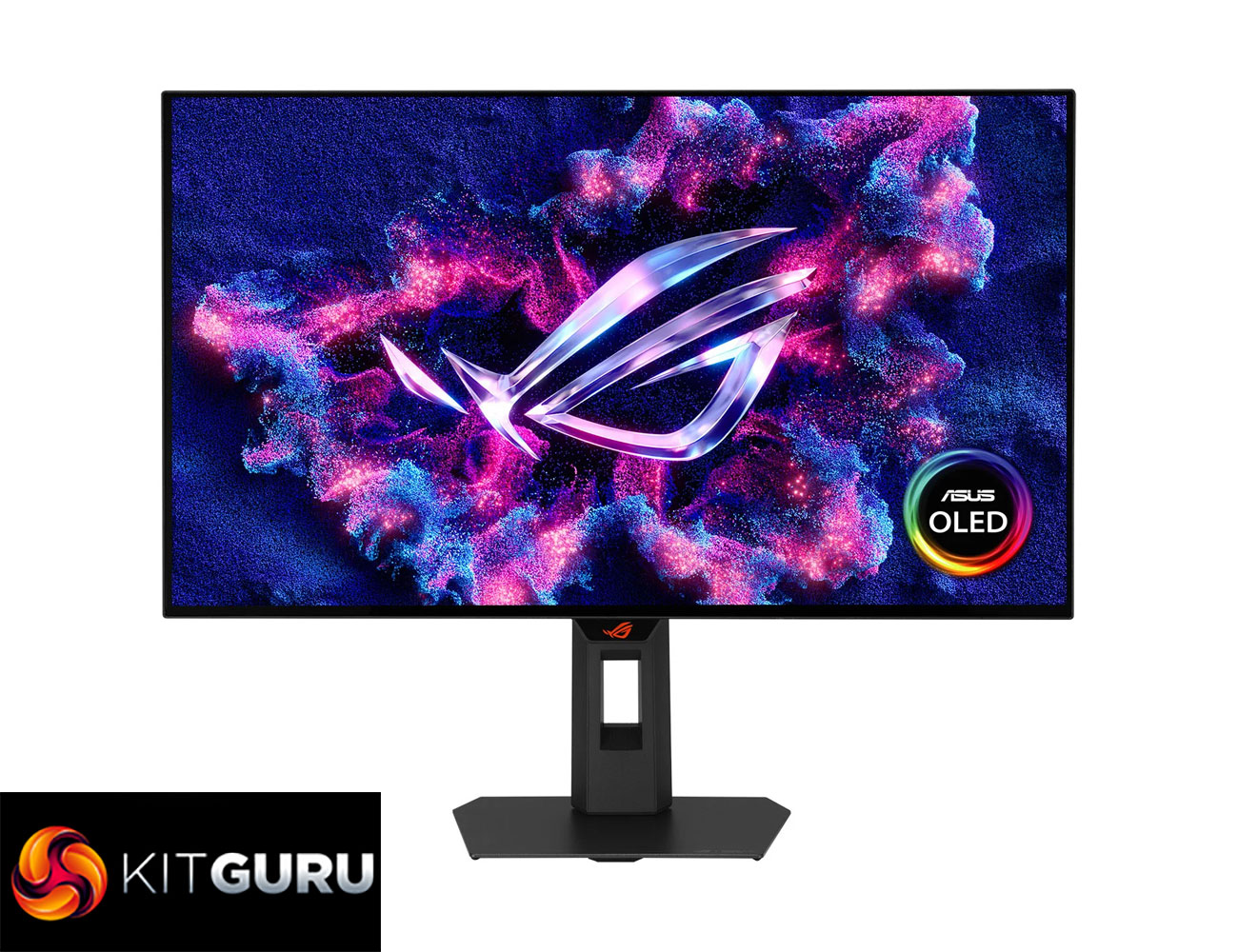
Today we are reviewing the hotly-anticipated ASUS ROG Strix XG27AQWMG. Announced back at Gamescom 2025, this screen is packing in the latest 4th Gen Tandem OLED panel from LG, promising a wide range of improvements compared to previous generations. On top of that, ASUS has fitted what it calls a ‘TrueBlack Glossy' coating, designed to offer a ‘zero-haze' finish while maintaining true black depth. There's a lot to talk about, so let's dive into the review.
Starting off with the 4th Gen panel from LG, this utilises Primary RGB Tandem technology, which basically means a new 4-layer stack compared to the 3-layer stack of prior panel generations. This offers three key benefits, being higher brightness, wider colour gamut and also significantly increased lifespan.
The panel itself is ‘only' a 1440p 280Hz spec, so it's not pushing boundaries in the same way as the 500+Hz OLEDs that are hitting the market, but it's still a very capable spec. That lower refresh also means pricing is perhaps surprisingly affordable for a monitor using the latest generation of panel, with this model listed at Scan for £520, putting it in very similar territory to most 1440p 240Hz OLEDs.
Specification:
Panel size: 26.5″
Aspect ratio: 16:9
Color space (DCI-P3): 99.5%
Panel type: WOLED
Resolution: 2560×1440
Display viewing area (HxV): 590.42 x 331.88 mm
Display surface: Glossy (TrueBlack Glossy)
Pixel pitch: 0.229mm
Brightness (HDR peak): 1,500 cd/㎡
Contrast ratio (typ): 1,500,000:1
Viewing angle (CR≧10): 178°/178°
Response time: 0.03ms (GTG)
Color accuracy: △E < 2
Display colors: 1.07B (10-bit)
Flicker-free: Yes
HDR support: HDR10
Refresh rate (max): 280Hz
ASUS OLED Care: Yes
GamePlus: Yes
Game Visual: Yes
VRR technology: Yes (Adaptive-Sync)
Extreme Low Motion Blur: Yes
DisplayWidget: Yes (DisplayWidget Center)
GameFast Input technology: Yes
Shadow Boost: Yes
Aspect control: Yes
A.I. Assistant technology: AI Visual, Dynamic Crosshair, Dynamic Shadow Boost
DisplayPort 1.4 DSC: 1x
HDMI 2.1 (FRL): 2x
Earphone jack: Yes
USB hub: 2x USB 3.2 Gen1 Type-A
Speakers: No
Digital signal frequency: HDMI 30–480 KHz (H) / 41–280 Hz (V); DP 480–480 KHz (H) / 41–280 Hz (V)
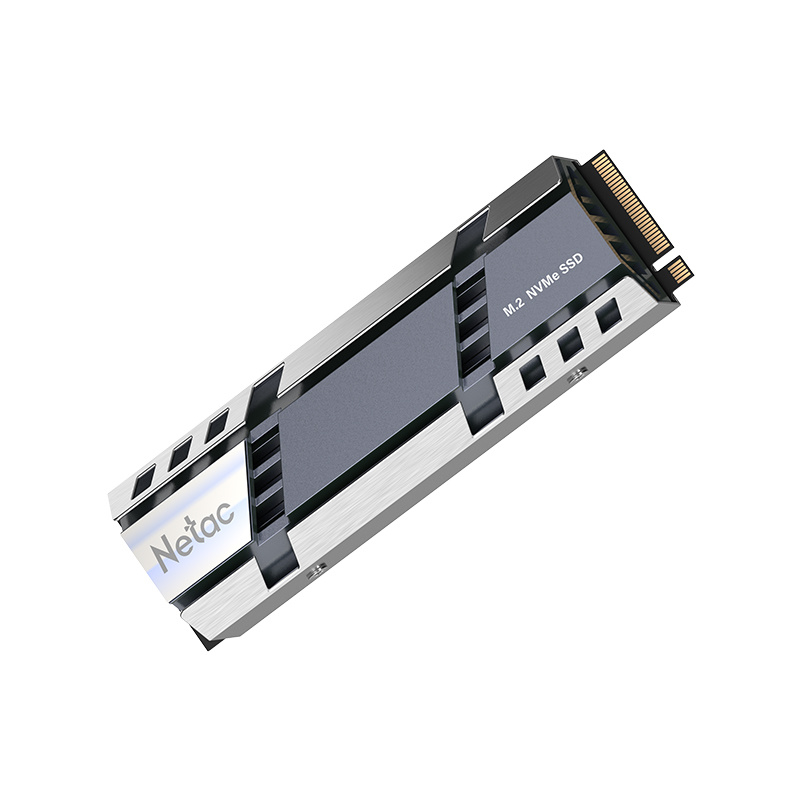
For Day 19 of the KitGuru Advent Calendar we have teamed up with Netac to give THREE lucky winners an SSD upgrade! Each winner today will receive a Netac NV150HK M.2 NVMe SSD.
The Netac NV150HK is a PCIe 5.0 M.2 NVMe SSD offering extreme performance with sequential read speeds up to 14,000 MB/s and write speeds up to 13,000 MB/s. It also features DRAM and SLC caching, as well as intelligent thermal control for stability and heat dissipation.
How to Enter:
To enter this giveaway, all you have to do is head over to our competition announcement post on Facebook, HERE. In the comments, leave an answer to the following question – What is the first game you would install on your brand new SSD?
This competition is open worldwide.
The winner will be picked randomly shortly after 11AM GMT December 20th, and a new competition will be announced for Day 20. The chosen winner has 48 hours to respond, if we do not hear from them, a new winner will be picked.
Terms and Conditions: This competition is open worldwide, starting at 11AM GMT on December 19th and ending at 10:59AM GMT on December 20th. Due to the busy Christmas season, prize deliveries could take longer than usual, and some prizes may not ship until January. In compliance with GDPR, we will not collect or store any personal information as part of this competition. Once the winner has been contacted and their prize received, personal details will be deleted from our email servers. Your details will not be shared, we respect your privacy.
KitGuru Says: Good luck to all who enter, we'll be back tomorrow morning to announce a winner and turn the calendar over to Day 20!
Need to find the best PC VR games on Steam, Rift, and Viveport? We’ve got you covered with our top 25 list.
The PC VR landscape has changed dramatically over the years. It used to be the front-and-center focus for the entire industry, though new headsets across different categories have since seen developers and publishers split their attention. Still, we’re often rewarded with various new gems every year that push the fidelity of VR experiences in ways lesser hardware can't manage. And with Steam Frame on the way in 2026, we're hoping to see more titles than ever make the leap.
What’s nice about the best PC VR games list, then, is that even the older games on this list from nine years ago remain some of the best-looking and playing titles in all of VR today. You’ll find most of these experiences on SteamVR, though some can be found on Rift (now called Meta Link), Viveport, GOG, or EGS. While new Rift releases are few and far between these days, some exclusives remain that are too good to ignore.
Honorable Mentions
We have to stop somewhere with these lists, though we've got even more recommendations if you want them with our honorable mentions. These are games that were previously included on our list and have since been removed or ones that didn't quite beat out the rest.
If a game's related to one of the main entries, such as a sequel or a spin-off, we'll mention it there instead. We've linked our reviews or other coverage below where possible, and here are a few additional titles worth considering.
It's worth noting that we don't include modded PC games in this list, so nothing that requires the Unreal Engine VR Injector or other methods is present. Everything included here was designed for official PC VR support, though we may touch upon modding support within these games. We've tried to keep our recommendations varied so there's something for everyone, and this list is in alphabetical order instead of ranked preference.
For now, these are our top 25 best PC VR games on SteamVR, Rift, and Viveport.
Arken Age
Arken Age is a game that's paid clear attention to evolutions in VR gameplay design across the last decade and utilizes those to its advantage. Developer VitruviusVR has delivered a satisfying sci-fi action-adventure where you defend this fantasy world against mechanical creatures.
Offering a sizable campaign with room for a follow-up, that's all assisted by a vibrant presentation with great visuals and strong audio design. It's one of our favorite VR games of 2025, and Arken Age is an absolute must for action fans.
Asgard’s Wrath might not have Skyrim levels of content but, for our money, the focus on native VR sword fighting and character progression makes this the more important of the two VR games. This is an immaculately produced Norse adventure split into three parts that captures the heart of the RPG genre.
Asgard's Wrath realizes it in its full glory using the power of PC VR, helping it vanquish its opponents in the fight for the best PC VR games to this day. While a sequel later followed in 2023, Asgard's Wrath 2 has remained Quest exclusive with seemingly no chance of a PC VR port.
Beat Saber has become such a sensation on basically every headset that it’s easy to forget the game’s humble beginnings as an early-access PC VR title. Despite Beat Games’ acquisition by Meta, the PC VR version of the game remains the sharpest place to play Beat Saber. Still one of the best PC VR games, then, but Beat Saber is a must wherever you enjoy VR.
Blade & Sorcery had been missing for several years from this list, but 2024's full release brought this back to our spotlight once more after nearly six years in early access. A PC VR medieval fantasy with full physics-driven melee combat and built-in mod support, further updates are planned even as the studio begins working on its next game.
If you've not played since the early access days, WarpFrog's early hit feels better than ever thanks to the Crystal Hunt campaign mode with an original biome and loot collecting. This new progression system gives you something to work towards while maintaining that sandbox spirit, and you'll gradually become more powerful through new magical skills.
Of all the physics-driven VR combat and puzzle games out there, Boneworks remains one of the most polished and impressive. Its single-player campaign offers plenty of fun sandboxes to experiment with, whether you're swinging robotic headcrabs around by their legs or beating up mindless zombies with a broom handle.
Or you can just rely on the classics and find a lethally accurate shooter. Boneworks is a great PC VR game and offered a glimpse of where the future of VR interactivity is headed. Stress Level Zero followed it up back in 2022 with Bonelab, which is also available on PC VR.
For the longest time, Demeo held a seemingly permanent spot on this list. We considered Resolution Games' 2021 tabletop game to be a genuine hit, delivering a first-rate four-player multiplayer VR experience that few games – flatscreen or VR – have ever really matched. Demeo Battles doesn't scratch the same itch as a PvP spin-off, though Demeo x Dungeons & Dragons: Battlemarked stylishly surpassed the original.
While Battlemarked doesn't use a Dungeon Master (DM) system, what's here is an incredibly natural crossover with Wizards of the Coast's successful tabletop RPG. It evolves on the original Demeo's formula in style, letting you and a group of friends traverse dungeons with more narrative-driven campaigns. No matter the platform, it's a must have co-op experience.
If you're looking for a fantasy action RPG that you can play with a group of friends, Dungeons of Eternity is the obvious pick. This first-person immersive experience feels significantly polished, allowing you and up to three more friends (Quest crossplay also supported) to explore various hack-n-slash combat options while clearing rooms in true “dungeon crawler” style.
It caters to many styles of play, pairing a rewarding progression system with endless randomly generated dungeons. There's a good reason why we named it our Best New Multiplayer VR Game for 2023, and further updatescontinuearriving two years on. With its PC VR launch, Dungeons of Eternity feels better than ever.
Eye of the Temple is one of the best examples of a game that puts VR-first design front and center, resulting in a triumphant room-scale platformer. You begin the Indiana Jones-inspired adventure outside a large temple. With a whip in your right hand and a torch in your left, you'll begin to navigate deeper into the temple by completing puzzles and platforming obstacles.
Every movement you make in Eye of the Temple is a real, physical movement through your play space. Some clever design trickery means that you'll always stay within your boundary and never run out of space to move – a bit like Tea for God. On PC VR, this may require a little more cable management if you've got a wired headset, but the game is nonetheless a thrill to play and incredibly well-designed. Fair warning though: it does require a minimum 2m x 2m play space.
Ghost Town is one of our favorite new VR games so far in 2025, and it's a strong return for Fireproof Games following The Room VR: A Dark Matter. Set in the '80s, this story focuses on a witch turned ghost hunter and exorcist called Edith Penrose, who now heads up a paranormal detective agency with her flatmate across London.
It's a brilliant supernatural puzzler that delivers a thoroughly compelling mystery, strong visuals, and intuitive puzzles that never feel too difficult or too easy. Our only complaint is that we wished it lasted longer, but don't let that deter you. If you're a fan of narrative-driven adventures, we highly recommend checking out Ghost Town. If you need more convincing, there's also a free PC VR demo.
It might not technically be Half-Life 3 but make no mistake, Half-Life: Alyx from Valve is a full-sized adventure worthy of the series’ past releases. Giving it top marks in 2020, we believe that “what it does right, it almost always does the best.” Playing as Alyx Vance, you fight through City 17 in a highly polished adventure fully designed for VR, relying on classic series elements and introducing plenty of new features.
It’s 10+ hours of immaculate, AAA-level VR shootouts, puzzles, and narrative design, featuring some of the best firefights you can have inside a headset, and offers truly memorable moments within. Half-Life: Alyx is arguably the best PC VR game yet, and we hope to see more from Valve when Steam Frame arrives in 2026.
Kayak VR is a quiet highlight on this list, offering a stunning visual presentation and a relaxing experience across four locations: Papagayo, Antarctica, Bjørnøya, and Australia. There's a competitive multiplayer mode, but it's free roam where the game shines, allowing you to sit back, relax, and enjoy the view.
It may not feature a fully fledged campaign or an extensive selection of game modes, yet Kayak VR is one of the most relaxing VR experiences available on the platform and a joy to look at from every angle. That's only improved with the Soča Valley and Yucatán DLC adding two new environments, and a real-time multiplayer update also appeared.
Packed with strong production values, 2017's Lone Echo provides a “winning blend of intuitive movement, discovery-based gameplay, and character-driven storytelling,” using zero-gravity traversal and thoughtful character interactions to deliver a compelling campaign. It’s slow-paced, but the focus on building a link between your character and those around him pays off, as does the enormous spectacle of it all.
Ready at Dawn went further with Lone Echo 2, and the original game spawned a standalone multiplayer spin-off game, Echo VR, which was one of VR's most fun and original multiplayer experiences. Sadly, that shut down in August 2023, followed by the studio itself a year later. The single-player experiences remain untouched, forming two of the best PC VR games on Rift.
Though Moss and Moss: Book 2 are separate games, we've also included them as one entry on this list as they flow into each other - Book 2 picks up the story moments after the end of Book 1. Moss helped prove that third-person VR experiences can make for some of the absolute best content out on the platform right now. You guide an adorable little mouse named Quill through diorama-sized levels, solving puzzles and taking on fearsome critters in sword-based combat.
While it's mechanically refined, Moss’ real claim to fame is the bond you build with Quill over the course of the adventure. Playing as a larger companion to the tiny protagonist, you really start to connect with her as you work together to overcome obstacles. It feels very much like a team effort, which is quite a remarkable feeling in itself.
Book 2 is technically a stronger, longer sequel, but realistically feels more like a continuation of the same journey instead of a completely fresh adventure. That being said, it does add some new mechanics that innovate on the original's combat, as well as offering a wider range of environments. The Moss series is not one to miss, and a MOBA-like entry Glassbreakers will follow later this year too.
No Man's Sky is notorious for its rocky launch in 2016. Since then, however, the game has received VR support and a wealth of updates that have turned it into an expansive survival space simulator. Various updates also overhauled many of the VR mechanics, adding new interaction methods and immersive menus, and the post-launch updateshaven't stopped.
Recent updates have even improved the image quality, performance, and enhanced rendering, so the game looks better than ever. If you are keen to explore an infinite, endless universe in VR, look no further—No Man's Sky is the perfect fit. It’s impossible to deny No Man’s Sky its place on the best PC VR games list.
If Pavlov is VR’s answer to Counter-Strike, then Onward is closer to something like Arma, with a focus on hyperrealism that paved the way for the mechanical complexity VR can add to the shooter genre. Following nearly nine years in early access, Onward finally entered full release in 2025 after the major Onward 2.0 launch, and it still deserves a place on the best PC VR games list.
However, its journey has come to an end after Meta closed Downpour Interactive and merged the staff into Camouflaj (Batman: Arkham Shadow) three months after the 2.0 update. Servers remain online, though no further developer support is coming beyond critical bug fixes. It's a massive shame as even now, Onward still has some of the best fundamental VR mechanics we've seen in a VR shooter.
Valve isn’t bringing Counter-Strike to VR anytime soon but, fortunately, we have a worthy replacement in Pavlov VR. Consistently developed over multiple years, Pavlov has turned into the fast-paced competitive shooter to beat, with tons of weapons and environments spanning multiple eras and new game modes being added at a dizzying pace.
Much like Onward and Blade & Sorcery, Pavlov spent many years in early access before receiving its full release and has cross-platform multiplayer with the PlayStation VR2 version. For multiplayer fans, it’s one of the better PC VR shooter games out there today and one that's still receiving the occasional updates.
Rhythm games are a dime a dozen in VR but, for our money, Pistol Whip from Cloudhead Games is the most inventive and overall best of the lot. One of VR's longest-running and well-updated games across all platforms, it's a beautiful intersection between rhythm games, Superhot-like action, and Matrix-style cinematic flair.
You'll move along on-rails scenes with enemies popping up to a pumping soundtrack. Your task is not just to shoot the enemies as they approach but to do so in time with the beat of the music. It's a fantastic concept that continued expanding for many years with numerous free content updates, and it's comfortably in our list of the best PC VR games.
Initially developed by RyseUp Studios, Roboquest is an FPS roguelite that first appeared on flatscreen platforms back in 2023. Already a great shooter in its own right, Flat2VR Studios took that a step further with its exhilarating adaptation. If we didn't already know it was a flatscreen game, you'd be hard pressed to and we called it “an instant classic” in our review.
Roboquest VR feels like it was natively designed for the platform, being completely rebuilt with key gameplay adjustments such as manual reloading. With a strong soundtrack, highly satisfying gameplay and considerable polish, it's incredibly impressive conversion earns a place on this list. Now all we need is the two player co-op update to arrive.
We still can’t quite believe Star Wars: Squadrons was a thing. A full Star Wars flight action game with both a single-player campaign and a huge multiplayer component… in VR? Are we sure we’re not dreaming?
Well, if we are, we don’t want to wake up because Squadrons’ highly immersive cockpits and blistering space dogfighting make for everything we ever wanted out of VR in the first place, making this, in turn, one of the best PC VR games.
Insomniac's last major VR release before Sony acquired the studio in 2019, Stormland is a sprawling open-world action-adventure shooter with support for 2-player co-op. One of the few AAA made-for-VR games available on PC, it launched six months after the Rift S and alongside the Oculus Link feature of the original Oculus Quest.
It's not a complete triumph, and some issues do emerge across this campaign, yet Stormland still shines with its smooth combat, high production values, and strong UI interactions. Don't wait around if you're interested in grabbing this, though; Insomniac's full VR library keeps getting delisted and relisted from Meta's PC VR store.
Skyrim VR successfully transplants the entire RPG into headsets with full motion controls. It’s not the most in-depth implementation, but just that fact alone makes this something you won’t want to miss in VR.
Along with bestowing you with a keen sense of adventure, there are bits of Skyrim that work incredibly well in VR. That includes the moment you first encounter a dragon or inspect a sword you’ve worked hard to earn in tireless detail. There are better, more native VR games out there, but Skyrim VR is Skyrim… in VR, and that makes it worth a look.
We’re grouping the first two installments of Cloudhead Games’ compelling adventure series together, since the first episode is on the shorter side and the two together cost about as much as a normal VR game.
The Gallery has its roots in Henson-esque dark fantasy, transporting you to amazing worlds of impossible landscapes and crazy characters on the hunt for your sister. The imaginative design makes these some of the best PC VR games despite their age. We’re just hoping Cloudhead one day gets to make Episode 3.
The Walking Dead: Saints & Sinners from Skydance Interactive is a PC VR essential, delivering some of the best design and user interaction you’ll find in VR. Released in 2020, “it’s a zombie apocalypse within your grasp – a living, breathing virtual ruin with player-driven highs that easily outshine its experimental lows.” It sets the bar for VR zombie games using Boneworks-style, physics-based combat.
The game will have you wrestling with undead hordes, packing its action into a full, meaty VR campaign that sees you trekking through the remains of New Orleans. Add in side missions and the ability to kill zombies with a spoon, and you have one of the deepest native VR games on the market. Though it wasn't as well received, Saints & Sinners later got a sequel with Chapter 2: Retribution.
One Hamsa's VR mech brawler roguelike made a big impact last year, earning our Best PC VR Game of 2024 award. UNDERDOGS is a physics-based brawler that uses arm-based locomotion and a comic book-style presentation. This 22nd-century underground roguelike fighter set a new benchmark for VR arena combat.
Between its stylish visuals, grimy soundscape, and unique character, UNDERDOGS feels fresh and exciting. Numerous post-launch updates have taken this further, such as 'Sandboxxer' with its level editor, while the more recent 'Rampage' mode added an endless endurance mode. More updates are coming, with a multiplayer mode next on the list.
Vertigo 2 is one of the best PC VR-exclusive experiences available and a masterclass in enthralling, VR-first game design. What's even more impressive is that it's largely put together by one solo developer – Zach Tsiakalis-Brown from Zulubo Productions. It pays homage to Valve classics and seminal VR releases but doesn't fall victim to copying them.
Instead, it forges ahead to create an impressive solo gaming experience in the same vein as Half-Life: Alyx, delivering a strong sequel to Vertigo Remastered. Featuring tactile weapons, creative enemies, and an engaging narrative-driven campaign, it's a shining example of what PC VR still has to offer. Two years later, the Into The Aether expansion delivered a strong conclusion to the series.
December 18, 2025, update: Added Demeo x Dungeons & Dragons: Battlemarked, Dungeons of Eternity, and Roboquest VR to main list. Removed Demeo, A Fisherman's Tale, Superhot and added to honorable mentions.
September 11, 2025, update: Unranked the list, added an honorable mentions section. Added Arken Age, UNDERDOGS, Stormland, Blade & Sorcery, Ghost Town, and Ultrawings 2. Removed Song in the Smoke, Wanderer, Eleven Table Tennis, Hubris, and Until You Fall.
July 10, 2023, update: Changed formatting. Reordered entries. Removed Wilson's Heart, Compound, Blade and Sorcery, and A Township Tale. Added Vertigo 2, Hubris, Eye of the Temple, and Kayak VR.
This article was initially published in March 2022. Former UploadVR Editor Jamie Feltham previously contributed entries to this list.
Being one of the best Mini-ITX motherboard's we've reviewed, ASUS has nailed it in several key areas with the Z890-I Gaming Wi-Fi. But it's expensive and comes with compromises, besides offering features that may ultimately prove to be too niche in their appeal.
 Connexion